
 E-mail us

From Political Label to Protective Concern
Red Scare rhetoric in 2026
Socialism, Communism, McCarthyism, Incivility, and the Protective-Intelligence Consequences of the 2026 Midterm Rhetoric
By Matthew C. Parker
Defending Democracy Initiative | Independent Security Advisors / EPTraining.us
Updated September 22, 2026
Author’s Background.

I have been around politics long enough to understand that campaigns today use labels, associations, and contrasts to define their opponents. My own exposure to politics began long before executive protection became a central part of my professional life. I interned for Senator Edward Kennedy when I was young, and later volunteered in Mitt Romney’s campaign for governor of Massachusetts.
I eventually studied political science, government, and international affairs alongside homeland security, criminal justice, and my 20+ year military career.
Those experiences occurred on very different sides of American politics, and perhaps that is one reason I have never found it particularly useful to begin every political question by deciding which party I am supposed to support or defend.
My concern now is more institutional: what is happening, and what happens to government when fear, intimidation, or violence begins interfering with the ability of public officials to perform their lawful duties?
We will discuss the use of political labels, the dehumanization of the political opponent, and the threats that this brings to our elected representatives.
Editorial and Source Note
This article uses public statements, polling, official records and open-source reporting cited below. Political affiliation is not treated as a threat indicator; references to threats and protection concern behavior and operating conditions, not ideology.
Reader Navigation — Choose How You Want to Read This Article
- Why This Article Matters
- Editorial and Source Note
- Case Snapshot / Abstract
- Part I — Political Context, Labeling, and McCarthyism
- Part II — Incivility, Threats, and the Protective Consequences
- The Bottom Line
- Frequently Asked Questions
- Related EPTraining.us Resources
- About Independent Security Advisors / EPTraining.us / Defending Democracy
- About the Author
- Sources and Notes
2026 Midterms
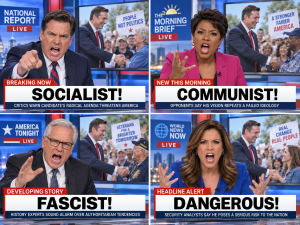 Increasingly Republican efforts to associate the Democratic Party with socialism and communism ahead of the 2026 midterm elections has gained in volume but not so much in factual traction. Lots of accusations of being a socialist, yet no actual policy differences to discuss.
There is a legitimate political argument here. The Democratic Socialists of America is an actual socialist organization. Some candidates openly describe themselves as democratic socialists, and voters are entitled to examine those positions and reject them if they choose.
Republicans are entitled to argue that Medicare for All, public ownership, rent controls, increased taxation or other policies represent socialism and would be harmful to the country.
Democrats, in turn, remain free to characterize Republican policies as extreme, authoritarian, economically harmful or inconsistent. Vigorous disagreement is not a defect in democracy; it is one of the ways democracy works.
My concern from the protective standpoint begins when the political label is no longer being used to describe an actual ideology or policy position and instead becomes a dangerous accusation. Something that directs anger, mistrust and violence towards a specific official.
A progressive becomes a socialist, a democratic socialist becomes a communist even though those are not even related. A politician who has never belonged to DSA is described as a DSA politician, and a new narrative is built, and a new risk is born.
The accusation is repeated loudly and frequently enough that repetition itself begins replacing the truth. When the pundit, media or political opponent knows the affiliation is false, or has been presented with reliable information showing it to be false and continues stating it as fact, we are no longer dealing simply with an aggressive disagreement over public policy. We are dealing with another form of the political incivility that ISA’s Defending Democracy Initiative has been warning about for years.
Incivility rarely begins with somebody announcing that they are abandoning normal political restraint. It develops by stages. Policy criticism becomes personal accusation. Personal accusation becomes a question of national loyalty or patriotism. The opponent is no longer merely wrong but supposedly dangerous, illegitimate or hostile to the country itself.
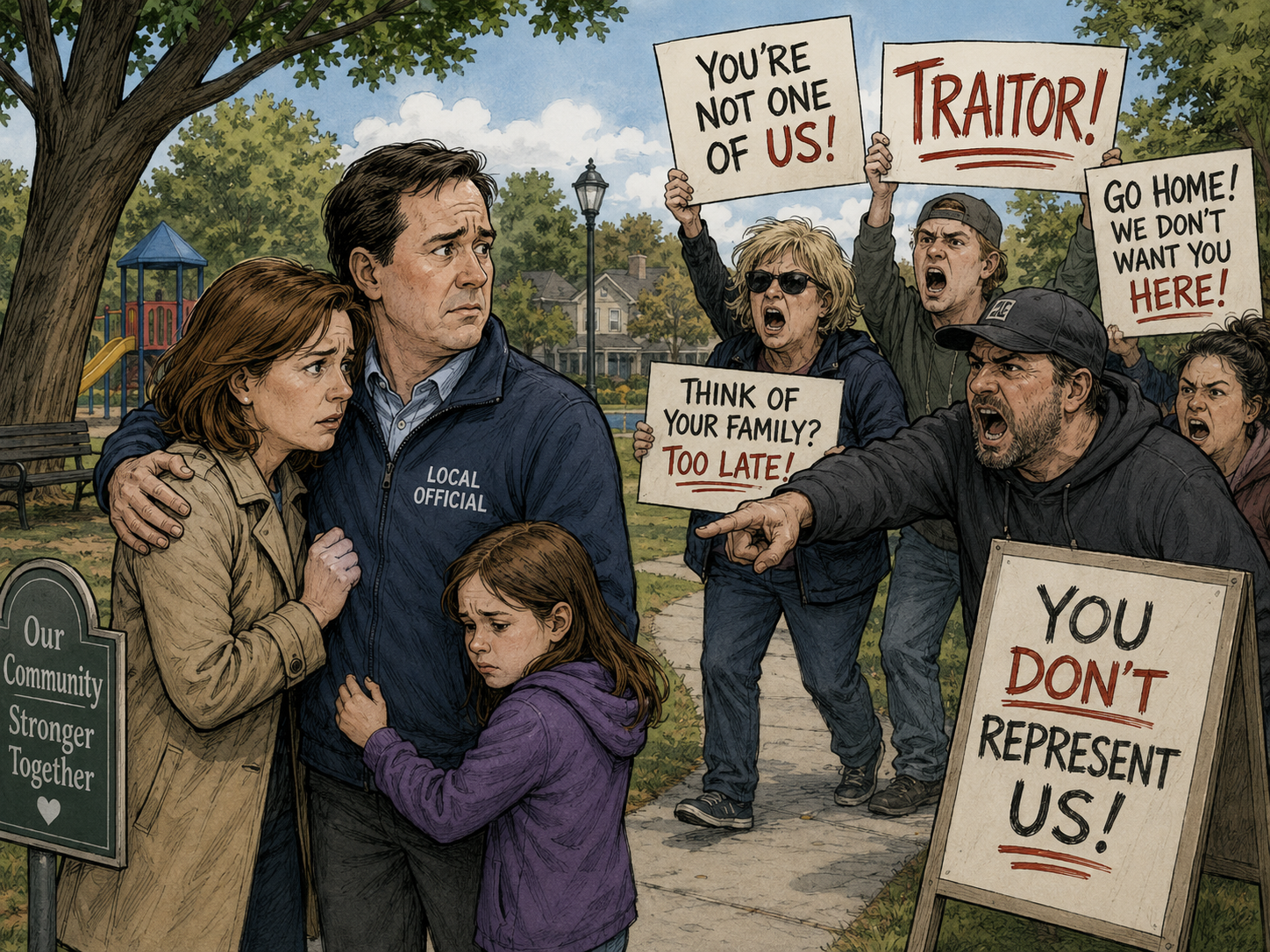
When the political opponent is then described as an animal, infection, cancer, plague, traitor or existential enemy, the rhetoric has moved beyond mischaracterization into a process of dehumanization in which an American political opponent is increasingly denied an ordinary place within American civic life.
That broader problem is discussed in ISA’s The Threats to Our Democracy: It Starts with Incivility. The article makes an important distinction that also applies here: criticism of a public official, including harsh criticism, remains part of democratic debate, but portraying opponents as undeserving of ordinary human consideration changes the environment in which threats and intimidation develop.
The related Defending Democracy article Fear Is Already Here: Threats Are Changing How Public Officials Serve—and How Judges Rule examines what happens when that environment begins influencing whether elected officials and judges can continue performing their duties.
A third piece, The Protection of Public Officials: A Democratic Imperative, explains why the protective objective is preserving the ability of public institutions to continue functioning.
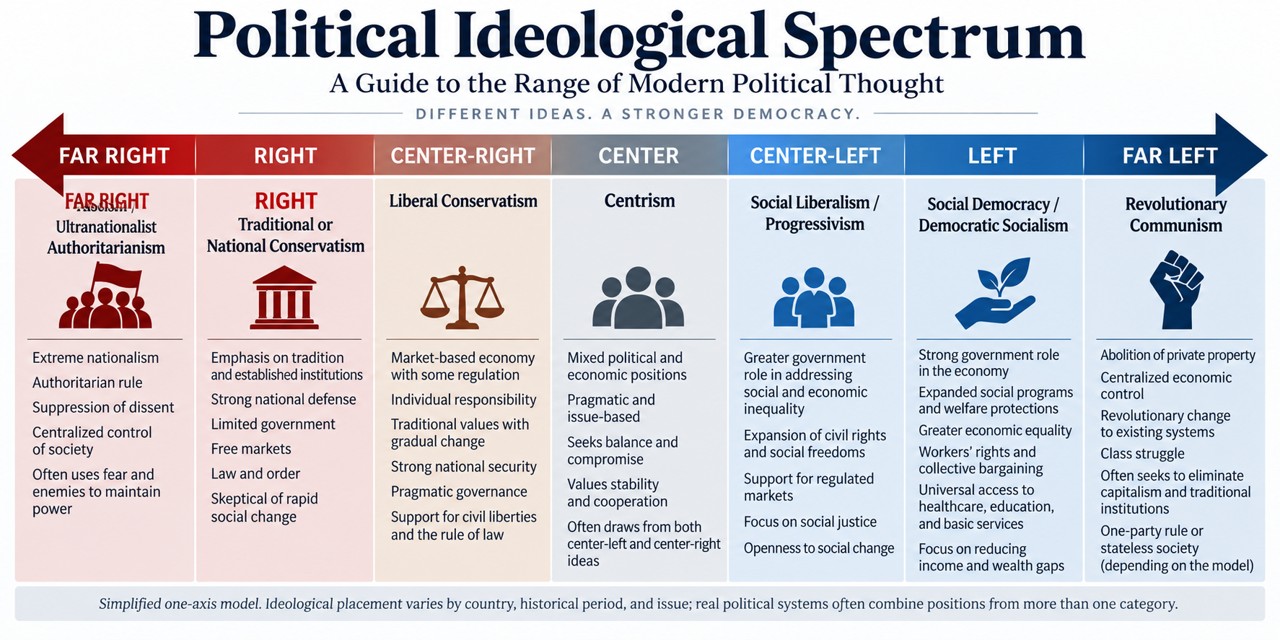
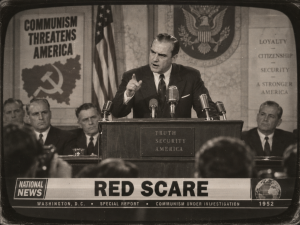 The same problem becomes more serious with the word communist. Someone is entitled to argue that democratic socialism could lead toward forms of communism or that particular policies have historical relationships with socialist or communist ideas. That is political and historical argument. It is entirely different from loudly accusing a named American politician of literally being a communist or belonging to a communist organization when the speaker knows the claim is false.
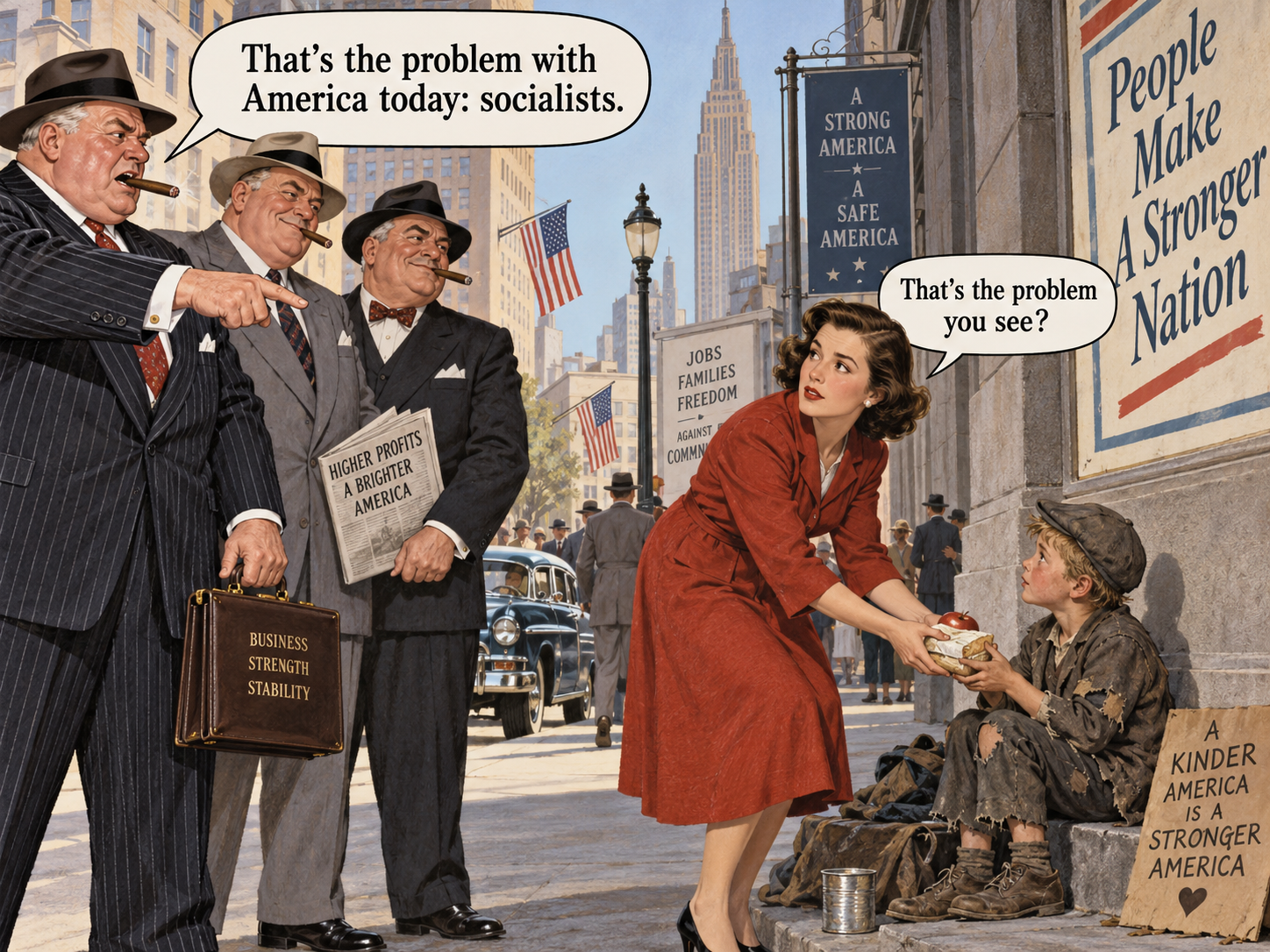 “It’s the economy stupid”

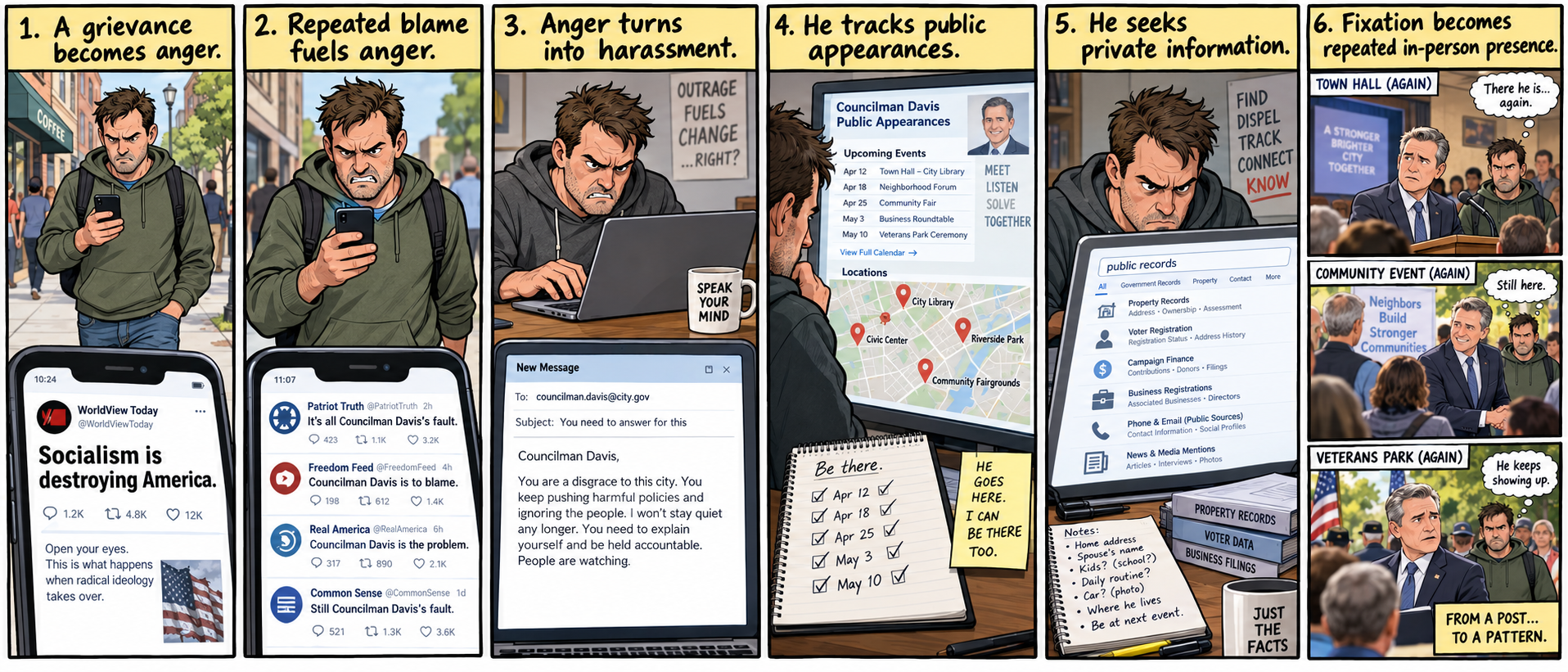 A grievance usually becomes more a problem when it moves from the general to the specific.
 Suppose a member of Congress has suddenly become one of the nationally recognized faces of an argument about socialism. That alone does not establish a threat. Suppose the member has been repeatedly and inaccurately described as a communist, national media coverage is intensifying, demonstrations are expected at the next appearance and the detail has noticed increasing personalized hostility in communications.
 One of the easiest ways to misunderstand this article would be to conclude that the answer is less political disagreement. I believe the opposite. Democracy depends upon the ability to argue forcefully over important questions.