When Political Labels Become a Protection Problem

Political campaign rhetoric about socialism and communism examined as a protective-intelligence concern for DSA candidates and Democratic public officials in the 2026 midterms.

From Political Label to Protective Concern

Red Scare rhetoric in 2026

Socialism, Communism, McCarthyism, Incivility, and the Protective-Intelligence Consequences of the 2026 Midterm Rhetoric

By Matthew C. Parker
Defending Democracy Initiative | Independent Security Advisors / EPTraining.us
Updated September 22, 2026

Author’s Background.
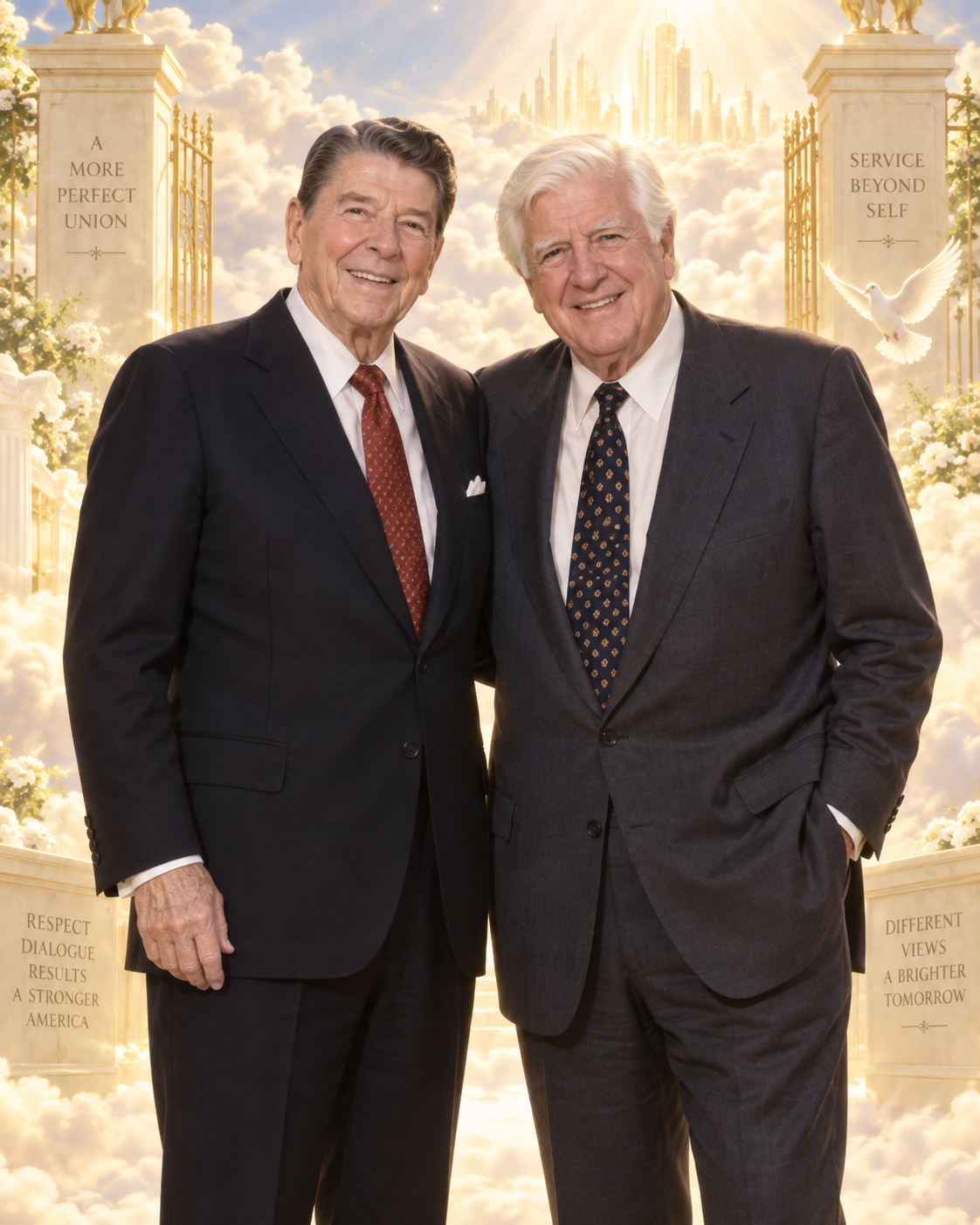
Political opponents, yet good friends

I have been around politics long enough to understand that campaigns today use labels, associations, and contrasts to define their opponents. My own exposure to politics began long before executive protection became a central part of my professional life. I interned for Senator Edward Kennedy when I was young, and later volunteered in Mitt Romney’s campaign for governor of Massachusetts.

I eventually studied political science, government, and international affairs alongside homeland security, criminal justice, and my 20+ year military career.

Those experiences occurred on very different sides of American politics, and perhaps that is one reason I have never found it particularly useful to begin every political question by deciding which party I am supposed to support or defend.

My concern now is more institutional: what is happening, and what happens to government when fear, intimidation, or violence begins interfering with the ability of public officials to perform their lawful duties? 
We will discuss the use of political labels, the dehumanization of the political opponent, and the threats that this brings to our elected representatives.  

Editorial and Source Note

This article uses public statements, polling, official records and open-source reporting cited below. Political affiliation is not treated as a threat indicator; references to threats and protection concern behavior and operating conditions, not ideology.


Reader Navigation — Choose How You Want to Read This Article

  • Why This Article Matters
  • Editorial and Source Note
  • Case Snapshot / Abstract
  • Part I — Political Context, Labeling, and McCarthyism
  • Part II — Incivility, Threats, and the Protective Consequences
  • The Bottom Line
  • Frequently Asked Questions
  • Related EPTraining.us Resources
  • About Independent Security Advisors / EPTraining.us / Defending Democracy
  • About the Author
  • Sources and Notes


2026 Midterms

Increasingly Republican efforts to associate the Democratic Party with socialism and communism ahead of the 2026 midterm elections has gained in volume but not so much in factual traction. Lots of accusations of being a socialist, yet no actual policy differences to discuss.

There is a legitimate political argument here. The Democratic Socialists of America is an actual socialist organization. Some candidates openly describe themselves as democratic socialists, and voters are entitled to examine those positions and reject them if they choose.

Republicans are entitled to argue that Medicare for All, public ownership, rent controls, increased taxation or other policies represent socialism and would be harmful to the country.

Democrats, in turn, remain free to characterize Republican policies as extreme, authoritarian, economically harmful or inconsistent. Vigorous disagreement is not a defect in democracy; it is one of the ways democracy works.

My concern from the protective standpoint begins when the political label is no longer being used to describe an actual ideology or policy position and instead becomes a dangerous accusation. Something that directs anger, mistrust and violence towards a specific official. 


A progressive becomes a socialist, a democratic socialist becomes a communist even though those are not even related. A politician who has never belonged to DSA is described as a DSA politician, and a new narrative is built, and a new risk is born.

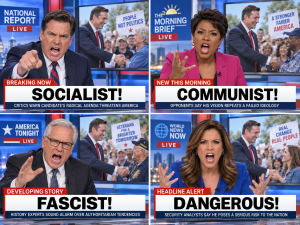
The accusation is repeated loudly and frequently enough that repetition itself begins replacing the truth. When the pundit, media or political opponent knows the affiliation is false, or has been presented with reliable information showing it to be false and continues stating it as fact, we are no longer dealing simply with an aggressive disagreement over public policy. We are dealing with another form of the political incivility that ISA’s Defending Democracy Initiative has been warning about for years.

Incivility rarely begins with somebody announcing that they are abandoning normal political restraint. It develops by stages. Policy criticism becomes personal accusation. Personal accusation becomes a question of national loyalty or patriotism. The opponent is no longer merely wrong but supposedly dangerous, illegitimate or hostile to the country itself.
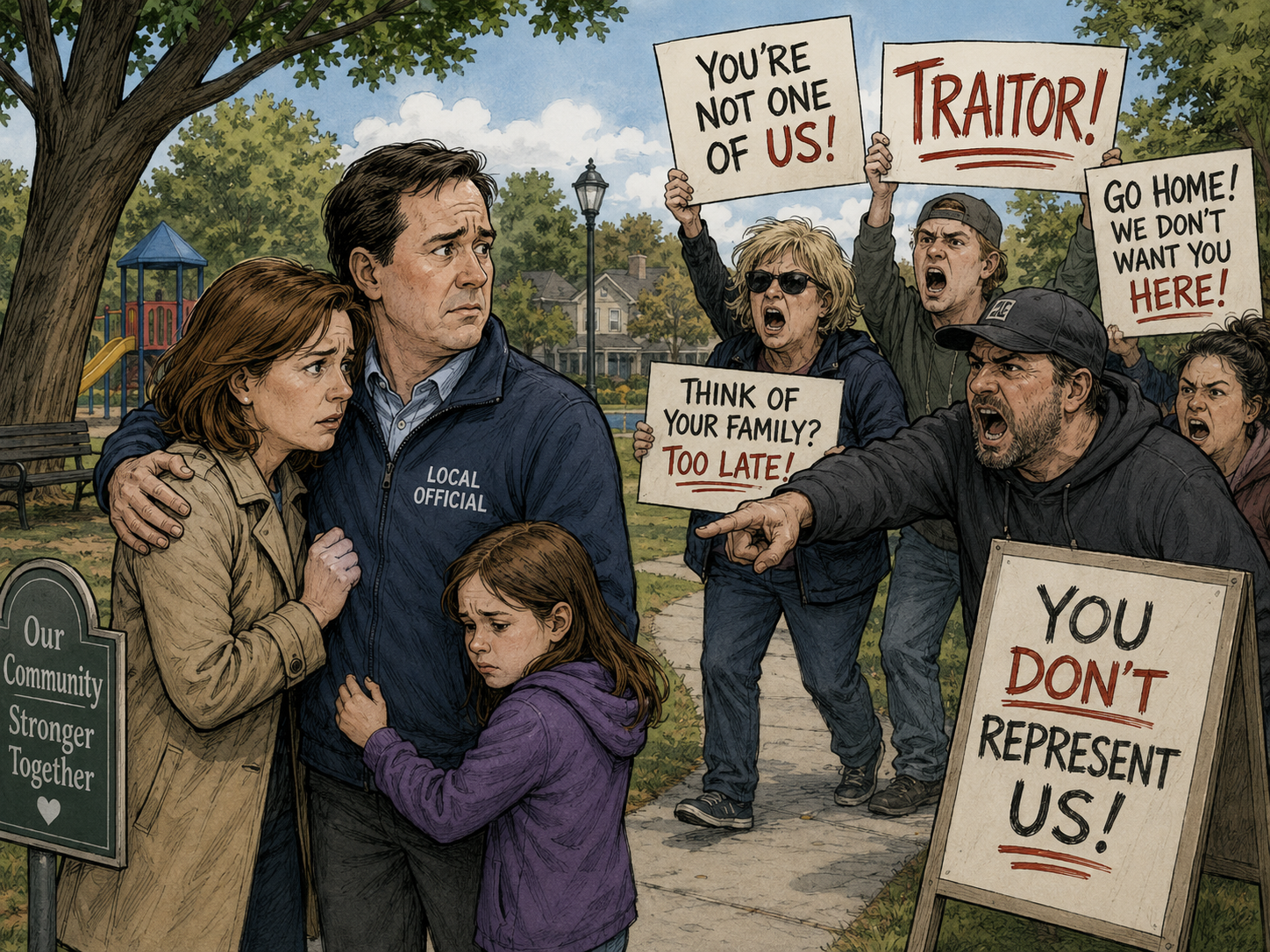
When that same person is then described as an animal, infection, cancer, plague, traitor or existential enemy, the rhetoric has moved beyond mischaracterization into a process of dehumanization in which an American political opponent is increasingly denied an ordinary place within American civic life.

When the political opponent is then described as an animal, infection, cancer, plague, traitor or existential enemy, the rhetoric has moved beyond mischaracterization into a process of dehumanization in which an American political opponent is increasingly denied an ordinary place within American civic life.

That broader problem is discussed in ISA’s The Threats to Our Democracy: It Starts with Incivility. The article makes an important distinction that also applies here: criticism of a public official, including harsh criticism, remains part of democratic debate, but portraying opponents as undeserving of ordinary human consideration changes the environment in which threats and intimidation develop.

The related Defending Democracy article Fear Is Already Here: Threats Are Changing How Public Officials Serve—and How Judges Rule examines what happens when that environment begins influencing whether elected officials and judges can continue performing their duties.

A third piece, The Protection of Public Officials: A Democratic Imperative, explains why the protective objective is preserving the ability of public institutions to continue functioning.


PART I — Political Context, Labeling, and McCarthyism

Why Republicans Are Talking About Socialism

When an Ideological Label Becomes an Accusation

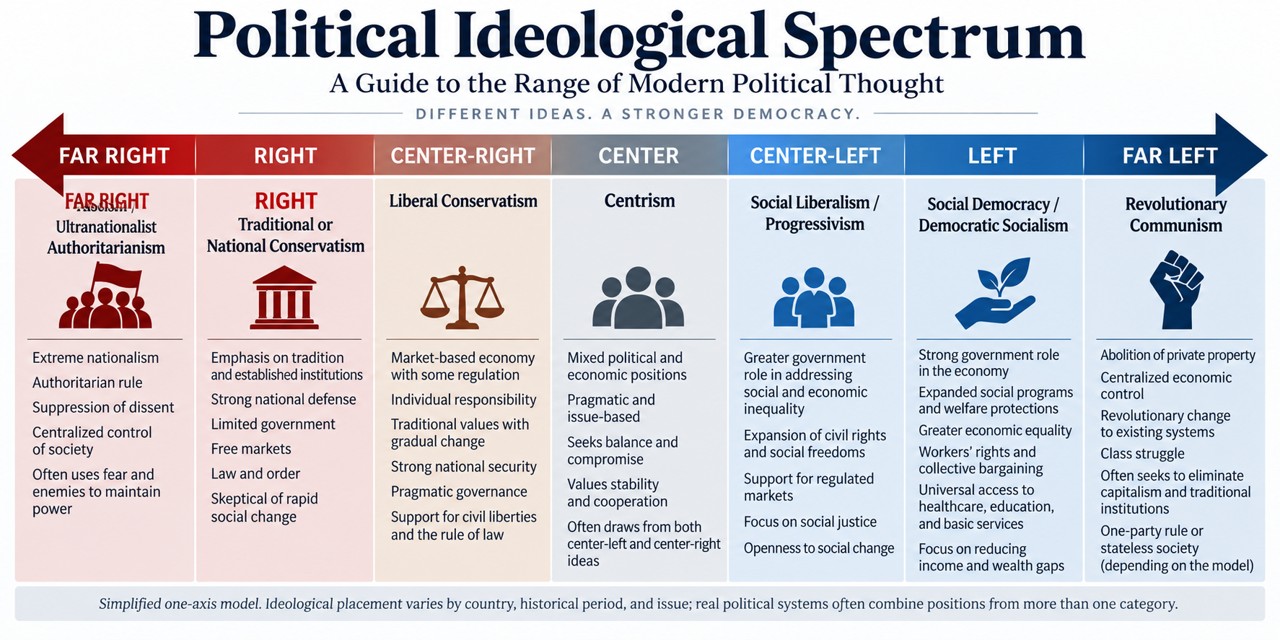
The Democratic Socialists of America openly identifies itself as socialist. There is therefore nothing uncivil about accurately identifying an actual DSA member as a socialist or criticizing the organization’s platform. The problem begins when political categories are intentionally collapsed together.

A person can support Medicare for All without belonging to DSA. A progressive can agree with several policies favored by democratic socialists without personally identifying as one. A politician can be endorsed by, supported by or photographed with socialists without becoming a member of their organization.

Describing any candidate as a DSA member when their not is a factual mischaracterization. Continuing to make that claim after knowing its false moves the statement further from policy debate and closer to deliberate ideological accusation. And that means an increased threat to that candidate of elected official. 

Now, before a discussion how a political label becomes dehumanizing, we should first acknowledge Republicans have a rational political reason to emphasize the dangers of socialism. Simply put, national polling shows that the label remains unpopular with a substantial portion of the electorate. Gallup reported in August that its 2025 polling found 54 percent of Americans viewing socialism negatively.  So push the label and try to paint every democrat as a socialist. 

Democrats engage in the same basic strategy when they believe terms such as extreme, authoritarian, far right or other ideological descriptions will hurt Republican candidates. There is nothing inherently improper about political contrast. But the same rules apply, the continued drum beat of he’s an extremist or fascist, when knowing they are not only weakens the argument, weakens the creditability of those using labels, and increases the tension around the person being maligned with the accusations. 


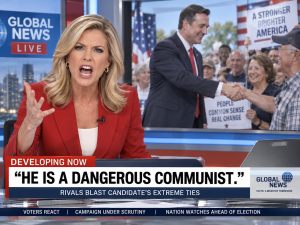
The same problem becomes more serious with the word communist. Someone is entitled to argue that democratic socialism could lead toward forms of communism or that particular policies have historical relationships with socialist or communist ideas. That is political and historical argument. It is entirely different from loudly accusing a named American politician of literally being a communist or belonging to a communist organization when the speaker knows the claim is false.
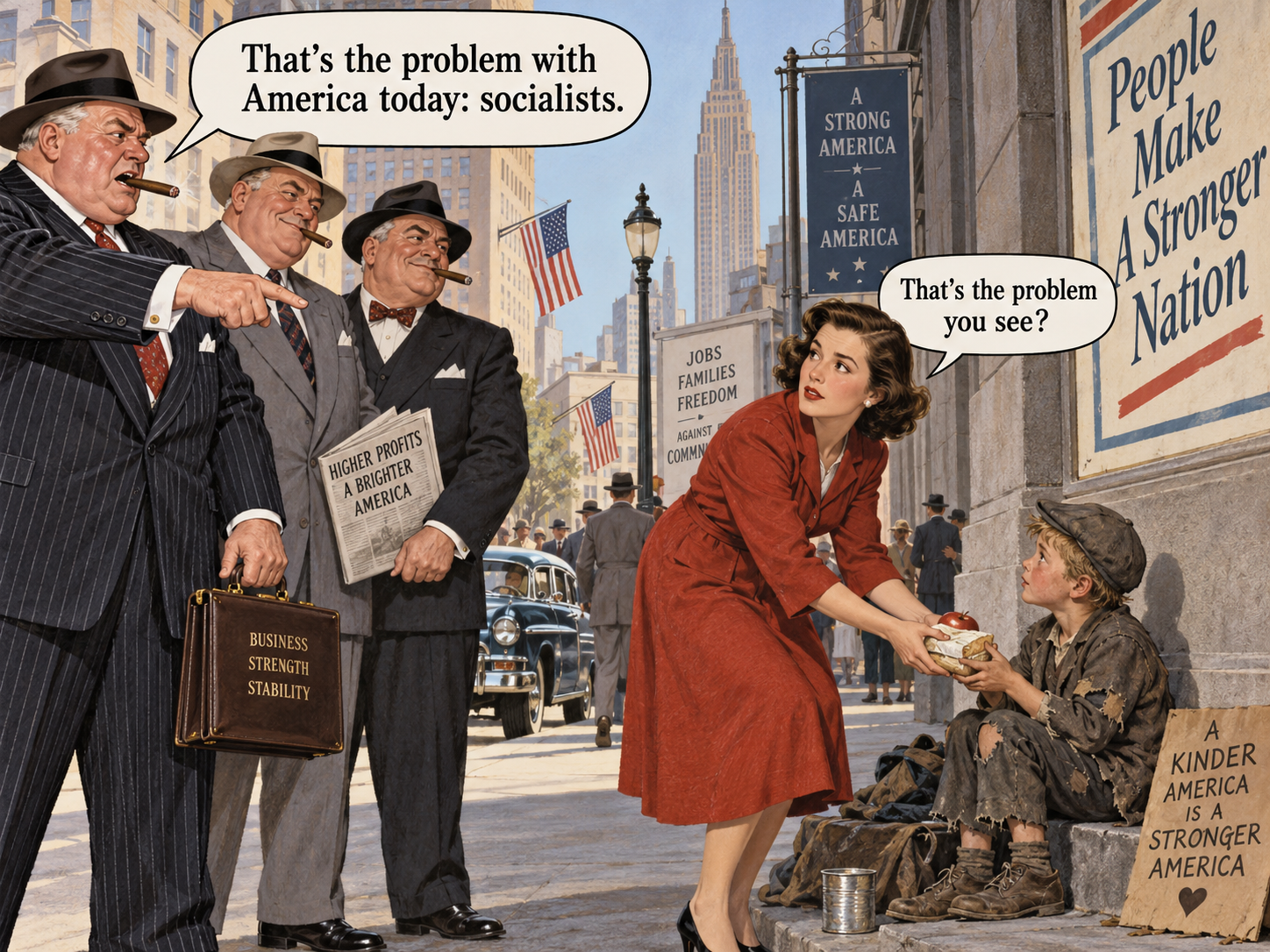
The latter is an important example of political incivility because the accusation is often not intended merely to classify the person’s economic views. In American political history, communist has frequently carried implications of disloyalty, foreign allegiance and hostility toward the constitutional system itself.

When a knowingly false communist accusation is combined with statements that the individual hates America, intends to destroy the country or represents an enemy operating from within, the label begins isolating the opponent, and makes them a target for verbal or physical abuse. 

That is where false ideological labeling can become part of dehumanization. The dehumanization does not come simply from using the word socialist or communist. It comes from using those labels, particularly when known to be inaccurate, as the basis for transforming another American from a political opponent into an alien, treacherous or contaminating enemy.

That is exactly the type of progression discussed in The Threats to Our Democracy: It Starts with Incivility. The concern raised there was never that criticism must become polite or that political anger should disappear. It was that a society changes when political disagreement increasingly teaches people that the person on the other side is not simply wrong but morally illegitimate, deserving of humiliation or somehow less entitled to ordinary human restraint. That distinction applies directly to the socialism and communism rhetoric now entering the midterm campaign.


Both Sides Missing the Point

“It’s the economy stupid”

The current polling cautions against assuming that “socialism is dangerous” is a long-term winning message.  The Pew Research Center found in July that economic concerns were the issues registered voters most wanted congressional candidates to discuss.

And with a weak economy, high inflation and gas prices, socialism is dropping in the polls as a primary concern. 

McCarthyism, Stephen Miller, and the Language of an Existential Election

Stephen Miller’s comments from late June, recirculated by uPolitics in September, described the 2026 election as “existential,” warned that Democratic control would mean “game over,” and predicted that Democrats would elect “actual communists” who would wreck the country.

The comments did not direct anyone to attack Democratic politicians. But it did set the stage for anger and concern should a specific candidate identified as a threat to this country be elected.

President Trump’s June 26 remarks to the Faith and Freedom Coalition went further rhetorically. In the speech and related social-media language, Trump discussed the election of politicians he characterized as communists, associated communism with assassination, referred to people in the movement as “animals,” described the movement as a “plague,” and characterized it as one of the gravest threats the nation had faced.

The same speech directed supporters toward the ordinary political remedy of voting in the midterms. A fair assessment has to preserve both facts. (The American Presidency Project)


The House Gets in The Act

The House vote on socialism demonstrates how fully the issue has entered national politics. On September 1, the House passed H. Res. 1490, described by the Clerk as providing for the condemnation and denouncement of socialism in all its forms. The resolution passed 220-192, with two members voting present.

That vote itself does not tell us that every Democrat voting against the resolution is therefore a socialist or communist. A recorded vote only proves how a member voted on that resolution. 

But this it is precisely the kind of vote McCarthyism uses to build a narrative around and against a political opponent. And here the republican controlled house knowing the negative numbers on socialism, tries to paint anyone voting against the measure an enemy of the state. 


PART II — Incivility, Threats, and the Protective Consequences

Why Incivility Matters to Protection

Political incivility is not the same thing as a direct threat, and dehumanizing rhetoric does not automatically produce an attacker. That distinction has been central to ISA’s Defending Democracy work from the beginning. Protection professionals should not investigate people merely because they hold angry political opinions or because their speech offends someone. The First Amendment protects a wide range of political expression, including expression that can be harsh, insulting or deeply unpleasant.

What matters to protection is how the environment interacts with behavior.

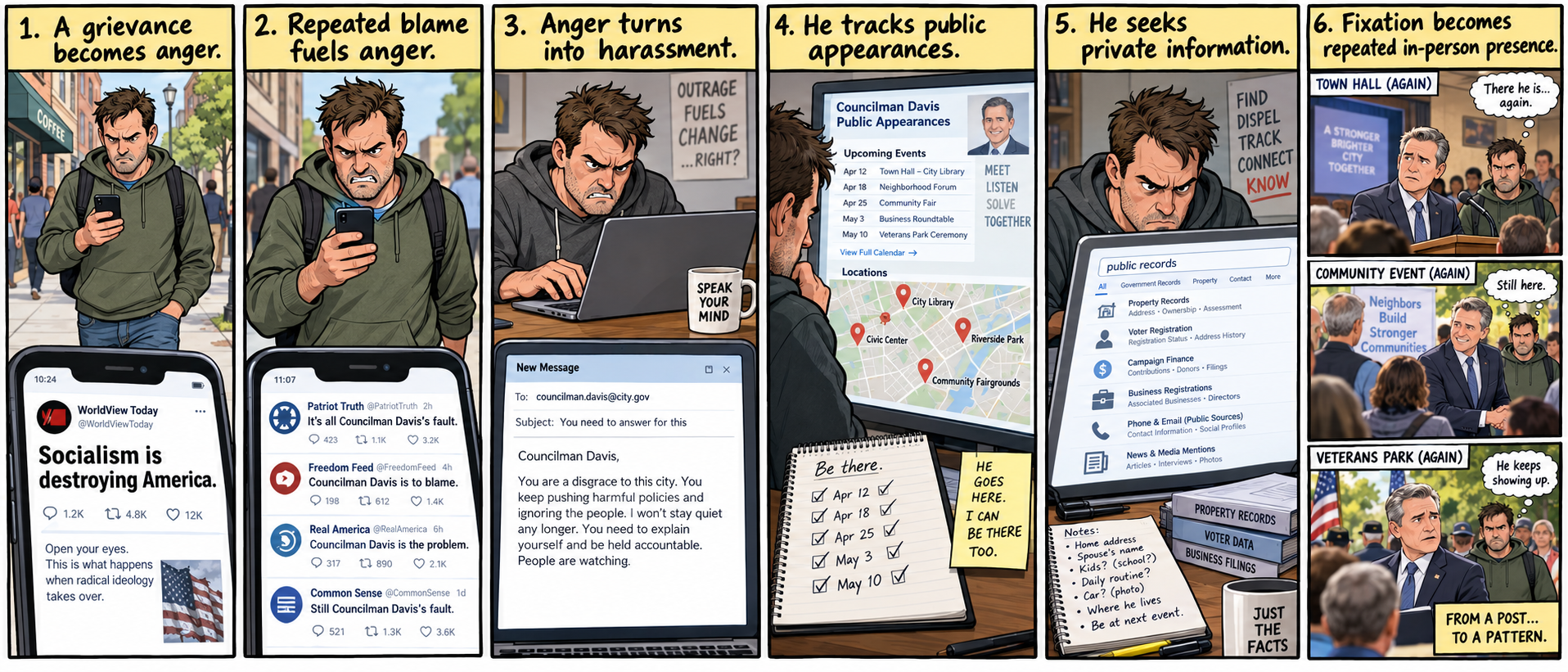
A grievance usually becomes more a problem when it moves from the general to the specific.
Someone posts that socialism is destroying America is expressing a political position. Someone who begins repeatedly naming one particular official, contacting that person, tracking public appearances, obtaining private information, appearing at multiple events or discussing punishment presents a different problem.

The ideology may explain what the person is angry about, but the behavioral progression is what tells us whether the matter is becoming operationally significant or a threat.

The same standard has to apply when rhetoric comes from the political left. If a Democrat knowingly and falsely labels a Republican opponent a Nazi, fascist or violent extremist and then uses that accusation to describe the person as an enemy, the incivility problem is fundamentally the same.


The current threat environment is especially important right now. The U.S. Capitol Police reported that its Threat Assessment Section investigated 14,938 concerning statements, behaviors and communications involving members of Congress, their families, staff or the Capitol Complex in 2025.

That was up from 9,474 cases in 2024 and continued a multiyear increase. USCP has also emphasized expanded coordination with state and local law-enforcement agencies because members face security concerns away from Washington as well as on Capitol Hill. (United States Capitol Police)

Those numbers do not prove that political rhetoric caused the increase, and they certainly do not represent nearly fifteen thousand assassination plots. They tell us that elected officials already operate in an environment containing a substantial amount of concerning behavior. Introducing increasingly dehumanizing or existential language into that environment does not prove that violence will follow, but it gives a protection professional a reason to watch carefully for changes around the protectee.

This is the point developed more broadly in Fear Is Already Here: Threats Are Changing How Public Officials Serve—and How Judges Rule. The issue is not merely whether an attacker succeeds. Threats, harassment and intimidation can alter how officials perform their duties before an attack ever occurs. Officials cancel appearances, change routines, restrict public access, reconsider votes or withdraw from public life. When fear begins shaping whether government can function, the security issue has become an institutional issue.

The companion article The Protection of Public Officials: A Democratic Imperative makes the same point from another direction. Public-official protection is not supposed to create a privileged political class insulated from criticism. It is supposed to provide enough security that elected and appointed officials can continue doing the work the public entrusted to them.

That has always been the balance.


Atmospheric Assessment: Know What Is Actually There

This debate provides an unusually good example of why ISA places such importance on atmospheric assessment. Too often the term is misunderstood as collecting demographic or political information and then labeling the resulting collection a threat assessment. That is not what it is supposed to do.

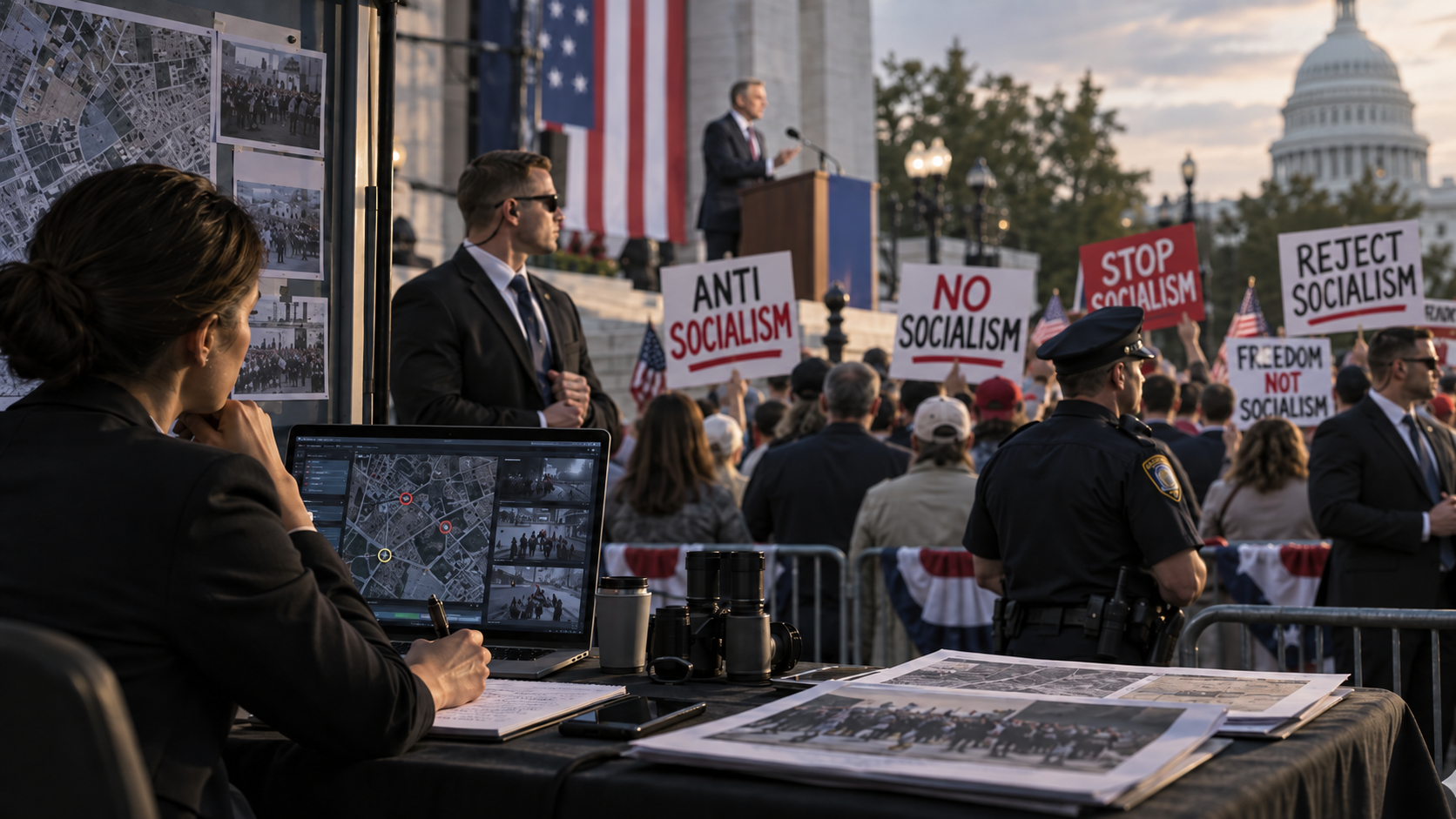
An atmospheric assessment examines the environment into which the principal is moving: political controversy, demonstrations, mobilized organizations, current media narratives, local tensions, recent events, hostile messaging and other conditions capable of changing the way people may respond to the protectee.

false political labels, Red Scare rhetoric in 2026Suppose a member of Congress has suddenly become one of the nationally recognized faces of an argument about socialism. That alone does not establish a threat. Suppose the member has been repeatedly and inaccurately described as a communist, national media coverage is intensifying, demonstrations are expected at the next appearance and the detail has noticed increasing personalized hostility in communications.

The assessment then has to produce an operational model. Perhaps an event requires better observation outside the venue, stronger liaison with local law enforcement, a review of expected protest groups, improved separation between the public entrance and motorcade staging, an alternate departure route or a more detailed briefing of staff and the protectee.

That is what an atmospheric assessment is supposed to accomplish. It should help a team to become more aware of its operational environment and selective and intelligent abouts it’s procedures. 

Protection has to remain politically neutral or it ceases to be professional.


The Lesson Is Not to Stop Arguing

Red Scare rhetoric in 2026One of the easiest ways to misunderstand this article would be to conclude that the answer is less political disagreement. I believe the opposite. Democracy depends upon the ability to argue forcefully over important questions.

Republicans should make their case against socialism. Democratic socialists should make their case against capitalism. Progressives should criticize conservative administrations, and conservatives should criticize progressive lawmakers.

Public officials should expect scrutiny, criticism, protest and occasionally very angry constituents.

What we should be able to preserve in the end is enough civic restraint to distinguish an opponent from an enemy and enough factual discipline to distinguish a person’s actual beliefs from an accusation we know to be false.

The current system works against the protection team, because the loud rhetoric and wild claims are good in the polls. It galvanizes followers, gets them to vote. But it also empowers the “Lone Wolf” to act. 

I just wish everyone understood when the yelling and screaming is done, these political enemies often get dinner together and are friends. It’s not as often as it was, but could you imagine what their followers would say if they realized the communist socialist traitor and the fascist right wing extremist and their family’s were friends? 


The Bottom Line

Protect the Argument, but understand the environment being created.

Republicans have a legitimate political argument against socialism in 2026. DSA is openly socialist. Some candidates openly identify as democratic socialists, and national polling shows that many voters remain uncomfortable with the socialist label. Republicans are entitled to use those facts politically, just as Democrats are entitled to attack Republican ideologies and policies they believe are dangerous.

The same thing applies to accusations of communism. Knowingly telling the public that a particular American politician is literally a communist when the evidence does not support that claim is dangerous. When the false label is repeated loudly enough to define the person’s political identity, and especially when it is combined with descriptions of enemies, animals, disease, assassination or national destruction, it becomes another example of the incivility and dehumanization ISA has warned can degrade the environment surrounding public officials.

None of that establishes criminal incitement. None of it proves an attack will occur, and none of it gives us permission to blame a future act of violence on a political speaker without evidence connecting the attacker to that rhetoric. It does tell us that the atmosphere deserves attention.

Protective intelligence helps know when generalized ideological anger begins concentrating on a particular person, and recognize the behavioral changes that indicate the grievance may be moving toward something more serious.

Defending democracy does not mean protecting elected officials from criticism. It means protecting enough space for Americans to continue disagreeing without intimidation or violence becoming an alternative method of settling the argument.


Frequently Asked Questions

Is calling someone a socialist an example of political incivility?

Not necessarily. When someone openly identifies as a socialist or belongs to a socialist organization, using the term may simply be factually accurate. It is also legitimate political argument to contend that a particular policy is socialist or would move government in a socialist direction. The incivility issue arises when the label is knowingly applied falsely to a particular person as an assertion of fact rather than an argument about policy, particularly when the accusation is used to question the person’s loyalty or legitimacy as an American political participant.

Is falsely calling somebody a communist automatically dehumanization?

False ideological labeling and dehumanization are related but not identical. Knowingly calling someone a communist without evidence is first a factual misrepresentation and a form of political incivility. The rhetoric becomes dehumanizing when that false identity is used to portray the person as alien, diseased, subhuman, inherently treacherous or an existential enemy rather than an American with whom the speaker has a political disagreement.

Why is McCarthyism relevant if today’s circumstances are different?

The useful comparison is not a claim that 2026 is simply repeating 1954. McCarthy operated during a genuine Cold War national-security confrontation. The relevant historical warning concerns the method by which legitimate concern about communism expanded into guilt by association and accusations unsupported by individualized evidence. That mechanism remains worth understanding whenever progressive, democratic socialist, socialist, communist and Democratic identities are collapsed into one category.

Why should protection professionals care about incivility if it is protected speech?

Because legality and operational relevance are different questions. Offensive or hostile speech can remain constitutionally protected while still indicating that a protectee is receiving increased attention or becoming more symbolically important within an ideological grievance. Protection professionals should not treat offensive political opinions themselves as threats; they should use the broader atmosphere to recognize when identifiable individuals begin demonstrating fixation, repeated approaches, threatening communication, surveillance, weapons interest or planning.

Where can readers find the related EPTraining.us Defending Democracy articles?

The core companion articles are The Threats to Our Democracy: It Starts with Incivility, Fear Is Already Here: Threats Are Changing How Public Officials Serve—and How Judges Rule, and The Protection of Public Officials: A Democratic Imperative. Readers can also browse the broader EPTraining.us Executive Protection Blog for the continuing Defending Democracy series.


Related EPTraining.us Resources


About Independent Security Advisors / EPTraining.us / Defending Democracy

Independent Security Advisors LLC (ISA) operates EPTraining.us, a U.S.-based executive protection training program serving law enforcement, military, public-safety, corporate-security, and private-sector protection professionals. 

ISA’s Defending Democracy Initiative applies the same system-based approach to preserve enough security and public access for lawful government functions to continue.

About the Author

Matthew C. Parker is CEO of Independent Security Advisors LLC and Director of Training Operations for EPTraining.us. U.S. Army retired, and protective-services practitioner, his assignments included training-department management at the U.S. Army Chemical, Biological, Radiological, and Nuclear School, and instructor service with Army ROTC at Virginia Tech. He has more than three decades of military, government, executive-protection, training, and advisory experience, including international work in Africa, Iraq and Ukraine.

Matthew C. Parker | Independent Security Advisors LLC | EPTraining.us
Publisher Independent Security Advisors LLC / EPTraining.us
Date updated September 22, 2026