
 E-mail us
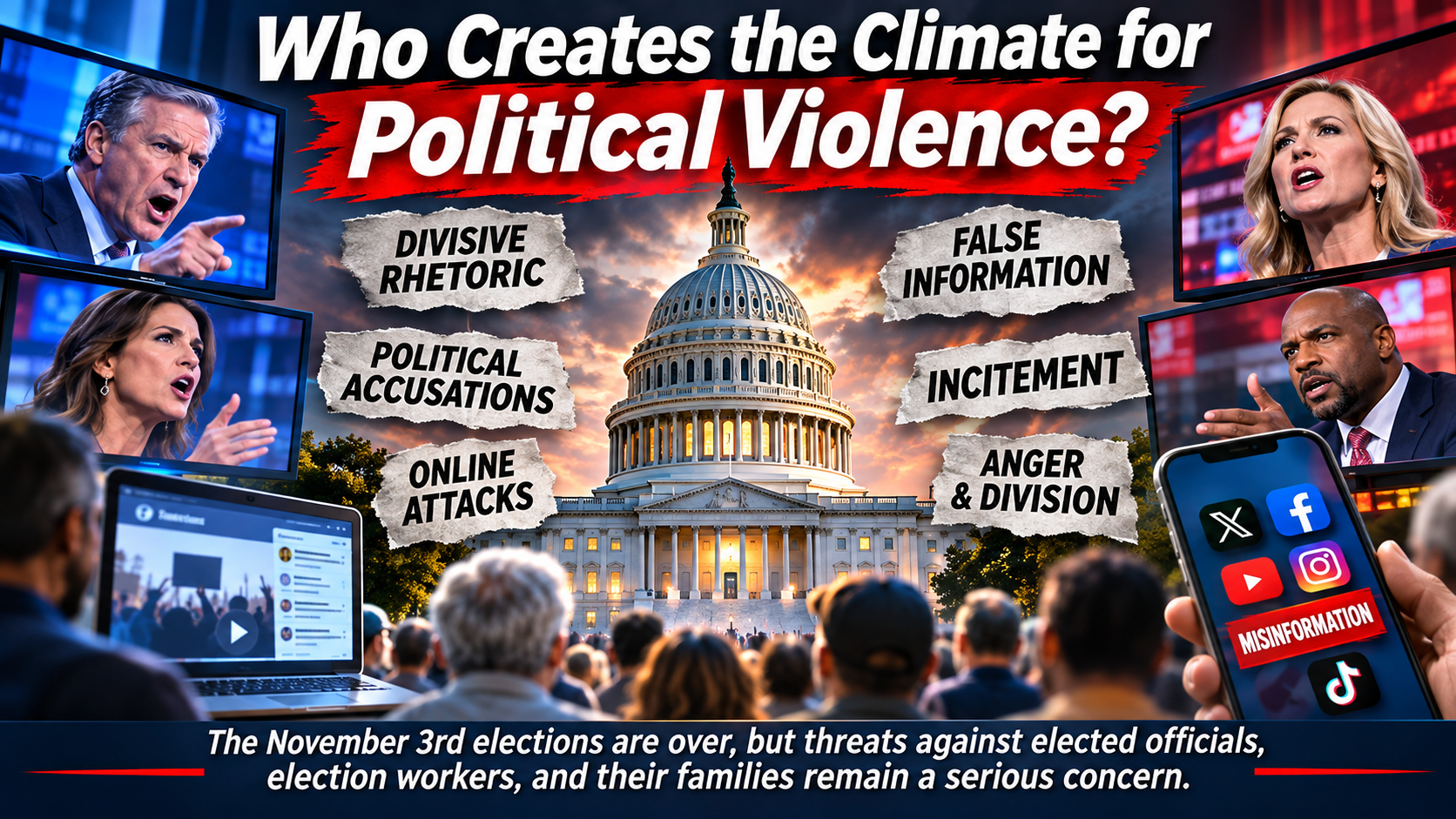
Who Creates the Climate for Political Violence?
From President Garfield to Charlie Kirk: How Political Leaders, the Media, and Dangerous Rhetoric Can Push People Toward Violence
Political Violence: By Matthew C. Parker
Chief Executive Officer, Independent Security Advisors LLC
Director of Training, EPTraining.us
ISA Defending Democracy Initiative
November 19, 2026
When someone commits an act of political violence, we want to know who did it and why. But we should also ask what led that person to believe violence was justified. From the assassination of President James A. Garfield to the killing of Charlie Kirk, the attack on Paul Pelosi, and the political rhetoric following the November 3rd midterm elections, that question remains as important today as it was more than a century ago.
Abstract
In the Netflix series Death by Lightning, First Lady Lucretia Garfield asks whether New York Senator Roscoe Conkling had anything to do with the assassination of her husband, President James A. Garfield. She is told that Conkling may not have been involved in the killing but may have helped create the political climate in which Charles Guiteau believed his actions were justified.
That scene raises a question we should be asking about political violence in America today. What happens when political leaders, television personalities, and social media commentators repeatedly tell Americans that their political opponents are criminals, enemies, or threats to the country? Following Charlie Kirk’s assassination in September 2025, President Donald Trump and other Republican leaders blamed dangerous political rhetoric from the left. Yet, in the days after the November 3rd midterm elections, some of those same voices were making similar accusations against Democrats.
New reporting shows that the concern extends beyond angry political statements. Following Republican election losses, some commentators have warned of an enemy takeover, encouraged supporters to arm themselves, and portrayed newly elected officials and entire communities as threats. Meanwhile, researchers continue to warn about threats against election workers, elected officials, and their families after the voting has ended.
Bottom Line Up Front
Following Charlie Kirk’s assassination, President Trump and other Republican leaders warned that dangerous political rhetoric could lead to violence. I agreed that we should take that concern seriously. But if those warnings were justified in September 2025, why would the same dangerous political rhetoric language be acceptable when Republicans use it against Democrats after the November 2026 midterm elections?
There is a difference between telling people to fight for their political beliefs and telling them to arm themselves because their political opponents are taking over the country. One is ordinary political language. The other raises questions about what people are being encouraged to believe and how they might respond.
The November 3rd elections were largely peaceful, but the threats did not disappear when the polls closed. Princeton University’s Bridging Divides Initiative warned on November 18th that many of the risks facing election workers, public officials, and targeted communities would continue through certification and the seating of the new Congress. That warning deserves attention from political leaders, the media, and everyone responsible for protecting public officials.
The Question Raised by President Garfield’s Assassination
I recently watched a scene from the Netflix series Death by Lightning that caught my attention because it deals with something we are experiencing in America today. The series tells the story of President James A. Garfield, who was shot by Charles Guiteau on July 2, 1881, and died from his injuries on September 19 of that year.
In the scene, First Lady Lucretia Garfield asks whether New York Senator Roscoe Conkling might have been involved in her husband’s assassination. She is told that although Conkling may not have been directly involved, he may have helped create the political climate in which Guiteau believed killing the president was justified. The conversation is dramatized, and I am not suggesting that Conkling was responsible for Garfield’s murder. But the question raised by that conversation is worth considering.
Guiteau had become caught up in the political disputes of his time. He identified himself with the Republican faction associated with Conkling and believed he was entitled to a government appointment. When he failed to receive one, his grievances against Garfield grew. His thinking was deeply disturbed, but politics became part of how he explained his actions.
We know who shot President Garfield. What we should also examine is how Guiteau came to believe that killing the president was justified. How much of that belief came from his personal grievances, and how much came from the political arguments taking place around him? Those questions do not excuse his actions or transfer responsibility to someone else. They help us understand how a person’s beliefs can develop into a threat.
I believe we should be asking similar questions about political violence today. When someone attacks an elected official, a family member, or another public figure, we naturally focus on the attacker. We want to know who committed the crime, how it was planned, and whether anyone helped. But we also need to understand what the attacker believed, where those beliefs came from, and why that person decided violence was an acceptable response.
Through our Defending Democracy Initiative, I have written about the growing hostility directed at elected officials and the role political incivility plays in that problem. Americans have every right to disagree with their government and criticize elected officials. But there is a difference between opposing someone’s policies and repeatedly telling people that the same official is a criminal, a traitor, or an enemy of the country without evidence.
And when those accusations are repeated by people with large audiences, they can become part of what some individuals believe. Most Americans will never act violently because of something they hear on television or social media. But we should be concerned about the person who begins treating those accusations as a reason to threaten or punish someone.
What Republicans Said After Charlie Kirk’s Assassination
Following Charlie Kirk’s assassination on September 10, 2025, President Trump blamed dangerous political rhetoric from the left. In his recorded address that evening, Trump criticized people who had compared conservatives like Kirk to Nazis and mass murderers. He said that this kind of rhetoric was directly responsible for terrorism in America.
Four days later, House Speaker Mike Johnson discussed Kirk’s assassination during an interview on CBS’s Face the Nation. Johnson warned that describing political opponents as fascists or enemies of the state could encourage some people to act. He also acknowledged that leaders from both political parties had a responsibility to lower the temperature of political debate. His comments can be read in the September 14th interview transcript.
I believe Johnson raised an important concern. When political leaders repeatedly tell people that their opponents are dangerous and want to destroy the country, we should consider how those words may be understood by someone who is already angry or looking for someone to blame. That does not mean we should stop criticizing elected officials. It means we should be careful about turning political disagreements into accusations that portray other Americans as enemies.
But if that language was dangerous following Charlie Kirk’s assassination, why would it be any less dangerous when Republicans use it against Democrats? We cannot warn Americans that political rhetoric may encourage violence and then excuse similar language when it comes from people we support. The same standard has to apply to everyone.
We should also remember how some Americans responded to Kirk’s death. Many Democrats condemned the assassination, while others made cruel comments because they disagreed with his political views. We saw similar behavior from some conservatives following the attack on Paul Pelosi, when rumors, conspiracy theories, and jokes circulated about a man who had been seriously injured.
I discussed this problem in When the Victim Is on the Other Side: How We Learned to Ignore Tragedy. We should not need to know someone’s political affiliation before deciding that an assassination or an attack on a family member is wrong. Yet too often, that is exactly how people respond.
Dangerous Political Rhetoric After the November 3rd Midterm Elections
In the days after the November 3rd midterm elections, some of the same political accusations Republican leaders had warned about following Kirk’s assassination were being directed at Democrats. One of the clearest examples came from President Trump himself. On November 7th, Trump accused Democrats of extortion over threats of impeachment and other action against members of his administration and Republican supporters. He singled out Senator Elissa Slotkin of Michigan, and said people he called extortionists should face imprisonment, and called for a Justice Department investigation.
Just over a year earlier, Trump had blamed dangerous political rhetoric for Charlie Kirk’s assassination. Now he was accusing Democrats of crimes, calling for imprisonment, and demanding an investigation. If accusing political opponents of being dangerous criminals can contribute to violence, why should those accusations be acceptable when they come from the president?
Senator Slotkin responded through an official statement from her Senate office, defending her position that government officials should be held accountable if they break the law. Political leaders have every right to investigate wrongdoing and demand accountability. But calling for an investigation is not the same as proving someone committed a crime, and the public should not be encouraged to confuse the two.
The president was not the only prominent conservative reacting strongly to the election results. Conservative commentator Mark Levin criticized Democrats following Republican losses, describing the political opposition in terms that included Marxists and enemies. His remarks reflected a broader argument heard from some conservative commentators that the election results represented more than a political defeat.
Political leaders and commentators have every right to criticize the election results, the policies of the winning candidates, and the direction they believe the country is taking. But there is a difference between saying Democrats won an election and telling supporters that enemies have taken control of their government. The second message can encourage people to see an election result as something that must be resisted rather than accepted through the normal political process.
That concern becomes more serious when the language moves beyond political opposition and begins encouraging people to arm themselves.
Laura Loomer and the Calls to Arm Against a Political Takeover
One of the more troubling examples following the midterm elections came from conservative activist Laura Loomer. Newsweek reported that Loomer posted 119 times following Republican election defeats. Her reaction received attention not simply because of the number of posts, but because of the accusations and warnings she directed at political opponents and communities she associated with the election results.
Princeton University’s Bridging Divides Initiative examined her statements in its November 18th post-election risk assessment. According to that report, Loomer told her followers to arm themselves to fight what she described as an “Islamic communist takeover” and the “massive political violence and terrorism” she claimed would follow the election.
Now, consider what people are being told. They are not simply being asked to vote, attend a meeting, or oppose a policy. They are being warned that their country is facing a takeover and that they should arm themselves in response. When those warnings are directed at political opponents or religious communities, they raise concerns about how an already angry individual may interpret the message. We already have an increasingly higher level of dangerous misinformation and violent rhetoric against the muslim community being shoveled out everyday by political pundits, elected officials and bigots in general.
The Bridging Divides Initiative confirmed that the 2026 elections have been followed by an increase in hostile rhetoric targeting Muslim, Jewish, Black, immigrant, and LGBTQ+ communities. The researchers identified a November 11th arson attack against a mosque in Alabama and a November 14th attack on a Somali-American Uber driver in Minnesota. Those incidents should not be attributed to Loomer or any other commentator without evidence. But they show why researchers are concerned about threats against communities that have become the focus of political anger.
Now compare Loomer’s post-election statements with the warnings we heard following Charlie Kirk’s assassination. Republican leaders told Americans that repeatedly portraying political opponents as dangerous enemies could encourage violence. If that was a legitimate concern in September 2025, why would warning supporters of an enemy takeover and telling them to arm themselves be treated differently after the November 2026 elections?
That is the standard we should be applying, regardless of the speaker’s political affiliation.
How a Minnesota Election Worker Became the Target of False Accusations
On November 3rd, a photograph of an election worker in Rogers, Minnesota, began circulating on social media. The photograph had been taken during early voting on Halloween. The woman was wearing a shirt with red splatter and the words “Problem Solved.” Some conservative commentators claimed the shirt was a reference to Charlie Kirk’s assassination or a threat against Republican voters. The photograph spread quickly, and people began repeating those accusations before they knew why the woman was wearing the shirt. But the story being shared online was BS and not supported by city officials later.
According to the original local reporting and the City of Rogers’ response, the woman was a Republican election judge. She told officials that she was wearing the shirt as Halloween attire and had no political message in mind. City officials said they would have asked her to remove or cover the shirt if they had “understood how some people were interpreting it”.
Seriously,”understood how some people were interpreting it”, people have been amped up since Kirks shooting. Political leaders and their bias media have been pushing conspiracy theories and misinformation for a year, and officials didn’t get how some people were going to interpret it? The woman didn’t understand how it could be perceived? Well why should she, it was a Halloween shirt at Halloween, what kind of idiot could see it as anything else?
The Associated Press also examined the false accusations that spread about the photograph. And at this point I’m not all surprised how quickly an ordinary person became the focus of public anger because commentators decided what a photograph meant before checking the facts. People who had never met this woman were being told she supported political violence. They did not know her political affiliation, what she intended, or why she was wearing the shirt, but that did not stop the accusations.
This is how political misinformation can create a problem for someone who was simply doing a job. A photograph is shared, someone assigns a political motive, and the accusation spreads to people who may never see the correction. By the time the facts come out, the person involved may already have been exposed to harassment or threats. But lets take a second to go back to “someone assigns a political motive”. Translated that means lied, assumed with bias, gleefully shared nonsensical motive.
The Minnesota incident also raises questions about the responsibility of political commentators who warned Americans about dangerous rhetoric following Kirk’s assassination. If falsely accusing people of supporting political violence is dangerous, why would it be acceptable to make those accusations against an election worker without first checking what happened? You think those political commentators will apologize, release statements of correction?
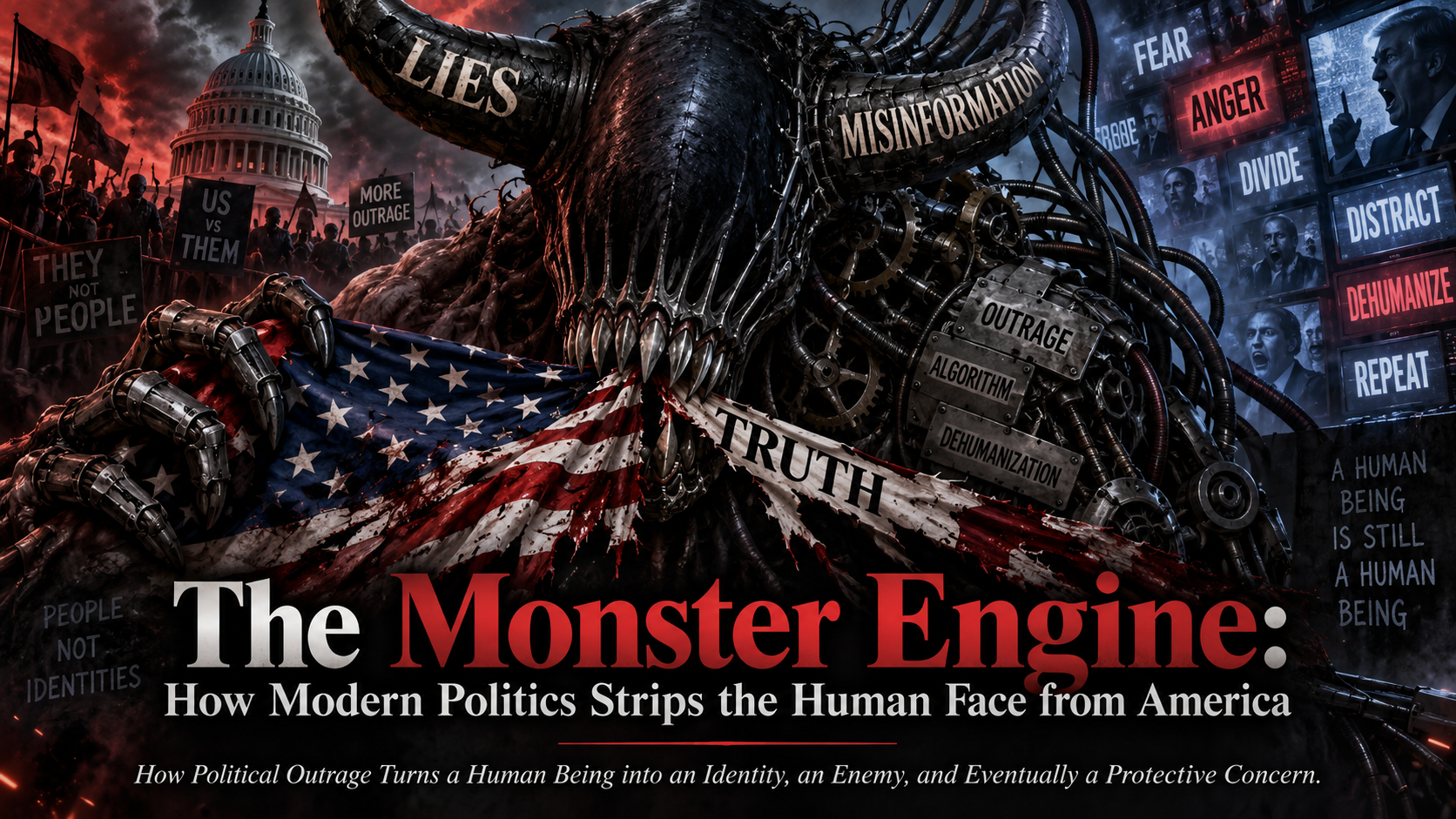
I discussed this problem in The Monster Engine: How Modern Politics Strips the Human Face from America. Political outrage has become something that attracts viewers, generates attention, and encourages people to share accusations before they know whether those accusations are true. The person at the center of the story can become little more than a symbol of everything an audience has been told to dislike.
Political Incivility Is Not the Same as a Threat
One of the things we need to be careful about is treating every angry political statement as though it encourages violence. Politicians have always used phrases such as “keep up the fight,” “hold the line,” and “win this battle.” In most cases, they are talking about elections, legislation, or political organizing. We should not automatically treat those expressions as threats. For example, on November 9th, Senate Democratic leader Chuck Schumer used the language of fighting political battles while criticizing the administration.
The important question is what he was asking people to do. Was he encouraging political action, or was he calling for someone to be harmed? We should ask that question every time, regardless of who is speaking.
But language urging people to arm themselves because their political opponents have won an election raises a different concern. It doesn’t automatically mean everyone who hears it will become violent. But, it does mean we should examine the message, the people being targeted, and whether anyone is beginning to act on those beliefs. That matters when we examine political disputes involving gun rights and election results.
Americans have the right to oppose firearms legislation, support the Second Amendment, and organize politically against laws they believe are unconstitutional. Those rights are not evidence of violent intent. The concern begins when political disagreement is used to justify threats, armed intimidation, or violence against elected officials and other members of the public.
Political incivility, political extremism, and criminal threats are not interchangeable terms. Someone can hold extreme political views without becoming violent. Someone can make an offensive statement without threatening anyone. But when a person begins focusing on a particular official, making threats, gathering personal information, or taking steps to approach that individual, the concern changes.
That is where the lessons from actual attacks become important.
What the Attack on Paul Pelosi Should Have Taught Us
On October 28, 2022, David DePape entered the San Francisco home of then-House Speaker Nancy Pelosi intending to kidnap her. Nancy Pelosi was not home, but her husband, Paul Pelosi, was. DePape attacked him with a hammer, causing serious injuries.
According to the United States Department of Justice, DePape had spent weeks gathering information about Nancy Pelosi, including her home address. He intended to punish her because of her official duties. A federal jury convicted him of assault and attempted kidnapping, and he received a 30-year federal prison sentence.
What makes this case important is how DePape’s political grievances became focused on a particular person. He was not simply criticizing Nancy Pelosi or disagreeing with her policies. He gathered information, went to her home, and attacked her husband. Those actions show how a grievance can move beyond political opinions and become a threat to someone’s safety.
DePape was responsible for his actions. We should not automatically blame every commentator, political leader, or podcast host whose views he may have heard. But we should examine how his beliefs developed, including the conspiracy theories he described during his trial. A person can plan an attack alone while drawing ideas and grievances from information consumed over time.
For those of us involved in protective intelligence, the important question is when someone’s anger begins turning into action. Has the individual become obsessed with an official? Are they repeatedly contacting the person’s office, collecting personal information, making threats, or attempting to locate the person’s residence? Those are the kinds of behaviors that may help identify a developing threat before an attack occurs.
What the Political Threat Statistics Tell Us Again.
A November 2026 report in Circuit Magazine, Political Violence in the US: What the Threat Data Shows After the Midterms, examined the growing security concerns facing elected officials and others involved in government. The report makes an important point: Election Day can pass without major violence even while the number of threats against public officials remains high.
According to the United States Capitol Police’s official report, the agency investigated 14,938 threat-assessment cases in 2025, compared with 9,474 in 2024. That represents an increase of nearly 58 percent in one year. Those figures do not mean there were nearly 15,000 assassination attempts or confirmed criminal threats. But they do represent concerning statements, communications, and behaviors that required assessment by the agency responsible for protecting members of Congress, their families, staff, and the Capitol complex.
Circuit Magazine also reported that the Secret Service had investigated approximately 10,000 threats during the first seven months of 2026, compared with about 7,000 during the same period in 2025. The United States Marshals Service’s official statistics recorded 562 threats involving 395 federal judges during fiscal year 2025. If your keeping score at home that is more.
The Brennan Center for Justice’s 2026 survey of local election officials also documented concerns about safety, political interference, and misinformation. Election workers help conduct the voting process that both parties depend on. When those workers become targets of false accusations and threats, the consequences go beyond the individuals involved.
These figures come from different agencies and surveys, so we should not combine them into a single national threat total. They also do not prove that threats increased specifically after November 3rd. What they establish is that the country entered the midterm elections with an already serious problem involving threats against public officials and others involved in government.
The post-election reporting gives us reason to remain concerned about what happens next.
Princeton’s Warning: The Election Is Over, but the Risks Remain
On November 18th, Princeton University’s Bridging Divides Initiative published Assessing the Post-Election Risk Environment Following the 2026 Midterms. The report provides one of the clearest explanations of why a peaceful Election Day does not mean the danger has passed.
Researchers found that the voting process was generally safe and that threats did not significantly disrupt the election. But they also documented the pressure election officials faced in the weeks leading up to November 3rd. More than 140 suspicious-mail incidents were tracked across more than 40 states and other jurisdictions. Election officials also dealt with bomb threats, shooting threats, harassment, and false claims about voting.
The report found little evidence of a coordinated national effort to overturn the election results through violence. That is an important finding, and it should not be ignored. But the researchers also warned that election workers, newly elected officials, and communities targeted by hostile political messages could continue facing threats through the certification process and the seating of the new Congress in January. The report identified several concerns worth watching. These included false accusations of election fraud, threats against officials responsible for counting and certifying votes, and political demonstrations that could attract confrontations.
Researchers also warned that newly elected officials from minority communities could become targets because of their religion, race, gender, or political positions. The report’s discussion of Laura Loomer’s post-election statements is particularly relevant. Princeton identified her calls for followers to arm themselves as part of a broader pattern of hostile rhetoric following the election. The researchers did not conclude that her statements caused any particular attack. They did warn that threats and harassment against targeted communities could continue or become worse.
Now, we don’t claim that every angry statement will lead to violence, and we don’t attribute a crime to someone simply because they made an inflammatory comment. But we shouldn’t be naive either. Calls for action, even passive aggressive ones have triggered real violence and we all know it. So we can’t ignore repeated messages about enemies, takeovers, and armed resistance when those messages are being directed at people who have become political targets.
The election may be over, but the people who have been threatened still have to go to work, return home to their families, and carry out their responsibilities. That is why post-election security deserves as much attention as security on Election Day itself. Let’s try to remember the Jan 6th violence took place well after the elections and due to increasing rhetoric.
Threats Against Public Officials Continue After the Vote
The concerns identified by Princeton are not limited to national political figures. Local officials and members of Congress also have to deal with suspicious mail, threatening communications, and other incidents that may require a law enforcement response.
A report in The Riverdale Press, Suspicious Envelope at Torres Office Underscores Growing Fears Over Political Violence, examined concerns involving Representative Ritchie Torres’s office involving suspicious mail. The concern is not only whether a particular envelope or package contains something dangerous. It is also the disruption such incidents create for elected officials, their staff, and the people who visit government offices. Security personnel may have to evacuate an office, call law enforcement, examine the package, and determine whether there is a continuing threat.
The problem is also being reported at the local level. Channel 3000’s reporting on political violence affecting local officials adds to the concerns already documented by Princeton and the Brennan Center. Local officials may not have dedicated security teams, even when their work exposes them to public anger and threats. These incidents and reports should not all be treated as evidence of the same criminal motive. But they demonstrate why threats against public officials cannot be viewed only as a problem involving presidents, governors, or members of Congress. A local election worker, city council member, judge, or congressional staff member may also become the focus of someone’s anger.
ISA has already examined how threats are changing the way local officials serve and who should provide their protection. Local governments need arrangements for assessing threats and obtaining qualified protective personnel before an official’s safety depends on assembling a detail at the last minute.
- Fear Is Already Here: Threats Against Public Officials Are Changing How They Serve — Examines Princeton’s findings on how hostility affects local officials’ public appearances, willingness to address controversial issues, and decisions to remain in office.
- Who Should Protect Elected Officials: Police, Private Security, Reserves, or an Integrated Detail? — Examines how governments can assemble protection using qualified police, reserve personnel, and private professionals, with appropriate authority, training, supervision, and accountability.
For protective intelligence professionals, the challenge is identifying which incidents are isolated and which may indicate that someone is developing a more serious grievance. That requires examining the available facts, the person’s behavior, and any connection between the threat and a specific individual or event.
Political Violence Does Not End on Election Day
The November 3rd midterm elections passed without widespread violence, but that does not mean the danger ended when the polls closed. People who develop serious grievances against an official or political movement may continue holding those beliefs long after an election. Some may become more angry if they believe the results were fraudulent or that their political opponents have gained power unfairly.
The Bridging Divides Initiative warned that risks could continue through December’s certification process and the seating of the new Congress in January 2027. The report also identified planned demonstrations during that period. Researchers found little evidence of major coordinated mobilization, but warned that additional involvement by political leaders or other influential figures could change the situation.
Circuit Magazine makes this point in its review of political violence and protective security following the midterms. Many serious attacks have occurred at residences, on campuses, or during ordinary movements rather than on Election Day. That should affect how protection teams plan for the months following an election.
For those responsible for executive protection and election security, the lesson is that security planning cannot focus only on Election Day. We need to consider threats that may continue after an election, particularly when an official becomes the subject of repeated accusations or when someone begins showing signs of a personal fixation.
What This Means for Protective Intelligence and Executive Protection
At EPTraining.us, we teach that executive protection involves more than standing beside someone, driving a vehicle, or responding when something goes wrong. We also have to understand the threats facing the person we are protecting and recognize when someone’s behavior begins to create a concern.
That means paying attention to changes in behavior. Has someone moved from posting angry comments about an official to repeatedly contacting the office? Are they discussing family members or private residences? Have they made threats or tried to obtain information that would help them approach the person? Those questions can help a protective team determine whether an individual is simply expressing an opinion or taking actions that require closer attention.
I discussed some of these concerns in When the Voice and Outrage Is Fake: Social Media and Protective Intelligence. Social media can make threat assessment more difficult because legitimate criticism, political misinformation, fake accounts, and genuine threats may all appear in the same discussion. A protective intelligence professional must examine the information, determine what can be verified, and decide whether the behavior creates a concern for the person being protected.
We should not confuse someone’s political beliefs with evidence that they intend to commit violence. Most people who strongly disagree with a politician will never threaten or attack that person. The concern is with behavior that suggests an individual may be moving toward an attack, including repeated threats, efforts to locate someone, or other actions that go beyond political disagreement.
The post-election period creates additional concerns because some officials may become targets only after winning an election. A newly elected official may face accusations of fraud, hostility over their political positions, or threats based on their personal background. Protective planning should consider those risks before the official takes office, not after a threatening incident occurs.
Protective planning also has to consider where an attack might occur. A residence needs appropriate security. Public appearances should be reviewed before the event. Travel routes and routine movements should be examined for unnecessary risks. Security cameras, alarms, and other equipment are useful, but they cannot replace people who understand what they are looking for and know how to respond.
Protecting elected officials is not only about protecting the individual. Those officials represent communities and perform work that affects the public. When threats prevent them from attending meetings, meeting constituents, or carrying out their duties, the consequences affect the people they serve.
We Have to Stop Making Excuses for Our Own Side
One of the biggest obstacles to addressing political violence is our willingness to excuse behavior when it comes from people we support. Republicans condemn dangerous language from Democrats but may defend similar language from Republican leaders. Democrats do the same thing when the situation is reversed. As long as we apply different standards depending on who is speaking, we will continue arguing about which political party is worse instead of addressing the problem.
I am not suggesting that political leaders should stop criticizing one another or that journalists should avoid reporting wrongdoing. Elected officials should be held accountable, and Americans should be free to question their government. But there is a difference between reporting verified information and making accusations without evidence. There is also a difference between criticizing someone’s policies and telling people that person is a criminal or an enemy of the country.
The statements following Charlie Kirk’s assassination and the reaction to the November 3rd elections provide a clear comparison. In September 2025, Republican leaders warned that calling political opponents dangerous enemies could encourage violence. Following the midterms, some conservative commentators warned that enemies were taking over the country, while Laura Loomer told supporters to arm themselves in response to what she described as an impending political and religious threat.
Those statements do not all carry the same meaning, and we should not pretend they do. But if we are concerned that repeated accusations can encourage people to see violence as justified, we should examine that possibility regardless of which political party or commentator is making the accusation.
The Minnesota election-worker incident demonstrates how quickly political misinformation can add to the problem. A photograph was circulated, commentators assigned a political motive, and people began repeating accusations before the facts were known. The woman involved was a Republican election judge who said she had no political message in mind. Yet the accusations had already spread because they supported a story some people wanted to believe.
Partisan media and social media have made this problem worse because accusations can reach large audiences almost immediately. A photograph, short video, or statement taken out of context can generate anger before anyone has checked what happened. When a correction finally appears, many of the people who saw the original accusation may never see it.
We need to be willing to question the political leaders and commentators we agree with, not just those we oppose. If we believe dangerous rhetoric can contribute to violence, we should be willing to say so when that rhetoric comes from our own side. Otherwise, our concern about political violence begins to look more like another political argument than a serious effort to protect people.
Bottom Line
When I think back to the scene in Death by Lightning, I keep coming back to the question Lucretia Garfield asked about Senator Conkling. Did he have anything to do with her husband’s assassination? The scene suggests that although Conkling may not have been involved in the crime, he may have helped create the political climate in which Charles Guiteau developed his beliefs.
That does not make Conkling responsible for Garfield’s murder. But it raises a question we should be asking today. When political leaders and commentators repeatedly tell Americans that their opponents are criminals, enemies, or threats to the country, are they helping create an environment in which some people begin to believe violence is justified?
Following Charlie Kirk’s assassination, President Trump and other Republican leaders warned that dangerous political rhetoric could lead to violence. I believe that concern deserves to be taken seriously. But the same standard must apply when Republicans make accusations against Democrats, just as Democrats must be willing to examine their own language when criticizing Republicans.
The November 3rd elections are over, but the concerns have not disappeared. Princeton’s post-election assessment warns that threats against election workers, newly elected officials, and targeted communities may continue through certification and the beginning of the next Congress. The research does not show a major coordinated effort to overturn the election through violence, but it does identify serious risks that deserve continued attention.
The latest political threat statistics also show that elected officials, judges, election workers, and their families face growing safety concerns. Those of us involved in protective intelligence and executive protection have a responsibility to recognize warning signs and help prevent attacks. But security measures alone will not solve a problem made worse by false accusations, political misinformation, and people who are willing to spread those accusations without checking the facts.
We may never know how much influence a particular speech, television program, podcast, or social media post had on someone who committed an act of violence. But we can recognize when accusations are false, when individuals are being unfairly targeted, and when political leaders are encouraging people to see their opponents as enemies.
If we are serious about defending democracy, we need to stop treating political violence as something that matters only when the victim belongs to our side. We also need to ask whether the language we use, the accusations we repeat, and the stories we share are helping create the very problem we claim to oppose.
The election is over. The threats have not gone away. We should not wait for another attack before taking them seriously.
Reader FAQ
Can dangerous political rhetoric lead to political violence?
Political rhetoric does not automatically cause violence, and someone who makes a statement is not necessarily responsible for another person’s actions. However, repeated accusations and conspiracy theories can influence how an individual develops grievances against a particular person. Threat assessment professionals examine those beliefs alongside the person’s behavior to determine whether there is a developing threat.
Are threats against elected officials increasing?
The United States Capitol Police reported 14,938 threat-assessment cases in 2025, compared with 9,474 in 2024, an increase of nearly 58 percent. Those cases include concerning statements, communications, and behavior requiring investigation or assessment. They should not be confused with confirmed criminal threats or attempted attacks.
Did political violence increase after the November 3rd midterm elections?
Princeton University’s November 18th assessment found that the election itself was largely peaceful and that there was little evidence of coordinated efforts to overturn the results through violence. However, the report warned that threats against election workers, newly elected officials, and targeted communities could continue through certification and the seating of the new Congress. The available evidence does not establish a nationwide post-election increase in violent incidents.
What is the difference between political criticism and a threat?
Americans have the right to criticize elected officials, oppose legislation, and express strong political opinions. A threat involves statements or behavior that indicate possible harm. Protective intelligence professionals examine what the person has said and done, the circumstances involved, and whether there are signs that the individual may be preparing to act.
Why are calls to arm against political opponents concerning?
Americans have the right to own firearms and support the Second Amendment. But when political commentators tell people to arm themselves because their political opponents or particular communities are taking over the country, the message raises concerns about how people may interpret the warning. Whether a statement constitutes a criminal threat depends on its wording and circumstances.
What does the Paul Pelosi attack tell us about targeted violence?
David DePape gathered information about Nancy Pelosi, went to her residence intending to kidnap her, and attacked her husband when she was not home. The case shows why protective intelligence professionals pay attention when a person develops a grievance against someone and begins taking steps to approach or harm that individual.
Why is political misinformation a concern for election security?
False accusations can expose election workers and public officials to harassment and threats. The Minnesota election-worker incident demonstrates how quickly an ordinary person can become the subject of national political anger when commentators assign a false meaning to a photograph.
How can protective intelligence help prevent political violence?
Protective intelligence involves identifying concerning behavior, examining threats, and recognizing when a person becomes focused on a particular individual. It helps protective teams make decisions about residential security, travel, public appearances, and other risks before an attack occurs.
About the Author
Matthew C. Parker is the Chief Executive Officer of Independent Security Advisors LLC and Director of Training for EPTraining.us. His professional experience includes providing close protection to political candidates, elected officials, and other public figures. He also serves as an advisor on domestic and international protective operations, executive protection and close-protection programs, and specialized training.
Through the ISA Defending Democracy Initiative, Parker draws on his close-protection experience, work for members of the United States Senate, volunteer involvement in political campaigns, and education in political science and international studies. His work examines political violence, dangerous political rhetoric, misinformation, and targeted threats, with particular emphasis on the safety of political candidates, elected officials, their families, and the democratic institutions they serve.
Sources and Further Reading
Primary Statements and Official Records
- President Donald Trump — September 10, 2025, Address Following Charlie Kirk’s Assassination
- House Speaker Mike Johnson — September 14, 2025, Face the Nation Interview
- President Donald Trump — November 7, 2026, Truth Social Statement
- American Presidency Project — Presidential Posts of November 7, 2026
- Senator Elissa Slotkin — Official November 7, 2026, Response
- United States Capitol Police — 2025 Threat-Assessment Cases
- United States Department of Justice — David DePape Sentencing
- United States Marshals Service — Protective Investigations and Threat Statistics
- Congressional Record — November 9, 2026
Research and Reporting
- Princeton Bridging Divides Initiative — Assessing the Post-Election Risk Environment Following the 2026 Midterms
- Circuit Magazine — Political Violence in the US: What the Threat Data Shows After the Midterms
- Newsweek — Laura Loomer Goes on 119-Post Spree After Republican Defeat
- The Riverdale Press — Suspicious Envelope at Torres Office Underscores Growing Fears Over Political Violence
- Channel 3000 — Political Violence on the Rise at Local Level
- Associated Press — False Accusations and Unverified Claims Spread About Election Day Voting
- Alpha News — Rogers Election-Worker Photograph and City Response
- Princeton Bridging Divides Initiative — Hostility Against Local Officials in 2026
- Brennan Center for Justice — 2026 Survey of Local Election Officials
Related EPTraining.us Articles
- The Monster Engine: How Modern Politics Strips the Human Face from America
- When the Victim Is on the Other Side: How We Learned to Ignore Tragedy
- The Threats to Our Democracy: It Starts with Incivility
- When the Voice and Outrage Is Fake: Social Media and Protective Intelligence
#DefendingDemocracy #PoliticalViolence #PoliticalRhetoric #CharlieKirk #PaulPelosi #PoliticalIncivility #ProtectiveIntelligence #ThreatAssessment #ElectionSecurity #ExecutiveProtection #PoliticalExtremism #Misinformation #Democracy #PublicSafety #EPTraining #MatthewCParker