
 E-mail us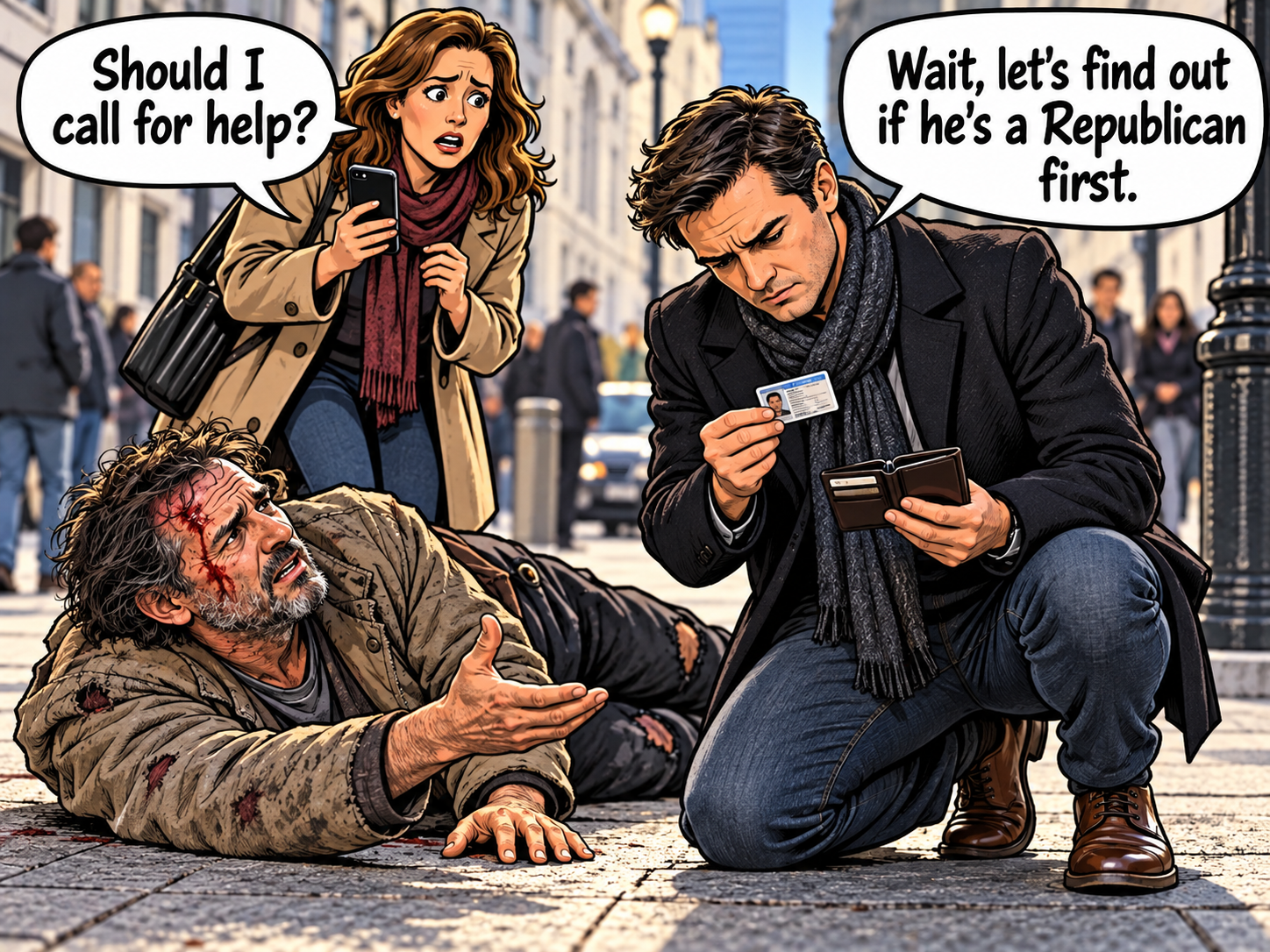
When the Victim Is on the Other Side: How We Learned to Ignore Tragedy
Political Violence, and Selective Humanity
Paul Pelosi, Charlie Kirk, and Selective Humanity in American Politics
By Matthew C. Parker
Independent Security Advisors / EPTraining.us
Defending Democracy Initiative
Abstract
When Paul Pelosi was nearly beaten to death with a hammer, there were some Republicans and conservative voices who responded with jokes, sexual rumors, and conspiracy theories. When Charlie Kirk was assassinated, some people on the political left responded with cruel comments, celebrations, and arguments over why Americans should not mourn him.
Now, many Republicans did condemn the attack on Pelosi, just as many Democrats condemned the assassination of Kirk. And this matters because neither political party spoke with one voice. The problem here is with those who could not simply condemn the violence without first considering who the victim was, what the victim believed, and which political side the victim belonged to.
It appears we have reached a point where sympathy itself can become political. Incivility has taught Americans to ignore tragedy. That leaves us with a simple question: When did Americans begin requiring a victim to pass an ideological test before we could simply say that what happened to them was wrong?
Bottom Line Up Front
Paul Pelosi did not need to be a Republican for Republicans to care that somebody fractured his skull, and Charlie Kirk did not need to be a Democrat for Democrats to care that somebody murdered him. Neither man needed our approval or political agreement before we recognized that violence against him was wrong. Political disagreement should not determine whether we recognize another persons humanity.
Chapter One: Pelosi and Kirk
Paul Pelosi
On October 28, 2022, David DePape broke into the San Francisco home of then-Speaker of the House Nancy Pelosi. She was not there, but her 82-year-old husband, Paul Pelosi, was. Evidence presented at DePape’s federal trial established that he had targeted Nancy Pelosi, collected information about her, and intended to kidnap her and break her kneecaps. When police arrived, DePape struck Paul Pelosi three times with a hammer, fracturing his skull. A federal jury later convicted DePape of assault and attempted kidnapping charges.
Those facts eventually became clear, but almost immediately after the attack another story began circulating. Maybe Pelosi knew DePape. Maybe they were involved in a gay relationship. Maybe DePape was a male prostitute. Maybe it was a lovers’ argument. Maybe there had not really been a break-in at all. FactCheck.org documented the spread of unsupported and false claims surrounding the attack, including the claim that DePape was a prostitute known to Pelosi.
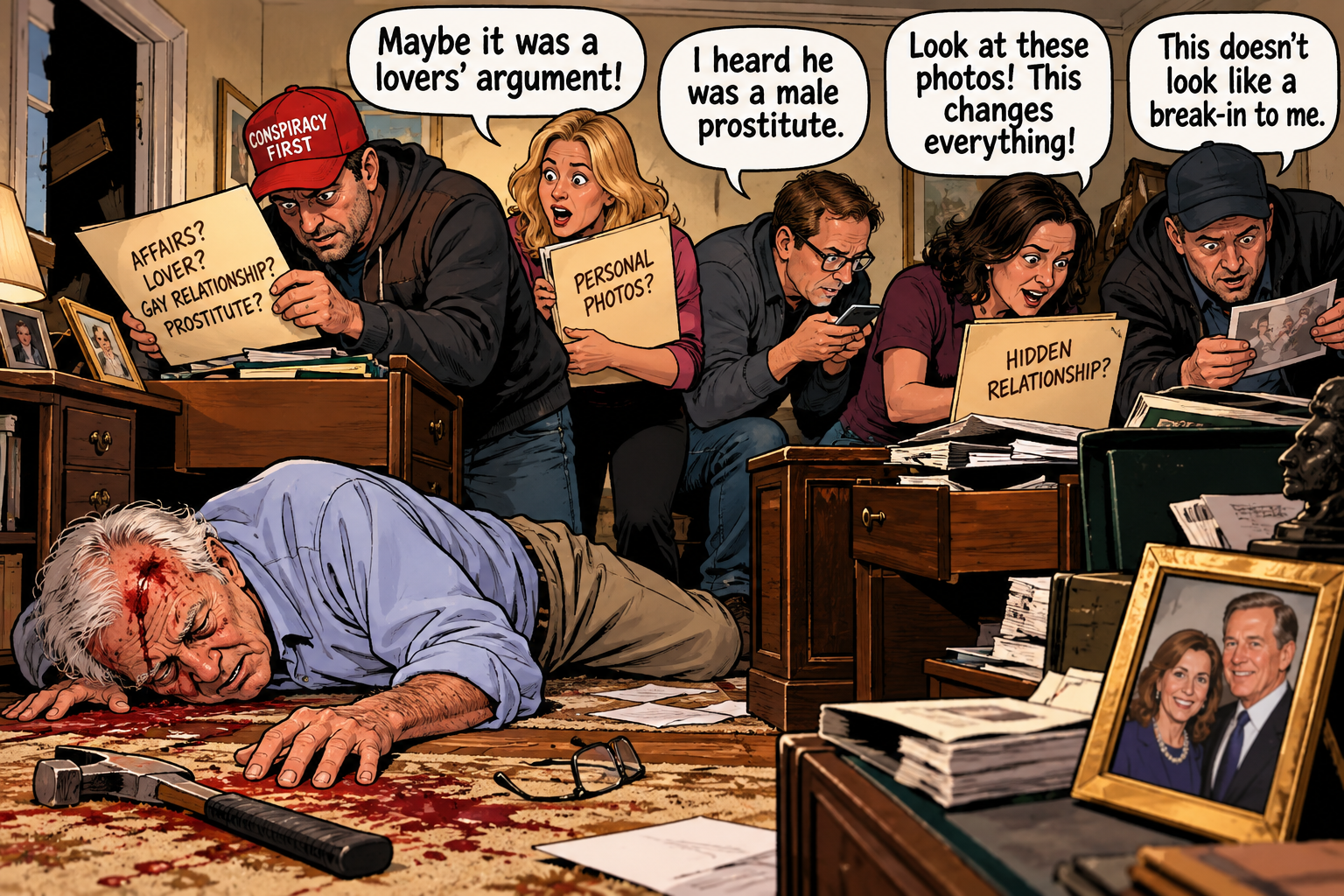 An 82-year-old man had been struck in the head with a hammer inside his own home, yet some people immediately went searching for a sex story or some other explanation that would make the incident suspicious, embarrassing, or politically useful. Before some people saw the injured man, they saw the political name. They saw Pelosi, and that was enough to change the conversation.
We also need to be honest about the rest of the record. Many Republicans condemned what happened. Mitch McConnell said he was horrified and disgusted. John Thune called the attack unconscionable. Steve Scalise said violence had no place in the country. Elise Stefanik called the attack horrific, and Republican Party leadership publicly condemned the violence.
It would be wrong to claim that Republicans as a group supported or celebrated the attack on Paul Pelosi. It would be equally wrong to pretend that the jokes, rumors, sexual insinuations, and conspiracy theories did not happen. For some people, even a fractured skull was not enough to make the politics disappear.
Then the Victim Was Charlie Kirk
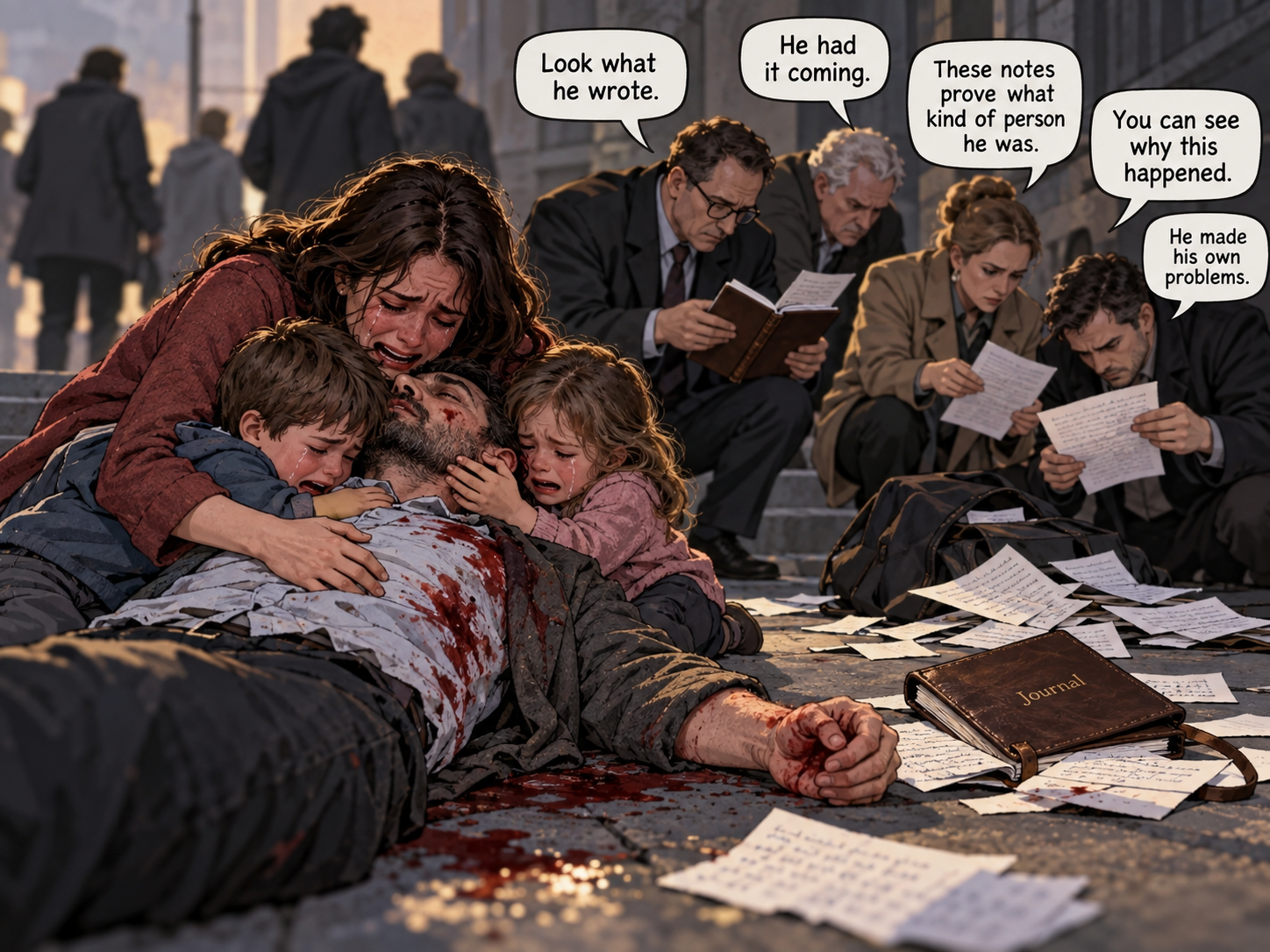 On September 10, 2025, Charlie Kirk was shot and killed while speaking at Utah Valley University. He was 31 years old. Major Democratic leaders condemned the killing. Former Presidents Joe Biden and Barack Obama and California Gov. Gavin Newsom were among the Democrats who publicly condemned Kirk’s murder and expressed condolences. That matters for the same reason the Republican condemnations of the Pelosi attack matter. It would be wrong to claim that Democrats collectively supported or celebrated Charlie Kirk’s assassination.
But once again, something else happened. Some people immediately began searching Kirk’s history for reasons they should not care he was shot. What had he said about this issue? What had he said about that group? What political positions had he taken? What offensive statement could be pulled from an old speech? The discussion quickly moved from what had happened to Charlie Kirk to whether Charlie Kirk deserved sympathy.
Once again, the victim’s politics began arriving before the victim.
The Uncomfortable Connection
There is an uncomfortable connection between the two cases. Charlie Kirk himself discussed the attack on Paul Pelosi three days after it happened. He called the attack “awful” and “not right,” but then moved back into politics, questioning why DePape remained in jail and suggesting that someone should bail him out so he could be questioned. Kirk described such a person as a potential “midterm hero.”
That does not mean Kirk wanted Paul Pelosi attacked. He expressly said the attack was wrong. But even while discussing a man whose skull had just been fractured with a hammer, the political argument came rushing back into the room.
Three years later, Kirk himself became the victim of political violence, and some people who despised what he believed began doing versions of the same thing. They went through his statements, positions, and political history looking for reasons why sympathy for Charlie Kirk should come with conditions.
That does not mean Kirk deserved what happened to him. It means exactly the opposite. The standard we tolerate when somebody else is the victim can eventually become the standard applied when somebody from our own side becomes the victim.
Selective Humanity
What sits underneath both cases is selective humanity. Most Americans know that beating an elderly man with a hammer is wrong, just as most Americans know that murdering someone because of political expression is wrong. The problem begins when politics gives us permission to add another word to the sentence: but.
What happened to Paul Pelosi was terrible, but there must be more to the story. Charlie Kirk should not have been murdered, but look at the things he said. The “but” becomes the place where politics enters a tragedy and starts changing how we respond to the victim.
There does not need to be a “but.” Paul Pelosi was attacked and seriously injured. Charlie Kirk was murdered. Those facts can stand on their own. We can argue about everything else tomorrow.
We Have Learned to Ignore or “Qualify” Tragedy
Incivility has taught Americans to Ignore or “qualify” tragedy. Someone gets attacked and, before the blood is dry, people want to know which party he belongs to. Someone’s husband has his skull fractured with a hammer and people search for a sexual scandal that might make the victim embarrassing. A conservative political activist is assassinated in front of a crowd and some people immediately search his old statements for something that will make sympathy unnecessary.
The issue is larger than Pelosi and Kirk. It is what we have allowed politics to do to the way we see another human being. Once the political identity becomes more important than the person underneath it, even violence may not be enough to make us see the person again.
Chapter Two: The Standard Changes With the Victim
The reactions of several prominent commentators help show the difference between maintaining a standard and changing that standard according to the victim. Bill O’Reilly and Jon Stewart have spent years disagreeing politically, while Steve Bannon and Steven Bonnell, better known as Destiny, come from very different sides of the political divide. Their comments are useful because they show both versions of the problem without becoming the subject themselves.
O’Reilly and Stewart
After Paul Pelosi was attacked, a viewer challenged former Fox News host Bill O’Reilly for not asking more speculative questions about what happened. O’Reilly’s answer was direct: “People who speculate about tragedy are vile.” He added that party or ideology did not matter and said the responsible approach was to rely on verified information rather than insinuation.
O’Reilly applied essentially the same standard after Kirk was murdered. Political disagreement with Kirk did not change the basic fact that his killing was wrong. The victim changed, but the standard did not.
Jon Stewart approached the issue from the political left. During the national debate following Kirk’s assassination, Stewart said that “only a bad person would celebrate violence or make crass jokes about it.” He then showed his audience examples of conservative figures making light of the attack on Paul Pelosi.
Stewart and O’Reilly disagree about plenty. Their importance here is much narrower. Neither needed the victim to share his politics before recognizing that political violence and cruelty toward the victim crossed a line.
Bannon and Destiny
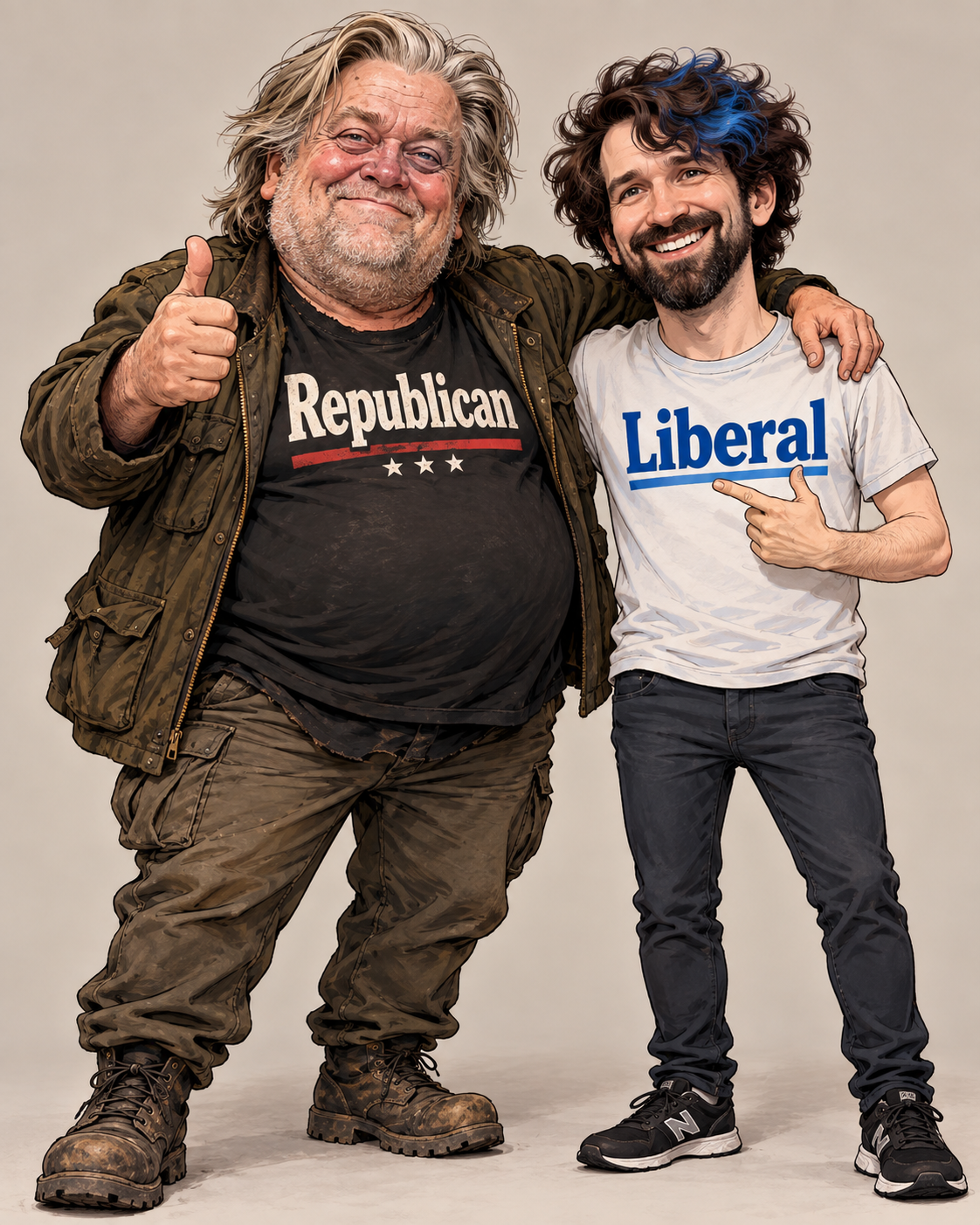 Steve Bannon provides a different example. Following the Pelosi attack, Bannon’s War Room aired a segment titled “The Pelosi Attack Narrative Makes Zero Sense, Key Footage And Details Omitted Purposefully.” The program questioned the official account while speculation and false stories about Pelosi were spreading.
After Kirk was murdered, Bannon’s language changed dramatically. His own War Room described Kirk’s death as martyrdom, rejected calls for unity under the headline “No Unity — Only Victory,” and argued for aggressive government action against groups he associated with political extremism.
That does not mean Bannon supported the attack on Pelosi. The comparison is narrower than that. Suspicion and skepticism surrounded one victim, while the killing of a political ally produced the language of war, martyrdom, justice, and retaliation. The victim changed, and the tone changed with him.
Destiny demonstrates the problem from the other political direction. After the attempted assassination of Donald Trump in Butler, Pennsylvania, in 2024, Destiny was challenged over his treatment of Corey Comperatore, the rally attendee who was killed while protecting his family. Destiny argued that conservatives could not expect sympathy after years of inflammatory rhetoric and pointed specifically to conservative reactions to the attack on Paul Pelosi.
After Kirk’s assassination, Piers Morgan repeatedly challenged Destiny over why he would not simply condemn Kirk’s murder. The discussion again returned to the conduct of conservatives, political responsibility, and whether the other side had first done enough to lower the temperature.
That is the problem reduced to its simplest form: they did it to our side, so I no longer owe the same standard to theirs. Once we reach that point, sympathy becomes transactional and tragedy becomes conditional.
O’Reilly and Stewart show that disagreement does not require abandoning the standard. Bannon and Destiny show how easily the standard can change when the victim changes.
How We See Each Other Now
In The Threats to Our Democracy: It Starts with Incivility, I wrote about what happens when a political opponent stops being merely wrong and becomes evil, illegitimate, dangerous, or undeserving of ordinary human consideration. I also made an important distinction that still matters here: offensive speech, ugly comments, and political anger are not automatically threats.
In The Monster Engine, I took that argument further and examined what happens when the individual disappears behind the political label. Republican, Democrat, liberal, conservative, MAGA, socialist, or enemy can eventually become more important than the person underneath the label.
Pelosi and Kirk show what happens when that process goes farther. Even violence may not restore the human face. A man can be lying in a hospital with a fractured skull and still be treated primarily as a Pelosi. Another man can be murdered in front of an audience and still be treated primarily as a collection of political statements people disliked.
That should concern us because we have started applying the same political sorting to entire communities. Chicago becomes a Democratic city. Dallas becomes a Republican’s city. The political label arrives before the people who actually live there.
There are legitimate arguments about crime, prosecutors, policing, bail, homelessness, drugs, public disorder, budgets, and city government. Those arguments should happen. The problem begins when San Francisco stops being an American city where an 82-year-old man was nearly beaten to death inside his home and becomes a Democratic city.
Once that happens, the separation becomes easier. The crime becomes theirs. The disorder becomes theirs. The failed policies become theirs. Eventually the victims and the dead can become theirs too. The problem is no longer happening to Americans; it is happening to the other political side.
We started doing this to people, and now we do it to places. It is the same habit of placing the political label before the human being.
This Is Not a Scorecard
There is no useful purpose in deciding whether Republicans behaved worse after Pelosi or Democrats behaved worse after Kirk. The circumstances were different, the public comments were different, and the attacks themselves were different. Turning this into a political scorecard would repeat the behavior being examined.
The comparison is the reaction. What happens when violence reaches somebody we already dislike? Do we see the victim first, or do we see the party? Do we condemn what happened, or do we immediately search for the rumor, old statement, joke, sexual story, political position, or anything else that allows us to say the violence was terrible but the victim was somehow different?
That is selective humanity. It does not require someone to celebrate violence openly. It only requires us to begin treating one victim differently from another because one belongs to our political side and the other does not.
Bottom Line
Many Republicans condemned the attack on Paul Pelosi, and many Democrats condemned the assassination of Charlie Kirk. We should remember that because most Americans are not celebrating political violence. But we should also stop excusing people who turn violence against the other side into entertainment, conspiracy, celebration, or political advantage simply because those people happen to vote the way we do.
We do not have to like Paul Pelosi or Charlie Kirk. We do not have to agree with what either man said, believed, or represented politically, and becoming a victim does not place either man beyond criticism. But there should still be enough room left in American politics to say that what happened to them was wrong without first checking their political credentials.
That is the part we appear to be losing. The Monster Engine works when it strips the human face from the political opponent. Pelosi and Kirk show something even more troubling: sometimes even blood is no longer enough to put the face back. The victim becomes an argument, the person becomes the political label, and tragedy becomes something we qualify according to which side suffered it.
That leaves us with the question that started this discussion: When did Americans begin requiring a victim to pass an ideological test before we could simply say that what happened to them was wrong?
We have learned to qualify tragedy. We need to stop.
About the Defending Democracy Initiative
ISA’s Defending Democracy Initiative examines threats, intimidation, political violence, misinformation, and other conditions that can affect the safety of elected officials, judges, prosecutors, candidates, and other public servants.
The initiative is nonpartisan. Political criticism, disagreement, protest, and opposition are part of democratic government. The concern begins when grievance moves toward threats, intimidation, stalking, targeted violence, or efforts to frighten people out of public service.
The initiative also examines the environment surrounding those threats. Political rhetoric, misinformation, dehumanization, and growing incivility do not automatically cause violence, but they can affect how people view political opponents and how protection professionals evaluate changes in the threat environment.
Protecting democracy requires more than protecting buildings or institutions. It also requires protecting the people who must be able to perform their lawful duties without violence or intimidation becoming the deciding force.
About the Author
Matthew C. Parker is CEO of Independent Security Advisors LLC and Director of Training for EPTraining.us. U.S. Army Retired, combat veteran, and executive-protection practitioner, Parker has worked in domestic an international executive and dignitary protection, protective intelligence and security operations.
His work through the Defending Democracy Initiative examines the intersection of political violence, public-official security, protective intelligence, and the increasingly hostile environment surrounding public service. Parker’s approach separates protected political criticism and disagreement from conduct that may indicate a developing threat, while emphasizing that public officials must remain sufficiently secure to perform their lawful duties without threats or intimidation determining who can participate in government.
Reader Navigation
For the broader discussion of political incivility, dehumanization, threats, and protective intelligence, see The Threats to Our Democracy: It Starts with Incivility, The Monster Engine: How Modern Politics Strips the Human Face from America, and Fear Is Already Here: Threats to Elected Officials & Judges.
Sources and Supporting Material
United States Department of Justice — David DePape Sentenced after Conviction on Assault and Attempted Kidnapping Charges. DOJ: David DePape case and sentencing
FactCheck.org — Conservative Figures Spread Baseless Claims About Attack on Paul Pelosi. FactCheck.org: Pelosi attack misinformation
FactCheck.org — What Republican Officials Have Said About the Violent Attack on Paul Pelosi. FactCheck.org: Republican condemnations of Pelosi attack
Federal Bureau of Investigation — Utah Valley Shooting Updates. FBI: Charlie Kirk shooting investigation
FactCheck.org — After Kirk’s Death, a False Social Media Post on Partisan Reaction to Violence. FactCheck.org: bipartisan reaction to Kirk killing
Bill O’Reilly’s No Spin News — comments on speculation following the Paul Pelosi attack. O’Reilly transcript on Pelosi attack speculation
The Daily Show / Jon Stewart — comments following the Kirk assassination and references to jokes about the Pelosi attack. Coverage of Stewart’s September 2025 comments
Steve Bannon’s War Room — Pelosi attack segment and Kirk assassination commentary. War Room: Pelosi attack commentary War Room: Kirk assassination commentary
Piers Morgan Uncensored — Destiny discussion following Charlie Kirk’s assassination. Piers Morgan: Destiny debate after Kirk assassination
EPTraining.us — The Threats to Our Democracy: It Starts with Incivility. Read It Starts with Incivility
EPTraining.us — The Monster Engine: How Modern Politics Strips the Human Face from America. Read The Monster Engine
EPTraining.us — Fear Is Already Here: Threats to Elected Officials & Judges. Read Fear Is Already Here
Hashtags: #PaulPelosi #CharlieKirk #PoliticalViolence #PoliticalIncivility #SelectiveHumanity #PoliticalRhetoric #ProtectiveIntelligence #ExecutiveProtection #DefendingDemocracy #EPTraining #IndependentSecurityAdvisors #MatthewParker