
 E-mail us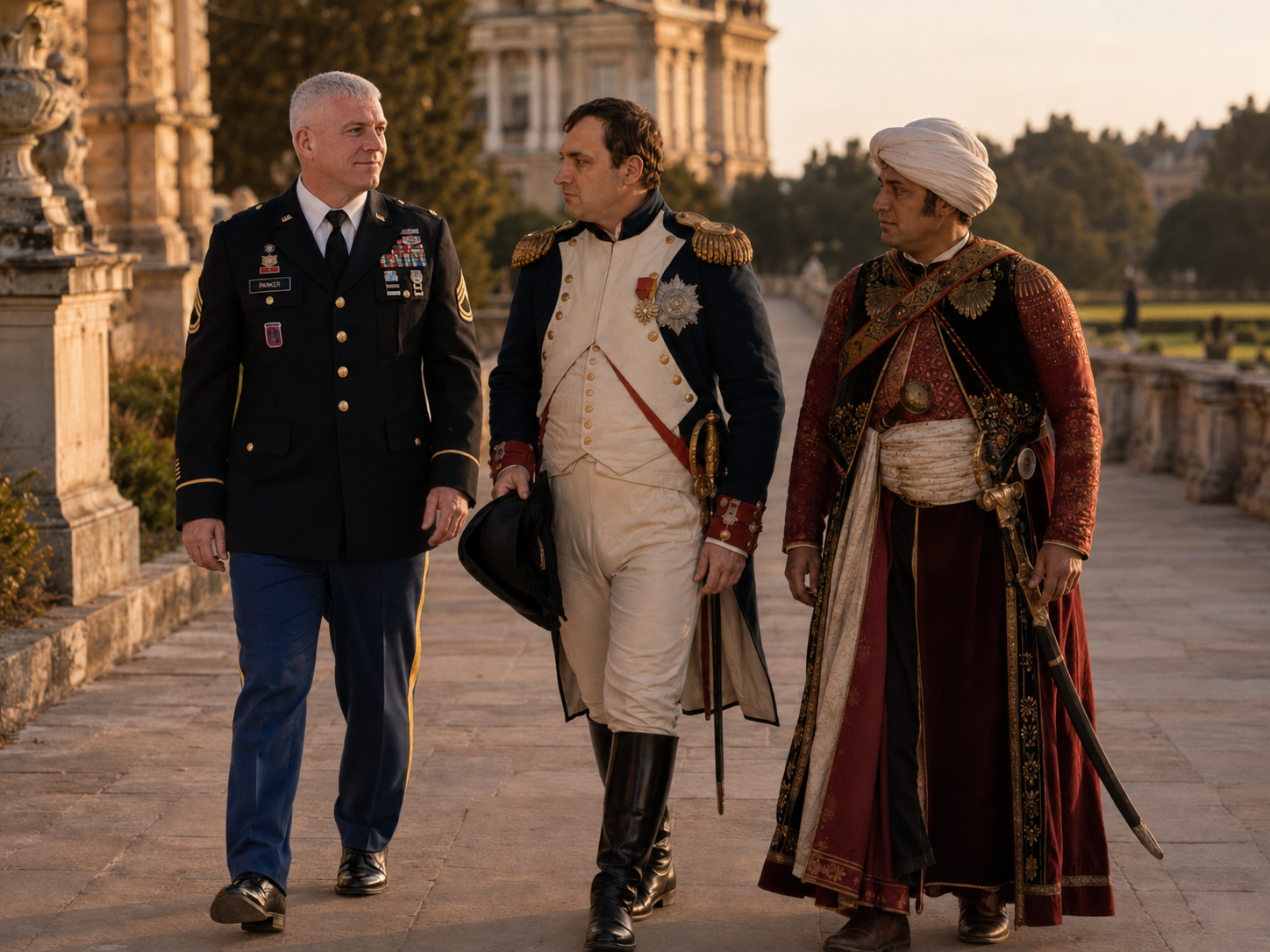
A Historical Simulation on Political Violence, Close Protection, Layered Security, Command Risk, and Loyalty
Paris and Fontainebleau, France – 1800 and 1814
By Matthew C. Parker | Independent Security Advisors LLC | EPTraining.us Historical Executive Protection Case Study Series
Napoleon survived the 1800 Saint-Nicaise bombing, but the attack exposed a timeless protective problem: an adversary can target movement before the principal arrives. This historical case study examines Roustam Raza, the Imperial Guard, police intelligence, battlefield exposure, political transition, loyalty, and crisis authority through the lens of modern executive protection.
Why This Historical Executive Protection Case Still Matters
Napoleon Bonaparte’s security environment demonstrates why executive protection cannot be reduced to the person standing closest to the principal. Roustam Raza could control immediate proximity and recognize the household around Napoleon, but he could not police Paris, secure every route, or provide the military depth of the Imperial Guard. Police intelligence, palace access, aides, escorts, household staff, and military formations each controlled a different part of the problem.
The 24 December 1800 attack in the rue Saint-Nicaise makes the movement problem especially clear. The conspirators did not need to breach the Tuileries or defeat a close protector. They prepared a bomb along a route they expected the First Consul to use. Napoleon escaped because the device detonated after his carriage had passed, while the blast struck the following party and killed and injured bystanders. From a protective perspective, the decisive work had begun before the carriage entered the street.
Fontainebleau adds a different lesson. After Napoleon’s abdication, protection became entangled with political legitimacy, personal loyalty, exile, continuity, and unclear crisis authority. Roustam’s long record of physical proximity did not give him a clear institutional answer when he feared that obeying an order involving Napoleon’s pistols might place the principal in danger. The case therefore moves from route security and layered protection to a harder question: what happens when the protector’s duty, the principal’s command, and the institution’s interests no longer point in the same direction?
Historical Simulation and Editorial Note
This is a historically grounded fictional interview. The dialogue is imagined, but the events discussed are drawn from the surviving record of Napoleon’s political and military career, the history of the Imperial Guard, the assassination attempt of 24 December 1800, Roustam Raza’s memoirs, and the events surrounding Napoleon’s first abdication in 1814. The interview begins at the Tuileries and resumes at Fontainebleau because those settings allow the security questions to remain historically coherent.
Modern terms such as executive protection, protective intelligence, route security, protection in depth, behavioral crisis, and continuity planning are analytical tools used after the fact. They should not be read back into Napoleonic institutions as though the household, police, Imperial Guard, and military command system were organized according to modern protective doctrine. The purpose is to identify comparable protective functions while preserving the historical differences.
The Elba discussion requires particular care. The Treaty of Fontainebleau authorized Napoleon to take a guard of 400 officers, noncommissioned officers, and soldiers. The force that ultimately accompanied and served him on Elba included additional Guard elements and remained below one thousand combatants; it should not be simplified as ‘one thousand Old Guardsmen.’
Reader Navigation – Choose How You Want to Read This Case Study
This case study is designed for readers who want either the historical conversation or the operational analysis. The interview reconstructs the protective questions through dialogue; Part II can be read independently by students and practitioners who want the modern findings without reading the full interview.
- Case Snapshot – A concise factual account of Saint-Nicaise, Roustam, Lobau, Fontainebleau, and the central protective problem.
- Part I – Historical Interview – Matthew Parker questions Napoleon and Roustam about political violence, protective layers, battlefield exposure, loyalty, and command risk.
- Part II – Protective After-Action Review and Lessons Learned – Modern EP analysis: eight consolidated operational findings.
- Curriculum Cross-Reference – Connections between the historical case and current ISA / EPTraining.us learning objectives.
- FAQ – Napoleon, Roustam Raza, and Executive Protection – SEO-focused answers on Saint-Nicaise, Roustam, the Imperial Guard, Elba, and modern protective lessons.
- The Bottom Line – The central protective lesson in concise form.
- Related Resources and Sources – Supporting EPTraining.us material followed by the historical sources used for the case study.
Case Snapshot: Napoleon, Saint-Nicaise, Roustam Raza, and Fontainebleau
Napoleon had already witnessed the violent seizure of the Tuileries in August 1792 before he became France’s ruler. By the time he was First Consul, the protective environment around him combined palace guards, household controls, police surveillance, aides, escorts, and military force. On 24 December 1800, royalist conspirators placed the machine infernale along his route to the Opéra. The explosion came too late to kill him, but the attack demonstrated that a principal can be targeted through predictable movement without an attacker ever needing to reach the palace.
Roustam Raza entered Napoleon’s service in 1799 and remained close to him for roughly fifteen years. His memoirs and later historical accounts describe a role that combined bodyguard, valet, mounted attendant, weapons care, and constant proximity; he was known for sleeping across Napoleon’s doorway. At Lobau in 1809, Roustam recorded that his white turban helped reveal Napoleon’s position to an Austrian sentry, after which he changed to a darker battlefield turban. The episode illustrates how even a protector’s visual signature can increase the principal’s exposure.
The relationship ended at Fontainebleau in 1814. After Napoleon’s abdication and reported suicide attempt, Roustam feared the consequences of giving him pistols and ultimately left rather than accompany him to Elba. The protective problem had changed from an external attacker to ambiguous authority around the principal himself. Taken together, Saint-Nicaise, Lobau, the Imperial Guard, and Fontainebleau show why protection is a system of intelligence, access, movement, proximity, mission, command, and continuity rather than a single bodyguard standing at the door.
PART I – The Historical Interview
Prefer the operational analysis? Skip the reconstructed interview and go directly to Part II – Protective After-Action Review and Lessons Learned.
Paris: The Tuileries Palace
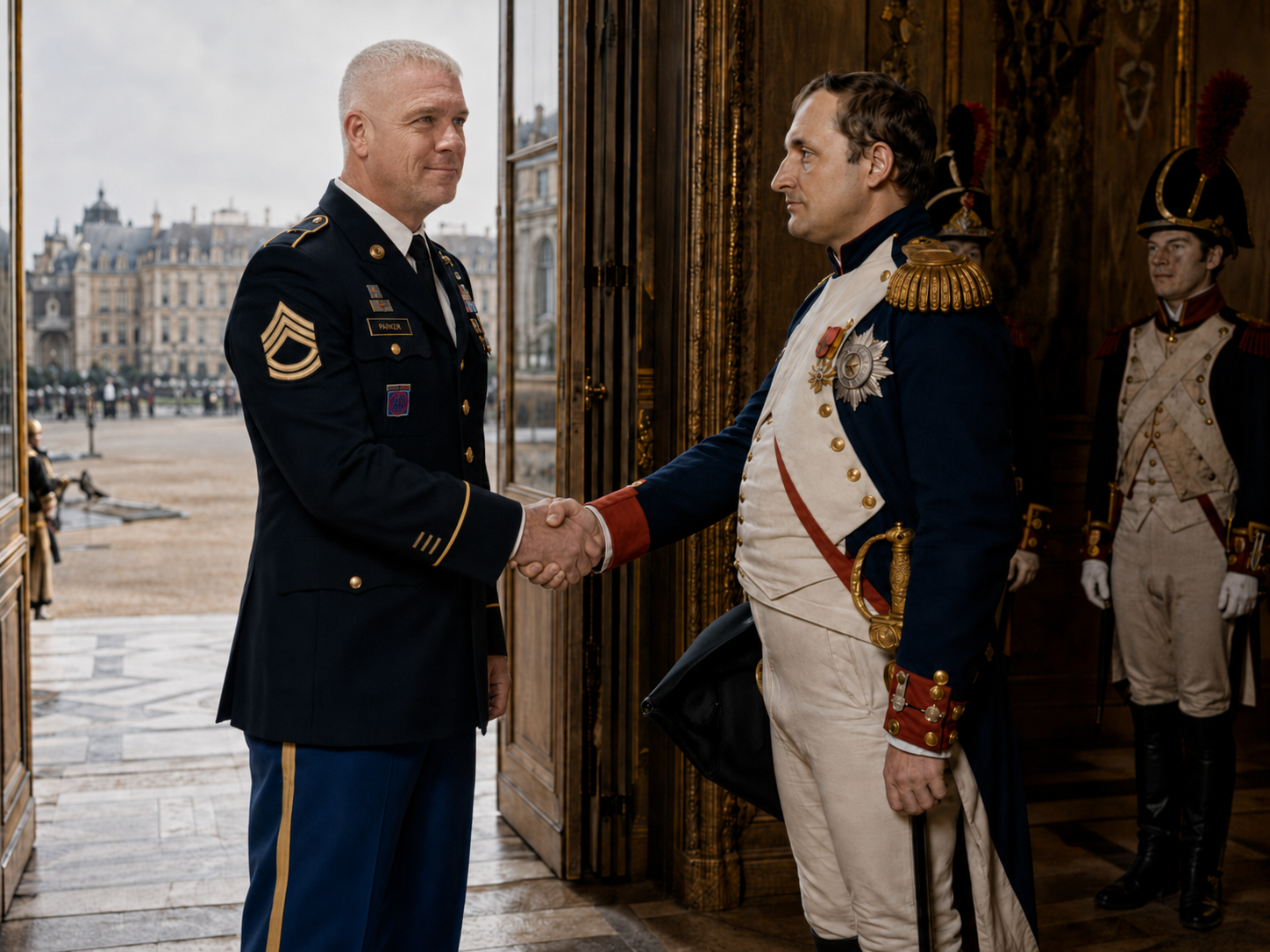 Matthew Parker arrived at the Tuileries in U.S. Army dress uniform. He had considered wearing a suit, then decided that meeting Napoleon Bonaparte dressed as though he were attending a business conference would be more distracting than the uniform.
The palace guards noticed him immediately. Napoleon noticed everything.
The Emperor stood just inside the entrance, wearing the relatively plain military coat that had become part of his public image. He looked first at Parker’s face, then at the uniform, then at the ribbons and insignia.
NAPOLEON: Your army still decorates its veterans.
PARKER: Yes, Your Majesty.
NAPOLEON: And you still stand straighter when you wear the uniform, even after retirement.
PARKER: Some habits survive retirement.
Napoleon extended his hand. The inspection was over.
NAPOLEON: Were you an officer?
PARKER: No, Sire. Sergeant First Class. Cavalry Scout.
NAPOLEON: A scout.
PARKER: For most of my Army career.
NAPOLEON: Then you learned to look ahead of the column before everyone else arrived.
PARKER: That was the job.
Napoleon’s eyes moved briefly toward the palace doors.
NAPOLEON: Good. Then look.
NAPOLEON: They tell me you now concern yourself with the protection of important men.
PARKER: Men and women. Heads of government, officials, executives, dignitaries – people whose position makes their movement and access a security problem.
NAPOLEON: Then you have come to tell me how badly I allowed myself to be protected.
PARKER: I came to ask why you accepted some risks and not others.
Napoleon’s expression sharpened with interest.
NAPOLEON: Better. Come inside.
They crossed into a state salon where sentries, aides, household officials, courtiers, and military officers overlapped without ever appearing to form one single protective line. Parker watched the traffic through the room for several minutes.
NAPOLEON: You are studying the doors.
PARKER: The doors, the people who control them, and the people who are allowed to ignore them.
NAPOLEON: Good. Start there.
The Palace Napoleon Had Already Seen Fall
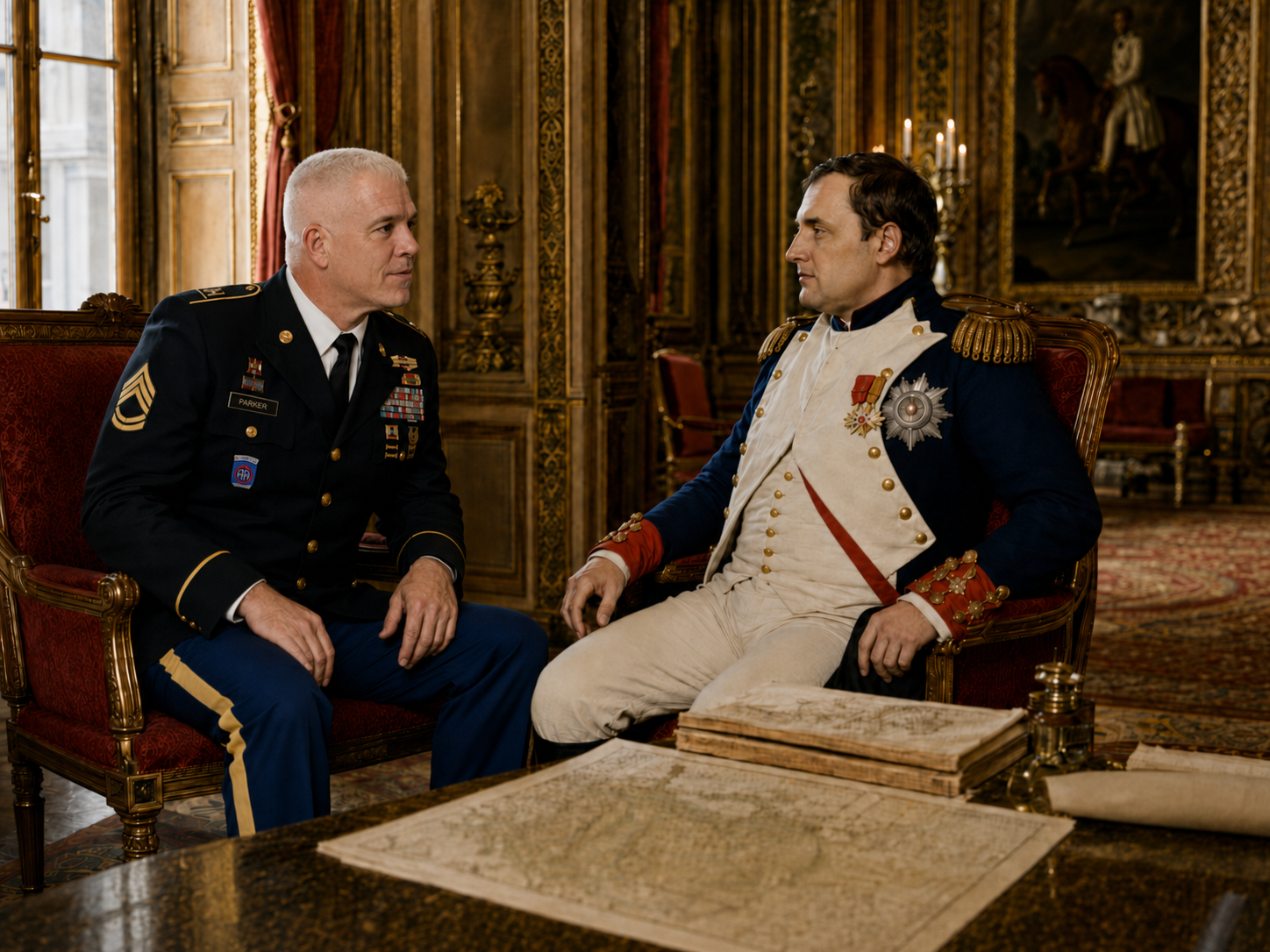 PARKER: Before you governed from this palace, you watched another government lose it.
NAPOLEON: August 1792.
PARKER: The storming of the Tuileries.
Napoleon sat back.
NAPOLEON: I was not commanding the defense. I watched the monarchy discover that walls and uniforms are not protection when the political order outside them has collapsed. The Swiss fought. Many died. The palace was taken anyway.
PARKER: That must have changed how you thought about security once you became First Consul.
NAPOLEON: It changed how I thought about power. Security is part of power, but it is not separate from the condition of the state. A palace guard cannot save a government that no longer commands obedience beyond the palace.
PARKER: That is an important distinction. A close-protection problem can be an individual attacker. A national-leader problem can be an unstable political environment. Then the crowd matters, the army matters, police loyalty matters, intelligence matters, the household matters, and the route between the palace and the opera matters.
Napoleon gave him a quick look.
NAPOLEON: Saint-Nicaise.
PARKER: Exactly.
The Bomb in the Street
On 24 December 1800, conspirators placed the machine infernale along Napoleon’s route to the opera. The device exploded after his carriage had passed, killing and wounding bystanders and striking the following carriage carrying Josephine and Hortense. Napoleon survived because the timing failed.
PARKER: What interests me is not only that someone tried to kill you. They attacked movement. They knew where you were going, where your carriage would pass, and where they could place a weapon before you arrived.
NAPOLEON: And they were late.
PARKER: Yes. But luck is not a control measure.
Napoleon’s mouth tightened into something close to a smile.
NAPOLEON: Fortune is a control measure when one has enough of it.
PARKER: Luck helped you. It is not something a protective service can rely upon.
NAPOLEON: You prefer systems.
PARKER: I prefer options. Your government had them. Police surveillance existed along routes. The palace had guards. Your household controlled access. The Imperial Guard could provide military depth. That means the visible man beside you was never the whole plan.
NAPOLEON: Fouche would be pleased to hear you praise his police.
PARKER: I am not praising everything Fouche did. I am saying that protection requires information before the principal moves. Those are different judgments.
NAPOLEON: Good. Never confuse usefulness with virtue.
That answer sounded more like Napoleon than any line Parker could have prepared.
Roustam Enters
Roustam Raza entered the room quietly despite clothing that made quiet anonymity impossible. The richly colored Mamluk dress, weapons, and eastern style that fascinated Europe had become visually inseparable from Napoleon’s household.
Roustam himself, however, was less theatrical than his clothing. Contemporary descriptions remembered a calm and good-natured man whose reputation for ferocity exceeded his actual temperament.
Parker stood.
PARKER: Roustam.
ROUSTAM: Monsieur Parker.
NAPOLEON: He wishes to know how you guarded me.
ROUSTAM: Then he will be disappointed. Much of it was not dramatic.
PARKER: That is usually where the useful part begins.
Roustam sat.
PARKER: When you entered Napoleon’s service after Egypt, what was the first protective responsibility he gave you?
ROUSTAM: The sleeping room. He showed me where he slept and told me to remain at the door. No one was to enter without permission. Often I slept there.
PARKER: So at night you were the last physical layer between the principal and the corridor.
ROUSTAM: If you want to give it a grand name. To me, I was at the door.
Napoleon glanced at Parker as though to see whether the modern expert could tolerate the simplicity.
PARKER: What else did being near him require?
ROUSTAM: I rode beside his carriage. I cared for weapons. I knew where his clothes and things were. On campaign I might bring a horse, a pistol, food, a glass, whatever was needed. If he moved, I moved. If he stayed awake, I stayed near. I knew the people who normally came close because I saw them often.
PARKER: That last part matters. Familiarity gives you a baseline. You know what belongs and what has changed.
ROUSTAM: Yes. A strange face is easy. A familiar man behaving strangely is harder.
Napoleon looked at him.
NAPOLEON: You learned to watch my household very closely.
ROUSTAM: I learned your household because I lived inside it.
PARKER: That is one reason close protection cannot be reduced to strength or weapons. Proximity gives response capability. Familiarity gives recognition.
NAPOLEON: And familiarity also produces complacency.
PARKER: It can. Which is why a good system needs both familiarity and supervision.
Roustam, the Guard, and Different Protective Layers
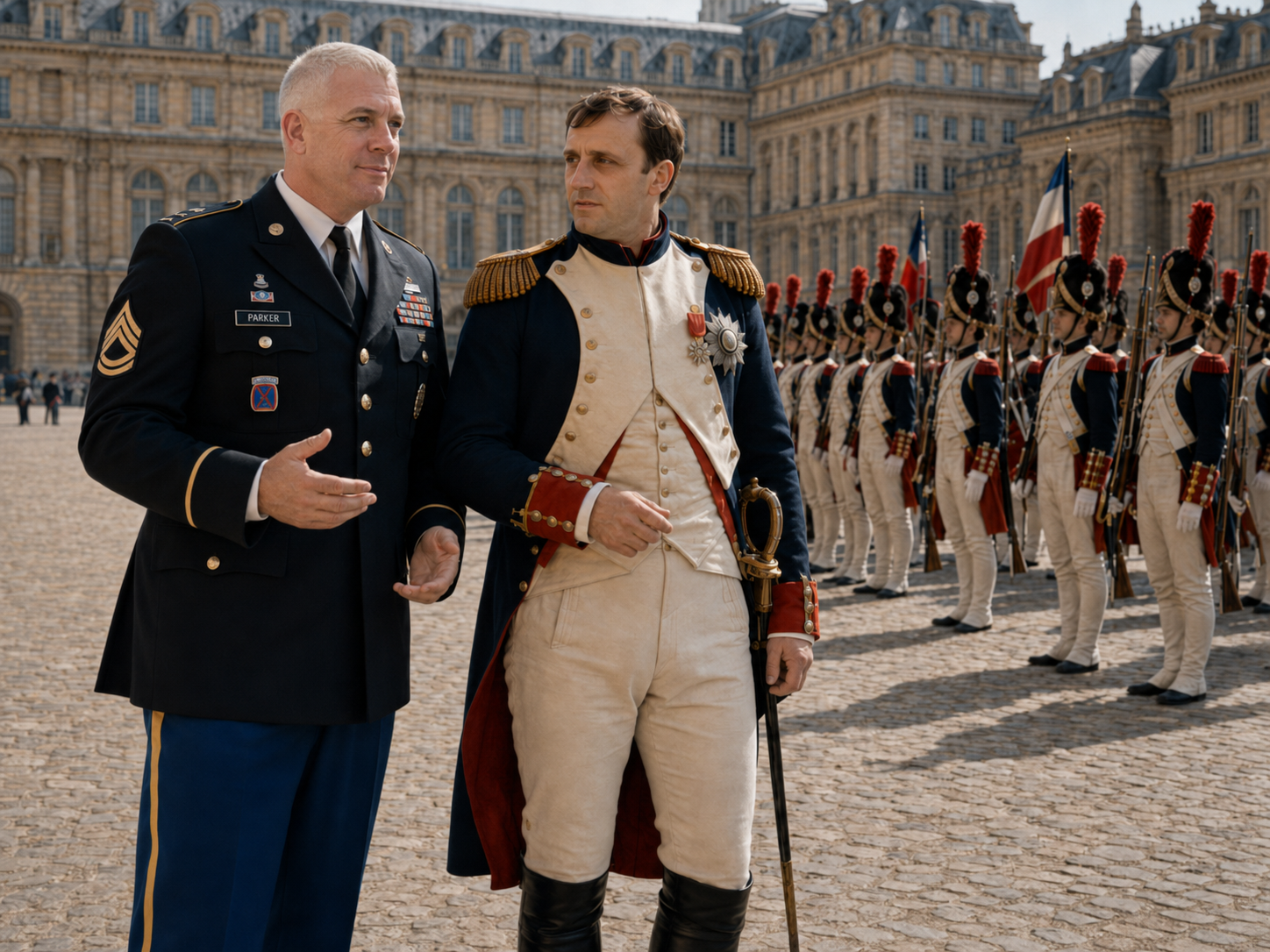 Later they walked outside where Guard formations were drilling within view of the palace.
Parker watched for a while before speaking.
PARKER: These men protect you, but not in the way Roustam does.
NAPOLEON: Obviously.
PARKER: I want the distinction stated because people often collapse all security into the word bodyguard. Roustam protects the immediate personal space. The Guard can secure the palace, headquarters, routes, and a much larger area. Police can watch streets and conspirators. Aides can control schedule and access. Those are different functions.
NAPOLEON: And on campaign these men are also soldiers. They may protect me one hour and attack the enemy the next.
PARKER: Which means the protective system is inseparable from your command system.
NAPOLEON: Naturally. You insist on separating professions that my century had no reason to separate.
PARKER: Fair criticism. I am trying to identify functions, not force your organization into modern job titles.
Napoleon nodded approval.
Lobau and the Price of Being Visible
PARKER: Roustam, tell me about Lobau.
Roustam looked at Napoleon first.
ROUSTAM: He went forward to observe the Austrian positions. Most of the entourage had been sent back. I was with him and carrying what he needed. A shot passed very close.
NAPOLEON: Because his white turban made us easy to see.
ROUSTAM: That was his opinion.
PARKER: And afterward you wore a darker one in battle.
ROUSTAM: I did.
PARKER: Sire, when you blamed the white turban, what concerned you – Roustam’s safety, or yours?
NAPOLEON: Mine. An enemy gunner did not need to distinguish me clearly if the man beside me marked my position for him.
PARKER: And once that became obvious, the white turban disappeared from the battlefield.
NAPOLEON: A ruler cannot become invisible.
PARKER: No. The question is whether he is more visible than the mission requires.
Napoleon stopped walking.
NAPOLEON: That distinction matters. A general must sometimes be seen by his army. He must sometimes see the ground himself. If your answer to danger is always distance, you will eventually protect a commander who cannot command.
PARKER: I agree.
Napoleon looked almost disappointed by the lack of argument.
PARKER: A battlefield cannot be made safe. Protection has to reduce unnecessary exposure while preserving the commander’s ability to command. I would want the route in, the route out, enough people close to react, communication with the larger force, and somebody thinking about what changes if the enemy shifts fire or the principal moves unexpectedly. I would not put you permanently behind the army.
NAPOLEON: Then your profession is less timid than I feared.
PARKER: Caution and timidity are not the same thing.
NAPOLEON: Good.
Fontainebleau: April 1814
The second part of the conversation took place in a different France.
Paris had fallen. Napoleon had abdicated. The marshals who once carried his wars across Europe were no longer willing to continue the same struggle. Yet veterans of the Imperial Guard still drilled in the courtyard at Fontainebleau.
Parker watched them before he looked at Napoleon.
PARKER: You lost the throne before you lost the loyalty of many of these men.
NAPOLEON: States change allegiance more quickly than old soldiers.
PARKER: Which creates its own security problem. Personal loyalty may keep you physically safe while making every government in Europe wonder whether your protection force is also the beginning of another army.
Napoleon gave him a hard, almost satisfied look.
NAPOLEON: Now you understand why they prefer an island.
The Guard and Elba
PARKER: People often simplify the story by saying you took a thousand Old Guardsmen to Elba. The treaty was more restrictive than that.
NAPOLEON: Much more.
PARKER: It allowed a large escort toward the embarkation point, but only a smaller personal guard for Elba. The final contingent was larger than the formal four hundred but still not simply ‘one thousand Old Guardsmen.’
NAPOLEON: History likes round numbers.
PARKER: Records should not.
Napoleon looked back toward the veterans.
NAPOLEON: There were more volunteers than places.
PARKER: That says something important about protective loyalty after political defeat. The state had changed course. Some of the men still identified their duty with you personally.
NAPOLEON: And you disapprove?
PARKER: I understand it. I also see the institutional danger. Personal loyalty can be one of the strongest protective assets and one of the greatest political risks.
NAPOLEON: The state and the man who leads it are not always easily separated.
PARKER: That is exactly why protection around national leaders requires more than personal devotion.
Abdication and the Institution Beyond the Principal
PARKER: Why stop fighting?
Napoleon remained quiet long enough that Parker thought he might refuse the question.
NAPOLEON: Because continuing would have changed the nature of the war. Paris was lost. The marshals were exhausted. Europe remained against me. To continue indefinitely would eventually mean France fighting France.
PARKER: Which creates a difficult protection principle. Sometimes the immediate instinct is to preserve the principal at all costs. But the principal and the state are not identical. If keeping one man in office requires destroying the institution around him, physical protection has become disconnected from the larger mission.
Napoleon’s face closed slightly.
NAPOLEON: Do not make my abdication sound like the recommendation of a security officer.
PARKER: I would not. It was a political and military decision. I am saying the case forces protection professionals to remember that preserving a national leader can never be evaluated entirely apart from the nation he leads.
NAPOLEON: Better.
Roustam’s Worst Night
Roustam joined them in the courtyard. The easy familiarity that had existed at the Tuileries was gone.
Parker waited until the three were walking before he spoke.
PARKER: Roustam, you were with Napoleon for roughly fifteen years. You slept outside his door, rode beside him, went on campaign, cared for his weapons, and stayed near him under fire. Why did you not go to Elba?
Roustam’s answer came slowly.
ROUSTAM: Because Fontainebleau frightened me differently from battle.
Napoleon’s expression hardened.
ROUSTAM: There were rumors he might kill himself. At first I intended to go with him. I wrote to my wife and made arrangements. Then the rumors became worse. He asked me for his pistols.
PARKER: And you refused.
ROUSTAM: I delayed. I tried to find someone above me who would take responsibility. I did not want to hand weapons to a man I feared might use them against himself. I also did not want to disobey the Emperor. No answer felt safe.
Napoleon spoke without looking at him.
NAPOLEON: You chose disobedience.
ROUSTAM: Yes, Sire.
PARKER: From a protection standpoint, that is a terrible decision to leave to one person at the bedroom door. If Roustam believed the principal might be an immediate danger to himself, simple obedience could be catastrophic. But there was no clear procedure, no medical intervention system, and no command structure willing to own the decision.
NAPOLEON: You believe procedures would have solved it?
PARKER: Not solved it. Reduced the ambiguity. Procedures do not remove human judgment. They prevent the individual from discovering the policy for the first time during the crisis.
Roustam nodded.
PARKER: That still does not explain why you left.
ROUSTAM: A friend warned me that if the Emperor died during the night, people would say I killed him. Think of my position. I was the foreign Mamluk who slept outside his door and handled his weapons. If he died near me, accusation would come quickly. I became afraid of being trapped between the Emperor’s death and everyone’s suspicion.
PARKER: So battle never broke the protective relationship, but ambiguity did.
ROUSTAM: Yes.
NAPOLEON: He left without speaking to me.
ROUSTAM: I did. I regretted that.
PARKER: And later you tried to catch up before embarkation.
ROUSTAM: Yes. We could not obtain the horses in time.
Napoleon finally looked at him.
NAPOLEON: The man who is left behind remembers the departure differently from the man who fled.
PARKER: That may explain more about close protection than another battlefield story. Roustam had already proved his physical courage. What broke here was certainty about duty: obey you, protect you from yourself if the rumors were true, protect his own life and reputation, and find someone willing to take responsibility. There was no clear authority strong enough to settle those obligations for him.
No one spoke for several steps.
What Close Protection Really Was
PARKER: Roustam, if you had to describe your work without the swords, uniforms, and legend, what mattered most?
ROUSTAM: Being there.
Parker waited.
ROUSTAM: If he woke, I was near. If he traveled, I traveled. If he rode, I rode. If he needed something, I usually knew where it was. I knew his habits because I saw them every day. I knew the people around him because I saw them every day. When others left at night, I remained.
PARKER: That is still a foundation of close protection. But Napoleon is right about the limit. One man at the door cannot watch every street in Paris.
NAPOLEON: And the police in Paris cannot ride beside me on Lobau.
PARKER: Exactly. The Guard secures what Roustam cannot. Roustam sees what the Guard cannot. Police intelligence sees what neither may see. Aides control schedule and access. Escorts protect movement. Military forces create depth on campaign. Each layer exists because the others are incomplete.
NAPOLEON: You make a system out of relationships that in my time grew from household, army, police, and court.
PARKER: Yes. My age gave those functions more formal names and organizations. It did not invent the need for them.
The Final Question
They reached the far side of the courtyard. The veterans were still drilling.
PARKER: Sire, after Saint-Nicaise, years of campaigning, the Tuileries, Fontainebleau, and now abdication, what have you learned about the relationship between power and personal security?
Napoleon answered first.
NAPOLEON: Do not imagine that power makes the principal safer. Power creates enemies, visibility, jealousy, and opportunity. But do not protect the ruler so completely that he can no longer command. A general must see his army. A head of government must see ministers, officials, and the public. Your task is not to remove all danger. It is to distinguish necessary danger from foolish exposure.
PARKER: I would agree with that.
NAPOLEON: I assumed you would.
Then he looked toward Roustam.
NAPOLEON: And proximity matters. A magnificent guard at a distance is not the same as a trusted man at the door.
ROUSTAM: But a trusted man at the door should not be the whole plan.
Napoleon glanced at him, surprised.
ROUSTAM: I learned that from listening to the two of you.
Parker smiled.
PARKER: Roustam, after fifteen years at his door, what did you learn that you did not understand when you first entered his service?
Roustam looked toward the palace windows.
ROUSTAM: Know what you will do before the worst night comes.
Parker was quiet for several seconds.
PARKER: I understand.
A bugle sounded. Napoleon turned back toward the Old Guard.
PARKER: They are still watching you.
NAPOLEON: They always have.
PARKER: And some are still going with you.
NAPOLEON: Yes.
PARKER: Not because France ordered them to.
Napoleon looked at him.
NAPOLEON: No. Because I asked.
Behind them, the Guard continued to drill – a military formation, a political symbol, a reservoir of personal loyalty, and one more reminder that protecting a ruler is never only about the man standing nearest the door.
PART II – Protective After-Action Review and Lessons Learned
The Napoleon-Roustam case brings together route security, protective intelligence, close protection, layered security, mission-driven exposure, political transition, behavioral crisis, loyalty, and command responsibility. The historical value is not in pretending that Napoleonic institutions were modern executive protection organizations. It is in identifying where different protective functions appeared, how their limits interacted, and what changed when the threat moved from a Paris street to a battlefield and finally to the principal’s own crisis of authority.
1. Route predictability creates pre-attack opportunity
Saint-Nicaise was a movement attack. The conspirators prepared a weapon on a route they expected Napoleon to use and attempted to synchronize the attack with the passage of his carriage. The protective lesson begins before detonation: recurring routes, departure timing, public destination information, choke points, observation positions, and the ability to pre-position a weapon can create opportunity before the close-protection team ever sees an attacker.
Modern route planning therefore cannot be treated as a transportation problem alone. Protective intelligence, advance work, alternates, departure discipline, surveillance detection, local coordination, and contingency movement all exist to reduce the adversary’s ability to convert predictability into a prepared attack.
2. Close protection and area security are different functions – and neither is complete alone
Roustam’s value came from proximity, familiarity, and immediate response. The palace guards, police, Imperial Guard, aides, escorts, and field forces controlled different layers that Roustam could not. The case is useful precisely because no single function can be mistaken for the whole protective system.
Modern details face the same problem when guard forces, corporate security, law enforcement, intelligence, transportation, and close protection operate in parallel rather than as one plan. The question is not which layer is most important in the abstract. It is whether the layers share information, understand responsibility, and close the gaps between them.
3. Visibility should be no greater than the mission requires
Napoleon’s command role required visibility. He had to see terrain, be seen by soldiers, meet officials, and remain politically present. Lobau demonstrates the other side of that requirement: Roustam’s conspicuous white turban helped mark Napoleon’s position to an enemy sentry. Once the visual signature was recognized as unnecessary exposure, it changed.
Protection should not make the principal incapable of performing the mission, but mission does not justify avoidable signature. Vehicles, formations, routines, uniforms, escorts, social media, arrival patterns, and distinctive personnel can all reveal more than operations require.
4. Familiarity is both capability and vulnerability
Roustam knew Napoleon’s habits and household because he lived inside them. That familiarity created a baseline: the normal faces, routines, rooms, equipment, and behavior around the principal were known to him. Familiarity can therefore improve recognition when something changes.
The same familiarity can produce complacency. People stop challenging a known face, assume another person has checked the door, or treat recurring movement as inherently safe because it has been safe before. Mature protective systems preserve the observational advantage of familiarity without allowing routine to become permission.
5. Personal loyalty and institutional duty are not identical
The Imperial Guard’s loyalty to Napoleon survived political defeat. That loyalty could protect the former emperor, but it also made the force politically consequential to governments that feared his return. The same people could be understood as protectors, soldiers, symbols, or the nucleus of renewed political power depending on who was evaluating them.
Modern protective professionals serving elected officials, executives, families, or founders need clear lines between professional duty and personal allegiance. Loyalty supports trust and continuity, but it cannot replace law, policy, organizational authority, or ethical judgment.
6. Crisis authority must be defined before the crisis
Roustam’s account of Fontainebleau presents a fundamentally different protective problem from Saint-Nicaise. He feared that Napoleon might harm himself, Napoleon requested pistols, and Roustam was left to decide whether obedience or refusal created the greater danger. Physical courage did not resolve the authority problem.
Modern protection plans should establish escalation paths for behavioral, medical, impairment, or self-harm concerns before they occur: who is contacted, who has decision authority, how weapons and medications are controlled, when medical professionals or emergency services are involved, and how the team acts when a principal’s immediate instruction conflicts with an urgent duty of care.
7. Extraction is not always compatible with the mission
On campaign Napoleon sometimes had to remain where danger existed because command itself required observation, communication, and presence. A protection plan that simply removes the principal from every dangerous environment can protect the body while defeating the mission.
The operational answer is not reckless proximity. It is deliberate exposure: understand why the principal must be there, reduce unnecessary signature, establish routes and alternates, create communications and medical support, position response capability, and define conditions that would trigger relocation.
8. The protection problem changes when political status changes
Fontainebleau transformed the protective mission. Napoleon was no longer simply an emperor moving within his own command system. Abdication introduced questions of exile, custody, allied supervision, public hostility, personal loyalty, and what military force he could retain. The risks and authorities changed even though many of the people around him did not.
Modern protection teams should expect similar transitions after elections, terminations, resignations, litigation, public scandal, mergers, family disputes, or other events that change the principal’s authority and exposure. A plan built for yesterday’s status should not be assumed adequate after the status itself changes.
Frequently Asked Questions: Napoleon, Roustam Raza, and Executive Protection
What happened in the Saint-Nicaise assassination attempt?
On 24 December 1800, royalist conspirators positioned an explosive device, the machine infernale, along First Consul Napoleon Bonaparte’s route to the Opéra in Paris. The device exploded after his carriage had passed. Napoleon survived; the blast killed and injured bystanders and affected the following party. For protective professionals, the case is important because the attack was prepared against a known movement route rather than against the palace itself.
Who was Roustam Raza?
Roustam Raza was a Mamluk who entered Napoleon’s service in 1799 and became one of the most recognizable members of his household. He served in a combined role that included close personal protection, valet duties, mounted attendance, care of equipment and weapons, and constant proximity. Historical accounts describe him sleeping across Napoleon’s doorway.
Was Roustam Raza Napoleon’s only protection?
No. Roustam was an important close-protection layer, but Napoleon also relied on palace guards, police intelligence, aides, escorts, household controls, the Imperial Guard, and military forces. Their functions overlapped but were not interchangeable.
What does Saint-Nicaise teach modern executive protection teams about route security?
It shows that a route can become the attack site before the principal arrives. Adversaries may exploit predictable timing, repeated routes, choke points, observation positions, public destination information, and opportunities to pre-position weapons. Route planning therefore has to connect advance work, intelligence, surveillance detection, alternatives, communications, and emergency movement.
Why is the Lobau turban incident relevant to executive protection?
Roustam recorded that an enemy shot passed close to Napoleon and that Napoleon blamed Roustam’s white headwear for making their position easier to identify. Roustam then obtained a darker turban for battlefield use. The modern lesson is not about historical uniforms; it is that an unnecessary visual signature can reveal the principal or formation.
Did Napoleon take one thousand Old Guardsmen to Elba?
That shorthand is misleading. The Treaty of Fontainebleau authorized a personal guard of 400 officers, noncommissioned officers, and soldiers. The force that ultimately served Napoleon on Elba included additional infantry, Polish lancers, artillerymen, and sailors and remained below one thousand combatants. It was not simply one thousand Old Guardsmen.
Why did Roustam not accompany Napoleon to Elba?
Historical accounts connect the break to the crisis at Fontainebleau after Napoleon’s reported suicide attempt. Roustam feared giving Napoleon requested pistols, feared the consequences if Napoleon died near him, and ultimately left. The case is valuable because it shows how unclear authority can break a protective relationship even after years of physical courage and loyalty.
How does this case connect to ISA and EPTraining.us executive protection training?
The case connects route security, protective intelligence, close protection, layered security, advance work, movement, mission planning, behavioral crisis, law and ethics, and command responsibility. ISA uses historical cases to show how those functions interact as one protective system rather than as isolated techniques.
The Bottom Line
Napoleon’s protective history cannot be reduced to Roustam standing at a bedroom door or the Imperial Guard forming around an emperor. Saint-Nicaise shows the threat forming in the street before the carriage arrives. Lobau shows a necessary command presence made more dangerous by an unnecessary visual signature. Fontainebleau shows a different form of failure: a loyal protector faced a crisis in which obedience, safety, authority, and self-preservation no longer aligned.
The strongest modern lesson is therefore systemic. Protection must connect information to planning, planning to movement, movement to site and route control, and proximity to a larger structure capable of seeing what the person beside the principal cannot. It must also define authority before a crisis forces an individual protector to invent policy under pressure.
Roustam was right about one essential part of close protection: being there matters. Napoleon was right about another: the principal must still be able to command. The profession exists in the space between those truths – close enough to respond, far enough ahead to prevent, and disciplined enough to preserve the mission without confusing personal loyalty with the whole protective system.
Related EPTraining.us Resources
- Executive Protection Training Syllabus – Current ISA course structure, learning outcomes, and protective-operations curriculum.
- Dignitary and Executive Protection Specialist Course – Program information for law enforcement, military, corporate-security, and private-sector protection professionals.
- Executive Protection Training Curriculum – How ISA organizes protective learning objectives, instructional methods, and operational subjects.
- ISA Executive Protection Training Standards – ISA approach to measurable standards, curriculum validation, and protective-service training.
- The Man Behind the Office Door – Henry Clay Frick Case Study – A related historical case study on access control, protective intelligence, workplace violence, and continuity.
- Grover Cleveland and the Protection Question We Still Have Not Solved – A related historical case study on the transition from fixed-site guarding to protection that follows the principal.
Sources and Historical Notes
- Fondation Napoléon – Museum of the Prefecture of Police – Saint-Nicaise attack and the Paris police context.
- Fondation Napoléon – Portrait of Raza Roustam, Mamluk and Napoleon’s bodyguard – Roustam, his Mamluk role, and the end of his service in 1814.
- Fondation Napoléon – Roustam (1782-1845), mamelouk de Napoléon – Biographical detail, close proximity, and Fontainebleau.
- Roustam Raza – Souvenirs de Roustam, Chapter V – Primary-source memoir passage on Lobau and the white turban.
- Fondation Napoléon – General Drouot – Treaty of Fontainebleau and the authorized 400-man guard.
- Fondation Napoléon – The Imperial Guard: glory to the grave – Composition of the force that accompanied Napoleon to Elba.
- Fondation Napoléon – Napoleon’s adieux to the Old Guard at Fontainebleau – Fontainebleau departure and the Old Guard.
- The Napoleon Series – Treaty of Fontainebleau, April 11, 1814 – English-language treaty text and abdication documents.
About Independent Security Advisors, EPTraining.us, and the Historical Executive Protection Case Study Series
Independent Security Advisors LLC (ISA) operates EPTraining.us, a U.S.-based executive protection training program for law enforcement, military, public-safety, corporate-security, and private-sector protection professionals. ISA training integrates threat assessment, protective intelligence, operational planning, advance work, physical security, movement, communications, legal and ethical responsibilities, medical response, and performance-based evaluation.
ISA’s historical executive protection case studies use documented events to examine recurring protective problems without pretending that earlier societies practiced modern executive protection in its present form. The objective is to identify transferable functions, control hindsight, and connect historical cases to the judgment, planning, and professional standards required in contemporary protective operations.