
 E-mail us
The Beginning of Secret Service Presidential Protection and the Continuing Duty to Protect Elected Officials
By Matthew C. Parker
Washington, D.C., and Gray Gables, Massachusetts – 1894
In 1894, threatening letters and a reported assassination plot pushed the United States toward informal Secret Service protection of President Grover Cleveland. The case shows why protection must follow the principal – and why principal resistance remains an executive-protection problem today.
Why This Historical Executive Protection Case Still Matters
Independent Security Advisors (ISA) and EPTraining.us use historical case studies to examine how threat assessment, protective intelligence, physical security, movement, access, family exposure, and principal cooperation operate as one protective system. Grover Cleveland’s second administration provides an unusually important example because the United States had already experienced the assassinations of Abraham Lincoln and James A. Garfield, yet presidential protection still remained fragmented. The White House could be guarded while the President himself moved beyond the strongest security perimeter.
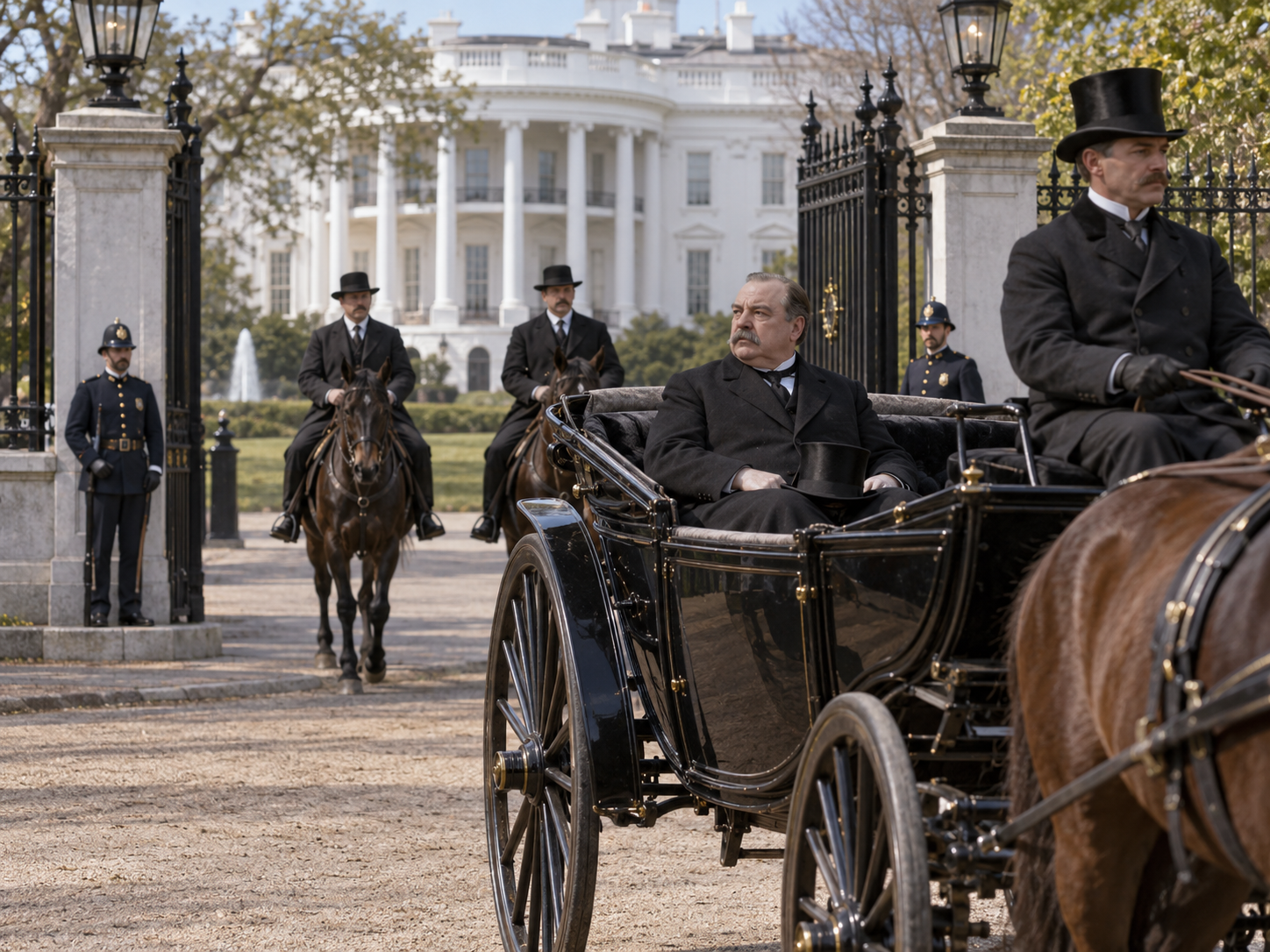
In 1894 that distinction began to change. Cleveland was receiving threatening correspondence. First Lady Frances Cleveland and presidential staff were concerned. A reported assassination plot in Colorado drew Secret Service investigators into the problem, and Treasury personnel were then used informally around the President. When the family traveled to Gray Gables in Massachusetts, protection traveled with them. The United States had not yet created the permanent presidential detail that followed William McKinley’s assassination in 1901, but it had begun to recognize a principle that remains central to executive protection: the perimeter has to move with the principal.
The Cleveland case also exposes a problem that has not disappeared. Leaders can resist protection because they value accessibility, independence, privacy, convenience, and control over their own movement. Modern elected officials and corporate executives face different threats and operate under different authorities, but the protective challenge is familiar: security has to support the mission without allowing the principal’s preferences to become the entire risk-management plan.
Historical Sources and Analytical Note
The 1894 details concerning the reported Colorado plot, Operative Walker, the informer identified as Glen, the White House assignment, the increase in White House police, and the summer detail come primarily from a Secret Service historical manual later entered into the Warren Commission record as Commission Exhibit 2550. It is a valuable institutional source, but it was written decades after the Cleveland administration and should be read as retrospective agency history rather than as a contemporaneous investigative file.
The political, labor, economic, and social conditions surrounding Cleveland’s second administration are included as part of the operating environment. They do not make protesters, labor participants, political opponents, unemployed marchers, or members of any demographic group a threat. This case study distinguishes atmospheric conditions from information tied to an actor, behavior, intent, capability, access, or movement toward violence.
Reader Navigation – Choose How You Want to Read This Case Study
This case study can be read two ways. Part I provides the historical development of Cleveland-era presidential protection; Part II can be read independently by students and practitioners who want the consolidated operational findings without reading the full historical narrative.
Case Snapshot: Cleveland, Threats, and the 1894 Protection Transition
By 1894 the United States had already lost two Presidents to assassination in less than thirty years, but it still had no permanent federal organization responsible for protecting the President wherever he went. The White House had guards and police, yet those arrangements were primarily fixed-site security. Cleveland reportedly disliked visible protection, even as threatening correspondence increased and members of his family and staff became more concerned.
A retrospective Secret Service history states that a reported assassination plot in Lyons, Colorado, prompted an investigation and eventually brought personnel to Washington who were assigned around the White House. Protection later extended to the Cleveland family’s summer residence at Gray Gables, trips, and special functions. The arrangement was informal and incomplete, but the concept had changed: federal investigators were being used not only to investigate a threat but also to protect the person who might be targeted.
Seven years later, President William McKinley was assassinated. Continuous Secret Service presidential protection followed. Cleveland’s case therefore sits at an important transition point between guarding a place and building a protective system around the principal.
PART I – Historical Case Study
Prefer the operational analysis? Skip the historical case study and go directly to the Protective After-Action Review.
Before Cleveland: A Nation Reluctant to Guard Its Presidents
The United States did not move directly from an unguarded presidency to the modern Secret Service. Protection developed unevenly.
The White House Historical Association records that guards and watchmen had been used around the Executive Mansion from the early years of the republic. In 1842, Congress authorized a small permanent auxiliary guard for the White House. The proposal itself met resistance from lawmakers concerned that an executive guard could become a political force serving the President rather than the Constitution.
The force protected the place, managed access, and responded to problems around the grounds. It did not provide the continuous, mobile, intelligence-supported protection now associated with a presidential detail. This distinction remains important. A secure building does not automatically protect the person who works inside it once that person enters a carriage, walks through a crowd, visits another site, travels overnight, or returns to a private residence.
Franklin Pierce became the first President reported to have a full-time personal bodyguard in 1853. That introduced an early version of two protective layers: an outer security function around the Executive Mansion and a person-focused inner function near the President. The arrangement still depended more on individuals and custom than on a permanent national system.
Lincoln’s assassination demonstrated the consequences of that weakness. He had received threats and had been accompanied by friends, soldiers, police officers, and others at different times. Yet no unified organization owned his protection from intelligence through movement, venue security, access control, and emergency response. At Ford’s Theatre, one unstaffed access point left no meaningful protective layer between John Wilkes Booth and the presidential box.
Sixteen years later, Garfield was shot in a Washington railroad station. Again, the attack showed that public office, predictable movement, and insufficient personal protection could combine with catastrophic results. Even after two presidential assassinations, the country did not immediately create the system we now consider indispensable.
Institutional change is often slower than the threat. That is one of the central lessons connecting Cleveland’s era to our own.
Why Resistance Mattered
The resistance to presidential protection was not based entirely on carelessness. It reflected competing American values: access to elected leaders, suspicion of centralized police power, fear of an imperial presidency, political concern over cost, and the belief that leaders in a republic should remain close to the people.
Those concerns did not disappear when the Secret Service assumed the mission. They became requirements the protective system had to manage. Modern protection still operates inside the tension between access and security. A mayor must attend a public meeting. A member of Congress must meet constituents. A judge must reach the courthouse. A candidate must campaign. A President must be seen performing the work of the office.
The goal of protection is not to eliminate the mission in order to eliminate risk. The goal is to understand the threat and design the operation so the mission can continue at an acceptable level of risk.
A Changing National Environment
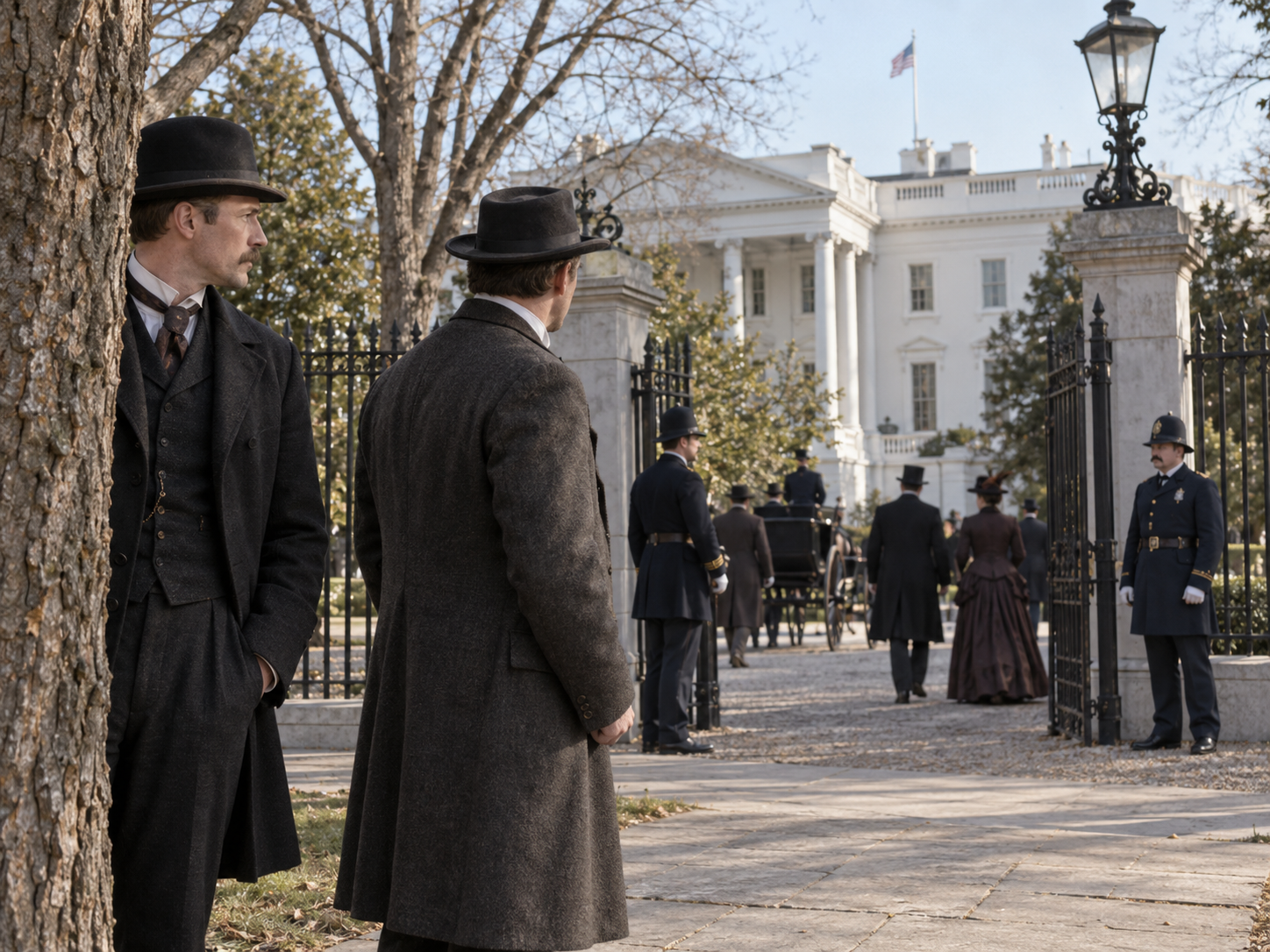
Cleveland returned to the presidency in March 1893 as the first President to serve two nonconsecutive terms. His second administration opened amid severe economic distress. The Panic of 1893 produced bank failures, business collapses, unemployment, and social unrest. Coxey’s Army marched on Washington in the spring of 1894 to demand federal public-works relief. The Pullman Strike and associated labor conflict followed that summer.
These conditions belong in a protective assessment, but they must be handled with discipline. Economic hardship, participation in a labor movement, political opposition, or presence in a protest does not make a person a threat. Demographic, political, and social information becomes operationally relevant only when it helps the team understand conditions that may affect exposure, crowd size, mobility, public sentiment, adversary capability, or the principal’s mission.
That is the difference between an atmospheric assessment and a direct-threat assessment. The atmosphere describes the environment in which an operation will occur. A direct-threat assessment examines information tied to an actor, intent, capability, target, behavior, or developing pathway toward violence. The two assessments should inform one another, but they should never be confused.
In Cleveland’s case, widespread unrest did not prove the existence of an assassination plot. It did help explain why the White House and Treasury Department had reason to examine warnings, public movements, organized gatherings, threatening correspondence, and the President’s visibility more carefully.
The Warnings Were Accumulating
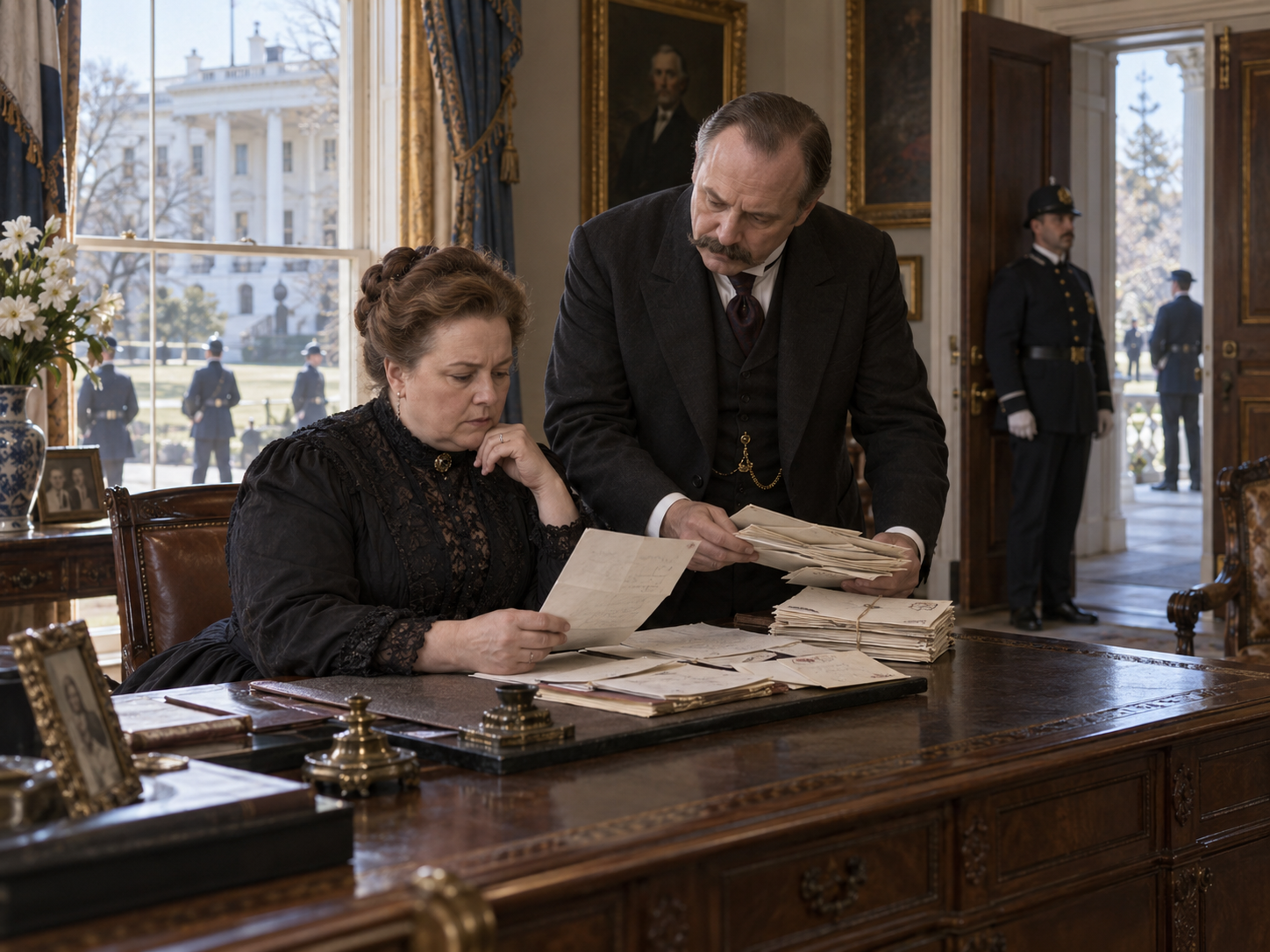
A Secret Service training manual later entered into the Warren Commission record as Commission Exhibit 2550 provides one of the clearest institutional accounts of the 1894 transition. According to that history, Cleveland received so many threatening letters during his second administration that Frances Cleveland persuaded him to increase the number of White House policemen from three to twenty-seven.
That increase strengthened the fixed-site layer around the White House. It did not solve the full problem. Threats did not stop at the gates, and the President did not remain inside the building.
In March 1894, the Secret Service received information about a reported plan by a group of gamblers in Lyons, Colorado, to assassinate Cleveland. The chief of the Secret Service directed an operative identified as Walker to investigate. Walker used an informer identified as Glen, who reported that danger existed. The Service then brought both men to Washington, commissioned them as special policemen, and assigned them around the White House.
The manual states that their daytime duties included watching for suspicious persons near the White House. In the evening, they observed meetings associated with Coxey’s Army, which had arrived in Washington during a period of public agitation over unemployment and federal economic policy.
This account must be read carefully. The reported Colorado plot, the threatening letters, the White House police increase, and the observation of Coxey-related meetings were different information streams. They formed part of one protective environment, but the record does not justify declaring every protester, unemployed marcher, gambler, political opponent, or unfamiliar visitor a threat.
What the record does show is an organization trying to build understanding from incomplete information and then placing personnel where warning and vulnerability might intersect.
Frances Cleveland and Henry Thurber
Frances Cleveland’s role deserves attention. Protective decisions are often influenced by people closest to the principal long before a formal organization acts. Family members see changes in correspondence, behavior, routine, and public exposure. They may understand the personal consequences of a threat more clearly than officials viewing it as one report among many.
Henry T. Thurber, Cleveland’s private secretary during the second administration, occupied another important position. A private secretary managed information, access, scheduling, and communication around the President. In modern language, those functions touch nearly every part of a protective operation. Staff members may not be protectors, but they frequently control the information and decisions that determine whether protection can work.
The historical importance of Frances Cleveland and Thurber is not that either became a modern detail leader. It is that protection began to change when people with access to the President recognized that the existing arrangements no longer matched the conditions.
From Investigation to Protection
The use of Secret Service personnel was an operational innovation. The agency had been created in 1865 within the Treasury Department to combat counterfeiting and related financial crimes. It possessed investigators who could travel, work in plain clothes, develop sources, follow leads, observe behavior, and operate across jurisdictions. Those capabilities made the Service useful when threats against the President crossed the boundary between criminal investigation and immediate personal safety.
Treasury Secretary John G. Carlisle authorized informal, part-time assistance. The initial personnel did not constitute the permanent, full-time presidential detail that would follow McKinley’s assassination. Their presence was limited and shaped by the authority available at the time.
When the Cleveland family left Washington for Gray Gables, their summer home at Buzzards Bay, Massachusetts, a new detail of three men accompanied them. Similar summer details followed, and agents were assigned for trips and special functions. In practical terms, the protective concept was expanding from the White House to the President’s movements, temporary residences, travel, and public activities.
That is the moment with the greatest relevance to modern public-official protection. Government recognized that protecting a building was not the same as protecting the official. The perimeter had to move with the principal.
What the 1894 Detail Could – and Could Not – Do
The early Cleveland protection effort had meaningful strengths. It connected threat investigation to personal protection. It used plainclothes personnel with investigative experience. It extended coverage to travel and a seasonal residence. It increased fixed-site manpower after the family raised concerns.
It also had serious limits. The mission was informal. Authority was improvised. Coverage was not yet permanent. There was no mature protective-intelligence program, standardized advance process, integrated transportation operation, unified command system, or continuous training pipeline designed around presidential protection.
The agents also served a principal who disliked visible constraints. That meant the protective method had to remain discreet. Accounts describe agents following behind Cleveland’s carriage rather than surrounding him in an obvious formation. Discretion may improve principal acceptance, but it can also reduce response time and control if it becomes the reason the team remains too far away to influence events.
Cleveland’s protection was therefore neither a complete modern system nor a historical footnote. It was a bridge. The United States was beginning to accept that the risk to the President had exceeded the capability of the old arrangement.
McKinley and the Move to Permanent Protection
President William McKinley was shot in Buffalo, New York, on September 6, 1901, and died eight days later. Secret Service personnel were present, but the agency did not yet possess the authority and operational control associated with a permanent detail. McKinley became the third President assassinated in thirty-six years.
After his death, the Secret Service began providing continuous protection to President Theodore Roosevelt. Congress funded the mission in 1902, although the legal foundation continued to develop over time. The agency’s transition from counterfeiting investigations to presidential protection was not the result of one legislative blueprint. It grew through repeated violence, improvised protective assignments, evolving appropriations, and the eventual recognition that the President required a permanent specialized capability.
That sequence should make us uncomfortable. The nation had warning. It had prior assassinations. It had Cleveland’s informal detail. Yet the permanent system followed another successful attack.
Protective systems often evolve after a tragedy proves that the existing system was inadequate. The better professional question is whether we can recognize that point before the next attack.
PART II – Protective After-Action Review and Lessons Learned
The Cleveland case is most useful when the historical facts are separated from hindsight and then converted into operational findings. The purpose is not to pretend that a modern detail could simply be dropped into 1894. It is to identify the protective principles visible in the transition from guarding the White House to protecting the President across movement, travel, temporary residence, and public duty.
The Threat Has Expanded Beyond the Presidency
The President is no longer the only public official whose safety can have consequences beyond the individual. Members of Congress, governors, judges, prosecutors, election administrators, mayors, local legislators, candidates, and other public servants can be targeted because of the offices they hold, decisions they make, cases they hear, or institutions they represent. Threats can follow them away from secured government buildings and into district offices, public meetings, parking lots, travel routes, homes, and family life.
Recent attacks show how widely that exposure can appear. Representative Gabrielle Giffords was shot while meeting constituents in Tucson in 2011. House Majority Whip Steve Scalise and others were shot during congressional baseball practice in 2017. A violent attack breached the U.S. Capitol on January 6, 2021, while Congress was performing a constitutional function. Paul Pelosi was attacked at the San Francisco home he shared with then-House Speaker Nancy Pelosi in 2022. In 2024, a former President and presidential candidate was wounded during a campaign rally in Butler, Pennsylvania.
Those incidents differ in offender, motive, method, location, and protective context. They should not be compressed into one causal theory. They do establish a continuing protective reality: public officials and their families can be targeted at official events, informal gatherings, public venues, residences, travel points, and other predictable places of exposure.
1. Protecting the Building Is Not the Same as Protecting the Principal
The White House had guards and watchmen long before the United States built a permanent presidential protective service. That fixed-site capability mattered, but it did not follow the President into a carriage, railroad station, hotel, public reception, private residence, or temporary destination. Cleveland’s 1894 protection is important because the response began extending beyond the official building to travel, Gray Gables, trips, and special functions.
Modern organizations make the same mistake when they equate strong facility security with executive protection. Courthouse screening does not protect a judge on the route to a vehicle. Capitol security does not automatically protect a Member in a district office or at home. A corporate headquarters with badges, cameras, and guards does not protect a CEO during travel, hotel arrival, public appearance, or a predictable commute. The protective perimeter has to be defined by the principal’s actual life and mission rather than by the organization’s real estate.
2. Principal Resistance Is an Operational Factor – and Cooperation Is Part of the System
Cleveland’s dislike of visible protection was not unusual for his era, and the underlying concerns remain recognizable. Leaders may fear appearing inaccessible or afraid; they may dislike schedule disruption, route restrictions, screening, family intrusion, loss of privacy, or the feeling that someone else is controlling their movement. A good protection program treats those concerns as design constraints rather than dismissing them as stubbornness.
For elected officials, that tension is built into the mission. Members of Congress, governors, mayors, judges, candidates, school-board members, and other public servants are expected to meet people, travel through their communities, appear at public events, and remain accessible. Protective resources only work when the principal and staff accept the operational consequences: advance coordination, controlled arrivals, route changes, screening, secure transportation, schedule discipline, and, when risk requires it, limits on spontaneity.
The modern corporate evidence is explicit. A 2025 Security Management research report identified executive noncompliance as the second-most frequently cited obstacle to effective executive-protection programs, reported by 47 percent of surveyed security professionals, behind budget constraints at 58 percent. Pearl Meyer’s 2025 survey of 258 organizations found that 65 percent lacked a formal CEO security program and 58 percent reported no formal board oversight of executive security. The problem can therefore exist at both levels: a principal may resist safeguards, or the institution may never provide a coherent program to begin with.
The December 2024 killing of UnitedHealthcare CEO Brian Thompson illustrates why that distinction matters. Thompson was not accompanied by a security detail when he was shot outside a Manhattan hotel. Reporting indicated that threats had previously been made against him, but the public record does not establish that Thompson personally rejected protection. A protection failure can result from an executive refusing safeguards, from an organization failing to provide them, from an inadequate assessment, or from a program that exists on paper but does not follow the principal into the places where exposure actually occurs.
For the protection professional, principal resistance is not a personality problem to complain about after an incident. It is an operational condition to manage before the mission begins. The team must explain risk in concrete terms, show how proposed measures preserve rather than obstruct the mission, offer less restrictive alternatives where possible, identify the minimum safeguards that cannot responsibly be removed, and document important decisions. A highly trained detail can still be defeated if the principal routinely rejects the vehicle plan, bypasses screened entrances, changes movements without notice, dismisses residential measures, or keeps threat information from the people responsible for protection.
Cleveland’s experience demonstrates that accepting protection is itself part of adapting to a changing threat environment. The modern lesson is not that elected officials or CEOs should surrender control of their lives to a security team. Accessibility, independence, privacy, and convenience must be balanced against assessed risk. Protection works best when the principal understands that the objective is not to restrict the mission, but to make it possible to continue the mission safely.
3. Atmospheric Assessment Is Not Direct-Threat Assessment
Cleveland’s second administration unfolded amid economic depression, labor conflict, marches, political criticism, and public agitation. Those facts belong in an atmospheric assessment because they affect the operating environment: crowd size, mobility, protest activity, public sentiment, media attention, event disruption, adversary opportunity, and the principal’s visibility. They do not establish that a participant in a labor movement, a protester, a political opponent, an unemployed marcher, or a member of any demographic group is dangerous.
Direct-threat assessment asks different questions. Is there an identifiable actor? Has language become personally fixated? Is someone researching the target, testing access, conducting surveillance, acquiring weapons or equipment, communicating intent, escalating behavior, or moving physically toward the principal? Keeping those analytical categories separate improves both civil-liberties discipline and operational accuracy.
4. Protective Intelligence Is Useful Only When It Changes the Operation
The 1894 Colorado report did not create a modern protective-intelligence program, and the surviving retrospective account does not provide enough detail to reconstruct every investigative judgment. What it does show is the important part: information caused action. Investigators were sent, sources were used, personnel were brought to Washington, observation increased, and protective coverage expanded.
That remains the standard. Relevant information has to reach the people who can alter access, staffing, observation, site control, routes, transportation, schedules, residence precautions, family instructions, local-law-enforcement coordination, or the principal’s behavior. Information that never changes a decision may be interesting, but it has not yet become operational protection.
5. Protection Must Move with the Principal and Preserve the Mission
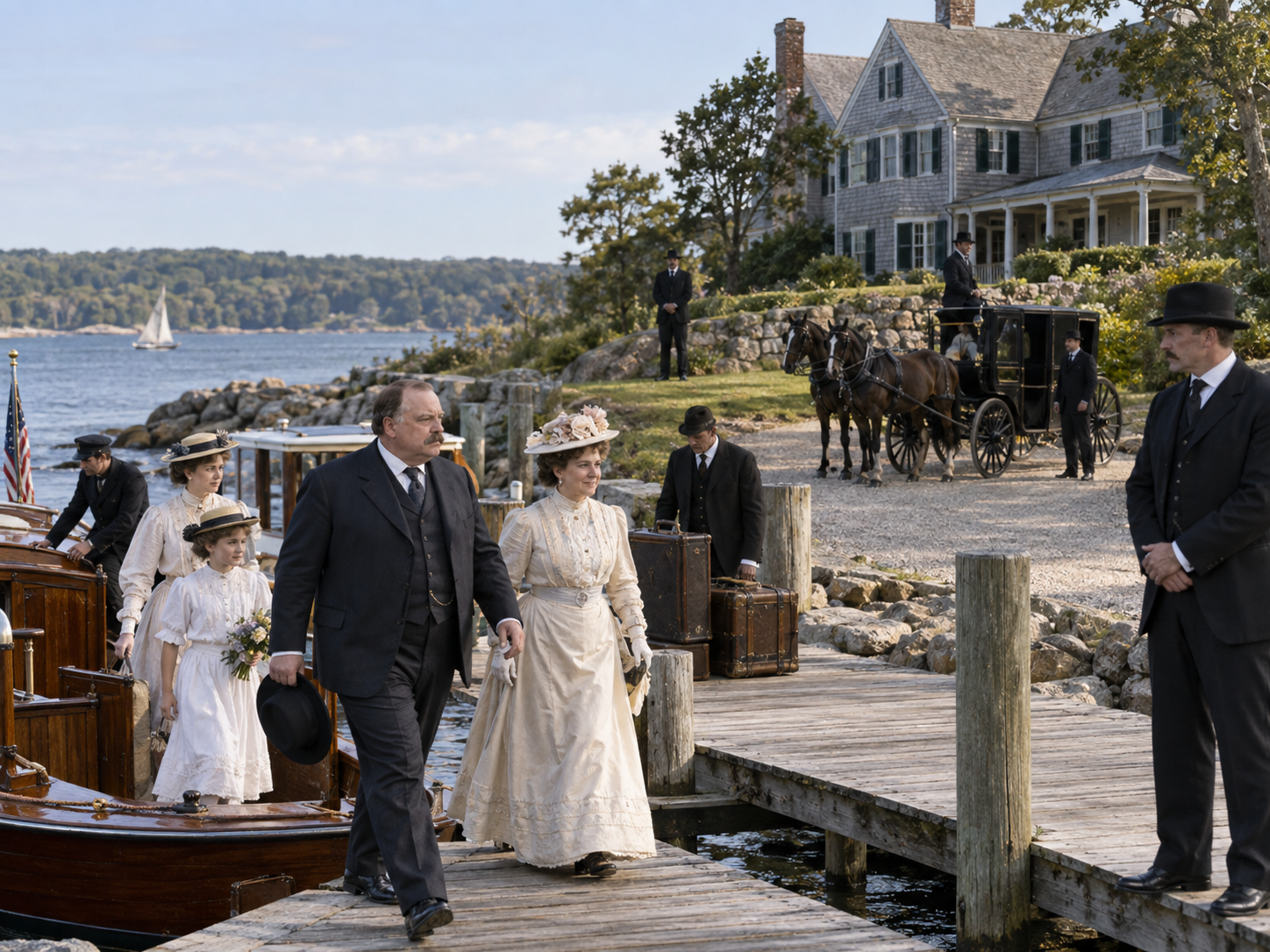 Cleveland’s carriage and the Gray Gables detail illustrate the beginning of a mobile perimeter. Modern protection expands that idea through advances, route planning, transportation, communications, site surveys, arrivals and departures, protected transitions, emergency action, medical planning, and liaison with local agencies. Vulnerability frequently appears not at the protected destination but in the spaces between protected places.
Mobility does not justify isolation. A President must govern, a Member of Congress must meet constituents, a mayor must appear in the community, a judge must reach the courthouse, and a CEO must visit offices, plants, investors, employees, and customers. Controlled accessibility is therefore a core protective objective. Screening, standoff, observation, credentialing, protected arrivals, alternate routes, and rehearsed emergency movement should make the mission safer, not erase the mission to eliminate risk.
6. Institutionalize Capability Before the Successful Attack Forces the Change
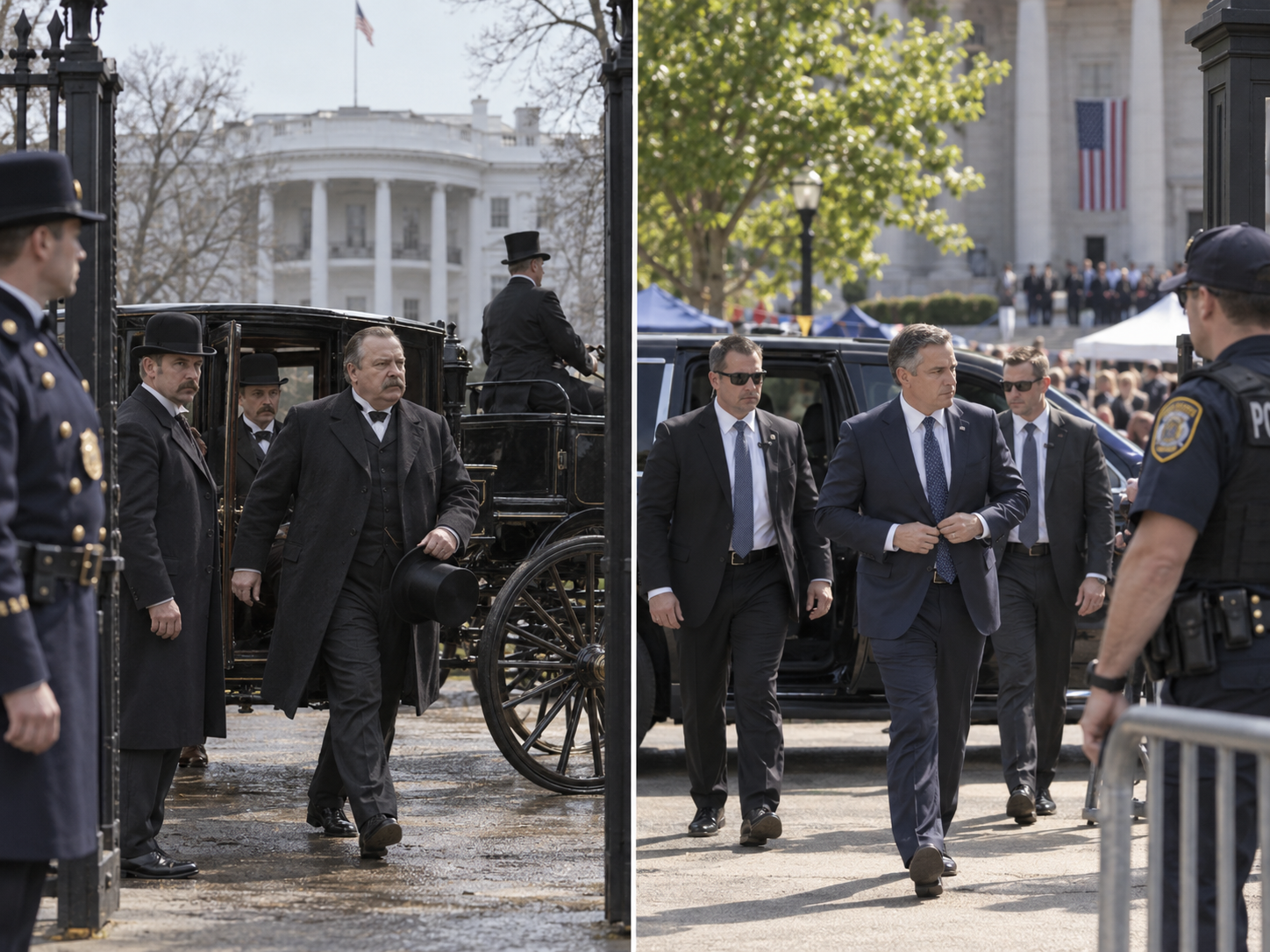
Cleveland’s informal detail demonstrates that the United States had recognized the emerging requirement by 1894. Yet continuous Secret Service protection followed another successful presidential assassination. William McKinley was shot in Buffalo on September 6, 1901, died eight days later, and the Service then began continuous protection of President Theodore Roosevelt. Congress funded the mission in 1902. The country did not lack warning; it stopped short of building permanent capability until another death made the gap impossible to ignore.
Not every elected official or corporate executive needs a presidential-style detail, and not every jurisdiction can support one. Organizations can still identify trained personnel, create tiered protection levels, establish mutual-aid relationships, define information-sharing and command arrangements, prepare qualified private-sector augmentation where lawful and appropriate, exercise likely missions, and build standards before the next threat-driven assignment arrives. Temporary success should not be confused with institutional readiness.
That principle also sits at the center of ISA’s Defending Democracy Initiative. Protection is not about placing officials above criticism or insulating leaders from the public. It is about preventing violence and intimidation from deciding who serves, whether a lawful vote is cast, whether a judge hears a case, whether an official appears in public, or whether an institution can continue its legitimate function.
Frequently Asked Questions: Grover Cleveland Presidential Protection and Executive Protection
Was Grover Cleveland the first President protected by the Secret Service?
Cleveland is generally identified as the first President known to receive Secret Service protection, but the 1894 arrangement was informal and part time. Continuous Secret Service presidential protection followed William McKinley’s assassination in 1901, with Congress funding the mission in 1902.
Why did the Secret Service protect Cleveland if its original mission involved counterfeiting?
The Service already had federal investigators who could travel, work in plain clothes, develop sources, observe suspects, and follow criminal leads. When a reported assassination plot against Cleveland was investigated, those capabilities were extended into an informal protective role around the President.
Did the Secret Service protect Abraham Lincoln?
No. The Secret Service was established in July 1865, after Lincoln’s assassination. Lincoln had various police, military, staff, and personal security arrangements at different times, but he was not protected by the Secret Service.
What caused Cleveland’s protection to increase in 1894?
No single factor explains the transition. The retrospective Secret Service history describes numerous threatening letters, concern from Frances Cleveland, a large increase in White House police, a reported Colorado assassination plot, investigative activity, and a tense national environment. Together those conditions produced an incremental protective response.
What is principal resistance in executive protection?
Principal resistance occurs when the person being protected rejects, bypasses, minimizes, or avoids safeguards because of accessibility, privacy, convenience, image, schedule, family concerns, or disagreement with the assessed risk. It becomes an operational factor because a sound protective plan cannot function as designed if the principal routinely removes its key safeguards.
What is the difference between an atmospheric assessment and a direct-threat assessment?
An atmospheric assessment describes the operating environment – conditions such as public sentiment, protest activity, crowd behavior, mobility, visibility, and other factors that can change exposure. A direct-threat assessment evaluates information tied to an actor, behavior, intent, capability, target selection, access, or movement toward violence. Political disagreement, protest, ideology, or demographic characteristics do not by themselves establish a direct threat.
Does every elected official or CEO need a full-time protection detail?
No. Protection should be proportionate to threat, vulnerability, exposure, mission, and consequence. Depending on risk, organizations can use event-specific protection, trained temporary teams, local-law-enforcement coordination, residential and travel precautions, mutual aid, or qualified private support rather than a permanent full-time detail.
Did Frances Cleveland create the Secret Service presidential detail?
No. She did help persuade Cleveland to increase the White House police presence. Her role is important because it shows how family members and close staff can influence protective decisions when a reluctant principal underestimates changing conditions.
Why is protecting an elected official a democratic issue?
Because threats can interfere with voting, judging, governing, campaigning, election administration, public meetings, and representation. Protection is not about placing an official above the public; it helps preserve the lawful public function the official was selected or appointed to perform.
Can private security protect public officials?
Qualified private professionals can support advances, transportation, residential assessment, logistics, event coverage, and continuing presence where law and policy permit. They should operate within applicable licensing requirements, professional standards, defined authority, and clear coordination with law enforcement.
Does criticism or protest constitute a threat?
No. Criticism, protest, political disagreement, ideology, and offensive speech are not automatically threats. Professional assessment examines behavior and context, including fixation, stalking, target research, surveillance, acquisition activity, escalation, communicated intent, access, and movement toward violence.
What is the central lesson from Cleveland’s protection?
Protective systems must change when the threat environment exceeds the capability of the existing security arrangement. The professional responsibility is to recognize that point early enough to act before a successful attack forces the change.
How does the Cleveland case connect to ISA and EPTraining.us executive protection training?
ISA uses historical cases to show why protection disciplines cannot be taught or operated in isolation. Threat assessment must inform protective intelligence; intelligence must change planning; planning must shape physical security, advance work, movement, transportation, communications, coordination, and protectee instructions; and operations must be exercised and reviewed as one protective system.
The Bottom Line
Grover Cleveland’s 1894 protection did not create the modern Secret Service detail, but it exposed the limitation of the old system. A guarded White House was not enough for a President who traveled, used temporary residences, appeared in public, and resisted visible constraints. Once investigators began following the threat beyond the building, the protective concept itself changed.
The transition remained incomplete. Seven years later, McKinley was assassinated, and continuous protection followed. That sequence is the uncomfortable part of the history: the requirement had been recognized before the permanent capability was built.
The modern lesson is not that every public official or corporate executive should live behind a presidential perimeter. Assessed risk must drive proportionate protection, intelligence must change operations, the protective perimeter must follow the principal, and principal cooperation has to be treated as part of the system.
Today, threats against public officials reach homes, families, district offices, court personnel, public meetings, travel, campaigns, and online spaces. Local agencies can receive protective responsibilities without adequate preparation, and intimidation can influence whether an official appears in public, addresses a controversial issue, seeks reelection, casts a vote, hears a case, or performs another lawful duty.
Protecting public officials is not about placing political leaders above the people they serve. It is about preventing violence and intimidation from deciding who serves, how they serve, and whether government can perform its legitimate functions.
The United States learned during Cleveland’s presidency that a protective system must change when the old arrangement no longer matches the threat. The lesson is available to us again.
The question is whether we will adapt.
Related EPTraining.us Resources
- Fear Is Already Here: Threats Are Changing How Public Officials Serve – and How Judges Rule – Modern Defending Democracy analysis of how threats and intimidation can change public service before violence occurs.
- Defending Democracy: The Urgent Need to Protect Public Officials – ISA analysis of the protective requirement around elected officials and other public servants.
- Executive Protection Training and Defending Democracy – ISA discussion of executive-protection training as part of a broader public-official protection capability.
- Security of Elected Officials – Supporting Defending Democracy analysis on protection challenges facing elected officials and local agencies.
- The Protection of Public Officials: A Democratic Imperative – Why protection of public officials is tied to continuity of lawful government rather than political privilege.
- Dignitary and Executive Protection Specialist Course – Program information for law enforcement, military, corporate security, and private-sector protection professionals.
- Executive Protection Training Syllabus – Current ISA course structure and protective-operations curriculum.
- ISA Executive Protection Training Standards – ISA standards for measurable, performance-based executive-protection education.
Sources and Historical Notes
Historical Sources
- National Archives – Records of the United States Secret Service – Federal records overview for the Secret Service.
- Secret Service Manual – Commission Exhibit 2550 – Retrospective agency history containing the key account of Cleveland-era assignments.
- United States Secret Service – History – Official agency history and mission development.
- United States Secret Service – 150 Years of History – Additional official history of the Service and its evolving mission.
- White House Historical Association – Secret Service and the Presidents – Historical background on the evolution of presidential protection.
- White House Historical Association – History of Presidential Protection – Background on early presidential guards and the development of continuous protection.
- White House Historical Association – The Life and Presidency of Grover Cleveland – Biographical and presidential context for Cleveland.
The description of the 1894 Colorado report, Operative Walker, the informer Glen, the White House assignment, the increase in White House police, and the summer detail comes from the Secret Service historical manual entered into the Warren Commission record. The manual is useful institutional history, but it was written decades after the Cleveland administration and should not be treated as a contemporaneous investigative file.
Modern Sources
- United States Capitol Police – Threat Assessment Cases for 2025 – Current congressional threat-assessment case volume and protective-intelligence context.
- Task Force 1-6 Capitol Security Review – Recommendations on threat-based Member protection, intelligence, travel, district security, and coordination.
- Security Management – The Main Impediment to Executive Protection? The Executives Themselves (2025) – Research on executive noncompliance and other obstacles to effective executive-protection programs.
- Pearl Meyer – Most Companies Lack Formal CEO Security Programs Despite Rising Threat Landscape (2025) – Survey findings on formal CEO security programs and board oversight.
- Bipartisan House Members Request Increased Security Measures – Congressional request addressing Member security beyond the Capitol, including district, family, and related protective concerns.
- Princeton Bridging Divides Initiative – 2026 Election-Season Toolkit – Guidance for countering threats to local officials while preserving democratic participation and public access.
- Combating Terrorism Center at West Point – Rising Threats to Public Officials – Review of federal data on threats and violence directed at public officials.
- National Counterterrorism Center – Protection Considerations for Threats to Public Officials – Protective considerations for violent-extremist threats to public officials.
- Congressional Research Service – Violence Against Members of Congress, Their Families, and Staff: Policy Responses (2026) – Congressional policy context for threats and protective responses.
- The Washington Post – Targeted Killing of UnitedHealth CEO Sends a Chill Among Executives (2024) – Reporting on the Brian Thompson killing, prior threats, and executive-security concerns.
About Independent Security Advisors, EPTraining.us, and Defending Democracy
Independent Security Advisors LLC (ISA) operates EPTraining.us, a U.S.-based executive protection training program for law enforcement, military, public-safety, corporate-security, and private-sector protection professionals. ISA training integrates threat assessment, protective intelligence, operational planning, advance work, physical security, movement, communications, legal and ethical responsibilities, medical response, and performance-based evaluation. The program began in response to a law-enforcement need identified after the 2011 attack on Representative Gabrielle Giffords and has continued to evolve through incident review, regulatory approval, professional practice, and recurring curriculum revision.
ISA’s Defending Democracy Initiative applies the same system-based approach to threats against elected officials, judges, candidates, prosecutors, election personnel, and other public servants whose legitimate duties can be disrupted by intimidation or political violence. Its position is nonpartisan: criticism, protest, and political disagreement are essential to democracy; threats, stalking, intimidation, and targeted violence should not be allowed to replace them. The Cleveland case illustrates the underlying principle: effective protection preserves both the person and the lawful public function that person is expected to perform.
Author Matthew C. Parker | Independent Security Advisors LLC | EPTraining.us
Publisher Independent Security Advisors LLC / EPTraining.us