
 E-mail us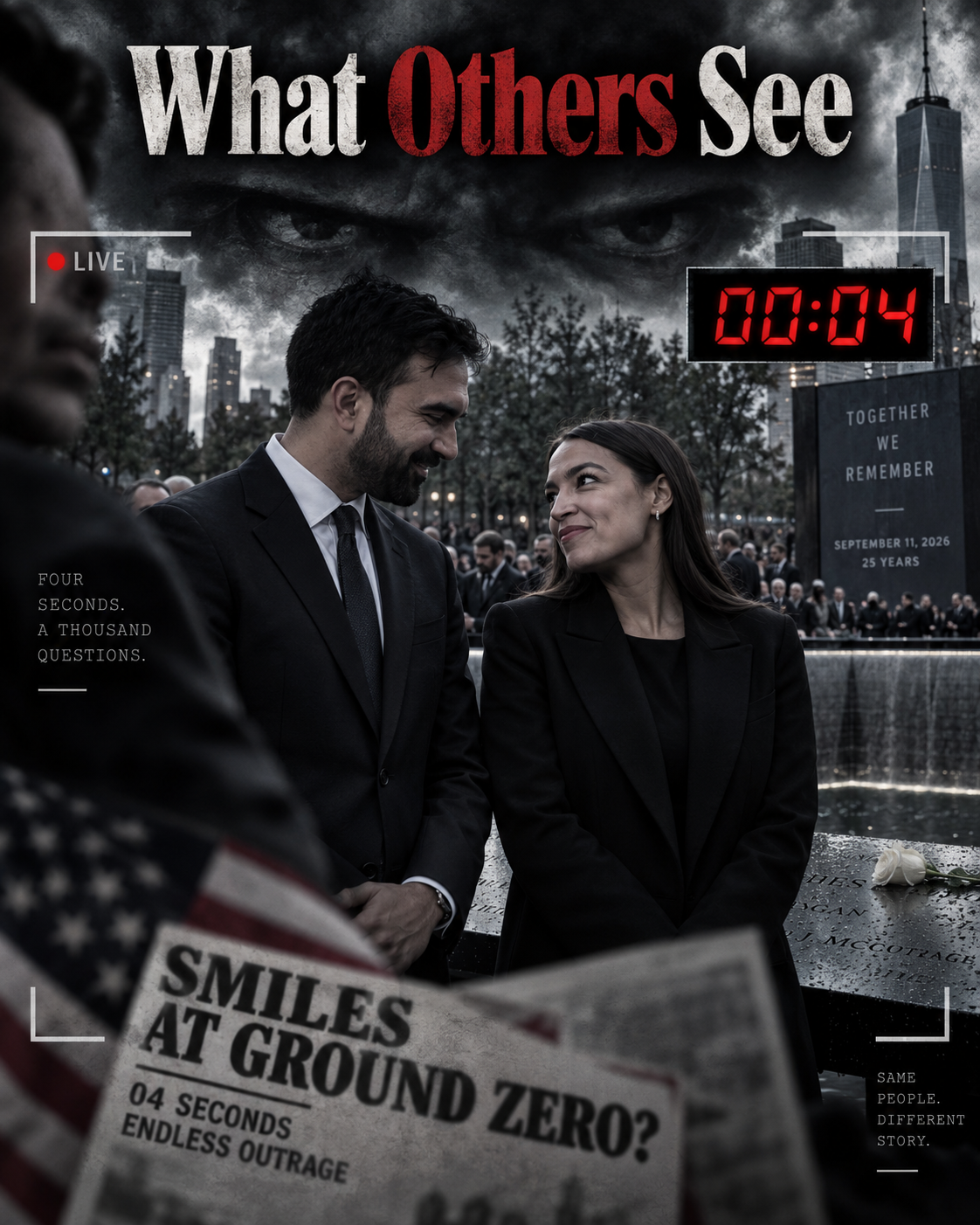
Four Seconds at Ground Zero
AOC Mamdani 9/11 memorial
From Political Opponent to Political Enemy: How a Four-Second 9/11 Video Became Something Much Uglier
By Matthew C. Parker
CEO, Independent Security Advisors LLC | Director of Training, EPTraining.us
ISA Defending Democracy Initiative
September 2026
Excerpt:
Four seconds of video at Ground Zero became claims that two elected officials were laughing at the dead and mocking Americans. A Republican eyewitness challenged the strongest version within minutes, but the accusation kept spreading.
We follow what happened next and explain why protection agents need to understand when media and social-media narratives begin changing the environment around a client.
Why This Analysis Matters
Four seconds of video at the September 11 memorial became something much larger than four seconds of bad optics. Within hours, politicians, commentators and social-media users were saying that New York City Mayor Zohran Mamdani and Representative Alexandria Ocasio-Cortez were laughing at the dead, mocking Americans and showing the country who they supposedly really were.
The part that should concern anyone who cares about facts is what happened next. Michael Ragusa, a lifelong Republican who said he was standing beside the two officials, publicly challenged the strongest version of the story almost immediately. Fox News published its national story at 3:25 p.m. Eastern. Mediaite published Ragusa’s eyewitness account at 3:27 p.m. The correction was not buried for days. It was there while the accusation was spreading.
For executive-protection agents, that has consequences beyond a fight over political media. False or misleading information does not have to be true to change the atmosphere around a client, an event or a location. If enough people believe the story, the protection team has to understand what that story is doing before somebody inside the noise becomes personally fixated and begins moving toward action.
Reader Navigation
- Case Snapshot / Abstract — What happened at Ground Zero, how quickly the accusation spread and why the timing of the eyewitness correction matters.
- Part I — Four Seconds and the Story Built Around Them — The political environment before the ceremony, the full timeline, Todd Starnes, Fox News, Michael Ragusa, Paul Mauro, Steve Bannon, OAN, The Mark Levin Show, social-media amplification and the false Facebook story.
- Part II — When the Story Changes the Protective Environment — How repeated accusations can change the atmosphere around a principal or destination and what protection teams need to recognize when political noise begins becoming focused behavior.
- Frequently Asked Questions — Direct answers about the video, eyewitness accounts, media amplification, fake accounts and the protection implications.
- Bottom Line — What this incident says about evidence, political media, dehumanization and protective intelligence.
Case Snapshot / Abstract
Four seconds of video from the 2026 September 11 ceremony at Ground Zero became claims that Mayor Zohran Mamdani and Representative Alexandria Ocasio-Cortez were laughing at the dead and mocking Americans. Within minutes, Michael Ragusa, a lifelong Republican who said he was standing beside them, publicly challenged the strongest version of that story and said Ocasio-Cortez had simply walked over to greet Mamdani.
This article follows what happened after the correction was already available: how criticism of a bad-looking moment became claims about motive and character, how those accusations continued through political media and social media, how a completely false punishment later found people willing to believe it, and why executive-protection agents need to understand what happens when a media narrative begins changing the environment around the person they are protecting.
PART I — FOUR SECONDS AND THE STORY BUILT AROUND THEM
The Fight Around Mamdani Had Already Started
The four-second clip did not arrive in an empty political environment. Mamdani’s attendance at the memorial was already the subject of a bitter public dispute involving some victims’ relatives, first responders and political opponents who wanted him to stay away. By September 8, OAN reported that a petition opposing his attendance had exceeded 100,000 signatures and that critics had gathered at City Hall to make their case publicly.
There had also been controversy involving city chief counsel Ramzi Kassem. Mamdani signed two September 11-related executive orders on September 4, and Kassem received one of the ceremonial pens after the signing. Kassem had previously represented convicted al-Qaeda operative Ahmed al-Darbi, and OAN’s September 7 coverage reproduced a social-media post declaring that “the enemy is inside the gates,” while Mamdani’s office said Kassem and his legal staff had worked on the executive orders and were present for that reason.
By the time the camera found Mamdani and Ocasio-Cortez at Ground Zero, some audiences had already spent days hearing arguments involving terrorism, Islam, political ideology, national loyalty and whether Mamdani belonged at the ceremony at all. Those four seconds therefore entered a political environment that was already primed for confrontation.
Timeline: How Four Seconds Became the Story
September 4 — The Ceremonial-Pen Controversy Begins
Mamdani signed executive orders establishing an annual September 11 day of remembrance and addressing city emergency preparedness. The ceremonial pen passed to Kassem quickly became part of the larger argument surrounding Mamdani and the approaching anniversary.
The criticism moved beyond disagreement over the ceremony itself. Kassem’s previous representation of al-Darbi, Mamdani’s Muslim identity and broader political arguments about terrorism and loyalty began appearing together in the same information environment before the later Ground Zero video existed.
September 7 — The Controversy Expands
OAN published its report on the ceremonial-pen controversy on September 7 and noted that the petition seeking Mamdani’s exclusion from the memorial was approaching 100,000 signatures. Its report also reproduced the statement that “the enemy is inside the gates,” showing how some of the rhetoric was already describing the mayor in terms much stronger than ordinary political opposition.
For a protection detail, that is part of the pre-event picture. The principal may be arriving at the same physical location everyone advanced days earlier, but the atmosphere surrounding his arrival can change substantially while the site itself remains unchanged.
September 8 — Opposition to His Attendance Passes 100,000 Signatures
OAN reported that September 11 family members, first responders and elected officials gathered at City Hall asking Mamdani not to attend. The petition had exceeded 100,000 signatures, while Mamdani confirmed that he intended to be at the ceremony.
By then, his attendance itself had become political news. People arriving at Ground Zero could therefore bring strong opinions about his presence before anything occurred between Mamdani and Ocasio-Cortez.
September 11, 5:37 a.m. — Mamdani Releases His September 11 Statement
OAN reported Mamdani’s 80-second commemorative statement early that morning. He called September 11 a “day of immeasurable loss” and the darkest day in the city’s history, referred to terrorists killing nearly 3,000 people and praised the first responders, office workers and strangers who ran toward danger.
Hours later, that statement would coexist online with accusations that he did not care about the victims or the country. Anyone doing more than reading a single post had access to a much larger record.
September 11 — The Camera Shows Four Seconds
During the live television broadcast, the feed moved between different views of the ceremony. One shot showed an emotional mourner before the camera moved to Mamdani and Ocasio-Cortez, who greeted one another, spoke briefly and smiled while victims’ names were being read. CNN Newsource, carried by Scripps News, reported that the live shot lasted approximately four seconds.
I have no problem saying that the moment looked bad. A viewer had just seen grief on the screen and then saw two elected officials smiling during one of the most solemn ceremonies in the country. Anyone watching those few seconds could reasonably believe the timing looked inappropriate or that public officials should have shown better judgment.
Criticism of what people actually saw was fair, but the story did not remain there. What came next moved from criticism of visible conduct into claims about motive, character and what the two officials supposedly believed about the victims and the country.
3:22 p.m. — Todd Starnes Says Mamdani Came to Gloat
The Todd Starnes Show posted its program at 3:22 p.m. Eastern under the title “Mayor Mamdani Laughs at 9/11 Memorial.” Starnes said Mamdani had attended the ceremony to “gloat, not mourn.”
That changed the accusation from criticism of visible conduct into a statement about motive. Starnes was no longer saying only that the image looked terrible; he was telling his audience why Mamdani had attended Ground Zero.
3:25 p.m. — Fox News Publishes Its National Story
Fox News published its national story at 3:25 p.m. Eastern. The article described Mamdani and Ocasio-Cortez as appearing to share a moment of levity while victims’ names were being read and collected a series of increasingly severe reactions.
Some criticism remained focused on conduct. Other commentary went substantially farther. Spencer Pratt said the two hated Americans, hated the country and enjoyed Americans’ misery. The Pittsburgh Republican Committee said they mocked rather than mourned the country, while Representative Randy Fine called the mayor “Jihad Mamdani.”
Fox’s own reporting also carried information pointing in the other direction. The same story included Ragusa’s account that Ocasio-Cortez had approached Mamdani to greet him and reported that Mamdani had been seen standing somberly during other portions of the ceremony.
The attack and the information challenging the strongest version of the attack were therefore sitting inside the same report. That becomes important when looking at what happened during the next few minutes.
3:27 p.m. — Michael Ragusa Challenges the Story
Mediaite published Ragusa’s account at 3:27 p.m., two minutes after Fox’s national story. Ragusa said he had been standing next to Mamdani and Ocasio-Cortez, that the camera caught Ocasio-Cortez greeting the mayor and that Republican and Democratic politicians around them had spoken, laughed and joked at different times during the ceremony.
Ragusa identified himself as a lifelong Republican and said he had been highly critical of both politicians. He was not asking people to support Mamdani or Ocasio-Cortez; he was saying that the story spreading online did not match what he said he personally witnessed while standing beside them.
CNN later added another attendee’s account. Former New York Assemblymember Yuh-Line Niou said the interaction occurred when Ocasio-Cortez walked over to Mamdani and said hello. She also said Mamdani stayed through the reading of the names and remained afterward speaking with families, while Ocasio-Cortez stayed until the end of the ceremony.
3:53 p.m. Eastern — Breitbart Adds Another Major Distribution Point
Breitbart published its article at 12:53 p.m. Pacific, or 3:53 p.m. Eastern, under a headline saying Mamdani and Ocasio-Cortez appeared to “yuk it up” at Ground Zero while victims’ names were being read.
By then, Ragusa’s account had already been public for more than twenty minutes. The information challenging the accusation was not buried in an investigative file or discovered days later; it was available while the accusation continued spreading.
The Correction Was Available While the Accusation Was Spreading
This is the part of the story that bothers me most. Breaking news is messy, emotions run high and people sometimes get the first version of a story wrong, but that excuse becomes much weaker once information directly challenging the accusation is already sitting in public view.
Fox published at 3:25 p.m. Ragusa’s account was published at 3:27 p.m. He was a lifelong Republican who said he had been critical of both officials, and he said he had been standing beside them. CNN later carried another attendee describing the interaction as a greeting.
Nobody needed classified intelligence, a subpoena or a team of investigators to find that information. They needed to read beyond the headline, look for somebody who was actually there and check whether the story they wanted to believe survived contact with another witness.
Too many people apparently did not care enough to do that work. Once the accusation confirmed what they already believed about Mamdani or Ocasio-Cortez, the search for facts stopped and the search for more people repeating the same accusation took its place.
That is the echo chamber at work. It does not require every person inside it to lie; it only requires enough people to stop asking whether the next repetition contains new evidence or is simply another person repeating the same four seconds.
Journalism is supposed to work differently. A reporter should test the allegation, find the witness, locate additional footage, compare competing accounts and tell the audience when the evidence does not support the certainty being claimed.
When contradictory eyewitness information is public within minutes and the accusation keeps growing anyway, this is not journalism. It is a mockery of what journalism is supposed to be, because the accusation becomes more important than determining whether the accusation is true.
The same rule applies to protection. If one of my agents ignores a relevant firsthand witness because the witness interferes with a theory he has already decided is true, that assessment is going back for correction.
Fox Carried the Attack and the Evidence Challenging It
Fox’s role is worth looking at closely because its reporting demonstrates the contradiction inside the story itself. The article gave national exposure to the video and to some of the strongest attacks, while also telling readers that Ragusa said the camera had simply caught a greeting and showing that Mamdani had behaved somberly at other points during the ceremony.
Two days later, when President Donald Trump criticized the interaction as inappropriate, Fox again carried Ragusa’s explanation. Fox’s follow-up also reported that the conversation could not be heard and repeated that Ragusa disputed the claim that the two officials had been joking about the ceremony.
Someone seeing only the clip, a headline or an angry social-media post could leave believing the motive had already been established. Someone reading the broader reporting encountered a much more complicated story in which eyewitnesses challenged the strongest accusation.
The evidence did not become stronger as the story spread. The accusation became stronger while the underlying event remained the same four-second interaction.
Paul Mauro Invented the Conversation
Fox News contributor Paul Mauro, a retired NYPD inspector, went beyond criticizing what the image looked like. Fox reported that Mauro supplied imagined dialogue in which Mamdani supposedly dismissed “never again,” Ocasio-Cortez supposedly agreed and “hilarity” followed. Fox then stated that it was not immediately clear what the two politicians had been discussing.
Mauro spent a career in law enforcement. He knows the difference between evidence and something an investigator invents to fill a hole in the evidence.
If an executive-protection agent wrote imaginary dialogue into a threat assessment because it helped make the case stronger, I would send the assessment back. Invented dialogue does not become intelligence because it fits what the analyst already believes.
There was plenty to criticize without doing that. Say the moment looked disrespectful, say the timing was terrible and say elected officials standing at Ground Zero during the reading of the names should have known better.
Do not write your own script and put it into somebody else’s mouth. If your criticism cannot survive without invented dialogue, the problem is with the criticism, not with the missing evidence.
Steve Bannon Takes the Attack Further
Steve Bannon’s War Room pushed the claim well beyond criticism of behavior. During the September 11 broadcast, Bannon called Mamdani a “Ugandan Marxist jihadist” and repeatedly told his audience that Mamdani and Ocasio-Cortez were “laughing at the dead” and “laughing at you.”
Bannon also directed his production team to replay the video with the victims’ names audible in the background because, as he said during the broadcast, the presentation was not as powerful otherwise. He then widened the accusation further, saying the pair were laughing at Americans and at “every patriot’s grave in this country.”
That is a major leap from a four-second image. Bannon had every right to condemn the optics, oppose Mamdani’s politics, attack democratic socialism or argue that either official should be defeated at the polls, but none of those political arguments required him to claim knowledge of why the two were smiling.
I find that presentation discrediting because the certainty came from Bannon, not from new evidence. If the political case against somebody is strong, make it from the facts rather than supplying a motive the evidence has not established.
Americans are constantly told that trust in journalism and political media is collapsing. Presentations like this do nothing to rebuild that trust.
OAN Shows What Was Already in the Atmosphere
OAN’s reporting before September 11 shows how much political material was already surrounding Mamdani before the disputed interaction. The network covered the Kassem controversy, the petition opposing his attendance, criticism from some victims’ relatives and the public gathering demanding that he stay away.
OAN also reported Mamdani’s September 11 statement describing the attacks as a day of immeasurable loss and remembering the victims and first responders. The same news outlet therefore contained both harsh criticism of the mayor and information that complicated later claims about his attitude toward September 11.
That is how a real information environment looks. It is messy, and the protection team cannot decide that only the accurate version matters because the people standing outside tomorrow’s venue may have consumed an entirely different version.
The Mark Levin Show Was Telling a Much Larger Story
On September 11, The Mark Levin Show was guest-hosted by Brian Mudd. The program’s published description placed Mamdani inside a much broader argument about Islam, terrorism, infiltration, political participation and the future of Western institutions.
That argument did not depend on the four-second Ground Zero video. Mamdani was already being presented to listeners as part of a larger ideological threat before the disputed interaction became a national political story.
For someone who had already accepted that larger argument, the Ground Zero image could become confirmation almost instantly. The identity assigned to the political opponent was already in place, so the new image had somewhere to fit before the viewer did any additional research.
That is how an echo chamber becomes self-reinforcing. New information does not always test an existing belief; sometimes the existing belief decides what the new information must mean.
Social Media Makes the Attack Personal
By 5:34 p.m., an Instagram account using the handle @onlypatriotjake had posted that Mamdani and Ocasio-Cortez were caught laughing at the memorial and concluded that the two “don’t care about America.” The indexed copy showed more than 4,500 interactions and more than 600 comments.
Some comments expressed anger or disgust, while others pushed back and pointed readers directly toward the eyewitness account. One commenter went much farther and wrote, “Shame their names were not being read.”
That statement should not automatically be converted into a threat. It does, however, show how far the conversation had moved only hours after the original clip—from criticism of two people smiling to somebody expressing regret that the two elected officials had not been among those killed.
The correction was present in the same comment stream. Other users specifically told readers that a person standing beside Mamdani and Ocasio-Cortez had disputed the accusation, yet the original post continued accumulating reactions.
The number of repetitions was growing while the original evidence remained the same. A person scrolling through hundreds of reactions could easily mistake the volume of agreement for hundreds of independent confirmations when everyone was still responding to the same few seconds of video.
Fake Accounts, Trolls and What Agents Can Actually See
Political social media includes identifiable users, pseudonymous accounts, anonymous accounts, parody operations, troll-style behavior and automated systems. A protection team should neither assume that every account is genuine nor label an account a bot without evidence.
The Instagram example gives the detail something concrete to evaluate. A pseudonymous political account pushed the accusation to thousands of users, comments became increasingly personal and the contrary eyewitness account was being challenged, dismissed and repeated within the same information space.
The later Facebook story gives us an even clearer example of false-account amplification. A parody operation openly stating that its content was fictional created a supposed official punishment, and some users reacted as though the event had actually happened.
Agents do not need platform-level access to notice every meaningful change. They can see repeated language, sudden increases in attention, pseudonymous amplification, local accounts entering the discussion, people posting schedules or locations and individuals whose interest in the protectee becomes increasingly focused or personal.
That is where the information environment begins becoming useful protective information rather than simply another argument about social media.
Facebook Adds Something That Never Happened
A few days later, the story moved from disputed interpretation into an event that never occurred. A Facebook post claimed that the National September 11 Memorial & Museum had formally banned Mamdani and Ocasio-Cortez from future commemorations because of their behavior and even supplied an official-sounding statement from a supposed spokesperson.
The claim originated with America’s Last Line of Defense, a parody operation whose own page says its material is fictional. A fact-check found no announcement, statement or press release from the memorial supporting the supposed ban.
Some users nevertheless praised the supposed decision as though the memorial had actually made it, while other users questioned whether the story was real. The fabricated punishment therefore found an audience already prepared to accept it.
By then, people had seen the four-second image, heard claims that the pair were laughing at the dead, been told they hated the country and watched political, ideological and religious labels accumulate around the event. A fake report saying the memorial had finally punished them fit comfortably inside the story some members of the audience had already accepted.
The progression is difficult to miss. Start with something real, attach an unproven motive, repeat the motive until it begins to feel like a fact, build a larger identity around the people involved and then introduce a completely fictional consequence that fits the story the audience has already been taught to believe.
The original video did not become more informative during that process. The story built around it became larger, harsher and eventually included something that never happened at all.
PART II — WHEN THE STORY CHANGES THE PROTECTIVE ENVIRONMENT
From Political Opponent to Political Enemy
American politics has always been rough, and vigorous disagreement is not the problem. Tell someone that a politician showed terrible judgment and you have given that person another reason to criticize the politician, protest the politician or vote against him.
Tell that same person repeatedly that the politician hates America, laughs at murdered Americans, represents a hostile ideology or is an enemy inside the country, and you have changed the relationship between the audience and the target.
Most people hearing that language will never hurt anyone, and executive-protection agents should never treat ordinary political anger as a threat simply because the language is ugly. The concern is the individual whose anger becomes personal, whose grievance begins centering on one official and whose behavior starts changing.
The Ground Zero controversy shows the progression. A bad-looking moment became laughter at victims, the supposed laughter became evidence that the officials did not care about the country, and existing political, ideological and religious labels were then attached until four seconds of video were carrying a story far larger than the original interaction.
Once that happens, almost anything can be treated as confirmation. Another photograph becomes proof of disloyalty, a mistake becomes proof of hostile intent and contrary information can be dismissed because the identity assigned to the political opponent has become more important than the evidence.
That is how a political opponent can become a political enemy in somebody’s mind.
Mass-Media Trash Can Change the Atmosphere Around the Client
A protection detail cannot dismiss a false story simply because the story is false. If thousands of people believe it and people tied to tomorrow’s destination are repeating it, the story has already become part of the environment the team is entering.
A principal may be scheduled to visit a courthouse, college campus, city hall, house of worship, corporate headquarters or public event several days after a controversy explodes. The physical site may be exactly the same building the advance team examined earlier, while the people around that site have spent the intervening days consuming and sharing an increasingly hostile story about the client.
Local Facebook groups may now be repeating the allegation. Instagram pages tied to the area may be circulating it, activist groups may be organizing and individuals may begin posting the principal’s arrival time, route, hotel or next public appearance.
The team therefore needs to know more than whether the original accusation was true. It needs to know what people connected with the destination believe, whether the story is becoming localized and whether anyone inside that environment is moving beyond general anger into focused behavior.
The Echo Chamber Can Focus Anger on a Location
The same echo chamber can target a location as easily as it targets a person. Ground Zero carried enormous emotional meaning in this controversy, which is one reason the four-second image had far more power than the same interaction would have had in an ordinary hallway.
A courthouse, college campus, church, synagogue, mosque, government office, campaign headquarters, private residence or corporate facility can become part of a grievance in the same way. Once the controversy becomes tied to a specific destination, people who know the site may begin discussing it through local social networks.
That creates a different protection problem from generalized national anger. Ten thousand hostile posts from people scattered across the country may create noise, while one increasingly fixated individual living ten minutes from tomorrow’s venue, studying the schedule and asking which entrance the principal uses may create the real operational concern.
The detail needs to know when national anger is becoming local before the motorcade arrives.
What Current Threat Research Tells the Detail
The Institute for Strategic Dialogue analyzed roughly 800,000 posts involving 26 prominent U.S. public officials between October 2021 and September 2025. Its February 2026 analysis reported that violent online rhetoric targeting those officials increased more than threefold across the period and frequently spiked around major political events.
ISD found increases against officials from both parties. Within its dataset, Republicans received more violent threats overall, largely because of the volume directed at President Trump, who accounted for 47 percent of the threatening content identified in the study.
The useful protection lesson is not that every mayor, judge or member of Congress faces exactly the same threat picture as the prominent officials ISD studied. The useful point is that sudden national attention can be followed by a substantial increase in violent rhetoric around the person receiving that attention.
ISD also reported that much of the violent material came from partisan individuals rather than people openly associated with organized extremist groups. That matters because the person who becomes dangerous may not first appear as a known member of an extremist organization.
He may begin as an ordinary angry citizen whose grievance becomes increasingly personal, and the job of the protection team is to recognize the behavioral change before that grievance becomes action.
The Detail Has to Know When Noise Becomes Behavior
A million angry posts do not automatically equal a threat, and online volume should never substitute for looking at individual behavior. One person repeatedly searching for a principal’s schedule, attempting contact, appearing at protected locations or becoming increasingly focused on a specific grievance may matter far more than thousands of generic political comments.
The questions for the detail are practical. Is the individual posting more frequently, moving from policy disagreement into a personal grievance, looking for routes or arrival times, trying to make contact, appearing at events, discussing weapons, threatening the principal or showing other signs that anger is beginning to move toward action?
The media story may help explain why the grievance is growing. The person’s behavior tells the detail where the actual protective problem may be developing.
Criticize What You Can Defend
Mamdani and Ocasio-Cortez are public officials and fair subjects for political criticism. Anyone watching the Ground Zero footage was free to believe that they exercised terrible judgment, and September 11 families were free to find the image offensive.
There was no need to improve that criticism by adding material that did not come from the event. Mauro’s invented conversation is one example, and Bannon’s declaration that the pair were laughing at the dead and at Americans watching them is another.
If your criticism is strong, make it from what happened. You should not need to make the case stronger by inventing the rest.
That rule is just as important in protective intelligence. An agent who begins filling gaps with assumptions is no longer reporting what the information shows; he is writing the story he expects to find.
Ragusa Did What Too Many Others Failed to Do
Ragusa did something that should not have been unusual. He saw a damaging story about two politicians he said he did not support, compared it with what he had personally witnessed and publicly said that the story did not match what happened beside him.
He did not have to become a Mamdani supporter or an Ocasio-Cortez supporter to do that. People reading his account did not have to change their politics either; they only had to care enough about the facts to check what a nearby witness was saying.
CNN later reported Niou’s similar description of Ocasio-Cortez walking over to say hello, while Fox itself carried Ragusa’s account inside its national coverage. Those accounts should have caused people to slow down and take another look.
Instead, much of the accusation kept moving because the more inflammatory version fit what some audiences already believed. That is exactly why the timing of the correction matters so much to this case.
The Same Standard Has to Apply to Everyone
Nothing in this article creates a separate standard for Mamdani or Ocasio-Cortez. President Trump has survived assassination attempts and was the largest single target of violent rhetoric in the ISD dataset, while violent rhetoric against both Republican and Democratic officials increased over the period the organization studied.
If somebody circulates four seconds of Trump, Vice President JD Vance, Senator Ted Cruz or another Republican official and supplies dialogue or motives the evidence does not establish, the questions should be exactly the same. What happened, what does the broader recording show, who was there, what did the witnesses say and what did the commentator add afterward?
A protective-intelligence standard that changes because the principal has an R or a D after the name is not professional protection. It is politics, and politics cannot be allowed to replace facts when somebody’s safety depends on the assessment.
The Person on the Screen Is Still a Person
Mamdani and Ocasio-Cortez did not change during those four seconds. What changed was the story some people were being told about them.
They went from two elected officials smiling during a moment many viewers considered inappropriate to people supposedly laughing at murdered Americans. Then they became people who hated the country, while political, ideological and religious labels accumulated until the image represented far more than the original interaction.
That is where political dehumanization becomes a protection issue. A political opponent is someone people can criticize, investigate, protest, debate and defeat in an election; an enemy is someone a grievance-driven person can begin convincing himself requires a different response.
Dehumanization does not begin with a monster. It begins with a human being, and the monster comes later after enough motive, identity and hatred have been added to the person on the screen.
Most people will never cross from ugly rhetoric into action. The protection team’s job is to identify the individual whose grievance and behavior show that he may be starting to.
Frequently Asked Questions
What did the Ground Zero video show?
The live broadcast showed Mamdani and Ocasio-Cortez greeting one another, speaking and smiling during the ceremony while victims’ names were being read. CNN Newsource reported that the shot lasted about four seconds and later reporting provided additional context from people at the ceremony.
Was it reasonable to criticize the moment?
Yes. Viewers and September 11 families could reasonably believe that the moment looked inappropriate, disrespectful or poorly judged. That criticism can be made from the visible conduct itself without adding a motive.
Who was Michael Ragusa?
Ragusa identified himself as a lifelong Republican who had been critical of both Mamdani and Ocasio-Cortez. He said he was standing beside them and described Ocasio-Cortez’s approach to Mamdani as a greeting.
How quickly was Ragusa’s account available?
Fox News published its national story at 3:25 p.m. Eastern, and Mediaite published Ragusa’s account at 3:27 p.m. The contrary eyewitness account was therefore public while the controversy was still spreading.
Was Ragusa the only person to provide that context?
No. CNN Newsource also cited former New York Assemblymember Yuh-Line Niou, who described Ocasio-Cortez walking over and saying hello. Niou also said both officials remained for the ceremony and that Mamdani stayed afterward speaking with families.
Did Fox carry evidence challenging the strongest accusation?
Yes. Fox’s September 11 article included Ragusa’s account and reported that Mamdani appeared somber during other portions of the ceremony. Fox’s later coverage again included the dispute over what the brief interaction represented.
What did Paul Mauro do?
Fox reported that Mauro, a retired NYPD inspector and Fox contributor, supplied imagined dialogue for Mamdani and Ocasio-Cortez. The dialogue was Mauro’s construction rather than a documented conversation between the two officials.
What did Steve Bannon say?
Bannon described Mamdani as a “Ugandan Marxist jihadist” and repeatedly said the pair were “laughing at the dead” and “laughing at you.” He also directed his production team to replay the footage with victims’ names being read in the background.
Did the story continue spreading after Ragusa challenged it?
Yes. Breitbart’s article was published at 12:53 p.m. Pacific, or 3:53 p.m. Eastern, after Ragusa’s 3:27 p.m. account was already public. Later social-media posts continued circulating the accusation.
Did fake or pseudonymous accounts contribute to the amplification?
The public record shows pseudonymous political accounts, troll-style commentary and a later parody operation spreading a completely false story. The available public material does not establish the operator or automation status of every account, so the useful protective information is the observable behavior and spread rather than unsupported labels.
Were Mamdani and Ocasio-Cortez banned from future September 11 ceremonies?
No evidence supports that claim. The story originated with the parody operation America’s Last Line of Defense, and the later fact-check found no announcement from the National September 11 Memorial & Museum imposing such a ban.
Why does this matter to executive protection?
A misleading story can change the atmosphere around a principal even after contrary information becomes available. Protection agents need to know when national anger is becoming local, when a grievance is becoming personal and when an individual begins moving from angry speech toward fixation, targeted threats, surveillance, repeated approaches or other behavior that changes the security problem.
Bottom Line
Four seconds at Ground Zero were enough to support criticism. Two elected officials spoke and smiled during one of the country’s most solemn ceremonies, and anyone who believed the moment showed poor judgment had every right to say so.
The attacks did not remain there. Todd Starnes said Mamdani went to Ground Zero to gloat, Paul Mauro invented dialogue for the interaction, Steve Bannon told his audience that the pair were laughing at the dead and at the Americans watching them, and social-media users repeated claims that the officials did not care about the country.
At almost the same time, Michael Ragusa was publicly saying that the strongest version of the story did not match what he had witnessed. Fox carried his account, CNN later carried another attendee describing the interaction as a greeting, and broader reporting provided more context than the viral four-second shot.
The correction was available while the accusation was spreading, and that is the point I cannot get past. People did not have to agree with Mamdani or Ocasio-Cortez; they had to care enough about getting the story right to look at evidence that did not confirm what they already believed.
The story then moved farther. Instagram carried increasingly personal attacks, one commenter wished the officials had been among the dead, and a Facebook parody operation eventually invented an official punishment that never occurred.
That is how bad optics become something much uglier. The video remains the same, but the accusation grows with every repetition until people are reacting not to the original event but to the political character that has been built around it.
For executive-protection professionals, the consequences do not stay online. A misleading story can focus anger on a client, change the atmosphere around a destination, move through groups tied to that location and give a grievance-driven individual another reason to focus on the principal.
Our job is not to protect politicians from criticism, referee partisan arguments or decide whose politics are correct. Our job is to understand the environment around the client, separate noise from behavior and recognize when somebody inside that environment is becoming personally fixated and beginning to move toward action.
That requires discipline that was missing from too much of this story. Check the facts, find the witness, compare the evidence and do not make somebody else’s assumption part of your intelligence assessment.
If we cannot do that with four seconds of video, we have no business calling the result intelligence.
Related ISA / EPTraining.us Resources
- The Threats to Our Democracy: It Starts with Incivility examines how political hostility and dehumanization affect the environment in which elected officials serve and provides the broader Defending Democracy context for this article.
- Fear Is Already Here: Threats Are Changing How Public Officials Serve—and How Judges Rule examines how threats, intimidation and political hostility are already affecting elected officials, judges and the performance of public duties.
- Defending Democracy: Protecting Public Officials in an Era of Escalating Threats addresses the need for professional protective capability while maintaining public access and keeping protection separate from partisan politics.
About Independent Security Advisors / EPTraining.us
Independent Security Advisors and EPTraining.us approach executive protection as a system that begins well before an agent is standing beside the principal. Threat assessment, protective intelligence, advance work, site assessment, movement, communications and continuing reassessment are used to identify changes in the environment before those changes enter the reactionary gap.
The Defending Democracy Initiative examines threats, intimidation and protective problems affecting elected officials, judges and other public servants without treating political disagreement itself as a threat. Its purpose is to help protection professionals recognize when grievance, fixation and behavior are beginning to change the security problem surrounding the client.
About the Author
Matthew C. Parker is CEO of Independent Security Advisors LLC and Director of Training for EPTraining.us. A retired U.S. Army Senior Non-Commissioned Officer, combat veteran, instructor and executive-protection practitioner, Parker’s work includes executive and dignitary protection, threat assessment, protective intelligence, curriculum development and training for professionals responsible for protecting elected officials and other at-risk persons.
Through ISA’s Defending Democracy Initiative, Parker examines threats and intimidation directed toward public officials as security problems that can interfere with their ability to travel, meet constituents, attend public events and perform the duties for which they were elected.
His approach to protective intelligence is straightforward: start with the facts, identify what is known and what is not, and do not make an assumption part of an intelligence conclusion simply because it fits what we already believe.
Sources
- CNN Newsource / Scripps News — Brief 9/11 ceremony exchange between Mamdani, AOC sparks political backlash — Documents the approximately four-second live shot and additional context from Michael Ragusa and Yuh-Line Niou.
- Fox News — AOC, Mamdani interaction caught on cam at 9/11 memorial sparks online fury — Documents the 3:25 p.m. publication time, political reactions, Ragusa’s account, Paul Mauro’s imagined dialogue and Mamdani’s demeanor elsewhere during the ceremony.
- Fox News — Trump unloads on AOC, Mamdani for laughing during sacred 9/11 ceremony at Ground Zero — Follow-up coverage of President Trump’s criticism and the continuing dispute over the interaction.
- Mediaite — “It’s Not True”: Ex-Giuliani Aide Demolishes Claim Mamdani And AOC Laughed During 9/11 Memorial — Documents Ragusa’s 3:27 p.m. account and his identification as a lifelong Republican.
- The Todd Starnes Show — Mayor Mamdani Laughs at 9/11 Memorial — Documents the 3:22 p.m. program and Starnes’ statement that Mamdani attended to gloat rather than mourn.
- Breitbart — Mamdani, AOC Appear to Yuk It Up at Ground Zero While 9/11 Victims’ Names Are Read — Documents another major distribution point later that afternoon.
- OAN — Mamdani slammed for gifting 9/11 pen to former defense lawyer of Al-Qaeda terrorist — Documents the Kassem ceremonial-pen controversy and pre-event rhetoric.
- OAN — Mamdani confirms he will attend 9/11 memorial despite calls to stay away — Documents the petition and opposition to Mamdani’s attendance.
- OAN — Mamdani releases video statement ahead of controversial 9/11 ceremony appearance — Documents Mamdani’s early-morning September 11 statement.
- Bannon’s War Room — September 11, 2026 program — Documents Bannon’s characterization of the interaction and his direction concerning replay of the footage.
- The Mark Levin Show — September 11, 2026 program — Documents the broader argument concerning Islam, political participation and Mamdani presented to listeners that day.
- Instagram public index — @onlypatriotjake — Documents the later-afternoon amplification, thousands of interactions, the death-wish comment and users directing others toward the eyewitness account.
- MEAWW News — Fact-check of the false future-ban claim — Documents the fabricated National September 11 Memorial & Museum ban and traces it to America’s Last Line of Defense.
- Institute for Strategic Dialogue — “Tick tock traitor:” The rise of violent rhetoric targeting US public officials — Documents increases in violent rhetoric directed at prominent officials, major-event spikes and threats affecting officials from both parties.