
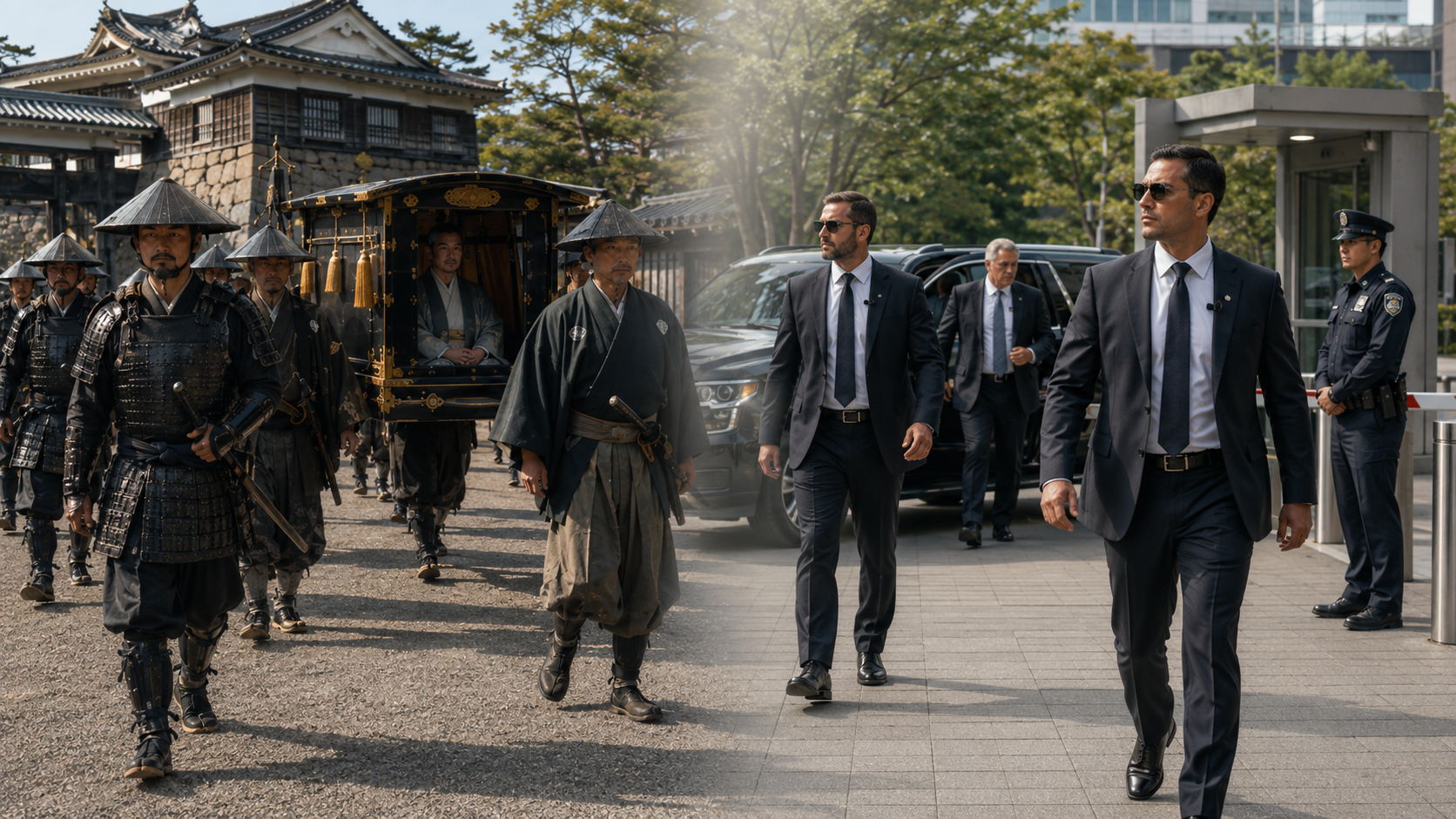
After Honnō-ji: Betrayal, Protection, Political Power, and the Lessons That Outlived the Samurai

The Interview That Never Happened

Matthew Parker Meets Toyotomi Hideyoshi

After Honnō-ji: Betrayal, Protection, Family, Political Power, and the Lessons That Outlived the Samurai

Osaka Castle, 1586

By Matthew C. Parker | Independent Security Advisors LLC | EPTraining.us Historical Executive Protection Case Study Series
The Honnō-ji Incident shows how legitimate access, trusted authority, incomplete intelligence, family continuity, and reaction distance can converge around a principal. In this historically grounded virtual interview, Matthew Parker questions Toyotomi Hideyoshi about the protective lessons that outlived the samurai.

Why This Historical Executive Protection Case Still Matters

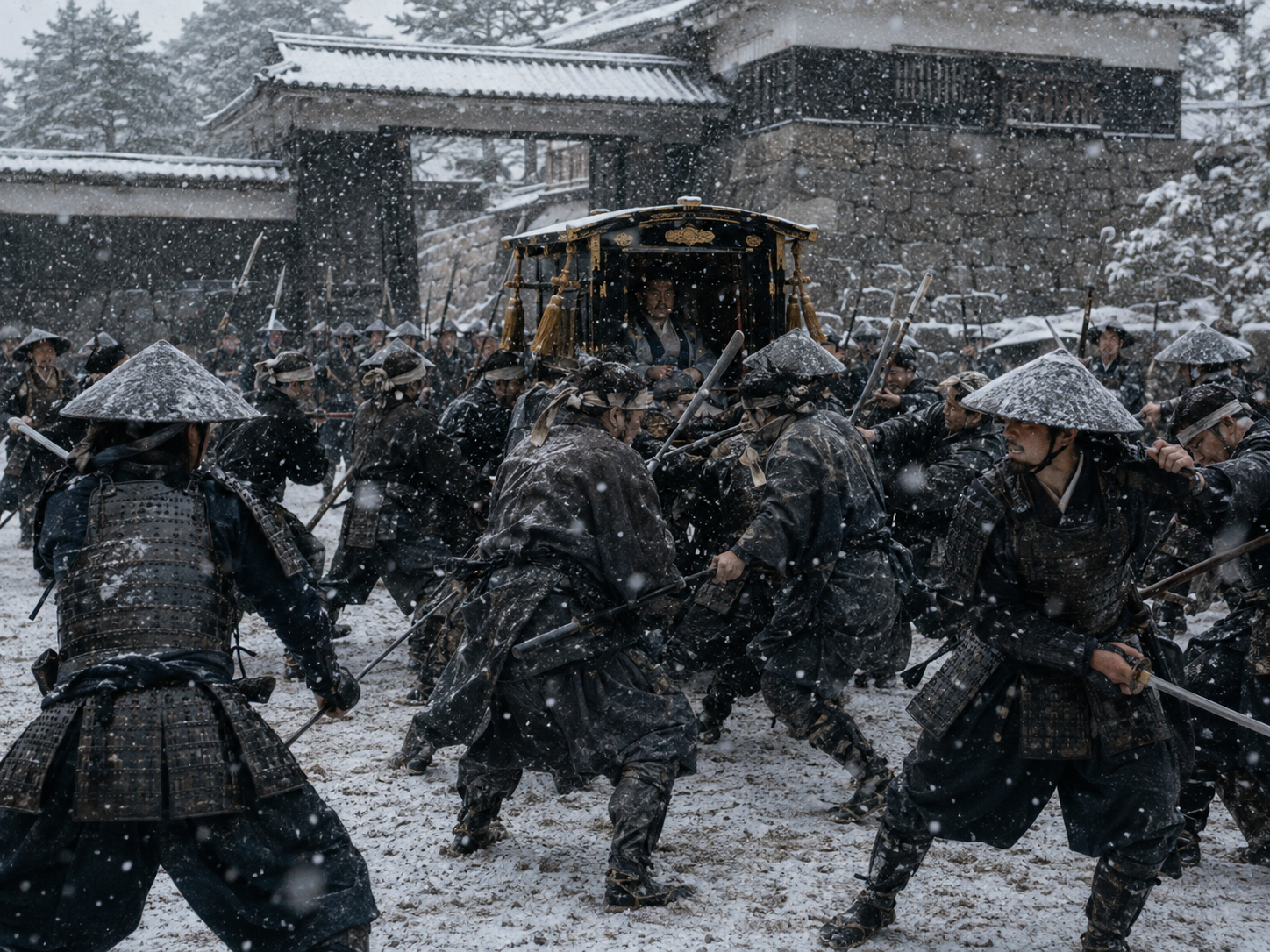
The Honnō-ji Incident is remembered as the betrayal and death of Oda Nobunaga, but from a protective perspective the deeper problem is how quickly legitimate authority can become hostile capability. Akechi Mitsuhide did not need to create access from the outside. He already possessed rank, troops, familiarity, and freedom of movement inside the political and military system surrounding Nobunaga.

That makes the case useful far beyond sixteenth-century Japan. Modern protection teams still have to distinguish trust from verification, recognize when familiar conditions have changed, convert imperfect information into decisions, create layers that buy time, and avoid treating the close protector beside the principal as the entire protective system.

Hideyoshi adds a second dimension. His response after Honnō-ji involved speed, intelligence, succession, family, alliances, movement, fortification, and political continuity. The interview therefore asks not whether samurai practiced modern executive protection, but which protective functions are recognizable across time – and where the historical analogy must stop.

Historical Simulation and Editorial Note

This is a historically grounded fictional interview set at Osaka Castle in 1586, four years after the Honnō-ji Incident. The dialogue is imagined, but the historical foundation is real: Oda Nobunaga was killed after Akechi Mitsuhide turned against him; Hideyoshi was campaigning against the Mōri at Takamatsu and returned east with extraordinary speed; Osaka Castle had become both a military stronghold and a visible center of Toyotomi authority; Nene held an important role within the household and political network; and family members could function simultaneously as loved ones, heirs, political actors, guarantees, and hostages. Matthew Parker serves as the modern executive-protection interviewer. His experience informs the questions, but Hideyoshi and the protective lessons of Honnō-ji remain the subjects.

The interview deliberately avoids pretending that sixteenth-century Japanese security practices were simply modern executive protection with swords. Terms such as insider threat, protection in depth, advance work, and reaction distance are used as modern analytical tools. Where the analogy stops, the interview says so. The setting is likewise reconstructed: Hideyoshi’s Osaka was known for formidable defenses and extraordinary display, and Momoyama political culture used architecture, ceremony, art, and hospitality as instruments of authority as well as prestige.

Reader Navigation – Choose How You Want to Read This Case Study

This case study is designed for two kinds of readers. The historical interview reconstructs the problem through conversation; the Protective After-Action Review can be read independently by students and practitioners who want the operational findings without reading the full interview.

  • Case Snapshot – A concise factual account of Honnō-ji, Hideyoshi’s response, and the protective problem.
  • Part I – Historical Interview – Matthew Parker questions Hideyoshi about betrayal, intelligence, layered security, reaction distance, advance work, family, succession, and continuity.
  • Part II – Protective After-Action Review and Lessons Learned – Skip directly here for the modern EP analysis and consolidated lessons.
  • Curriculum Cross-Reference – The strongest connections to current ISA / EPTraining.us learning objectives.
  • FAQ – Honnō-ji, Hideyoshi, and Executive Protection – SEO-focused answers on the historical event and its modern protective relevance.
  • The Bottom Line – The central protective lesson in concise form.
  • Related Resources and Sources – Supporting EPTraining.us material followed by historical and institutional sources.

Case Snapshot: Honnō-ji, Hideyoshi, and the Protective Problem

In June 1582, Oda Nobunaga was at Honnō-ji in Kyoto while major forces were dispersed on campaign. Akechi Mitsuhide, one of Nobunaga’s senior retainers, redirected troops toward Kyoto and attacked. Nobunaga died at Honnō-ji, and his son and expected successor Nobutada also died in Kyoto, turning a protection failure into an immediate succession and continuity crisis.

Toyotomi Hideyoshi was campaigning against the Mōri at Takamatsu when news of Nobunaga’s death reached him. He rapidly concluded the siege, moved east, and defeated Mitsuhide at Yamazaki. The surviving record does not justify pretending that Hideyoshi possessed perfect information at the moment of decision; the more useful lesson is how quickly he had to separate what required confirmation from what could not wait.

The protective significance of Honnō-ji lies in compressed warning time. Mitsuhide did not approach as an unknown outsider. His authority, troops, familiarity, and legitimate movement gave him advantages an external attacker would have had to create. The case therefore connects insider access, intelligence, protection in depth, succession, family exposure, advance work, and reaction distance into one historical problem.

PART I – The Historical Interview

Prefer the operational analysis? Skip the reconstructed interview and go directly to the Protective After-Action Review.

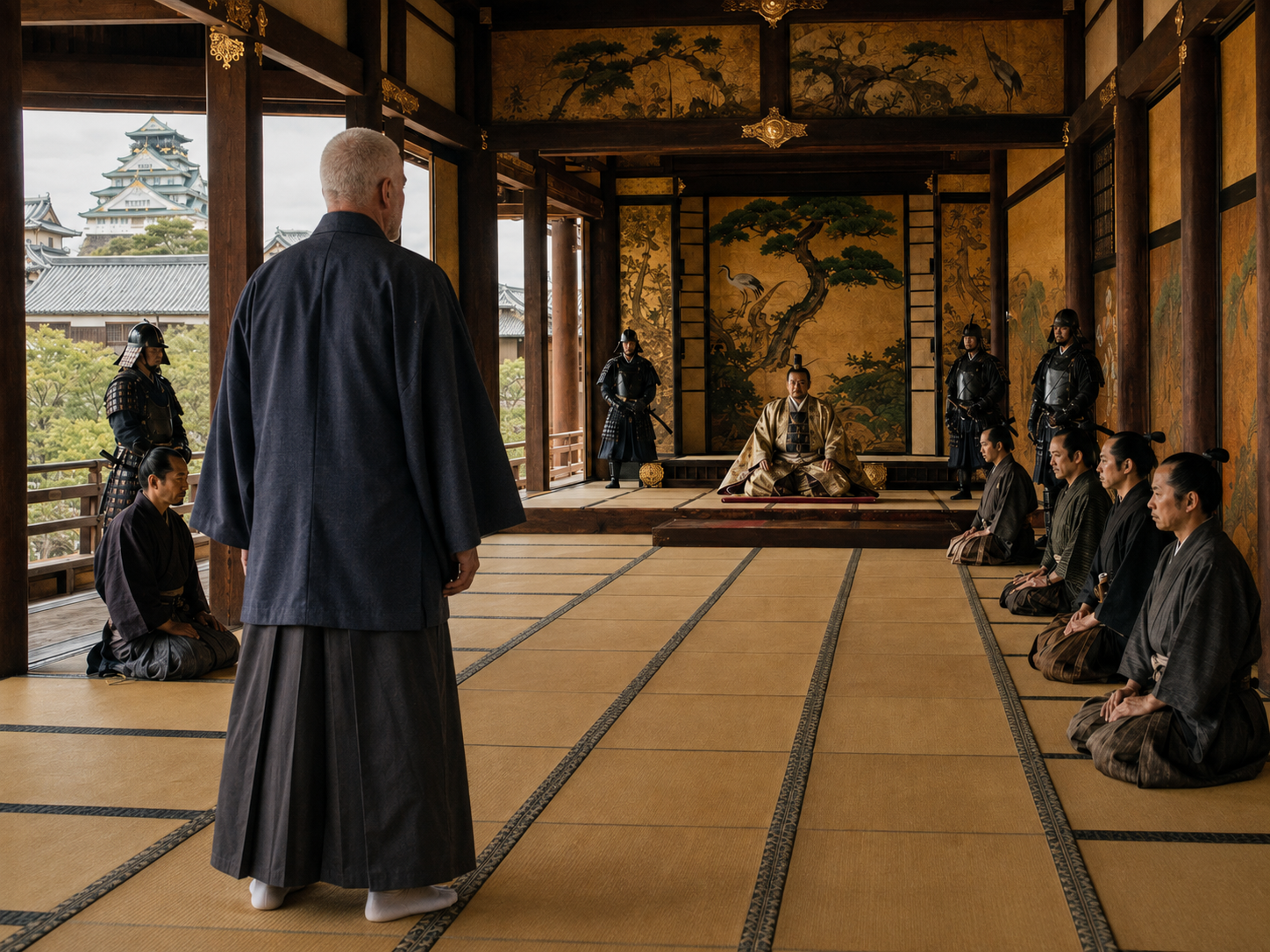
Matthew Parker meets Toyotomi Hideyoshi at Osaka Castle in a historical reconstruction examining Honnō-ji and executive-protection lessons. The first thing Matthew Parker noticed was not the guards. It was how little they needed to move. Men knelt along the edges of the audience hall, quiet enough to disappear into the architecture. Beyond them, lacquered timber, painted screens, polished floors, and the layered approaches of the castle created a kind of controlled distance before a visitor ever reached the man at the center of it.
Parker had been given clothing appropriate enough to the period that he did not arrive looking like a man from another century. He carried no modern weapon and no piece of equipment that could turn the exercise into fantasy. What he did carry was the habit of looking past the person he had come to meet and asking what the environment was doing around him.

Toyotomi Hideyoshi entered without the physical grandeur Parker might have expected from later heroic images. He did not need it. The room had already announced him.

Parker bowed as he had been instructed before entering the audience hall.

PARKER: Kampaku-dono.

Hideyoshi acknowledged the courtesy with a small movement of his head, then looked Parker over.

HIDEYOSHI: They tell me you train people who guard powerful men.

PARKER: Men and women. Officials, executives, families, dignitaries – people whose position, work, or circumstances create risk.

HIDEYOSHI: Women too?

PARKER: Yes.

Hideyoshi looked him over, not offended by the correction so much as interested in what kind of age required it.

HIDEYOSHI: Your world has changed some things.

PARKER: Some. Not as many as we like to think.

HIDEYOSHI: Then I suppose you have come to tell me what warriors in my age failed to understand.

PARKER: No. I came because I think your age understood access, deception, reconnaissance, family leverage, layered defenses, and human motive very well. Honnō-ji matters because it also shows where all of those things can still fail.

The faint smile left Hideyoshi’s face.

HIDEYOSHI: Then ask about Nobunaga.

Historical grounding: Hideyoshi began building Osaka Castle in 1583 as a principal stronghold after Nobunaga’s death. Osaka Castle Museum and Osaka Museum of History materials emphasize both the formidable scale of the Toyotomi castle and Osaka’s role as a center of political authority and display.

The News From Honnō-ji

PARKER: Where were you when you accepted that Nobunaga was dead?

HIDEYOSHI: At Takamatsu, fighting the Mōri. Nobunaga was expected to come west. Instead Mitsuhide turned eastward purpose into rebellion and his soldiers toward Kyoto.

PARKER: Sources differ on exactly how the first report reached you, so I do not want to pretend there was one perfect messenger story. What interests me is what you did while the information was still incomplete.

Hideyoshi nodded, and for the first time Parker saw the general more clearly than the ruler.

HIDEYOSHI: News in war does not arrive clean. It arrives frightened, late, contradicted, exaggerated, sometimes deliberately false. You do not ask whether you possess perfect information. You ask what must be confirmed, what cannot wait, and what will be lost if you are slow.

PARKER: What could not wait?

HIDEYOSHI: Time. If the Mōri learned Nobunaga was dead before I settled the siege, they would calculate differently. If my men believed the Oda house had collapsed, some would think of revenge, some of survival, some of opportunity. Mitsuhide would be gathering allies while I was still grieving. Mourning was real. It was simply not the first duty.

PARKER: So the information itself became part of the security problem.

HIDEYOSHI: Of course. A sword may kill the man in front of it. Information can break an army without touching anyone.

PARKER: When that report reached you, what did you need to know before you moved – and what did you have to decide before you could know everything?

HIDEYOSHI: Your age needed new words for that?

PARKER: We have become very good at naming old problems.

Hideyoshi laughed once, then waved him on.

Historical grounding: Hideyoshi was besieging Takamatsu during the Mōri campaign when Nobunaga was killed in June 1582. He rapidly concluded terms and returned east, defeating Mitsuhide at Yamazaki. Sources differ on the exact first transmission of the news, so the interview does not treat any single messenger account as certain.

The Enemy Was Already Inside

PARKER: Nobunaga had enemies everywhere. The man who destroyed him was not an outsider forcing a gate. Mitsuhide was one of his senior retainers. He had troops, authority, familiarity, legitimate movement, and the trust that came with all of those things.
HIDEYOSHI: That is why men prefer the word betrayal. Betrayal sounds as though the defect belongs entirely to the traitor. If you call it a weakness, you are forced to examine the lord, the household, the permissions, the habits, and the assumptions around him.

Parker paused. Hideyoshi had reached the issue faster than he expected.

PARKER: That is exactly the distinction I wanted.

HIDEYOSHI: If an enemy army approaches, scouts may see it. If bandits gather, villages talk. If a rival lord mobilizes, roads change, horses move, smoke rises. Mitsuhide did not need to disguise himself as Mitsuhide. His banners were allowed to move. His officers were allowed to obey him. His access was legitimate until his purpose changed.

PARKER: In my time we have a clinical phrase for it – insider threat – but your word, betrayal, may be more honest. Mitsuhide already possessed the relationship, authority, troops, familiarity, and movement that an outsider would have had to create.

HIDEYOSHI: And your answer is to trust no one?

PARKER: No. A protection organization that trusts no one destroys itself. The answer is that trust cannot be the only protection measure. We still look at access, changes in behavior, grievance, capability, unusual movement, information from outside the immediate detail, and whether one person has enough opportunity to defeat the whole system.

HIDEYOSHI: Then trust remains necessary, but it is no longer allowed to become blindness.

PARKER: Exactly.

HIDEYOSHI: Nobunaga was in territory he controlled. That probably made danger feel farther away than it was.

PARKER: Familiar ground is where people stop asking whether the ground changed.

HIDEYOSHI: A battlefield announces itself. Betrayal does not.

A Man Who Learned to Read Other Men

Hideyoshi rose and crossed a few paces toward the open side of the hall. He had risen from origins that gave him none of the inherited certainty surrounding many of the men he later commanded. Parker wondered whether that history had made him unusually attentive to motive.

PARKER: You seem to talk about motive before you talk about weapons. Is that because of what happened to Nobunaga, or because of how you came to power yourself?

Hideyoshi turned.

HIDEYOSHI: A man born high may be taught that others obey because obedience is natural. A man who climbs has to learn why each person opens a door, closes one, changes sides, accepts a gift, resents an insult, or waits for another man to become weak. I could not inherit the assumption that men would follow me. I had to learn what moved them.

PARKER: That is very close to threat assessment. Not because everyone with a grievance becomes violent, but because behavior makes more sense when you understand what the person believes he is gaining, losing, avenging, or protecting.

HIDEYOSHI: Then do not call it your invention.

PARKER: I would not dare.

Historical grounding: Japanese reference works emphasize Hideyoshi’s extraordinary rise from low social origins, his quick wit, ambition, adaptability, and skill at winning people over. The dialogue treats these traits as part of his political persona without converting later anecdotes into literal quotations.

Osaka Castle: Security and Political Theater

PARKER: Did Honnō-ji change how you protected yourself?
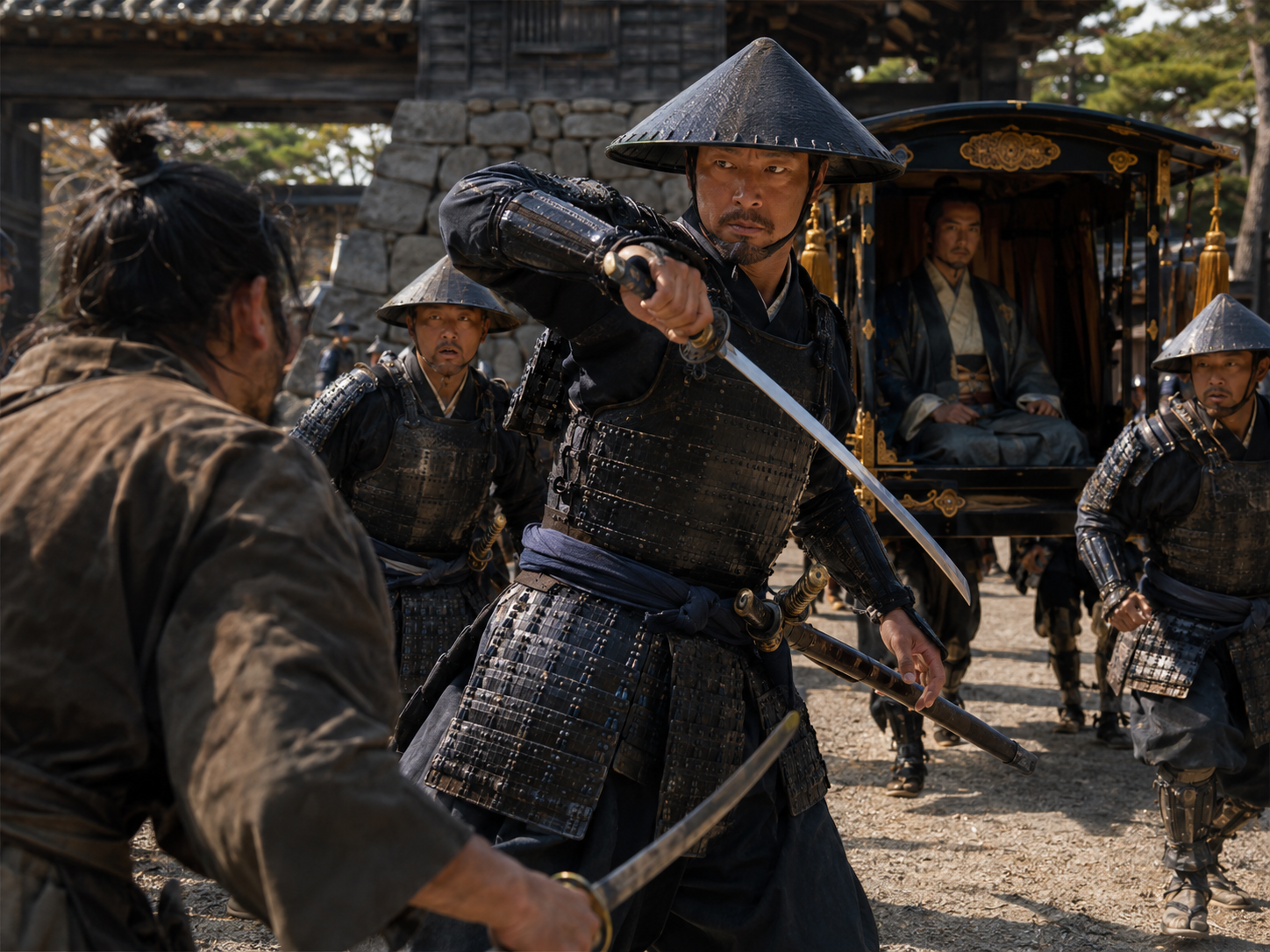
Hideyoshi opened one hand toward the room.

HIDEYOSHI: You are sitting inside part of the answer.

PARKER: Osaka is not Honnō-ji.

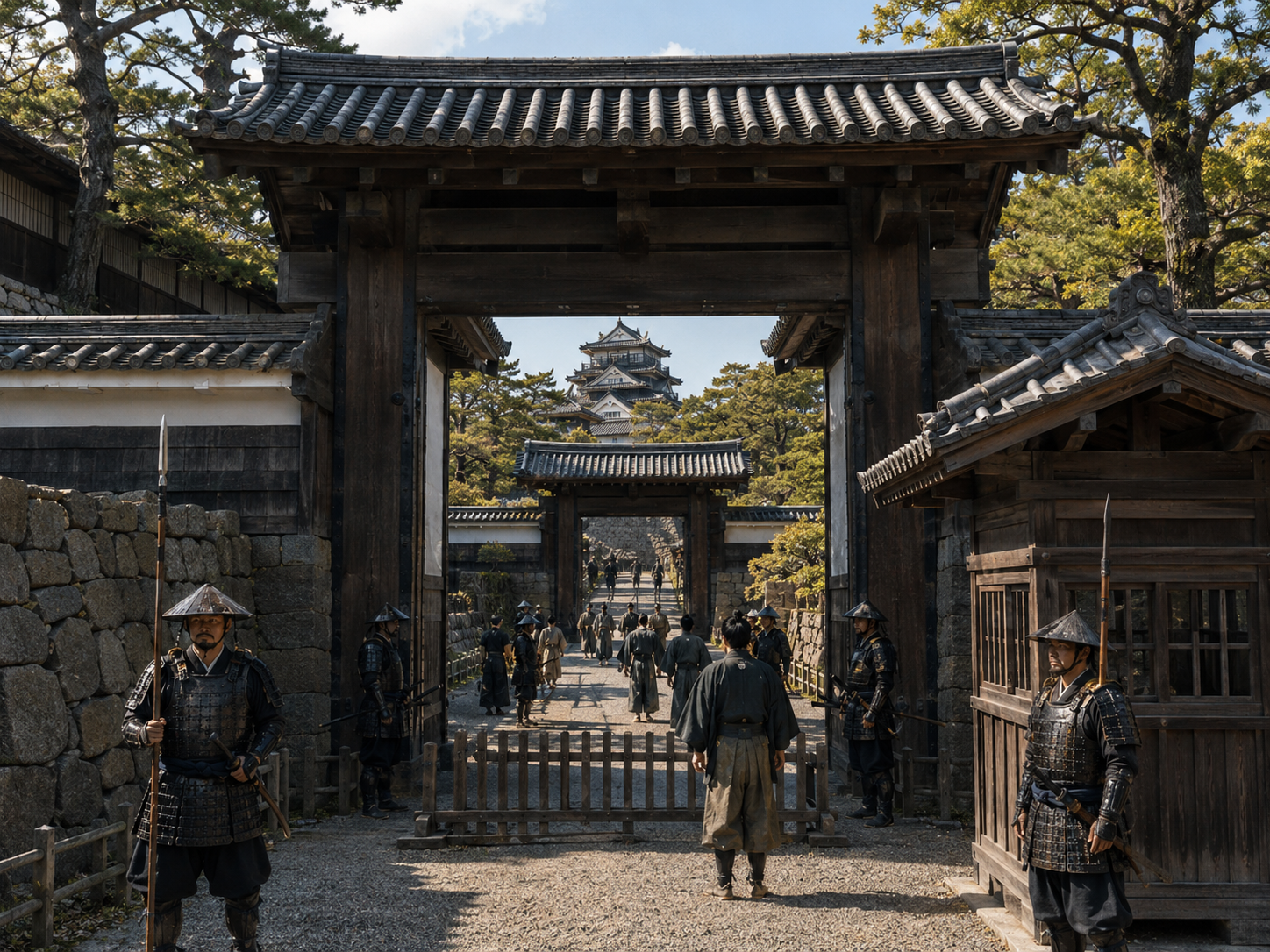
HIDEYOSHI: No. Distance separates me from the road. Gates separate one court from another. Men approaching me pass through other men. Walls, stores, water, residences, towers, and troops create time. A sudden attack must solve more problems before it reaches this room.

PARKER: Protection in depth.

HIDEYOSHI: Another of your names for an old thing?

PARKER: Yes. The guard beside the principal should not be the first security measure an attacker encounters. One layer observes. Another controls access. Another protects the site. Another manages movement. Close protection still matters, but ideally it is the last line, not the entire plan.

HIDEYOSHI: And if the other lines fail?

PARKER: Then I want a very good person standing beside you.

Hideyoshi smiled.

HIDEYOSHI: Good. I was beginning to think your future had abolished warriors.

PARKER: No. We just try not to make the warrior do work that intelligence, access control, or planning could have done earlier.

Hideyoshi looked around the hall again.

HIDEYOSHI: You see defense. Do not miss display. A lord who approaches this castle is being told something before I say a word. He sees what I can build, what I can supply, how many people move when I give an order, and what opposing me may cost.

PARKER: Deterrence through visible capability.

HIDEYOSHI: If that is your phrase. Strength that prevents a fight has still done work.

PARKER: Agreed. But visible security has a second edge. It can teach an observer where the principal is, how the formation moves, and what remains predictable.

HIDEYOSHI: Then a wise ruler displays what he wants understood and conceals what he does not need understood.

PARKER: That is a better answer than simply saying visible or invisible security is always superior.

HIDEYOSHI: Because it is not a guard answer. It is a ruling answer.

Historical grounding: Toyotomi Osaka combined fortification with political display. Osaka Castle Museum describes the first Toyotomi castle as exceptionally grand and strong, while scholarship on Momoyama culture emphasizes Hideyoshi’s use of architecture, ceremony, art, and material wealth as expressions of authority.

The Garden: Security That Does Not Announce Itself

Hideyoshi left the hall without warning. The guards changed posture, attendants moved, and the conversation moved with him. Outside, the garden was quieter. The castle remained present in walls, paths, distance, and controlled approaches, but the display of force receded.

Parker noticed one guard near a veranda, another beyond the trees, and another positioned where a bridge narrowed the path. Hideyoshi noticed Parker noticing them.

HIDEYOSHI: You found them.

PARKER: You brought the security with you. You simply stopped advertising all of it.

HIDEYOSHI: A man does not always need to see the spear protecting him.

PARKER: That remains true. Visible protection can deter and reassure. Low-profile protection can preserve movement, reduce political distance, and reveal less about the formation. The right balance depends on the threat and on what the principal has to accomplish.

HIDEYOSHI: You keep returning to what the principal has to accomplish.

PARKER: Because security can become successful at the wrong thing. If I make you completely safe by preventing you from receiving lords, traveling, inspecting troops, negotiating, or governing, I have protected your body and damaged your purpose.

HIDEYOSHI: A lesson for timid men with too many guards.

PARKER: And for bold men with too few.

Hideyoshi laughed and continued toward the pond.

The Reaction-Distance Problem

PARKER: If a man is already within sword distance and decides to attack before the guard recognizes that decision, how much advantage has the attacker already gained?
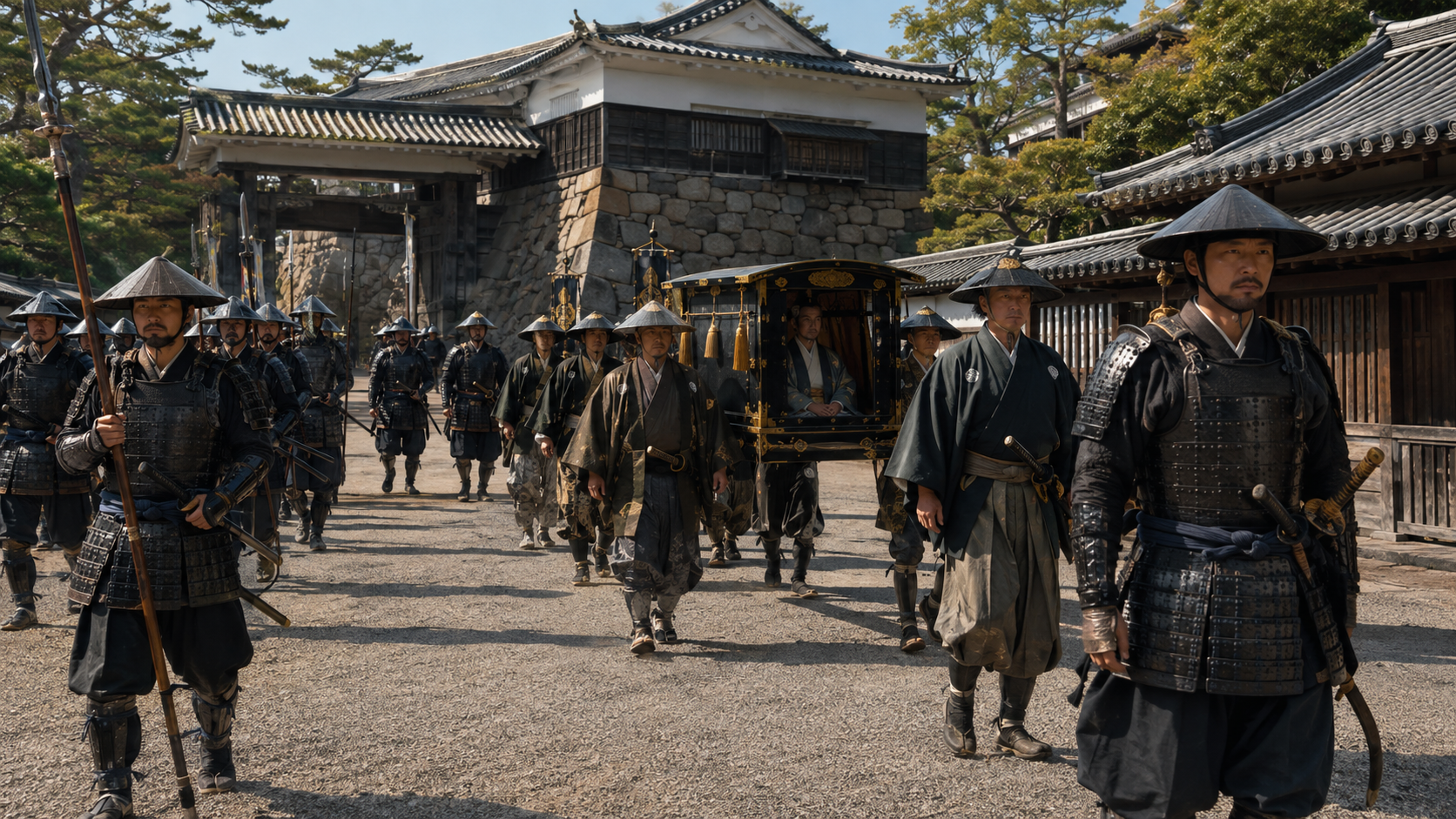
HIDEYOSHI: Most of it. He has already chosen the moment. The guard is still discovering that there is a moment to answer.

PARKER: Even against a skilled swordsman?

Hideyoshi rested his hand near his sword, not theatrically, but as if measuring the sequence in his own body.

HIDEYOSHI: Skill wastes less movement. It does not give the guard knowledge before the attacker has chosen. A poor swordsman may lose to hesitation; a good one still cannot begin before he understands that he must.

PARKER: Then the closer the attacker is allowed to come, the more the problem becomes reaction rather than prevention.

HIDEYOSHI: Naturally. But a wise man still keeps someone near who can answer when prevention fails.

PARKER: On that we agree.

HIDEYOSHI: Good. I was beginning to think your age had forgotten the last few feet.

PARKER: It has not.

Historical grounding: This exchange concerns initiative, recognition, and reaction at close distance. It does not claim that Hideyoshi or samurai practiced a modern 21-foot or 1.5-second standard. The Tueller/OODA comparison is reserved for the editorial curriculum analysis at the end.

Advance Work: Seeing the Ground Before the Principal Arrives

PARKER: When you travel, who goes ahead, and what do you require them to learn before you arrive?
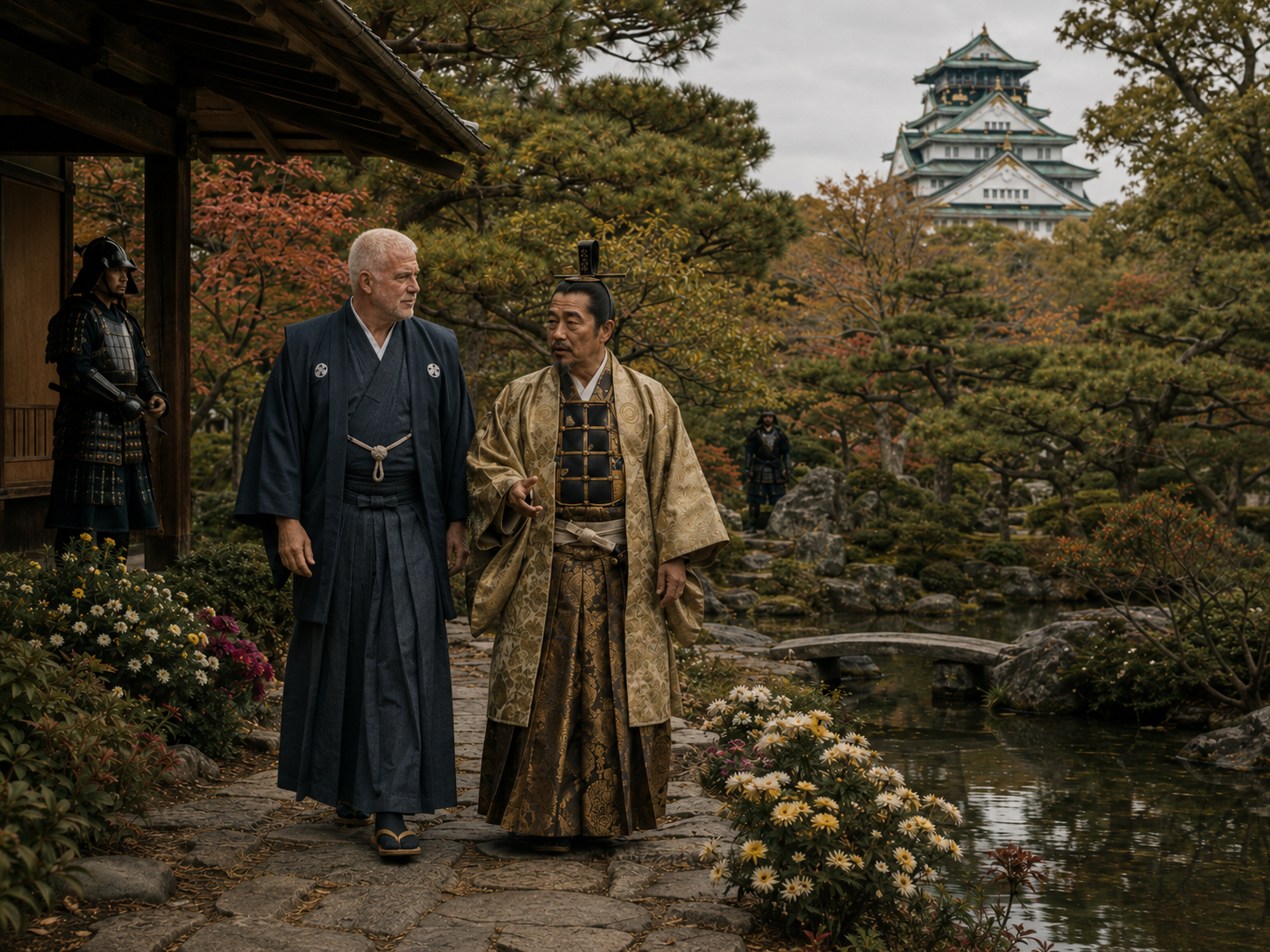
HIDEYOSHI: Scouts, messengers, men who know the road, men who know the lord receiving me, sometimes men whose names the receiving lord never hears. Roads wash out. Bridges fail. Villages change allegiance. Gates close. An escort that was enough last season may be foolish this season. You learn before the body arrives.

PARKER: Then the real value is not simply sending someone ahead. It is learning enough about the road, the host, the people, and the place that you do not discover the problem at the same moment you arrive inside it.

HIDEYOSHI: Then your advance man is scout, chamberlain, engineer, and spy.

PARKER: On a difficult day, yes.

HIDEYOSHI: And if he says the destination is unsafe?

PARKER: Then we decide whether to change the place, the route, the timing, the security, or the mission. Sometimes the principal accepts risk because the mission requires it. My job is to make sure the risk is understood rather than accidental.

HIDEYOSHI: You cannot simply command the principal not to go?

PARKER: Usually, no.

Hideyoshi looked genuinely delighted.

HIDEYOSHI: Your profession is harder than mine.

PARKER: It has fewer armies. The arguments can be similar.

Family, Succession, and the Cruel Logic of the Age

The path narrowed beneath the trees. Parker waited until the audience hall was no longer visible before changing the subject.

PARKER: What did Honnō-ji teach you about family?

Hideyoshi did not answer immediately.

HIDEYOSHI: Nobunaga did not die alone. Nobutada died in Kyoto too. Kill the lord and perhaps the house still has a direction. Kill the man expected to follow him and every relative, general, enemy, and opportunist begins calculating. Family is love. For a ruler, it is also continuity.

PARKER: So you would avoid placing the principal and the critical successor inside the same vulnerability.

HIDEYOSHI: When the choice exists, I would not let one revolt cut the trunk and the strongest branch at once.

PARKER: That is an interesting answer in 1586, because your own succession is not simple. You have built a government around yourself, but you do not yet have the biological son who will later become the center of your succession plans.

Hideyoshi’s expression changed. The charm did not disappear, but Parker could see that the question had crossed from history into a present weakness.

HIDEYOSHI: You came prepared to be impolite.

PARKER: The polite version of the question is still the same question.

HIDEYOSHI: Then yes. A house built around one man is powerful while that man is strong and uncertain when he is gone. Blood, adoption, brothers, nephews, titles, marriages – all of these can become answers until they become problems. Honnō-ji taught every ambitious man in Japan that succession is part of security whether he wishes to think about death or not.

PARKER: That is continuity planning in its hardest form. Protecting the current principal while also making sure the organization does not collapse if protection fails.

Historical grounding: In 1586 Hideyoshi had no surviving biological son who could provide an uncomplicated succession. Tsurumatsu was not born until 1589 and Hideyori until 1593. Contemporary and later evidence shows that succession arrangements around Hideyoshi shifted substantially as family circumstances changed.

Nene: Family Member, Adviser, and Political Actor

PARKER: And Nene?

Hideyoshi’s expression softened more than it had at any point in the conversation.

HIDEYOSHI: Nene is not a wife who merely waits in a room while men decide the world. She knows retainers, wives, families, quarrels, grievances, obligations. Men speak differently around her than they speak around me. She can hold people together in ways soldiers cannot.

PARKER: So from a protection standpoint she has two identities at once: someone whose safety matters to you personally and a political figure with her own access, information, relationships, and value to the regime.

HIDEYOSHI: Why would those be separate?

PARKER: In my field we sometimes make the mistake of treating the spouse as simply an extension of the principal. But if the spouse has an independent schedule, influence, or threat profile, that has to be assessed separately.

HIDEYOSHI: Then assess Nene separately.

PARKER: I would.

Historical grounding: Osaka Castle Museum describes Kōdai-in/Nene as playing a major independent role in holding together family and retainers and participating in political affairs. Jesuit observer Luís Fróis also described her as unusually prudent and capable.

The Question About His Mother

PARKER: You have just described family as continuity and strength. Then I have to ask about your mother.

The expression closed again.

HIDEYOSHI: Ieyasu.

PARKER: Yes. You sent Ōmandokoro into Tokugawa hands as a guarantee while trying to secure Ieyasu’s submission. How do you talk about protecting family and then deliberately place your own mother where another lord can use her as leverage?

Hideyoshi looked toward the castle before answering.

HIDEYOSHI: By refusing to pretend that your morality and my politics are the same thing. In this age a marriage can stop a war. A child can secure an alliance. A wife can be kept where her husband remembers the price of disobedience. My mother gave Ieyasu what my words alone could not: proof that if I betrayed him, I had placed something I valued inside the consequence.

PARKER: She became collateral.

HIDEYOSHI: Yes.

There was no attempt to make the answer kinder.

HIDEYOSHI: Do not mistake explanation for mercy. It is a cruel practice. It works because families matter.

PARKER: So the same fact creates both protection and leverage: because family matters, an enemy can use family to influence the ruler even when the ruler himself is difficult to reach.

HIDEYOSHI: Then perhaps your age improved something.

Historical grounding: During the 1586 negotiations that brought Tokugawa Ieyasu into submission, Hideyoshi used close family members as political guarantees, including sending his mother Ōmandokoro into Tokugawa territory. Hostage and marriage politics were established instruments of Sengoku diplomacy and coercion.

Loyalty, Screening, and the Limits of Knowing People

PARKER: After Mitsuhide, how do you decide whom to trust?

HIDEYOSHI: Poorly, sometimes.

Parker laughed before he could stop himself.

HIDEYOSHI: You want a method that tells you which man will betray you. If such a method existed, it would be worth more than Osaka Castle.

PARKER: We still do not have one.

HIDEYOSHI: Good. I would resent the future for possessing it.

They resumed walking.

HIDEYOSHI: I watch what men want. Land. Rank. Revenge. Marriage. Recognition. Safety for children. I watch who feels slighted, who quarrels, who changes allies, who suddenly speaks too loudly of loyalty. I use gifts, marriages, movement, fear, advantage, and sometimes the presence of families.

PARKER: You are mixing protective intelligence with governance.

HIDEYOSHI: I am ruling.

PARKER: That is where our roles separate. You can govern alliances, marriages, lands, and movements in ways a protective service in my time cannot. But the question underneath your methods is useful to me: what does the person want, what changed, what access does he possess, and what is he capable of doing?

HIDEYOSHI: Then you still study men.

PARKER: Yes. We just have fewer acceptable ways to manipulate them.

HIDEYOSHI: Again, your profession sounds difficult.

The Hindsight Test at Honnō-ji

They stopped at a pavilion overlooking the water. Parker turned the conversation back to Nobunaga.
PARKER: I want to take away the advantage both of us have now. Go back to the day before Honnō-ji. You do not know that Mitsuhide will turn. Based only on what a competent commander could reasonably have known then, what would you change?

Hideyoshi looked irritated by the rule, then intrigued by it.

HIDEYOSHI: Good. If I am allowed to know the answer before the question, I can pretend to be wiser than I was.

He sat and thought for a long moment.

HIDEYOSHI: I would begin by rejecting the idea that Kyoto was safe merely because Nobunaga controlled it. His strongest forces were dispersed. He was moving between campaigns. Senior retainers could move troops under legitimate orders. I would keep enough men close that a sudden force could not overwhelm the residence before warning spread. Not an army so large that the lord could not move, but enough to create time.

HIDEYOSHI: I would also watch troop movement toward the city, including friendly troop movement. I would want more than one way out. I would ask whether the same revolt could reach both the lord and the people on whom succession depended. And I would not let a familiar banner answer the question of intention by itself.

PARKER: Then your review begins with capability and access, not with the luxury of already knowing the traitor. You would create more warning, more than one way out, attention to friendly as well as enemy movement, and separation where one blow could destroy both command and succession. None guarantees survival, but each gives Nobunaga more time and choices.

HIDEYOSHI: Would your system have saved Nobunaga?

PARKER: I cannot promise that. Anyone who promises invulnerability is selling something. Better protection gives you earlier recognition, fewer easy opportunities, more options, and more problems for the attacker to solve. Sometimes the attacker still solves them.

Hideyoshi smiled.

HIDEYOSHI: That answer I believe.

What Hideyoshi Would Ask the Protector

HIDEYOSHI: You have spent all day asking how I judge other men. Let me ask how your protectors are judged. Suppose the principal survives. Do you call the operation successful?

Parker looked at him, surprised by how directly the question landed on one of his own professional habits.

PARKER: Survival is the most important outcome, but it is not enough to tell us every layer worked. If the attacker reached the principal because intelligence failed, access failed, the advance missed something, and then the close protector reacted brilliantly, I would call the reaction successful. I would not call every part of the system successful.

HIDEYOSHI: Then you divide victory into pieces.

PARKER: We have to. Otherwise good fortune can hide bad procedure, and one good guard can hide three earlier failures.

HIDEYOSHI: And a failed attack can still teach you that the attacker came too close.

PARKER: Exactly.

HIDEYOSHI: Nobunaga would have disliked this conversation.

PARKER: Most principals eventually dislike part of a good after-action review.

Toward the Water

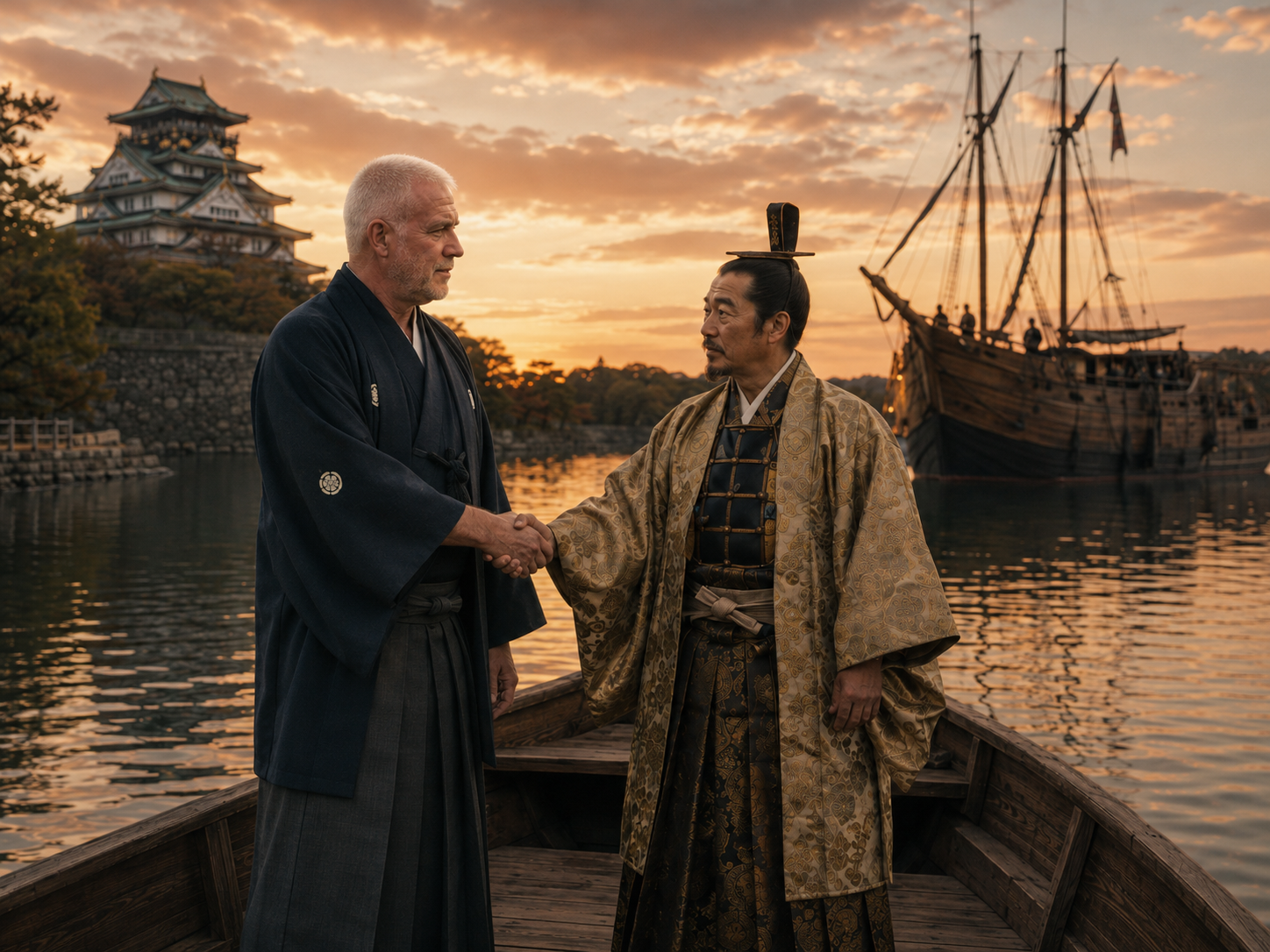
Near sunset they descended through another set of gates toward the water. A narrow boat waited at the landing. Farther out, a larger vessel sat against the darkening sky. Only two guards were obvious. Parker had learned enough by then to assume that obvious and total were not the same thing.

They stepped into the small boat. The boatman pushed away, and Osaka Castle began to recede.

HIDEYOSHI: Now I will ask the question I wanted to ask when you first entered my hall. In your age, with firearms, armored vehicles, physicians, police, intelligence, devices that speak over great distances, cameras, and all these layers – have you solved betrayal?

Parker looked back toward the castle.

PARKER: No.

Hideyoshi waited.

PARKER: We detect more. We communicate faster. We can screen access more carefully, share warnings quickly, move the principal faster, treat injuries better, and coordinate more people than your system could. But the human problem remains. People become angry, humiliated, ambitious, ideological, jealous, frightened, obsessed, or desperate. Trusted people change. Principals become comfortable in familiar places. Security becomes routine. Someone assumes another person is watching the door.

HIDEYOSHI: Then you have not solved betrayal.

PARKER: No. We have built better systems around the fact that betrayal remains possible.

Hideyoshi looked toward the larger vessel.

HIDEYOSHI: Then perhaps that is the lesson Nobunaga left you. Not that he required a better swordsman beside him.

PARKER: No.

HIDEYOSHI: He needed more time before the sword mattered.

Parker smiled and bowed. He kept his hands at his sides rather than imposing a foreign gesture on the Kampaku.

HIDEYOSHI: You were about to do something else.

PARKER: In my country, we sometimes part by taking hands. I was told not to assume my customs belong in your hall.

Hideyoshi studied him for a moment, then gestured for Parker to show him. Only then did Parker extend his hand. Hideyoshi looked at the unfamiliar gesture and took it.

HIDEYOSHI: In your country, this is respect?

PARKER: Usually. Sometimes agreement. Sometimes friendship.

Hideyoshi tightened his grip once before releasing it.

HIDEYOSHI: Then remember this, Parker-dono. A man who waits until he sees the enemy’s blade may already be too late. But a man who believes walls, guards, loyalty, and plans make betrayal impossible has misunderstood both security and men.

PARKER: I will remember it.

The boat turned toward deeper water. Behind them stood the castle Hideyoshi had built after one of the most powerful men in Japan died in territory he believed he controlled. Ahead waited another age – one with faster weapons, better medicine, instant communications, armored vehicles, modern intelligence systems, and the same human capacity for ambition, loyalty, betrayal, routine, and surprise.

The weapons had changed. The speed had changed. The technology had changed. The central protective problem had not: recognize danger before proximity turns it into reaction, create time before time runs out, and never mistake the warrior standing beside the principal for the entire protective system surrounding him.

PART II – Protective After-Action Review and Lessons Learned

The interview uses modern questions to examine a sixteenth-century event, but the after-action review has a different purpose: separate the historical record from the simulation, identify the recurring protective functions, and ask what Honnō-ji and Hideyoshi’s response can teach without pretending that modern doctrine already existed in Sengoku Japan.

Honnō-ji is especially valuable because the decisive threat did not approach Nobunaga as an outsider. Mitsuhide already possessed rank, troops, authority, familiarity, and legitimate movement. The stronger question is not whether a faster swordsman could have won the final seconds, but how a trusted subordinate acquired enough capability and opportunity to compress warning time almost to zero.

Hideyoshi’s response shows that the protection problem can expand after the principal is lost. Information, succession, command continuity, family, alliances, political speed, and physical security all became immediately relevant. Osaka later created distance, gates, controlled approaches, troops, and time while also functioning as visible political deterrence.

1. Insider threats possess advantages outsiders have to earn

Mitsuhide did not need counterfeit status, outsider reconnaissance, or a fabricated reason to move troops. Authorized position supplied much of the access and capability an external adversary would first have had to build. Modern protection cannot eliminate trust, but it cannot allow trust to become the only control.

2. Imperfect intelligence still has to drive decisions

Hideyoshi could not wait for perfect reporting at Takamatsu. The operational requirement was to distinguish what required confirmation from what could not wait. Protective intelligence is useful when it changes decisions under uncertainty, not only when every fact is settled.

3. Layered security creates time

Osaka’s gates, water, courtyards, troops, residences, controlled approaches, and distance created detection, delay, and options. The transferable principle is not the castle itself; it is that the close protector should not be the first security layer an attacker encounters.

4. Deterrence and concealment are different tools

Hideyoshi’s Osaka projected strength as political theater, but the garden sequence illustrates the opposite requirement: some protection works best when it reveals less. Visible capability can deter; lower-profile protection can preserve movement and conceal protective structure.

5. Reaction time is the last problem, not the first plan

Once an attacker acts inside weapon distance, the defender is already spending time recognizing and reacting. The sword-distance discussion is useful precisely because it does not depend on a modern 21-foot rule. The enduring issue is initiative: the attacker chooses the moment while the protector must first recognize that the moment has changed.

6. Advance work is reconnaissance for the principal’s mission

Roads, bridges, hosts, local allegiance, gates, routes, and changing conditions all had to be understood before movement. Modern advance work is more formal and technologically supported, but the operational objective is familiar: discover the problem before the principal arrives inside it.

7. Family can be continuity, intelligence, leverage, and target

Nobutada, Nene, and Ōmandokoro show different ways family intersected with power. Modern ethical and legal limits are radically different, but the protective lesson remains that family members may have independent exposure, information value, continuity importance, and vulnerabilities that cannot be reduced to the principal alone.

8. Hindsight must be controlled

A useful review cannot begin by granting the protector knowledge that only became available after betrayal. The better question is what a competent observer could reasonably have recognized before Honnō-ji: dispersed forces, legitimate troop movement, access, succession concentration, escape options, and the danger of assuming familiar territory was automatically safe.

9. Survival does not prove every layer worked

A principal may survive because of skill, courage, medical response, luck, or an attacker’s failure even when earlier protective layers failed. A serious after-action review separates the performance of intelligence, access, planning, movement, and close response instead of treating survival alone as proof that the system succeeded.

Frequently Asked Questions: Honnō-ji, Toyotomi Hideyoshi, and Executive Protection

What happened at Honnō-ji in 1582?

Akechi Mitsuhide, a senior retainer of Oda Nobunaga, redirected troops toward Kyoto and attacked Nobunaga at Honnō-ji. Nobunaga died, and his son Nobutada also died in Kyoto. Hideyoshi, then campaigning against the Mōri at Takamatsu, rapidly moved east and defeated Mitsuhide at Yamazaki.

Why is Honnō-ji relevant to modern executive protection?

Because the decisive threat came through legitimate authority and familiar access rather than through an unknown outsider forcing a perimeter. The case illustrates insider access, compressed warning time, the danger of overreliance on trust, and the need for multiple protective layers.

Was Akechi Mitsuhide an outsider to Nobunaga’s organization?

No. He was a senior retainer with troops, authority, familiarity, and legitimate movement. That is precisely why the case is useful when discussing insider threat: many of the capabilities an outsider would need to create were already available to him.

Does the article claim Hideyoshi knew in advance that Mitsuhide would betray Nobunaga?

No. The interview deliberately avoids giving Hideyoshi information that the surviving record does not establish he possessed. The hindsight section asks what could reasonably have been recognized before the betrayal rather than pretending the answer was obvious.

How does Osaka Castle connect to protection in depth?

The historical castle was a political, military, residential, and symbolic complex rather than a modern executive-protection system. As an analytical comparison, its distance, gates, controlled approaches, water, troops, and internal layers illustrate the protective value of creating detection, delay, and options before an attacker reaches the principal.

Does the reaction-distance section claim samurai used the modern 21-foot rule?

No. The article explicitly separates the historical sword-distance discussion from modern Tueller/OODA training. The transferable concept is initiative and recognition delay: once an attacker is already close and has chosen the moment, the defender has less time to recognize and respond.

Why does the interview spend so much time on family and succession?

Because Nobunaga’s death did not create only a personal-security problem. Nobutada’s death intensified the succession crisis, while Hideyoshi’s own family relationships later carried political, continuity, intelligence, and leverage implications. Modern family protection operates under different law and ethics, but family exposure and continuity still matter.

How does this case connect to ISA and EPTraining.us training?

The case connects threat assessment, protective intelligence, protection in depth, advance work, movement, family and continuity planning, site assessment, hostile reconnaissance, protectee mission requirements, and reaction time. The curriculum cross-reference keeps those modern applications outside the historical dialogue so the history is not rewritten as modern doctrine.

The Bottom Line

The strongest lesson from Honnō-ji is not that Nobunaga needed a faster swordsman beside him. He needed more time before the sword mattered. Better warning, more depth, attention to legitimate as well as hostile movement, more than one way out, and a clearer separation between trust and control could have created additional options without guaranteeing survival.

Hideyoshi’s response reinforces the other half of the lesson. When a principal is lost, the protection problem can immediately become an information, succession, family, command, political, and continuity problem. Protection therefore has to support both the person and the mission that person is expected to perform.

The weapons changed. The technology changed. The central protective problem did not: recognize danger before proximity turns it into reaction, create time before time runs out, and never mistake the warrior standing beside the principal for the entire protective system surrounding him.

Related EPTraining.us Resources

Sources and Historical Notes

Historical note: The reconstructed dialogue does not treat disputed messenger stories, private motives, or later anecdotes as established fact. Historical-grounding notes are retained at the points where the interview relies on reconstruction or where a modern executive-protection analogy could otherwise be mistaken for period doctrine.

About Independent Security Advisors, EPTraining.us, and the Historical Executive Protection Case Study Series

Independent Security Advisors LLC (ISA) operates EPTraining.us, a U.S.-based executive-protection training program for law-enforcement, military, public-safety, corporate-security, and private-sector protection professionals. ISA training integrates threat assessment, protective intelligence, operational planning, advance work, physical security, movement, communications, legal and ethical responsibilities, medical response, and performance-based evaluation.

The Historical Executive Protection Case Study Series uses documented incidents and historically grounded simulations to examine recurring protective problems without presenting modern doctrine as though it already existed in earlier periods. The purpose is to extract transferable functions while preserving the historical differences that make the comparison useful.


Author: Matthew C. Parker | Independent Security Advisors LLC | EPTraining.us

Publisher: Independent Security Advisors LLC / EPTraining.us