
 E-mail us
Who Should Protect Elected Officials: Police, Private Security, Reserves, or an Integrated Detail?
police vs private security executive protection
Building Protection From the Resources Government Already Has—and the Resources It Can Add
Police chiefs, actual protection costs, private-sector performance, reserve personnel, special deputation and Minneapolis show why the answer is larger than choosing between a police officer and a private bodyguard
By Matthew C. Parker
Independent Security Advisors LLC | EPTraining.us | Defending Democracy Initiative
Updated September 14, 2026
Abstract: Once government determines that an elected official, judge or other public official requires protection, somebody has to decide who will actually perform the mission. Police officers bring law-enforcement authority, intelligence access, investigative capability and an immediate connection to the public-safety system. Properly qualified private executive-protection professionals may bring specialized experience, flexibility and manpower that an understaffed department does not possess. Reserve officers, auxiliary personnel and sworn court personnel can add capability when their authority and training support the assignment. In limited circumstances, specially appointed or deputized personnel may provide another option. The question is not which profession wins an argument. The question is what the threat requires, what authority is needed, who is actually qualified, what the operation will cost and how those resources should work together.
From Ten Days to the Next Question
The sister article in this series, Ten Days to Build the Detail — and What Happens When the Detail Loses the Mission, places a police sergeant, police chief and county administrator into the problem after a credible threat is received. Their fictional county has no standing executive-protection detail, no dedicated protection budget and no group of trained protection specialists waiting for the telephone to ring.
That interview addresses how a jurisdiction can assemble the capability. This article addresses the next question: once government determines that protection is required, who should actually perform it?
Should the chief remove officers from patrol or investigations? Should the sheriff provide deputies? Can trained reserve officers be used? Where can auxiliary or court personnel reduce the burden on full-time officers? When does private executive protection provide a better capability? What functions still require police authority? Can government give private personnel additional authority?
I would not answer those questions by starting with a preference for police or private security. I would start with the mission.
Reader Navigation
- Start With the Mission
- Police Protection: What It Gives You and What It Costs You
- What Police Chiefs Have Actually Said
- What Police Protection Really Costs
- Reserve, Auxiliary and Court Personnel
- What Private Executive Protection Can Give Government
- Where Private Security Stops and Police Authority Begins
- When Private Contract Security Fails
- Private Security as a Working Government Resource
- Can Government Give Private Protection Personnel Additional Authority?
- So Who Should Perform the Mission?
- The Integrated Detail
- A Judge Receives a Threat
- Protective Analysis
- Frequently Asked Questions
- Parker’s Bottom Line
Start With the Mission
Suppose a mayor, county executive or judge receives a credible threat this afternoon. The police chief can pull several experienced officers from patrol and investigations, but none has substantial executive-protection experience. A respected private provider can put experienced agents on the ground quickly, but those agents do not possess the same police powers, restricted information access or connection to the local public-safety system. Which one do you choose?
My answer is that I do not have enough information yet.
I want to see the threat assessment. Is there an identified subject? Is the threat being actively investigated? Are communications increasing in frequency or specificity? Has the person researched the official, attempted an approach, located the residence or obtained schedule information? Is there evidence of surveillance? Is this connected to tomorrow night’s public meeting, or are we dealing with a problem that may continue for weeks or months?
Then I want to know what the official has to do. A mayor appearing at several public events creates a different problem from a county executive working primarily from one government building. A judge may be relatively secure inside a courthouse and exposed during the walk to the parking area, the drive home or at a residence that has never received a security review. If the threat mentions a spouse, children or staff, the protective problem may extend beyond the principal.
Once we understand the mission, we can identify the positions that need to be filled. The operation may require a protection leader, close-protection personnel, a driver, advance work, intelligence support, residential measures or additional police at a public event. Some positions may require police authority. Others may require specialized protection experience more than police powers.
Define the job before choosing the title. Only then would I decide whether the position should be filled by a police officer, deputy sheriff, reserve officer, private executive-protection agent or another qualified person.
Police Protection: What It Gives You and What It Costs You
There are good reasons government frequently turns first to police. A police officer brings law-enforcement authority, established communications, local knowledge and immediate access to patrol, detectives, dispatch and other public resources. If threatening behavior becomes criminal behavior, the protective operation is already connected to the people who investigate the crime, identify suspects, preserve evidence and make arrests.
Police also operate within an established government chain of command. Firearms policy, use-of-force rules, reporting requirements, evidence procedures and emergency communications already exist. Those advantages become especially important when the protective mission is connected to an active criminal investigation, public disorder, a likely arrest, traffic control or a larger law-enforcement operation.
But a police badge is not an executive-protection certificate. An experienced officer may know how to investigate a crime, make an arrest, respond to violence and lawfully use force without having been trained to conduct an advance, build a movement plan, evaluate a residence, plan protective transportation or identify hostile surveillance. That is a training issue, not a criticism of police officers. Law enforcement and executive protection overlap, but they are not the same job.
The second problem is manpower. The officer assigned to protection was normally doing something else yesterday. Move a detective and the detective’s cases remain. Move a patrol officer and the calls for service do not disappear. Someone absorbs the workload, another officer works overtime or the department operates short.
If four detectives are placed onto a protection assignment, four investigative workloads have just been moved, slowed or stopped somewhere else in the organization. The detail may still be completely justified. Government should simply stop pretending the reassignment is free.
What Police Chiefs Have Actually Said
I have looked for a defensible national survey telling us what percentage of police chiefs support elected-official protection details and what percentage oppose them. I have not found one, and I would rather say that than manufacture a statistic.
The Police Executive Research Forum gives us something more useful. In November 2025, PERF brought together more than sixty participants, primarily police officials responsible for mayoral protection. Their discussion focused on threat assessment, leadership, staffing, training, intelligence, officer selection and resources rather than prescribing one detail size for every city.
Chiefs are not simply divided between people who support executive protection and people who oppose it. A chief can properly defend substantial protection today and properly reduce that same detail later.
The question is whether today’s threat still justifies today’s protective posture.
When Chiefs Defend Protection
Pittsburgh provides a useful example. In 2013, Acting Police Chief Regina McDonald defended the use of police officers to protect the mayor even when the assignment generated substantial overtime. Reported annual protection expenses were approximately $140,000, including about $73,000 in overtime.
Her position was straightforward: protecting the mayor was a police responsibility, and if the mission required overtime, overtime was part of the cost.
I understand that position. If a legitimate threat requires protection, the absence of a convenient budget line does not remove the requirement.
Pittsburgh also demonstrates why protection and accountability should not be treated as competing objectives. When questions later arose concerning overtime records associated with the detail, McDonald sought an investigation. Government can protect the official and audit the expenditure.
San Antonio provides another part of the same lesson. In 2025, then-Chief William McManus objected to public disclosure of details concerning the mayor’s security arrangements because of the danger operational information could create for the official and protection team.
The public has a legitimate interest in knowing that a protection program exists, what general authority supports it and what public money is being spent. That does not require government to publish routes, staffing patterns, residential procedures, arrival points or vulnerabilities.
Financial accountability does not require publication of the security plan.
When Chiefs Question Protection
Former Boise Police Chief Mike Masterson criticized the use of two officers assigned to protect Mayor Lauren McLean because those officers were being removed from other police functions. The Boise Police Department explained that enhanced protection had been established because of legitimate safety concerns and was later reduced as the frequency and severity of concerning behavior declined. The threat changed, so the protective posture changed.
Former Dolton Police Chief Robert Collins made a similar argument concerning Mayor Tiffany Henyard. Collins said protection had initially been warranted when threats and protests created real security concerns. His later criticism focused on the manpower being committed while the department was under severe staffing pressure. Those positions are not anti-protection positions. A chief should know why the detail exists, why it is staffed at its current level and whether the facts still support that decision.
What Police Protection Really Costs
Police protection does not become free because the personnel already receive a government paycheck. When a city council or county board asks what a protection detail costs, salary is only part of the answer. Regular personnel time, overtime, backfill, supervision, training, travel, vehicles and equipment all matter. So does the police work that must be performed by somebody else after officers are reassigned.
Pittsburgh: Protection and Overtime
The Pittsburgh example shows the issue at a smaller scale. Approximately $73,000 of the roughly $140,000 reported expense involved overtime. That is exactly the kind of cost administrators need to identify when a protection decision is initially described as simply assigning officers already employed by the city.
San Diego: What Capability Are We Funding?
San Diego’s FY2026 budget analysis identified nine sworn positions associated with the city’s Executive Protection Detail and approximately $2.661 million in total expenditures.
I would not use that figure to tell an administrator that protecting one mayor costs $2.661 million. San Diego’s detail performs broader responsibilities involving full-time mayoral protection and other municipal security functions.
The important budget question is not: How much does a bodyguard cost? It is: What protective capability are we funding?
Once executive protection becomes a continuing government responsibility, personnel, supervision, overtime, equipment, training, vehicles, relief and administrative support form an actual program.
San Jose: One Officer Is More Than One Salary
When San Jose examined adding a second officer to the mayor’s protection, its 2026 analysis estimated approximately $305,000 in personnel cost associated with the additional position and another $132,000 in anticipated overtime.
That is approximately $437,000 under San Jose’s particular staffing and overtime assumptions. It is not a national price for one protection officer.
It demonstrates how quickly the actual cost can move beyond salary when the officer is reassigned from another police function and the protection schedule itself generates overtime.
San Jose also raises another issue that government should settle before the trip begins. A security concern may follow an elected official into campaign activity, political travel or a personal event even though the public purpose of the trip has changed. The need for protection may remain, while the proper source of payment changes.
That belongs in policy before the expense occurs.
Baltimore: If You Cannot See the Cost, You Cannot Manage It
Baltimore’s Office of Inspector General reported approximately $2.895 million in FY2023 expenditures associated with the Police Department’s Executive Protection Unit. The review also demonstrates how protection costs become difficult to understand when expenses are distributed across different police accounts.
That problem can exist with private protection as well. One contractor invoice may appear easier to understand than several police accounts, but the comparison is incomplete unless government counts the whole mission. If you cannot see the cost, you cannot manage it.
Reserve, Auxiliary and Court Personnel: Use the Resources Honestly
ISA has argued for years that state and local government should look beyond the assumption that every protective assignment must be filled by the same small group of full-time officers. Properly authorized reserve, auxiliary and court personnel can add capability, but those titles mean different things in different jurisdictions.
Some reserve officers are sworn law-enforcement officers with substantial authority and recurring training requirements. Other reserve programs consist of unarmed volunteers with no vested arrest authority. Those people should not be treated as interchangeable.
Auxiliary personnel can still make an important contribution without being placed beside the principal. Traffic control, event support, logistics or another approved assignment can free a fully sworn protection-trained officer for a position requiring greater law-enforcement authority.
Court personnel create the same issue. A sheriff’s deputy or sworn bailiff who works around a judge every day may understand the courthouse, parking areas, staff, schedule and recurring contacts better than an outside officer arriving after the threat is received.
That familiarity has value. It does not automatically establish mobile executive-protection competence.
The appointing agency still has to determine what authority the person carries outside the courthouse and whether firearms, driving, use-of-force and protection-specific training support the proposed assignment.
What Private Executive Protection Can Give Government
Private executive protection should not be treated as the second-rate option in this discussion.
There are private practitioners who spend their working lives conducting advances, protective transportation, residential protection, close protection, surveillance detection and other specialized functions. A police department may have excellent officers and limited routine executive-protection experience, while a qualified private provider may have personnel performing those functions regularly. That experience can matter when time is short.
A police department cannot create six experienced executive-protection officers because an elected official received a threat yesterday. Training can begin building capability, but a training class does not instantly create experience. Qualified private personnel may be able to fill that gap.
Private providers may also allow the chief to preserve scarce sworn personnel. If qualified contractors can handle residential security, advance work, protective transportation or another function that does not require police authority, fewer officers may need to be removed from patrol and investigations. The important word is qualified.
I would want to know who the contractor is actually assigning, what executive-protection training those people have completed and what relevant assignments they have performed. Can they conduct an advance, manage protective transportation and work effectively around a principal? Can they recognize possible hostile surveillance? What medical capability do they possess? If armed, are they licensed and currently qualified? Who supervises the operation?
Most importantly, can they demonstrate the functions government is paying them to perform? A company brochure does not answer that question. Neither does a security license.
Where Private Security Stops and Police Authority Begins
The strongest private executive-protection professional in the country does not become a police department when government signs a contract.
Suppose the private team sees the same vehicle around an official’s residence, workplace and public event. An experienced protection agent may correctly recognize possible hostile surveillance. Someone still needs lawful access to restricted police information to determine who owns the vehicle and whether the subject is connected to another investigation.
Suppose someone commits an offense at a public meeting. A protection agent may possess lawful authority to defend the principal against an immediate threat, but that does not necessarily give the contractor the same arrest powers, investigative responsibility or evidence-handling role as a police officer.
If an attack occurs, the private protection team may correctly cover and evacuate the principal while police still have a crime scene, witnesses, suspects and a continuing threat to investigate. That is why I would not build private protection around an elected official without connecting the team to the responsible law-enforcement agencies before deployment. Private protection can be excellent protection. It does not automatically replace government authority.
When Private Contract Security Fails: Government Still Owns the Problem
If government uses private protection, government still owns the responsibility to select, vet and oversee the provider.
Minneapolis: Protection Need and Contractor Due Diligence Are Different Questions
In 2020, Minneapolis provided taxpayer-funded private security to City Council members Andrea Jenkins, Phillipe Cunningham and Alondra Cano after they reported threats. The final reported cost was $152,400, averaging approximately $4,500 per day. All three had supported significant changes to policing during the intense public debate following George Floyd’s death.
That history makes the case politically attractive, but it should not decide the protection question. If the council members received credible threats serious enough to justify protection, they should have been protected. The next question is whether the city properly selected, supervised and integrated the private resources it purchased.
Reporting concerning one contractor identified previous regulatory history involving Erik Bergling and a company he formerly headed. That earlier company had been associated with failures to conduct required background checks on 147 employees working security connected with Super Bowl LIVE. That history should matter during government due diligence.
It is equally important not to turn that information into something the evidence does not establish. The earlier regulatory problem does not prove the agents later protecting Minneapolis council members failed their required background checks. I also have not identified a formal court, state or inspector-general finding establishing that the council-member protection contracts themselves were corrupt.
We do not need to make the record worse than it is. The lesson is strong enough. When government hires private protection, somebody still has to examine the company, management, individual personnel, licensing, regulatory history, insurance, supervision and relevant executive-protection experience.
Outsourcing the protective assignment does not outsource government’s responsibility.
Public Money Still Requires Accountability
The private arrangement was not widely known when it began. Early reporting identified approximately $63,000 in expenditures, while the final reported total later reached $152,400. That does not establish wrongdoing. It reinforces the same accountability problem seen with police details. Government should be able to explain the general nature and cost of protection without publishing tactical information that creates another vulnerability.
Minneapolis Did Not Abolish Its Police Department
Minneapolis did not abolish its police department in 2020. The city entered an intense debate over the future of policing, and a later 2021 charter proposal would have changed the existing Police Department structure and created a Department of Public Safety that could still include licensed peace officers.
The proposal failed. 56.17 percent voted no and 43.83 percent voted yes. Police capacity nevertheless declined substantially. Court records show Minneapolis employed 879 sworn officers in January 2020. By April 2021, the department employed 743, with 651 actively working after continuous leave was considered.
Several conditions contributed to the decline, including COVID-related financial pressures, academy changes, departures and extended leave following George Floyd’s death and the civil unrest that followed. I would not assign the entire decline to one political decision because the evidence does not support that conclusion. What the record does show is that Minneapolis had substantially fewer active police officers during a period when some elected officials themselves required protection.
Reducing police staffing did not eliminate criminal investigations, emergency calls or threats. A private contract could fill part of a protection requirement. It could not recreate the rest of the police department.
Federal Contract Security: Paper Requirements Are Not Performance
The Federal Protective Service gives us a larger government example of the difference between contract requirements and actual performance. This involves facility security rather than executive protection, and the two should not be confused. The oversight lesson still applies.
For years, the Government Accountability Office has identified problems involving contract-guard training, certification and government verification. In covert testing during 2024, guards at selected federal facilities failed to detect prohibited items in roughly half of 27 tests. GAO’s review of Federal Protective Service testing from 2020 through 2023 found a similar problem. That should get the attention of anyone writing a security contract.
Government can require training, certifications, background screening and insurance on paper. Those requirements still do not establish whether the person assigned to the mission can perform the job unless somebody verifies performance. The same competency discipline ISA applies to students and agents should apply to contractors.
Test the person’s knowledge and have them demonstrate the skills that cannot be tested on paper. A contract is not competence. A certificate by itself is not competence.
Private Security as a Working Government Resource: Members of Congress
Minneapolis is not the entire private-security record. Members of Congress also use professional private protection when permanent federal protective agents are not assigned to them.
In 2021, the Federal Election Commission approved the use of campaign funds for bona fide, legitimate professional personal security in qualifying circumstances when the threat arose from an individual’s status as a federal officeholder. The decision also addressed protection for immediate family members under specified circumstances. Congress did not respond by assigning every Member a permanent Capitol Police close-protection detail. It recognized another resource.
The House Members’ Congressional Handbook also recognizes security personnel as an allowable official expense in defined circumstances, including security at Member-hosted district events, personnel accompanying Members during official duties and security at district offices.
I would not call that statistical proof that private protection always succeeds. Public information does not tell us how many attacks individual private teams have prevented. What it does establish is that professional private protection is a formally recognized supplemental part of protecting Members of Congress.
Can Government Give Private Protection Personnel Additional Authority?
Sometimes, but the authority has to exist in law.
The Musk / DOGE Example
In February 2025, news organizations reported that members of Elon Musk’s existing private security detail received special deputation through the U.S. Marshals Service while Musk was working with DOGE. That example shows that private protective personnel can, under specific legal authority, receive additional governmental powers or protections. It does not mean a sheriff, mayor or administrator can simply change a contractor’s title and turn a private agent into a police officer.
What the U.S. Marshals Example Actually Shows
The U.S. Marshals Service maintains a Special Deputation Program allowing defined federal authority to be extended for qualifying law-enforcement purposes.
The federal example also shows the limit. In 1983, the Justice Department’s Office of Legal Counsel considered whether private security personnel protecting a former cabinet official could simply be made Special Deputy U.S. Marshals. The opinion concluded that the applicable authority required an actual federal law-enforcement function rather than merely the importance of the person being protected.
Some states give sheriffs or other officials authority to make special appointments. Others restrict that authority.
Check the law before the threat occurs.
If a jurisdiction intends to use a special appointment, legal counsel should determine what powers are granted, how long they last, who supervises the person, what use-of-force rules apply, what firearms authority exists and how liability, insurance and workers’ compensation will be handled.
Then answer the second question: Is this person allowed to do the job, and can this person actually do the job? Giving somebody additional authority does not create executive-protection competence.
So Who Should Perform the Mission?
When Police Should Be Central
Police should remain central when the mission depends heavily on an active criminal investigation, identified subjects, restricted law-enforcement intelligence, arrests, traffic authority, public-order responsibilities or immediate access to other police resources.
Police leadership also becomes more important when the protection operation depends heavily on detectives, intelligence units, patrol, dispatch, tactical assets and several law-enforcement agencies. That does not mean every person beside the principal has to be a police officer. It means police authority and capability are central to the mission.
When Private Professionals May Be the Better Addition
Qualified private professionals may be especially useful when government needs specialized executive-protection experience it does not maintain internally or when sworn manpower is already stretched.
A capable private provider may supply experienced advance personnel, close-protection agents, surveillance-detection capability, residential coverage or protective transportation faster than a department can develop those skills internally. Private support can also preserve police resources by placing sworn officers where police authority is actually needed.
Why an Integrated Model Often Makes Sense
For many jurisdictions, an integrated model may be the strongest answer. A law-enforcement component can maintain police authority, intelligence connectivity, investigative support and immediate access to government resources while qualified private protection personnel provide specialized functions or additional manpower.
The combination can change with the mission. A large public meeting may require more police because traffic, crowds and enforcement authority are central. Residential coverage may require fewer police powers and permit greater private participation. Travel may require another arrangement. The model works when command, authority and communications are defined before deployment.
The Integrated Detail: Fill the Positions With the Right People
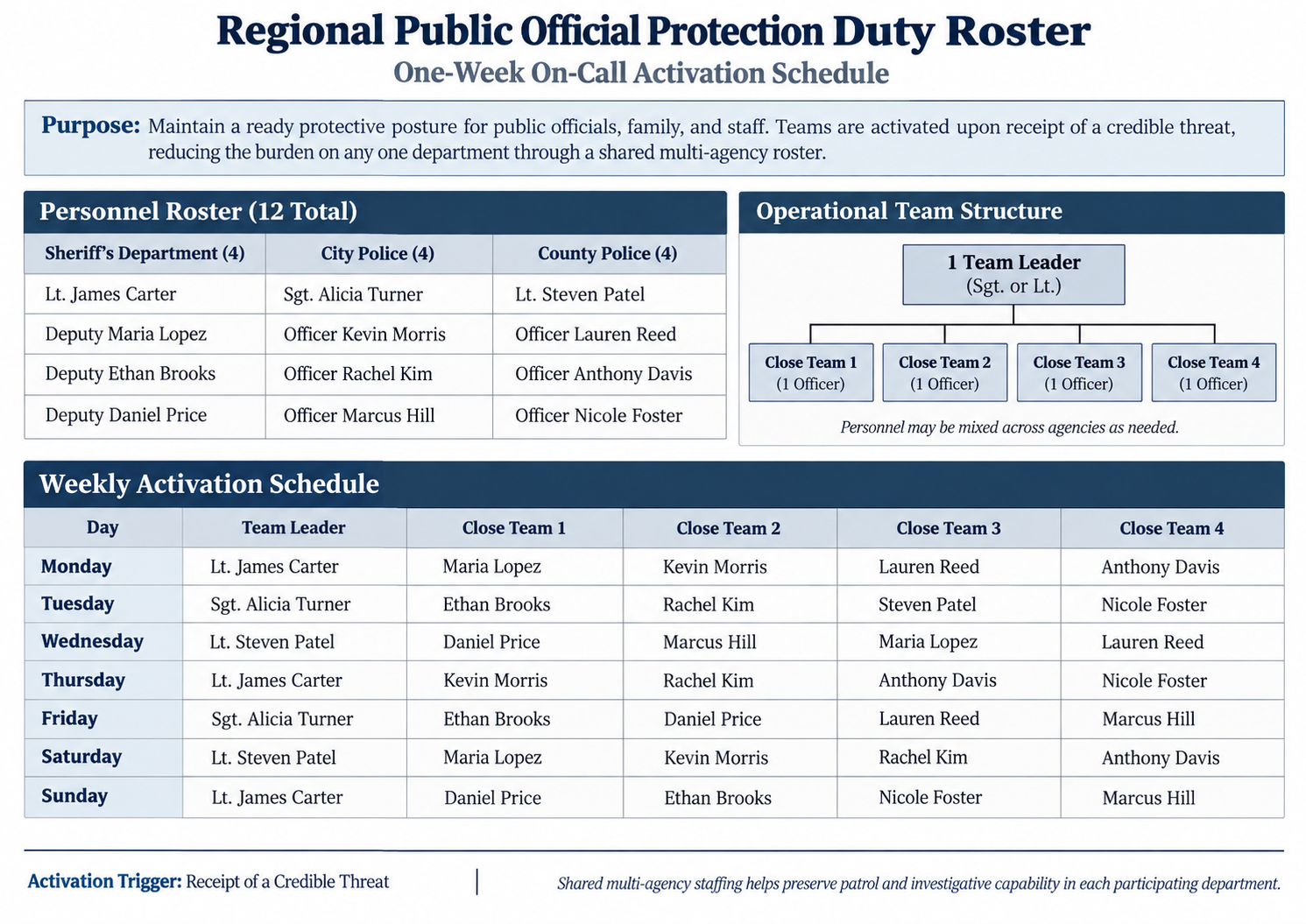
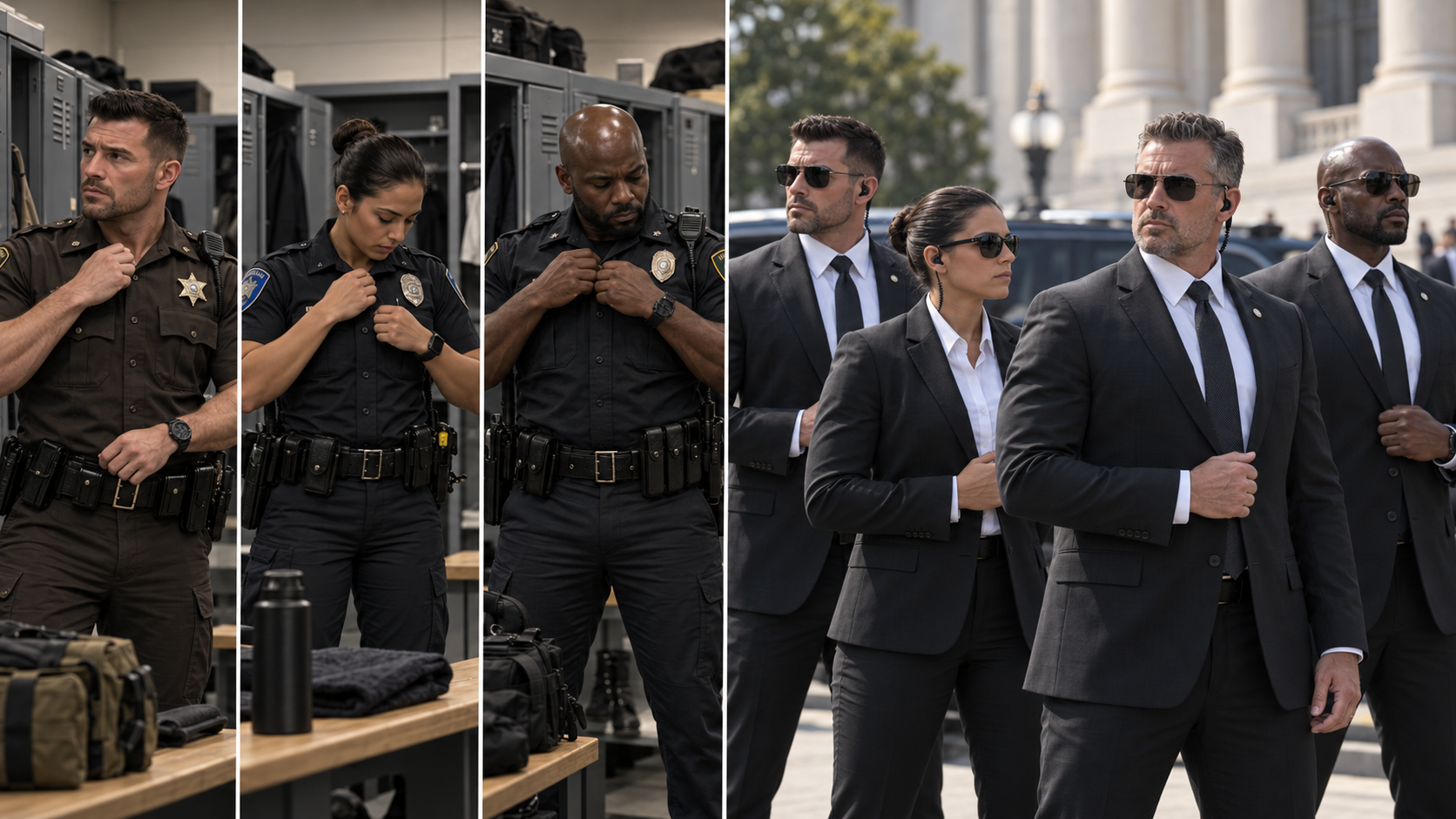
The point here is that a police officer does not have to fill every position simply because police authority is required somewhere in the operation, and a private agent does not have to run the entire detail simply because the private provider has more EP experience.
Fill each position with the person who has the authority and demonstrated ability that position requires.
Qualified reserve or court personnel may support functions consistent with their authority and training. Private executive-protection professionals may fill defined gaps when specialized experience or additional manpower is required.
That approach reduces the burden on one police department without reducing the protection around the official.
A Judge Receives a Threat

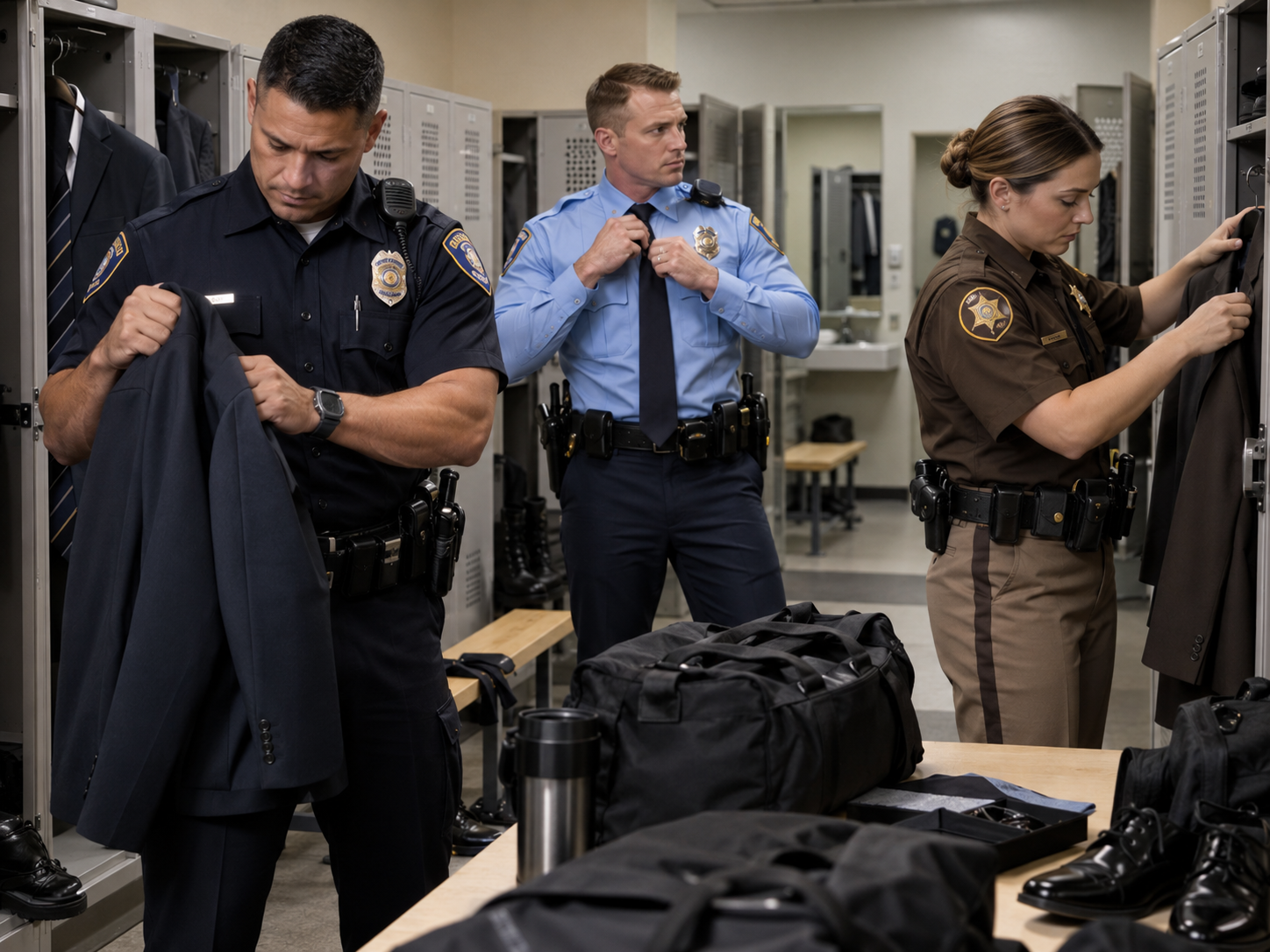
Canceling court indefinitely is not a protection plan.
If the jurisdiction already maintains the capability described in Ten Days, the threat can be assessed and the appropriate protective posture activated.
The judge’s residence and family may also need to be considered if the threat extends beyond the courthouse.
If additional specialized manpower is required, qualified private personnel can be assigned to defined positions while local law enforcement remains connected to the threat investigation and emergency response.
The exact staffing will change with the threat and mission. The important point is that the people assigned should not be meeting one another for the first time beside the judge’s car.
Protective Analysis: What the Evidence Tells Government
The evidence points back to the same starting point: the threat and mission should determine the protective structure, not a preference for police, private security or a particular individual. Determine what is known, what the official has to do, what authority the mission requires and what capabilities are available.
Authority and competence are separate questions. Police personnel may have powers that private agents do not possess while lacking certain protection-specific skills. Private agents may have extensive executive-protection experience without police powers. Reserve, auxiliary and court personnel may fall somewhere else depending on their appointment and training. Government needs to know both what a person is authorized to do and whether that person can actually do it.
The true cost also has to remain visible. Police assignments create overtime, backfill and opportunity costs. Private contracts create their own costs and oversight requirements. When private personnel are used, law enforcement should remain connected to the operation wherever criminal investigation, police information, arrests or emergency response may become necessary.
Finally, the protective posture has to be reassessed. If the threat increases, add resources. If the threat declines, reduce the posture when the facts support that decision. Keep the underlying capability—the trained people, agreements and relationships—ready for the next activation.
Frequently Asked Questions
Should elected officials normally be protected by police?
There is no single answer for every official or jurisdiction. Police involvement becomes especially important when the mission requires criminal investigation, law-enforcement intelligence, arrests, traffic authority, public-order capability or immediate access to other police resources.
Is private executive protection appropriate for elected officials?
Yes. Properly trained, experienced and vetted private professionals can provide close protection, advance work, protective transportation, residential protection, surveillance detection and other specialized capabilities. Government still has to define their authority, supervision and relationship with law enforcement.
Is private security automatically cheaper than police?
No. Police protection may create overtime, backfill and opportunity costs. Private protection creates contract, supervision, travel, equipment, insurance and other expenses. Compare the complete mission rather than one hourly rate or salary.
Does a police badge or security license establish executive-protection competence?
No. A badge or license establishes legal status and authority to perform certain work. Executive-protection competence requires role-specific training, experience and demonstrated performance.
Can reserve, auxiliary and court personnel be used?
Yes, where their appointment, authority, training and agency policy support the assignment. Their title alone does not determine what protective work they are authorized or qualified to perform.
Can private security personnel be deputized?
Sometimes, when specific law authorizes it. The Musk/DOGE example involved special federal deputation through the U.S. Marshals Service. That does not create automatic authority for state or local governments. Legal authority, supervision, liability and training should be resolved before a special appointment is used.
Did Minneapolis prove private executive protection does not work?
No. Minneapolis raises important questions involving contractor vetting, government accountability and public-safety integration. The available evidence does not establish that the agents assigned to protect the council members failed to protect them.
Has government experienced failures with contract security?
Yes. Federal Protective Service contract-guard programs have faced repeated GAO criticism involving training, certification, oversight and screening performance. Those guards perform facility security rather than executive protection, but the lesson about verifying contractor performance applies.
Does government use private protection successfully for public officials?
Professional private security is a formally recognized supplemental option for Members of Congress under applicable federal rules and House procedures. It operates as part of a broader governmental security system rather than replacing law enforcement.
Can police and private executive-protection personnel work on the same mission?
Yes. In many jurisdictions, an integrated model may be the strongest option. Command, authority, communications, information sharing, emergency response and individual responsibilities should be established before deployment.
Bottom Line
If you are a police chief, sheriff, county executive, court administrator or government official responsible for protection, I would want the capability identified before somebody makes the threat.
That does not mean every jurisdiction needs a permanent executive-protection unit. It means government should know what resources are available, what those people are qualified to do, who can lead, how outside agencies can assist and whether qualified private personnel can fill identified gaps.
When the threat occurs, start with the threat and mission rather than the uniform.
Police bring authority and immediate connection to the larger public-safety system. Qualified private professionals can bring protection-specific experience and additional manpower. Reserve, auxiliary and court personnel can contribute when their authority and training support the assignment. In limited circumstances, lawful special appointments may extend authority, but authority should never be confused with competence.
The police-chief examples support that approach. Pittsburgh defended protection when the mission required it and still demanded accountability. Boise reduced staffing when the threat environment changed. Dolton’s former chief said protection was initially justified and later questioned the resources being committed. Those positions all come back to the same question: does the current threat justify the current protective posture?
Minneapolis gives us the same lesson from the private-security side. If the council members faced threats serious enough to justify protection, they should have been protected. But the private contracts did not eliminate the city’s responsibility to vet providers, account for public money, maintain police investigative capability and connect private protection to the larger public-safety system.
Federal contract-security failures remind us that paperwork is not performance. Congressional use of professional private security demonstrates that properly qualified private personnel can also be a legitimate part of a broader government protection system. Special deputation shows that authority can sometimes be extended, but only where the law provides the authority to do it.
That is why I would not frame this as a contest between police and private security.
What is the threat? What does the official have to do? What authority will the detail need? Who is trained? Who can demonstrate the required skill? Who commands? What police capability has to remain connected? What does the mission actually cost? How will the detail change if the threat increases or decreases?
Those are the questions that build the detail.
I am less interested in the title printed on someone’s identification card than I am in whether the person standing in that position understands the mission, possesses the legal authority required for the assignment and can demonstrate the skills necessary to perform it.
Continue the Defending Democracy Series
Sister Article — Interview Format
Ten Days to Build the Detail — and What Happens When the Detail Loses the Mission?
Matthew Parker in conversation with a police sergeant, police chief and county administrator. The interview places the same problem inside a fictional Maryland county facing a credible threat without a standing executive-protection unit.
This Article — Policy and Evidence
Who Should Protect Elected Officials: Police, Private Security, Reserves, or an Integrated Detail?
This companion article examines actual police-chief decisions, government protection costs, private-sector performance, Minneapolis, congressional private security, special deputation and the criteria for deciding who should perform each part of the mission.
The interview shows how government can assemble the capability. This article examines who should perform the work once that capability is activated.
Related EPTraining.us Resources
- Ten Days to Build the Detail — and What Happens When the Detail Loses the Mission?
- Security for Elected Officials, Revisited
- Fear Is Already Here: Threats Are Changing How Public Officials Serve—and How Judges Rule
- Grover Cleveland and the Protection Question We Still Have Not Solved
- Defending Democracy: Why the Protection of Public Officials Is a Democratic Imperative
- ISA Dignitary and Executive Protection Specialist Course
- Executive Protection Training Syllabus
- ISA Executive Protection Training Standards
Sources and Policy References
Police Leadership and Protection
- Police Executive Research Forum, Protecting Mayors and Other Elected Officials, November 2025.
- CBS Pittsburgh reporting concerning Acting Police Chief Regina McDonald and Pittsburgh mayoral protection.
- San Antonio Police Department statements concerning then-Chief William McManus and mayoral security, 2025.
- Idaho reporting concerning former Boise Police Chief Mike Masterson and Boise mayoral protection.
- FOX 32 Chicago reporting and interview concerning former Dolton Police Chief Robert Collins and mayoral security.
Government Protection Costs
- San Diego Office of the Independent Budget Analyst, Analysis of the Police Department Fiscal Year 2026 Budget.
- City of San Jose, Police Department budget and overtime memorandum concerning mayoral protection, February 2026.
- Baltimore City Office of Inspector General, Executive Protection Unit expenditure and investigative materials.
Reserve, Auxiliary and Local Government Resources
- Maryland Police Training and Standards Commission, Police Auxiliary and Reserve Volunteer Program regulations.
- Anne Arundel County Police Department, Reserve Officer Program.
- City of Frederick Police Department, Auxiliary Unit.
- Maryland Criminal Procedure §2-105, police assistance beyond jurisdictional boundaries.
- Maryland Public Safety §14-803, Maryland Emergency Management Assistance Compact.
Minneapolis and Private Security
- FOX 9 Minneapolis-St. Paul, Security for Minneapolis Council Totaled $152K, July 2020.
- City of Minneapolis Elections and Voter Services, 2021 City Question 2 results.
- Minnesota court records concerning Minneapolis Police Department staffing.
- Minnesota regulatory materials concerning private protective agents.
Federal Contract Security
- U.S. Government Accountability Office, Federal Protective Service: Actions Needed to Address Critical Guard Oversight and Information System Problems, GAO-25-108085, March 2025.
- Earlier GAO reports concerning Federal Protective Service contract-guard training, certification and oversight.
Congressional Private Security
- Federal Election Commission, Advisory Opinion 2021-03.
- U.S. House Committee on House Administration, Members’ Congressional Handbook.
- U.S. Senate Select Committee on Ethics, guidance concerning Member Protection Funds.
Special Deputation
- U.S. Marshals Service, Special Deputation Program materials.
- U.S. Department of Justice, Office of Legal Counsel, Special Deputations of Private Citizens Providing Security to a Former Cabinet Member, 1983.
- Reporting concerning special deputation of members of Elon Musk’s private security detail, February 2025.
About Independent Security Advisors, EPTraining.us and the Defending Democracy Initiative
Independent Security Advisors LLC operates EPTraining.us, a U.S.-based executive-protection training program serving law-enforcement, military, public-safety, corporate-security and qualified private-sector protection professionals.
ISA approaches executive protection as a connected operational system. Threat assessment and protective intelligence have to reach planning. Planning has to reach the advance, movement, transportation, communications, physical security, medical response and emergency action. Personnel assigned to those functions should be trained and evaluated for the work they are expected to perform.
The Defending Democracy Initiative applies that same system-based approach to elected officials, judges, prosecutors, candidates and other public servants whose ability to perform lawful governmental duties can be affected by threats, intimidation, stalking and targeted violence. The initiative is nonpartisan. Political criticism, disagreement and lawful protest are part of democratic government. Threats and targeted violence should not determine who can safely perform public duties.
About the Author
Matthew C. Parker is CEO of Independent Security Advisors LLC and Director of Training Operations for EPTraining.us. A retired U.S. Army senior noncommissioned officer, training leader and protective-services practitioner, Parker’s approach to executive protection is grounded in mission analysis, threat assessment, resources, planning, execution, evaluation and continuous improvement.
His training philosophy emphasizes measurable objectives and demonstrated performance rather than attendance alone. Through ISA and the Defending Democracy Initiative, Parker has also focused on a broader purpose of executive protection: public officials, judges and other public servants must remain sufficiently secure to perform lawful duties without threats and intimidation becoming the deciding force.
Hashtags
#ExecutiveProtection #PoliceExecutiveProtection #PrivateExecutiveProtection #PrivateSecurity #ElectedOfficials #PublicOfficialSecurity #JudicialSecurity #LawEnforcement #PoliceLeadership #ReservePolice #ProtectiveIntelligence #ThreatAssessment #GovernmentSecurity #PublicSafety #DefendingDemocracy #IndependentSecurityAdvisors #EPTrainingUS