
 E-mail us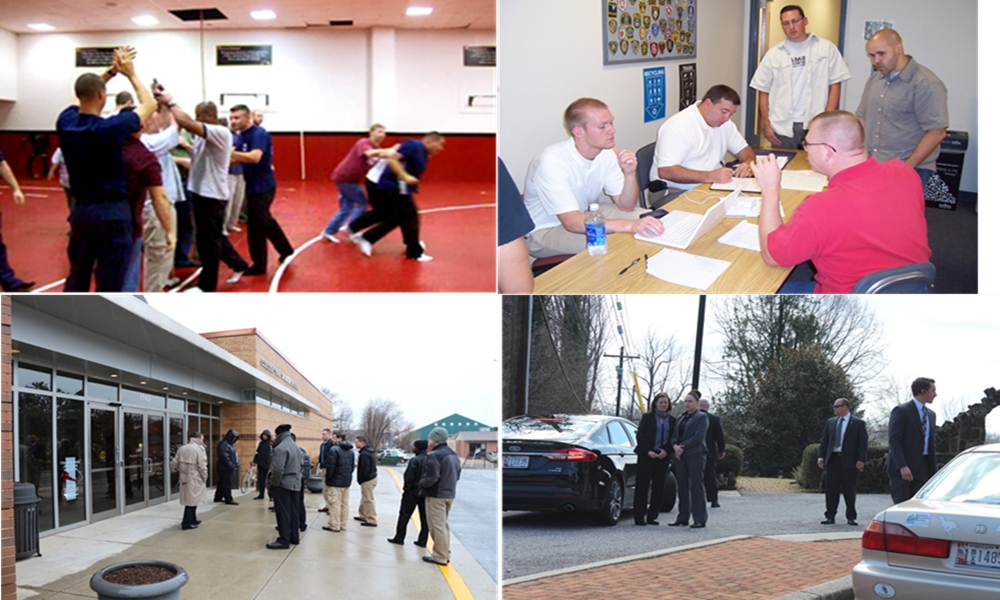
Dignitary & Executive Protection Specialist Course
Seven-Day Executive Protection Core Program | 70–84 Hours
The ISA/EPTraining.us Dignitary & Executive Protection Specialist Course is the mandatory core of ISA’s 32-day Executive Protection Studies Program. The seven-day course is deliberately focused on executive and dignitary protection rather than trying to compress unrelated specialties into the same training week.
Students are taught the procedures, methods, and hard and soft skills protective agents use in operational assignments, including the threat-assessment and protective-intelligence process, mission and emergency planning, advance work, site assessments and physical security, transportation and movement planning, public-event and daily protective operations, communications, hostile-surveillance awareness, legal and ethical responsibilities, medical response, and protective-detail operations.
Weapons employment, protective driving, advanced medical training, military and law-enforcement Protective Service Detail operations, terrorism awareness, and other specialized skills are developed through separate courses within the full 32-day program. This allows the seven-day core to remain focused on executive protection while giving specialized skills the dedicated time, facilities, equipment, repetition, and evaluation they require.
Review the Full Course Syllabus
Approved, Accredited and Recognized Executive Protection Training
Employers today require applicants to have completed formal training from a recognized, approved, accredited, or established executive protection program. ISA/EPTraining.us meets that training requirement.
The Dignitary & Executive Protection Specialist Program is approved in both Virginia and North Carolina for executive-protection licensing purposes. In Virginia, the program satisfies the training requirements for the 32E Personal Protection Specialist license. In North Carolina, it is approved for Close Personal Protection licensing.
The program has also been accredited, accepted, or recognized for law-enforcement in-service training in multiple states and for civilian adult-education credit. The curriculum is built to meet applicable regulatory requirements and is reviewed by experienced law-enforcement, military, and protective-security professionals.
ISA has trained personnel from federal, state, and local law-enforcement agencies as well as private-sector protective professionals. Agency and company executive-protection leaders have selected ISA/EPTraining.us to prepare personnel for protective assignments, and the program is endorsed by the International Foundation for Protection Officers.
Why the Seven-Day Core Is Focused on Executive Protection
When comparing executive-protection programs, the number of days by itself tells very little. A more useful question is how much of the training time is actually devoted to executive protection.
ISA dedicates the seven-day core to the protective mission itself: how threats are identified and assessed, how information is turned into an operational plan, how locations and routes are evaluated, how advances are conducted, how movement and transportation are planned, how a detail communicates, and how protective personnel respond when conditions change.
Specialized skills such as driving, weapons employment, advanced medical care, PSD operations, and terrorism response are important, but each requires its own instructional time and performance standards. ISA teaches those subjects separately within the larger Executive Protection Studies Program rather than reducing the amount of time available for the executive-protection core.
The result is a program structure in which students first learn how a professional protective operation works and then build specialized capabilities on that foundation.
What Students Are Taught to Do
Protective operations begin well before an agent stands beside the protectee. Students begin with the threat-assessment and protective-intelligence process, learning how to identify relevant information, evaluate sources, determine what information can be trusted, and decide what that information means to the protective detail.
That analysis must lead somewhere. Students move from assessment into mission planning, risk mitigation, advance work, site assessments and physical security, transportation and movement, arrivals and departures, public-event and daily protective operations, communications, hostile-surveillance awareness, emergency planning, legal responsibilities, and medical response.
The course is built around protection-in-depth. The agent closest to the protectee is only one part of the protective system. Students learn to identify vulnerabilities earlier, reduce unnecessary exposure, create layers of protection, prepare the environment, coordinate movement, communicate with the team, and plan for emergencies before a threat reaches the protectee.
The training therefore emphasizes both technical procedures and the judgment required to decide when, where, and how those procedures should be used.
Practical Training and Performance Evaluation
ISA teaches the procedure, demonstrates the skill, and then requires students to apply what they have learned.
Throughout the week, students move from classroom instruction into practical exercises, facilitated problem-solving, planning assignments, field application, and team responsibilities. They are expected to assess information, develop plans, conduct advance work, communicate with other members of the detail, move the protectee, identify problems, and adapt when the original plan no longer fits the situation.
The program culminates in a live capstone protective operation. Students must bring the separate elements of the course together and demonstrate that they can function as part of a protective detail while dealing with changing information, routes, schedules, assignments, and operational conditions.
The capstone is designed to evaluate more than memory. Students must demonstrate judgment, communication, teamwork, planning, movement, and the ability to adjust the protective operation while continuing the mission.
The Seven-Day Core and the Full 32-Day Executive Protection Studies Program
The Dignitary & Executive Protection Specialist Course is the mandatory foundation of ISA’s 32-day Executive Protection Studies Program.
The seven-day core establishes the methodology of executive protection first. Students who continue through the complete program then receive dedicated instruction in specialized areas requiring additional training time, facilities, equipment, repetition, and evaluation.
The broader program includes advanced medical training for executive-protection personnel, Protective Service Detail training for military and law-enforcement assignments, terrorism and active-threat awareness, weapons training, protective and security driving, and other advanced protective-service subjects.
This structure allows each major skill area to be treated as a professional discipline rather than as a short block inserted simply to make a single course appear more comprehensive.
Preparing for Executive Protection Employment
Students entering private-sector executive protection should compare training against the qualifications employers are actually asking applicants to bring to the job.
Executive-protection employers commonly look for formal EP training together with knowledge or experience in threat and risk assessment, protective intelligence, advance work, site surveys, movement planning, communications, emergency response, medical preparation, discretion, judgment, and professional conduct. Some positions also require separate qualifications in protective driving, firearms, advanced medical care, or other specialized areas.
The seven-day ISA core addresses the executive-protection foundation. The full 32-day program allows students to continue into dedicated training in specialized areas that may be required for the type of protective work they intend to pursue.
Training does not replace experience. No legitimate school can turn a short period of training into years of operational experience. What ISA provides is a structured path from approved and recognized executive-protection core training into specialized follow-on training, allowing the student to build relevant capabilities over time.
Preparing Law-Enforcement Personnel for Protective Assignments
Executive protection is not a routine assignment for every police department or public-safety agency. An officer may suddenly be assigned to protect an elected official, judge, candidate, visiting dignitary, prosecutor, or other at-risk person even though the agency does not maintain a permanent protective unit.
Some states operate their own VIP or dignitary-protection programs, and those programs may meet an agency’s needs. ISA provides another option when an agency requires a broader executive-protection program, when state training is not available at the required time, or when officers will be expected to help establish and operate a detail rather than simply augment an existing protective team.
Patrol, investigative, tactical, supervisory, and court-security experience can all contribute to protective work, but those skills must be applied differently when another person’s safety, schedule, public responsibilities, transportation, staff, venue, route, and emergency planning become part of the mission.
The seven-day course concentrates on that protective assignment. Agencies requiring additional capabilities can build on the core with separate PSD, medical, weapons, driving, terrorism, or other specialized ISA training.
Military, Veteran and Federal Law-Enforcement Transition
Military personnel, veterans, and federal law-enforcement personnel often enter executive protection with significant operational experience. Military protective-service, force-protection, intelligence, security, investigative, leadership, or PSD experience can provide a strong foundation, while federal law-enforcement personnel may bring valuable investigative, protective, intelligence, security, or special-operations experience.
The challenge is translating that background into a different operating environment.
A corporate executive, family office, high-net-worth individual, or private client operates under different legal authority, organizational expectations, business schedules, privacy concerns, liability, and client-service requirements than a military commander or government official. Private executive protection may require the agent to be less visible, more discreet, more flexible, and more conscious of how the protective operation affects the client’s business and personal life.
ISA does not ask experienced students to discard what they already know. The objective is to help them determine what transfers directly, what must be adapted, and what additional civilian licensing, communication, discretion, and client-service skills are required.
Students who require broader high-threat or government-security capability can continue through the full program into PSD, advanced medical, weapons, driving, terrorism, and other specialized courses.
Public- and Private-Sector Protective Operations
The fundamentals of protection cross occupational lines, but the mission changes with the protectee.
An elected official may be expected to remain accessible to constituents and attend public meetings. A judge may face a threat connected to a case, litigant, courthouse, residence, or family member. A corporate executive may require protection that fits around meetings, travel, corporate policy, executive staff, and business operations, while a high-net-worth individual or family may present additional concerns involving privacy, residential security, children, travel, public recognition, stalking, or routines extending far beyond the workplace.
The ISA program teaches a common protective methodology while requiring students to understand that the same security plan does not fit every protectee, threat, environment, or mission.
Program History and Continuing Development
ISA began developing the Dignitary & Executive Protection Specialist Program in 2011 for law-enforcement personnel assigned protective responsibilities involving elected officials and other public figures.
The original program-development process examined federal protective-service training, law-enforcement requirements, private-sector executive-protection programs, and the needs of state and local agencies whose officers might receive protective assignments without serving on permanent protection units.
As the program expanded, ISA incorporated private-sector licensing requirements, corporate-security practices, employer expectations, and the transition needs of military personnel, veterans, federal personnel, and other professionals moving into civilian protective work.
The curriculum continues to be reviewed and updated as threats, technologies, regulatory requirements, operational lessons, and the protective environment change. The purpose is not to preserve a fixed presentation. It is to keep the training relevant to the work protective personnel are expected to perform today.
Review the Full Course Syllabus
This page explains the purpose, structure, and role of the seven-day core program within the larger Executive Protection Studies Program.
The full syllabus provides the detailed course sequence, individual training modules, learning objectives, practical exercises, evaluation requirements, and current admission standards.
Review the Full Dignitary & Executive Protection Specialist Course Syllabus
Tuition and Registration
Standard Tuition: $2,300.00
Special tuition programs may be available for law-enforcement personnel, active-duty military, Reserve and National Guard personnel, veterans, IFPO members, agencies, groups, and hosted-course partners.
Specific dates, locations, host information, lodging, tuition programs, and event-specific requirements are published on the individual course announcements.
View Upcoming Executive Protection Training
Register for Executive Protection Training
Agency and Group Information:
[email protected]
315-486-7854
Suggested Social Hashtags
#ExecutiveProtectionTraining #ExecutiveProtection #DignitaryProtection #CloseProtection #ProtectiveServices #PersonalProtectionSpecialist #ProtectiveIntelligence #ThreatAssessment #LawEnforcementTraining #VeteranTraining #EPTrainingUS #ISATraining
Dignitary Protection Studies Program
Executive Protection Training Program Syllabus
ISA DEP 101 | Module One
Seven Days | 70–84 Hours
Independent Security Advisors (ISA) / EPTraining.us
Course Navigation
- Course Information
- Faculty Information
- Attendance Prerequisites
- Course Description
- Course Expectations
- Student Responsibilities
- Classroom Rules of Engagement
- Course Format
- Learning Objectives
- Class Modules
- Required Pre-Attendance Study
- Textbooks and Materials
- Pre-Attendance Homework
- Daily Course Schedule
- Course Policies
- Testing and Evaluation
- Attendance
- Physical Requirements
- Dress Code
- Graduation Requirements
This replaces the document-style numbered Table of Contents with clickable page anchors.
Course Information
| Course Information | Details |
|---|---|
| Course | Dignitary Protection Studies Program / Executive Protection Training |
| Course Code | ISA DEP 101 |
| Module | Module One |
| Length | Seven Days / 70–84 Hours |
| Course Location | Published with individual course announcement |
| Course Dates | Published with individual course announcement |
| Typical Training Hours | 0800–1800; extended hours may apply |
| Program Director / Primary Instructor | Matthew Parker, DPS |
| [email protected] | |
| Phone | 315-486-7854 |
Faculty Information
Instructor Qualifications
ISA instructors must be graduates of an accredited and federally or state-recognized Instructor Qualification Course and complete ISA’s instructor-certification process.
The process includes:
- Completion of the ISA assistant-instructor program under a senior instructor.
- A minimum of 40 hours assisting with instruction during an ISA Executive Protection Training course.
- A minimum of 80 hours serving as a primary instructor while under senior-instructor observation.
This belongs on the syllabus page. It establishes the instructional standard without turning the section into advertising.
Attendance Prerequisites
There are no prior executive-protection training prerequisites for the core course. Students should, however, have a basic understanding of executive protection and the general mission of a protection agent.
Any separate eligibility, licensing, age, identification, physical-participation, or regulatory requirements should follow here rather than being mixed with academic prerequisites.
Course Description
The Dignitary Protection Studies Program and Executive Protection Training Course are designed for personnel who will supervise, execute, or support diplomatic, dignitary, and executive-protection operations involving diplomats, elected and public officials, members of the judiciary, candidates for office, corporate executives, and private individuals.
The program normally requires approximately 70–84 hours over seven days. Its modular structure allows instructors to adjust presentations, exercises, and supporting material to meet student, agency, organizational, or local requirements while maintaining all mandatory topics required by applicable accreditation and regulatory bodies.
Students learn the mission and purpose of the protective detail and agent, the fundamental principles and terminology of protective operations, and the similarities and differences between public/government and private-sector protection.
Training includes threat assessment and protective intelligence, risk and threat-mitigation planning, physical and residential protection, secure transportation and movement planning, advance work, team management and communications, foot movement, reaction to threats and changing situations, emergency medical response, de-escalation, avoidance, ethical decision-making, and the legal principles governing protective operations.
The course places strong emphasis on protection in depth and requires students to understand and demonstrate the methods and procedures used to manage protective operations.
Course Expectations
Students should expect an intensive seven-day program combining classroom instruction, facilitated discussion, field activity, practical exercises, independent study, and preparation outside scheduled classroom hours.
Training may intentionally introduce changing schedules, incomplete information, unfamiliar assignments, time constraints, and other conditions requiring students to adapt. These conditions are used to develop decision-making, communication, teamwork, and problem-solving under operational pressure.
Student Learning
ISA uses a combination of:
- Instructor-led instruction
- Facilitated discussion
- Student-led activities
- Hands-on training
- Practical exercises
- Field exercises
- Individual assignments
- Team assignments
- Scenario-based evaluation
I recommend removing the unsupported 90%, 75%, 92%, and 50% learning-retention percentages while retaining the instructional methodology itself.
Student Responsibilities
Students are expected to:
- Maintain professional conduct throughout the program.
- Avoid conduct that could bring discredit upon the student, ISA, the student’s agency, or employer.
- Request assistance when course material is not fully understood.
- Participate actively in classroom discussions, practical exercises, and small-group activities.
- Contribute to team planning and development of assigned products.
- Participate in required individual and group briefings.
- Complete assigned work and prepare for each training day.
Participation is required and evaluated.
Classroom Rules of Engagement
- Respect classmates, instructors, staff, and training partners.
- Be present and on time for class and after breaks.
- Cell phones must remain silent unless an instructor authorizes their use.
- Laptop screens will be lowered during VIP or operational briefings when instructed.
- Electronic devices may be used for course-related work but not unrelated browsing, messaging, or email during instruction.
- Weapons must be secured before entering the classroom unless specifically authorized by the instructor.
Course Format
ISA DEP 101 combines classroom instruction with facilitated discussion, student-led work, practical exercises, field exercises, and operational evaluation.
Each training day normally begins with a review of previous material and an introduction to the day’s training objectives before moving into new instruction and practical application.
Learning Objectives
Terminal Learning Objective
Action
Demonstrate proficiency and knowledge in conducting executive-protection operations in accordance with the Dignitary Protection Studies Program and applicable federal and state training standards.
Condition
Students receive instruction in an in-person and real-time training environment through presentations, facilitated discussions, hands-on exercises, practical assignments, and field-training scenarios involving executive protection at varying threat levels.
Standard
Students must complete required training, participate in discussions and exercises, demonstrate proficiency through individual and team-based practical exercises, complete the executive-protection field exercise and capstone, and pass the written examination.
Learning Domain: Cognitive / Psychomotor / Affective as applicable
Learning Level: Application
Class Modules
100-Level — Foundational
Foundational theories, principles, procedures, and terminology that establish the base for more advanced instruction.
- EPO 100 — Essentials of Executive Protection
- IPC 100 — Communication Theory
- SOC 100 — Demographics and the Evolution of the Detail
- IPC 101 — Etiquette and Rapport
- PHIL 100 — Ethics in Protective Services
- HIST 100 — Dignitary & Executive Protection: Historical Overview / Case Study
200-Level — Intermediate
Intermediate courses require students to analyze information, draw conclusions, make decisions, and complete assigned exercises.
- MGT 200 — Psychology of Violence
- MGT 201 — Preparing the Threat Assessment
- MGT 202 — Threat Intelligence & Open-Source Research
- TRO 200 — Foundations of Terrorism
- LAW 200 — Protective Security Law
- MGT 203 — Stalking
- MGT 204 — Workplace Violence
- MGT 205 — Bias & Hate
- MGT 206 — Domestic Violence
300-Level — Advanced / Intermediate
Students apply information and intelligence, develop operational plans, solve problems, and assume greater responsibility during exercises.
- EPO 300 — Operational Planning, Managing Threats and Risk Mitigation
- MGT 304 — Fundamentals of Analysis
- EPO 301 — Hostile Surveillance & Counter-Measures
- MGT 305 — Physical Security Management
- MGT 306 — Secure Transportation & Movement Operations
- MGT 307 — Movement and Static Site Operations Planning
400-Level — Advanced Application
Advanced courses emphasize student-led exercises, independent decision-making, real-world application, and operational evaluation.
- EPO 400 — Advance Work
- EPO 401 — Conflict Resolution
- EPO 402 — Operational Challenges for the Protective Agent
- EPO 403 — Travel, Emergency Medical & Hard Site Planning
Required Pre-Attendance Study
Before attending, students must download and review the assigned:
- Student Study Guide
- Threat Assessment Packet
- DSS reference material
- PSOTP reference material
Required Exercises
Students must also:
- Conduct an open-source search on themselves and record what personal information can be located online.
- Prepare a 90-second personal presentation.
- Research the Tueller Drill / 21-foot rule, OODA Loop, and human reaction time.
Textbooks and Materials
Students are encouraged to bring a laptop or tablet capable of accessing standard document and PDF files.
Students should also bring:
- Business-casual clothing
- Exercise or tactical clothing for field activities
- Appropriate footwear
- Suit or comparable professional attire for the capstone when required
Pre-Attendance Technology Preparation
Students should identify applications or services capable of supporting:
- Weather monitoring
- Traffic and road-condition monitoring
- Flight-status monitoring
- Team voice communications
- Emergency medical reference
- Map creation and sharing
- Hotels, restaurants, fuel, medical facilities, and local logistical information
Daily Course Schedule
This is where the previous conversion went wrong.
For the website, do not try to reconstruct the damaged document table by forcing every “Concurrent” and broken cell into an invented row.
Use this template instead.
Day 1 — Executive Protection Foundations and Threat Assessment
Training Hours: 0800–1800
Lunch: 1200–1300
Classroom / Instruction: 7 hours
Exercises / Testing: 4 hours
Published Training Time: 9 hours
Training Blocks
- EPO 100 — Essentials of Executive Protection
- IPC 100 — Communication Theory
- SOC 100 — Demographics and the Evolution of the Detail
- MGT 301 — Psychology of Violence
- MGT 202 — Stalking
- MGT 203 — Workplace Violence
- MGT 205 — Bias & Hate
- MGT 206 — Domestic Violence
- MGT 201 — Preparing the Threat Assessment
- MGT 303 — Threat Intelligence & Open-Source Research
- MGT 304 — Fundamentals of Analysis
- PHIL 100 — Ethics in Protective Services
Training Methods
Location: Classroom
Methods: Instructor presentation, facilitated discussion, discussion group, practical exercise
Domains: Cognitive / Affective
Concurrent Instruction: Some subjects are integrated and delivered concurrently where operationally appropriate.
Case Studies Executive Briefing Paper
Students conduct a detailed case study and analysis of a selected incident and prepare an executive briefing addressing how pre-mission decisions affected the outcome.
Sample subjects include:
- Pie attack on Bill Gates
- “Pixy dust” incident involving Newt Gingrich
- White House state-dinner security breach
- Assassination of President Kennedy
- President Bill Clinton injury incident
Research Requirement: Students must use and properly cite a minimum of three online sources.
Day 2 — Threat Intelligence, Physical Security, Advance Work and Movement
Training Hours: 0800–1800
Lunch: 1200–1300
Classroom / Instruction: 6 hours
Exercises / Testing: 3 hours
Published Training Time: 8 hours
Training Blocks
- MGT 201 / MGT 303 — Threat and Intelligence Exercise
- MGT 305 — Physical Security Management
- EPO 400 — Advance Work
- MGT 306 — Secure Transportation & Movement Operations
- MGT 307 — Movement and Static Site Operations
- MGT 204 — Off-Site and Off-the-Record Operations
Training Methods
Locations: Classroom / Field
Methods: Discussion, group practical exercises, field exercises
Domains: Cognitive / Psychomotor
Concurrent Instruction: Selected modules are integrated during field and practical exercises.
Day 3 — Operational Planning and Advance Exercise
Training Hours: 0800–1800
Lunch: 1200–1300
Classroom / Instruction: 3 hours
Exercises / Testing: 6 hours
Total Training Time: 9 hours
Training Blocks
- EPO 300 — Operational Planning, Managing Threats and Risk
- Risk-Mitigation Exercise
- EPO 400 — Advance Work Exercise
Training Methods
Locations: Classroom / On Location
Methods: Group practical exercise / Student-led exercise
Domains: Cognitive / Psychomotor
Day 4 — Movement, Static Site Operations and Conflict Resolution
Training Hours: 0800–1800
Lunch: 1200–1300
Classroom / Instruction: 3 hours
Exercises / Testing: 6 hours
Total Training Time: 9 hours
Training Blocks
- MGT 306 / MGT 307 — Movement and Static Site Operations
- EPO 401 — Conflict Resolution
Training Methods
Locations: Classroom / Field
Methods: Discussion, group practical exercise, student-led training
Domains: Cognitive / Psychomotor
Physical Contact Notice
Physical contact between students may occur during reaction-to-contact and scenario-based training. Students must act professionally and comply with all safety briefings and instructor directions.
All weapons must be secured during training.
Day 5 — Operational Exercises and Hostile Surveillance
Training Hours: 0800–1800
Lunch: 1200–1300
Classroom / Instruction: 3 hours
Exercises / Testing: 6 hours
Total Training Time: 9 hours
Training Blocks
- EPO 300 — Operational Planning, Managing Threats and Risk
- Risk-Mitigation Exercise
- EPO 400 — Advance Work Exercise
- MGT 306 — Secure Transportation & Movement Operations Exercise
- EPO 401 — Conflict Resolution Exercise
- EPO 301 — Hostile Surveillance & Counter-Measures
Training Methods
Locations: Classroom / Field / On Location
Methods: Discussion, group practical exercise, student-led exercise
Domains: Cognitive / Psychomotor
Selected activities are conducted concurrently as part of the operational exercises.
Day 6 — Law, Operational Challenges, Terrorism and Emergency Medical Response
Training Hours: 0800–1800
Lunch: 1200–1300
Classroom / Instruction: 3 hours
Exercises / Testing: 6 hours
Total Training Time: 9 hours
Training Blocks
- LAW 200 — Protective Security Law
- EPO 402 — Operational Challenges for the Protective Agent
- TRO 200 — Terrorism
- CPR / AED / Stop the Bleed / First Aid
Training Methods
Location: Classroom / Practical Training Area
Methods: Discussion, group practical exercise, hands-on training
Domains: Cognitive / Affective / Psychomotor
Day 7 — Capstone and Final Evaluation
Training Hours: 0800–2000
Lunch: 1200–1300
Minimum Scheduled Training: 12 hours
Final Requirements
- Live Capstone Protective Operation
- Capstone Evaluation
- Written Examination
- Retesting when authorized and required
Twelve hours are scheduled for the final training day. Training concludes upon completion of the capstone, written examination, and any required authorized retesting.
Visit program comments and testimonials on the home page