
 E-mail us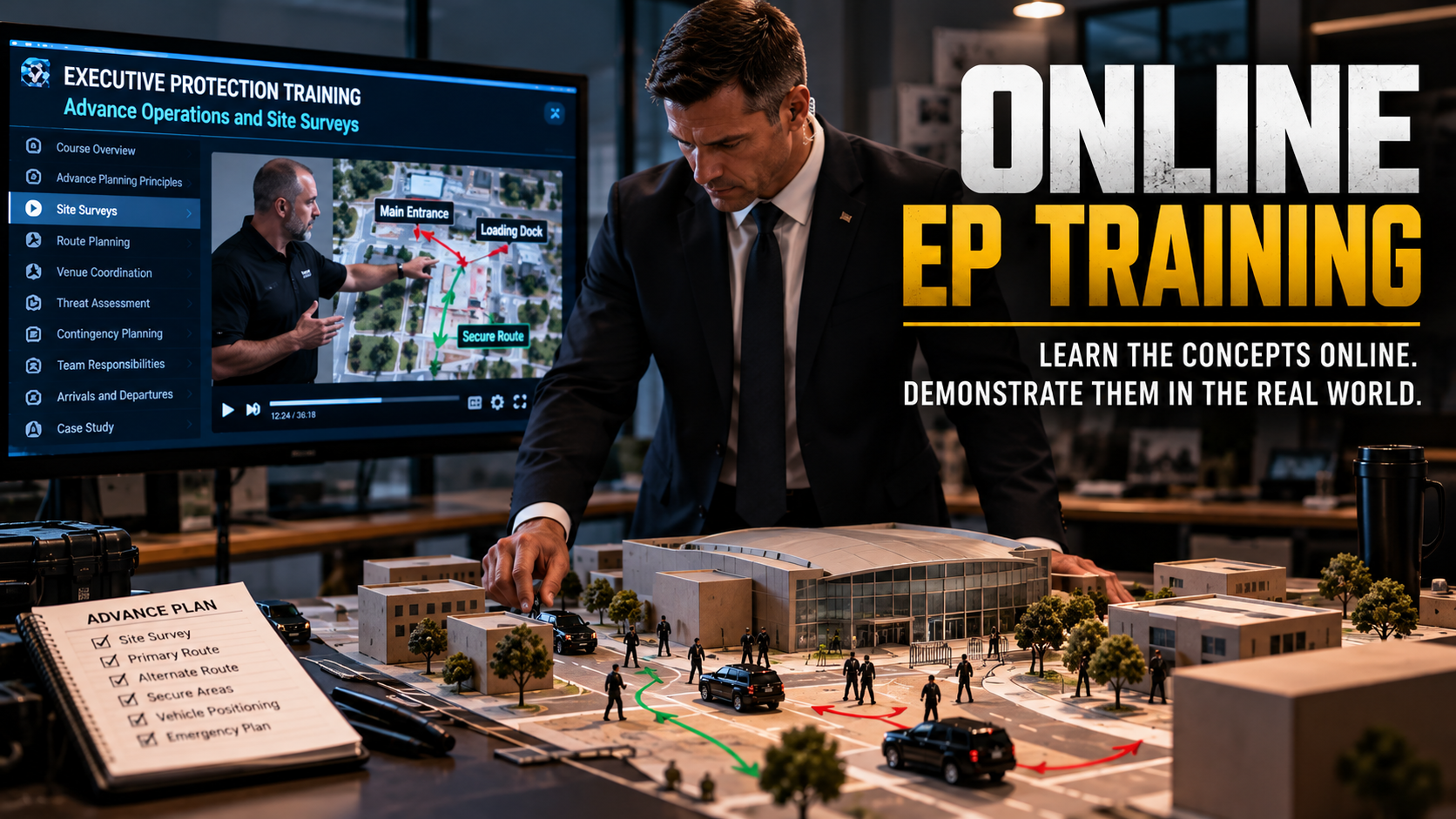
Before You Spend Thousands on Online Executive Protection Training
Online Executive Protection Training
What Prospective Students Should Know Before Paying for an Online-Only EP Course
By Matthew C. Parker
Independent Security Advisors / EPTraining.us
Abstract
Online education has a legitimate place in executive-protection training. Students can learn terminology, planning methods, threat concepts, legal issues, protective responsibilities, case studies, and the purpose behind many protective procedures without sitting in a traditional classroom.
The limitation begins when a course moves from teaching what an executive-protection agent should know to claiming that the student has been trained to perform a physical or operational skill. Protective formations, advance work, motorcade operations, surveillance detection, defensive tactics, arrivals and departures, emergency actions, and team movement require more than understanding the concept. At some point the student must practice the skill, make mistakes, receive correction, and demonstrate that the lesson can be applied in an operational environment.
Before spending several thousand dollars on executive-protection training, prospective students should understand the difference.
Bottom Line Up Front
There is nothing wrong with online executive-protection education. ISA uses online education for subjects and portions of subjects that can be effectively taught that way. The problem is treating knowledge and operational proficiency as though they are the same thing.
A student may learn how a protective formation works, why it is used, and when a particular formation may be appropriate from a computer. But a full operational understanding of formations is not possible until the student has worked inside one, moved with other agents, adjusted to the principal, and demonstrated that the formation can be maintained under changing conditions.
A student can study motorcade operations, learn the purpose of each vehicle, understand an agent’s position within the motorcade, and learn the basic procedures without ever operating in one. But no student will be ready to work safely and effectively around a motorcade without hands-on training and an operational demonstration of understanding. Vehicles move, doors open, agents change positions, communications occur, and the principal has to be moved safely. Those things have to be practiced.
A student can watch defensive tactics and understand the purpose of a technique, but watching does not create proficiency. The student must physically practice those measures and tactics against another person, receive correction from an instructor, and repeat them until the movements can be performed safely and effectively.
A student can study advance work without ever walking a site, changing a route, coordinating with a venue, or solving the problems that appear once the plan meets the real world. But that student will not serve effectively on an advance team until the planning process is applied in a walk-through or field exercise where the student has to identify problems, make decisions, and adjust the plan.
That is the distinction prospective students need to understand before they pay for training.
Online Training Has a Legitimate Role
Executive protection includes a substantial amount of information that can be taught online. Threat assessment, protective intelligence, legal issues, executive protocols, professional standards, report writing, international considerations, case studies, mission-planning principles, communications procedures, and parts of advance and transportation planning can all benefit from online instruction.
Online learning can also make a live course better. If students arrive already understanding basic terminology, assignments, planning documents, common threats, protective responsibilities, and the reasons behind certain procedures, instructors do not have to spend as much field time teaching definitions. That time can be used for application.
Continuing education is another legitimate use. An experienced protection professional who already understands movement, advances, transportation, and team operations can benefit from online instruction dealing with new technology, threat developments, laws, case studies, or changes in procedure.
The problem is not the computer. The problem is asking a computer-based course to replace the practical portion of a profession built around performance.
Protective Formations: Knowing Why Is Only the Beginning

Protective formations are a good example because they look simple on paper. An instructor can explain the diamond, wedge, box, one-on-one coverage, or other movement concepts. A student can learn where each agent is assigned, why the formation changes, how the principal is positioned, and what threats each member of the detail is expected to observe.
That education has value, but the real lesson begins when people start moving.
The student has to maintain proper distance without crowding the principal, watch an assigned area while remaining aware of the principal, communicate with the team, move through doors and hallways, make adjustments on stairs, deal with crowds, transition toward vehicles, and react when the planned formation no longer fits the environment.
A diagram cannot tell the instructor whether the student consistently falls behind, loses the principal, crowds another agent, watches the wrong area, or fails to recognize when the formation needs to change. Those problems become visible when the student works inside the formation.
That is why understanding a formation and being able to work in one are not the same level of training.
Motorcade Operations Require More Than Knowing the Positions
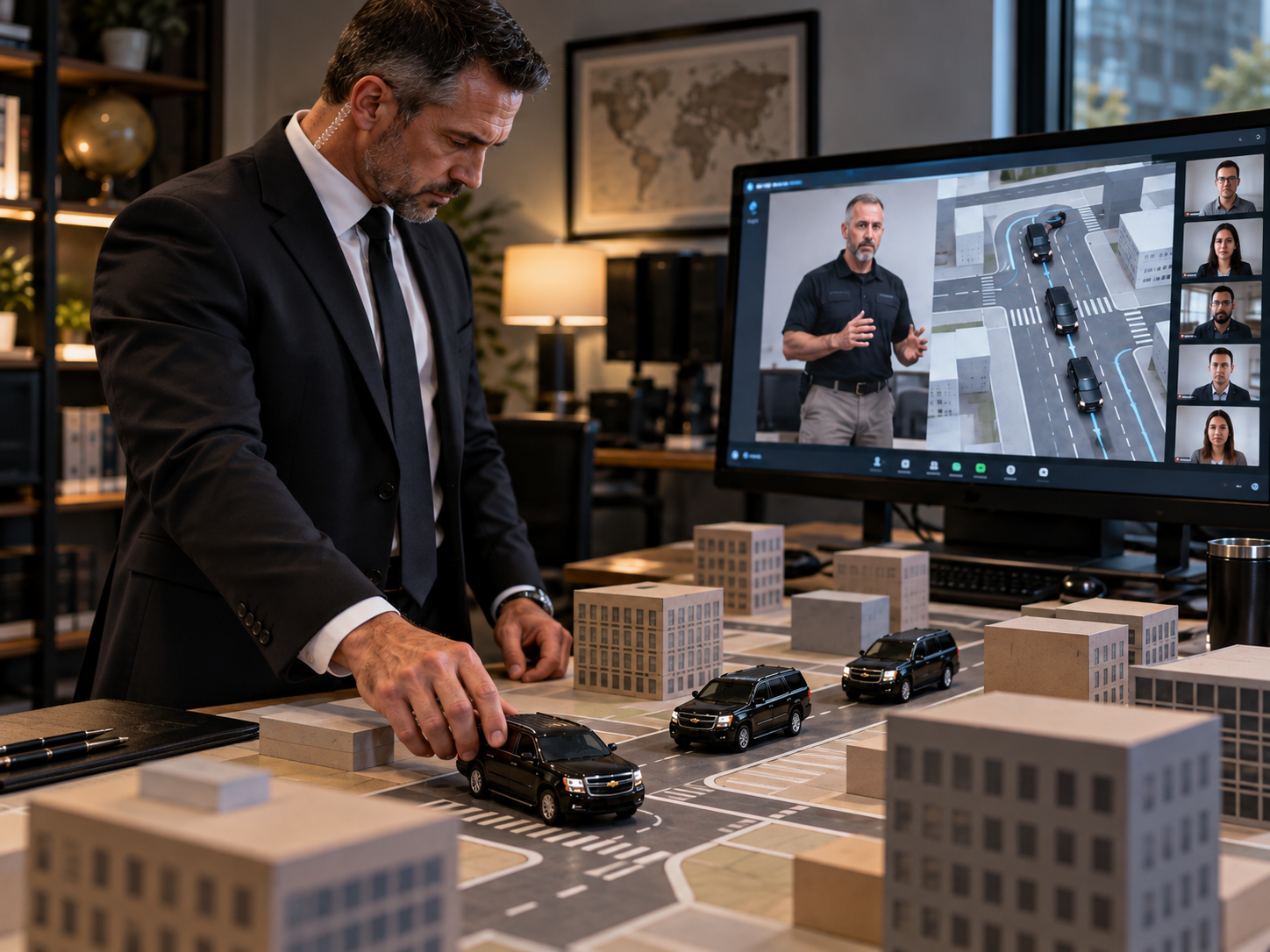 Motorcade principles can also be taught effectively in a classroom or online. Students can learn vehicle order, responsibilities, terminology, route considerations, communications, primary and alternate movements, emergency procedures, and how different vehicles support the protective mission.
That gives the student the foundation.
It does not make the student operationally prepared to work around the vehicles.
Motorcade work involves timing, distance, doors, people, traffic, communications, staging, loading and unloading, arrivals, departures, vehicle changes, and the constant movement of agents and the principal around machines that can weigh several thousand pounds.
The student needs to experience where to stand, when to move, what vehicle is moving next, where the principal is going, and what happens when the original plan changes. The student must also demonstrate that those movements can be made without creating another hazard for the principal or the team.
High-speed and technical driving makes the distinction even clearer. Driving concepts can be taught online. Driving cannot. A student may understand braking, cornering, vehicle dynamics, route selection, or emergency driving theory without having demonstrated any ability to control a vehicle under those conditions.
Calling something a driving concept is accurate. Calling someone trained in driving when that person has never been behind the wheel is something very different.
Advance Work Has to Leave the Computer
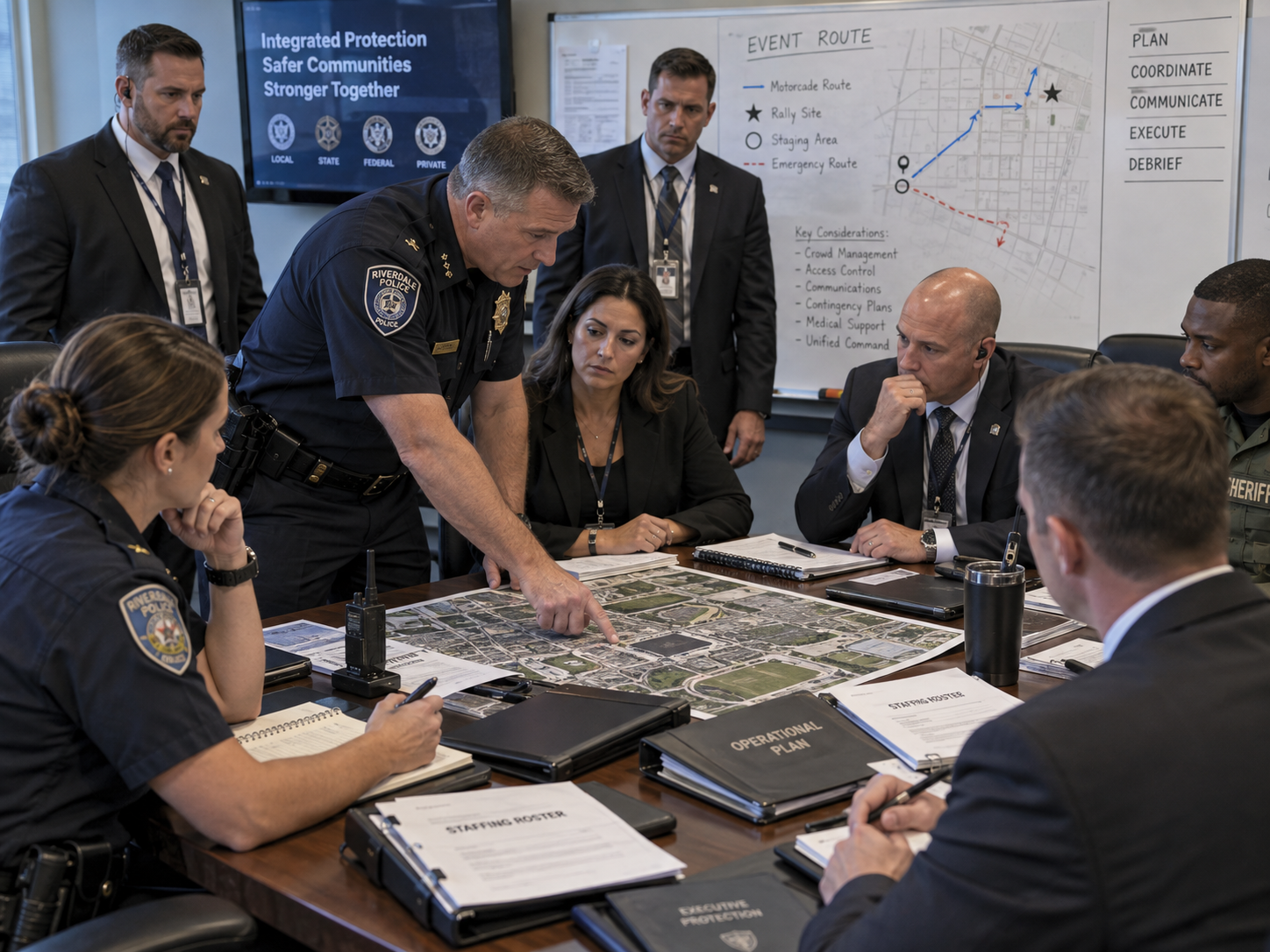
Advance work contains a large amount of material that belongs in classroom and online instruction. Students should understand site surveys, route planning, medical facilities, safe havens, emergency procedures, transportation requirements, venue coordination, holding areas, arrivals, departures, communications, and contingency planning before they begin field work.
Then they need to walk the site.
A venue rarely looks exactly like the plan presented before arrival. The entrance may be locked. An elevator may require credentials. Construction may block a route. A vehicle may not fit where the planner expected it to fit. A holding room may have another entrance that was not obvious on the drawing. The medical route may be affected by traffic or construction. Venue management may make a last-minute change that affects the entire movement.
The student needs to encounter those problems and solve them.
An advance is not simply a form that gets completed. It is a process of identifying problems before they become the principal’s problems. A student who has never physically conducted that process may understand advance terminology but is not prepared to serve effectively on an advance team.
Defensive Tactics Require Repetition
Defensive tactics are another subject where online instruction can support training but cannot complete it.
An instructor can explain distance, positioning, movement, weapon awareness, control, protection of the principal, and the reasons behind a particular technique. Video can be useful for reviewing movements and allowing students to see a technique more than once.
None of that substitutes for practice against another person.
A student has to learn what happens when another person moves, resists, changes direction, grabs, strikes, or simply does something different from the demonstration. Timing, balance, distance, control, coordination, and judgment have to develop through physical repetition.
The instructor also needs to correct the student. A small error in hand placement, balance, positioning, or movement may be obvious to an experienced instructor standing beside the student but may never become clear in an online lecture.
Understanding the tactic is education. Performing it safely and effectively requires practice.
Surveillance Detection Requires a Real Environment
Surveillance detection also begins well in the classroom. Students can learn surveillance methods, indicators, route planning, pattern recognition, choke points, observation techniques, reporting, and the difference between normal coincidence and behavior that requires further attention.
Those concepts are necessary before field exercises begin.
Practical surveillance detection then requires the student to move through an environment while other people and vehicles are also moving. The student has to observe, remember, compare, communicate, and make decisions without knowing in advance what is important.
That environment creates ambiguity, and ambiguity is part of the skill.
A photograph can teach the student what to look for. A field exercise begins teaching the student how to find it while everything else is happening around them.
Executive Protection Is Also Team Training
One of the most serious limitations of an online one-on-one course is that much of executive protection involves working with other people.
Protective formations require other agents. Motorcades require drivers and vehicles. Advances require coordination with venues, transportation, staff, law enforcement, event personnel, medical resources, and the protectee’s representatives. Emergency action requires communication and coordinated movement.
Even the solo protection agent rarely operates completely alone. The agent may work with an executive assistant, driver, household staff, corporate security, hotel personnel, local police, event security, aviation staff, or medical personnel.
A student can learn the responsibilities of those people online. The student cannot demonstrate teamwork without a team.
That matters because communication failures, missed assignments, poor positioning, and misunderstandings between people are often where otherwise sound plans begin to fail.
The Instructor’s Experience Is Not the Student’s Experience
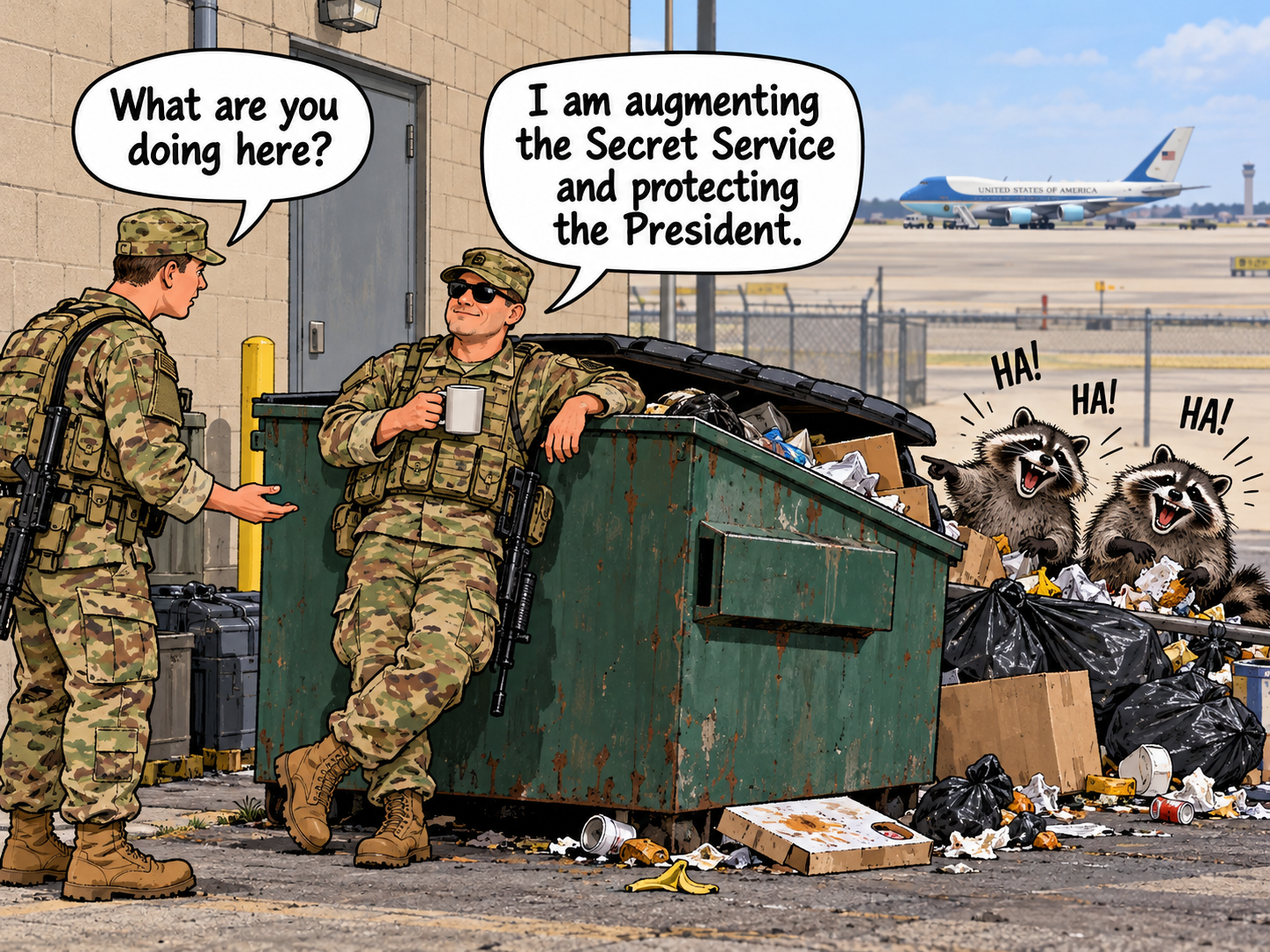 Prospective students should pay attention to instructor qualifications. Operational experience matters, instructional ability matters, and there is value in learning from someone who has actually performed the work being taught. But, never be afraid to ask for a verified resume and proof of certifications. There is a small number of former military and law enforcement with no formal training or real experience that will relay on you not knowing what to ask them.
Military police, special forces, or truck drivers, makes no difference, they don’t normally receive training in close protection. And look for terms like augmented in their bio. They augmented the protection of the CEO, Senator or President. They augmented the Secret Service to support the Security of the President. These are red flags to look for. A soldier standing guard on a road 10 miles away from the President is technically augmenting security. But is this experience what you want in an instructor?
But students should not confuse an instructor’s verified résumé with their own training either.
An instructor may have conducted hundreds of advances, but the student has not completed an advance simply by hearing the instructor describe them online. An instructor may have operated in motorcades around the world, but that experience does not place the student beside a moving vehicle. An instructor may have years of defensive-tactics experience, but the student still needs to practice the technique.
The question prospective students should ask is not only “What has the instructor done?” It is also “What will I be required to do?”
Those are different questions.
Regulators Recognize the Difference
State requirements provide a useful comparison because regulators have already addressed the difference between knowledge and demonstrated performance.
North Carolina’s Close Personal Protection licensing path requires a qualifying course to contain at least 40 hours of instruction. At least 26 hours cover fundamentals including mission planning, site surveys, route selection, medical evacuation, walking formations, protectee communications, and transitional movements. The state specifically requires at least 12 hours of in-person practical exercises. NC DPS
That structure is important. North Carolina does not say those subjects cannot be discussed in a classroom. It requires practical exercises because discussing them is not the end of the training.
Virginia makes the same distinction in another way. Its entry-level Personal Protection Specialist program requires 60 hours of training, and the state’s curriculum specifically requires five practical exercises as part of the performance evaluation. Virginia also requires the applicable registration before someone can work in that regulated category. Virginia DCJS
North Carolina also limits how much online training can count toward continuing education for its licensed private-protection professionals. A maximum of six hours of the required continuing education may come from on-line, although live virtual instruction is treated differently. NC DPS
Requirements differ between states, and not every student attends an EP course to qualify for a state license. The larger point is that regulatory agencies recognize a difference between learning information and demonstrating skills.
A Certificate Is Not Automatically a Credential
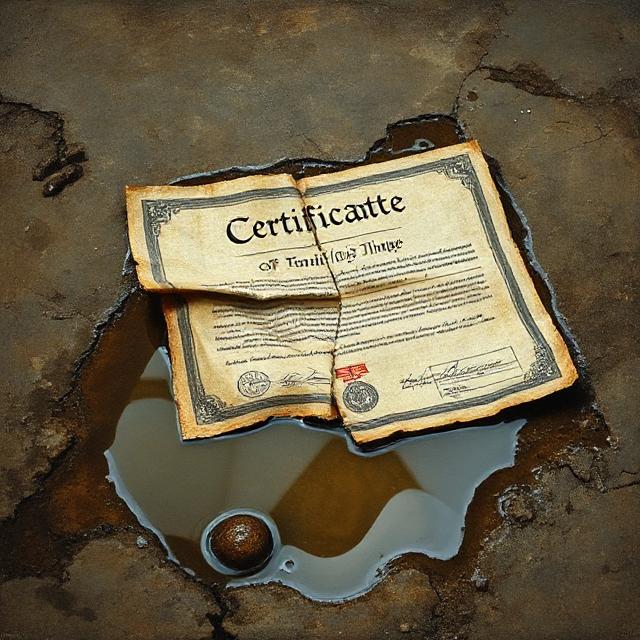
Students should also understand what they are buying when a school advertises a certificate.
Completing a course may result in a certificate of completion. That does not automatically mean the program is state approved, accepted for licensing, accredited by a recognized body, approved for law-enforcement credit, recognized by an employer, or transferable into another credential.
Those terms should not be treated as interchangeable.
If a program advertises accreditation, certification, approval, or recognition, the student should ask who granted it and what that approval actually means. If the answer is a state agency, the student should be able to verify it with the agency. If the course supposedly satisfies a licensing requirement, the student should confirm that with the regulator before paying tuition.
North Carolina publishes the courses it has pre-approved for Close Personal Protection licensing and expressly tells applicants that they remain responsible for ensuring their course satisfies the Board’s requirements. The current list includes programs from a number of providers, including Independent Security Advisors. NC DPS
The point is not that every worthwhile EP course must have the same approval. The point is that students should understand exactly what the certificate represents.
Before You Spend the Money
A prospective student considering an executive-protection course should ask direct questions before registering:
- Who recognizes or approves this course? Ask for the exact agency, regulator, academy, educational institution, or professional organization and verify the claim independently.
- What does the certificate qualify me to do? Determine whether it satisfies a licensing requirement, employer standard, continuing-education requirement, or simply documents course completion.
- Which subjects are taught only as concepts and which are actually practiced? The provider should be able to make that distinction clearly.
- How many hours are devoted to hands-on practical training? Ask what the student will physically perform rather than simply how long the total course lasts.
- Will I conduct an actual advance or field exercise? If advance work is advertised, ask what the student personally does.
- Will I work in protective formations with other students? If formations and team operations are advertised, find out whether there is actually a team.
- Will I work around vehicles? If motorcade, transportation, arrivals, departures, or driving are listed, ask which parts are classroom concepts and which parts are physically performed.
- How are practical skills evaluated? Attendance and a written examination do not establish proficiency in a physical skill.
- Is there a live capstone or scenario that requires the student to combine the lessons? This is where planning, communication, movement, and decision-making should begin coming together.
- Does the training satisfy the requirements where I intend to work? Check the current law and regulatory requirements yourself rather than relying only on the school.
A reputable training provider should be able to answer those questions without avoiding the distinction between what is taught and what is performed.
Online Education Should Prepare Students for Performance
ISA uses online education as part of its training model because it makes sense for certain material. Knowledge that can be learned before attending a live program should not necessarily consume valuable field-training time.
But the online component and the hands-on component serve different purposes.
The online student can arrive knowing what an advance is, what information needs to be collected, how a route is planned, what a protective formation is intended to accomplish, what positions exist within a motorcade, and why particular emergency procedures are used. The live training then requires that student to apply those lessons.
That combination is stronger than pretending either method can do everything by itself.
ISA’s current Executive Protection Specialist syllabus lists 20 practical exercises and a live capstone as part of its seven-day core program. The course combines classroom instruction with practical application rather than treating the two as interchangeable. Independent Security Advisors LLC
North Carolina currently lists ISA’s NC PPSB Fundamentals of Personal Protection and Dignitary Protection Studies Program among the courses pre-approved for Close Personal Protection licensing purposes. NC DPS
That information is provided so students can verify what ISA claims for itself. Prospective students should expect the same transparency from any school they consider.
Bottom Line
Online executive-protection education can give a student substantial knowledge. It can explain why a formation is used, how a motorcade is organized, what information belongs in an advance, what surveillance indicators mean, and what a defensive technique is designed to accomplish.
That knowledge matters. It is also not the end of the training.
The student still has to step into the formation, work around the vehicle, walk the advance, observe the environment, communicate with other people, practice the technique, make mistakes, receive correction, and demonstrate that the lesson can be applied.
That is particularly important when a student is being asked to spend several thousand dollars. Before paying that tuition, determine whether the program is selling education, practical training, or a combination of both. Find out who recognizes the course, what the certificate actually means, which advertised skills you will personally perform, and how anyone will determine whether you can perform them correctly.
There is nothing wrong with learning executive protection from a computer when the subject can be taught that way. The problem begins when the student leaves the computer believing that understanding the lesson is the same as having demonstrated the skill.
Executive protection is a performance profession. The education matters because eventually the student has to perform.
About the Author
Matthew C. Parker is CEO of Independent Security Advisors LLC and Director of Training for EPTraining.us. He retired from the U.S. Army, is a verified combat veteran, DOD master instructor, law enforcement instructor, and executive-protection practitioner whose work includes domestic and international advisor roles, executive and dignitary protection, protective intelligence, curriculum development, and professional training.
Parker’s executive-protection training work emphasizes recognized standards, practical application, evaluated performance, and continuing curriculum review as threats, technology, regulations, and protective practices change.
About Independent Security Advisors / EPTraining.us
Independent Security Advisors develops executive- and dignitary-protection training for law-enforcement, public-safety, corporate-security, private-security, military, and qualified protective personnel. ISA’s current Executive Protection Specialist syllabus contains 104 course learning objectives, 123 terminal learning objectives, 20 practical exercises, facilitated discussions, and a live capstone. Independent Security Advisors LLC
ISA’s programs have received regulatory, law-enforcement, and professional recognition in multiple jurisdictions. Students should always verify which approval applies to the particular course, jurisdiction, employer, or license they are pursuing. North Carolina currently lists two ISA programs among its pre-approved Close Personal Protection licensing courses. NC DPS
Hashtags: #ExecutiveProtection #ExecutiveProtectionTraining #CloseProtection #EPTraining #ProtectiveOperations #SecurityTraining #PersonalProtection #AdvanceWork #ProtectiveIntelligence #EPTrainingUS