
 E-mail us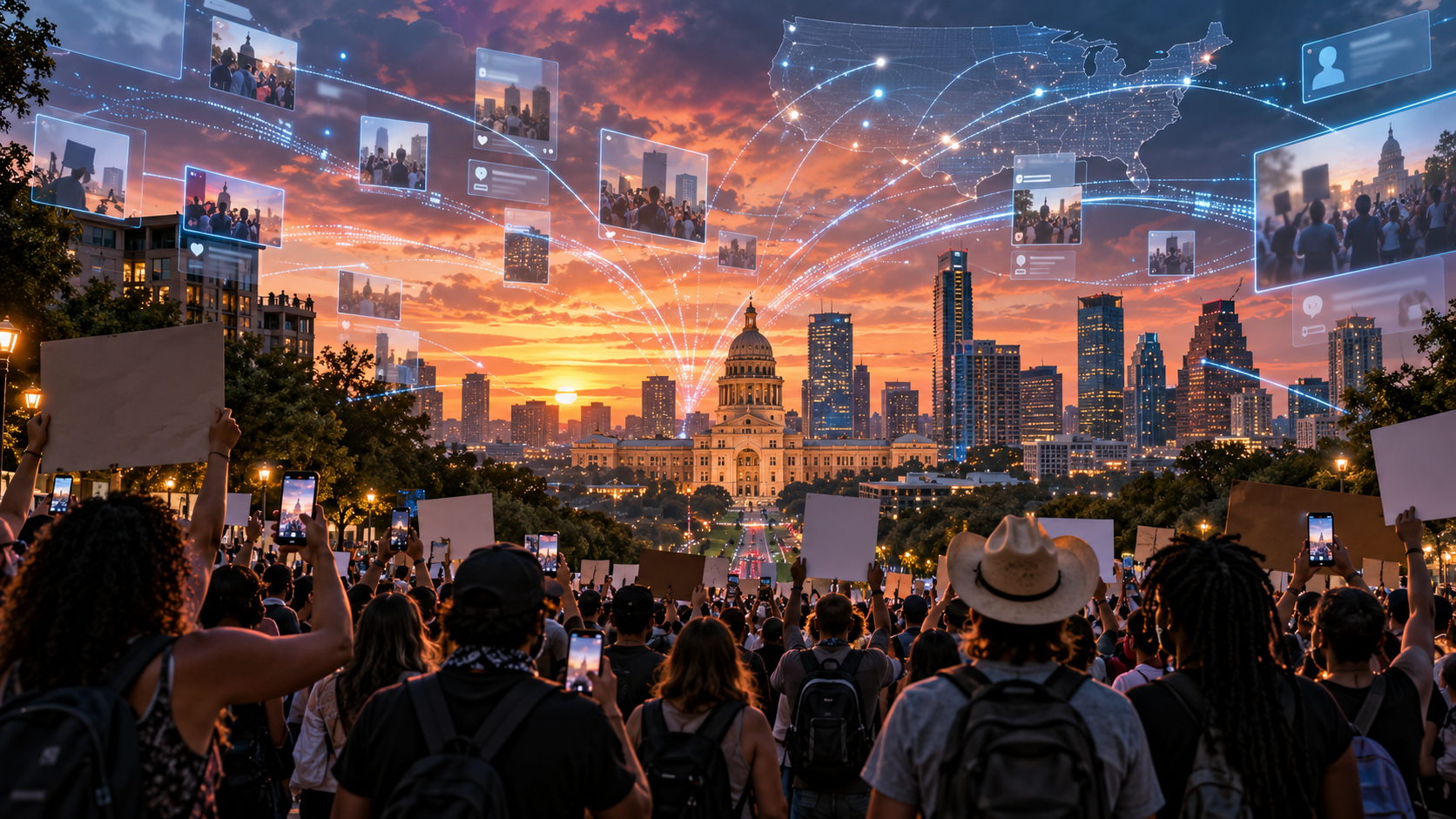
ISA Intel Blog
Austin ICE Protests
The Digitization of a Crisis: How Social Media Took Over the Austin Protests
By Matthew C. Parker | CEO & Director of Training, Independent Security Advisors LLC | EPTraining.us | Defending Democracy Initiative
Date Posted: September 24, 2026
Abstract
This article is the third part of today’s ISA media-literacy series. AI and Deepfakes: How Fake Videos, Voices, and Photos Can Fool Voters explains how artificial intelligence can create convincing fake photographs, cloned voices, altered video, and synthetic online identities. Be a Fact Checker: Why Voters Today Have to Verify What They Read follows with practical tools for checking photographs, videos, websites, original sources, and social-media networks.
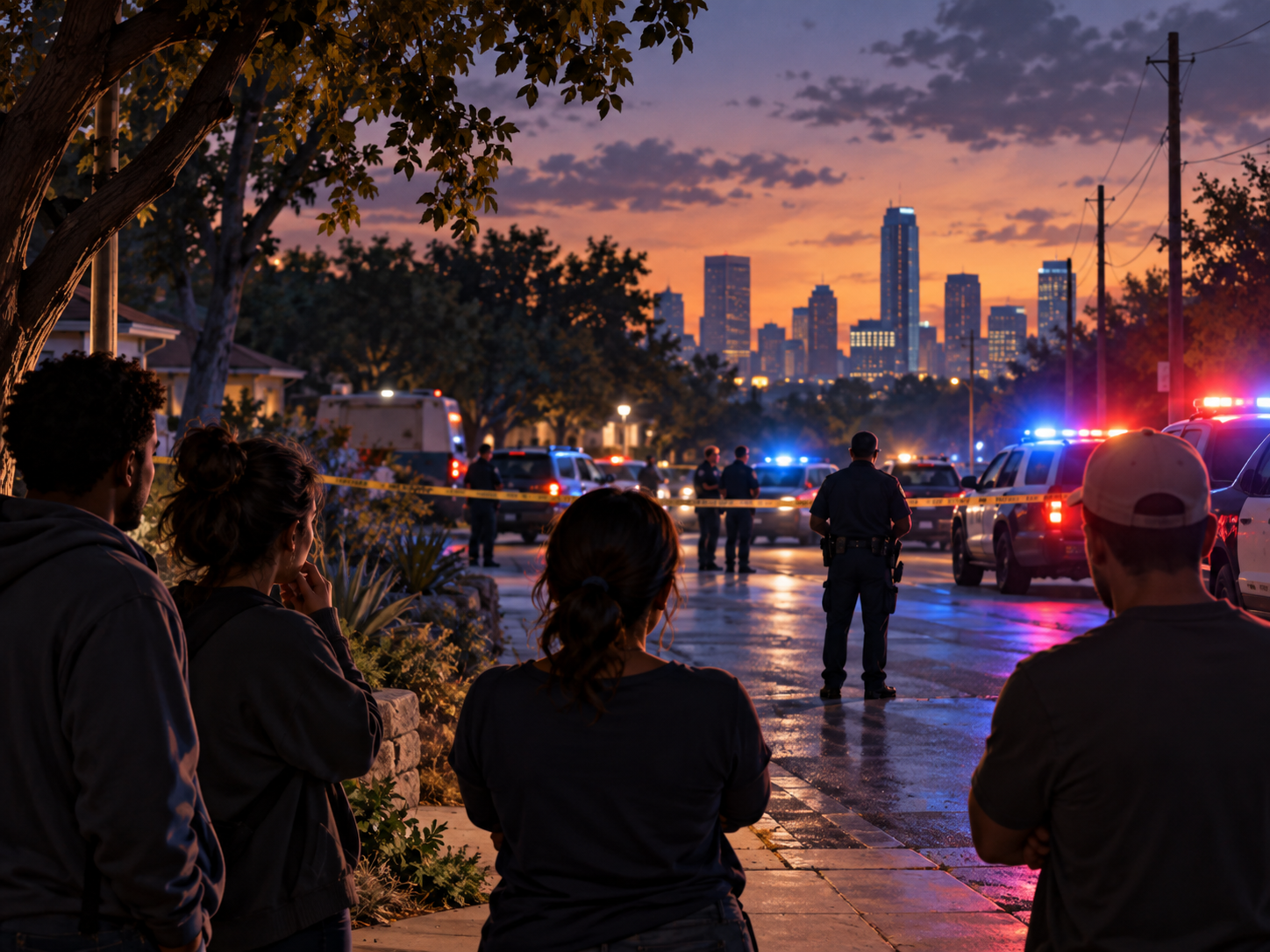 What happened in Austin after the September 20, 2026, shooting of Wilber Rafael Garces Perez by a federal immigration officer began as a local crisis. A man was shot, his family wanted answers, people living and working nearby reacted, protesters gathered, local organizations began organizing, and students later left school to demonstrate. At the same time, investigators were still trying to establish exactly what happened during the shooting because the accounts given by Garces Perez and federal authorities differed. (The Texas Tribune)
Within hours, that local event was moving through national political networks. Organizations on the left connected Austin to their broader argument that ICE enforcement had become violent and should be resisted. Conservative media and commentators focused on socialist organizations, organized anti-ICE activity, confrontations with police, and national activist networks, presenting Austin as evidence of a much larger radical movement against federal immigration enforcement.
The important point is that neither side needed to invent Austin. Each had real facts, real photographs, real protesters, and real political organizations to work with. What changed was which facts were selected, repeated, and presented to a national audience. (Fox News)
That is what makes Austin useful as a media-literacy and protective-intelligence case study. The people living through the event in Austin were dealing with a shooting, an investigation, fear, protests, police response, and questions that had not yet been answered.
National audiences were increasingly seeing Austin through much larger arguments about immigration, ICE, socialism, public order, federal authority, Democrats, Republicans, and the direction of the country.
The problem here was not primarily fake media. Much of what people saw was real. The distortion came from selecting different pieces of the same local event and turning them into competing national political stories. Together, the three articles show the full problem: media can be fabricated, real media can be stripped of context, and political networks can amplify selected facts until the national story looks very different from what happened on the ground.
Austin Started as a Local Crisis
 On September 20, an ICE officer shot and wounded 28-year-old Wilber Rafael Garces Perez during an enforcement operation in North Austin. Austin police initially confirmed that there had been a pursuit and that Garces Perez suffered a gunshot wound to his upper torso. Garces Perez later said he had been trying to find a safe place to stop after realizing federal officers were pursuing him, while federal authorities offered a different account of the encounter. Those differences were still being investigated as the political story around the shooting was already growing. (The Texas Tribune)
As we have seen across the country with previous shootings involving ICE, people began gathering near the shooting scene that afternoon. A protest begins and becomes tense later in the day. Local reporting documented demonstrators throwing rocks and water bottles while police and state officers used pepper-ball projectiles to clear the area.
Four people were arrested, according to KUT’s reporting. Those confrontations are part of the Austin story, the facts are what they are, and should not be used to create a political version of the days events for partisan use. (KUT)
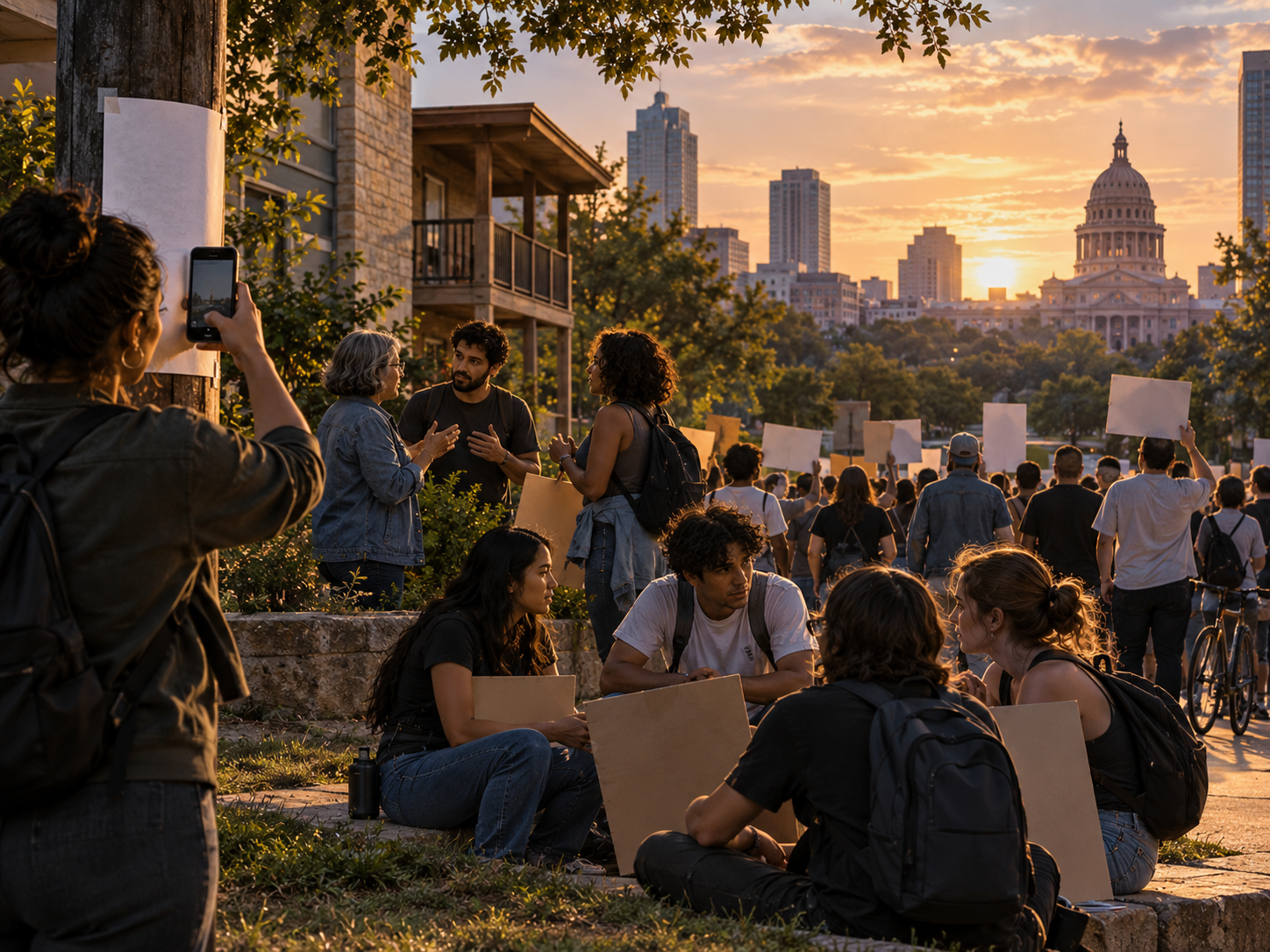
The following evening La Frontera Unida organized a demonstration at the Texas Capitol that drew close to 100 people by 8 p.m. Protesters carried signs including “Get ICE Out of ATX,” while local reporting described the gathering as part of the continuing response to the shooting and ICE activity in the city. (KUT)
At the same time, reporters were talking to people who lived and worked near the shooting scene. KUT “found” members of Austin’s Hispanic community who described fear about leaving home, concern for family members, and uncertainty over immigration enforcement. One nearby business closed early because of the unrest. Whatever position someone takes on immigration policy, those people were part of the real Austin story, and their experience should not be reduced to either a national anti-ICE campaign or a story about radical protesters. (KUT)
What Austin Looked Like Before the National Story Took Over
The local response was emotional, and political, but it was local.
Then Hands Off Central TX organizer Melody Tremallo described about how she heard about the shooting, she started organizing where members would meet and what the objectives should be. Calling friends, and posting a local notice on Instagram she called for a pop-up protest. (AOL.com)
But Hands Off Central TX is not politically disconnected from the larger immigration debate. Its own website shows that it had organized previous “ICE OUT OF ATX” events and worked alongside other advocacy organizations before the Garces Perez shooting. That matters because it gives us a more accurate picture of the first response. It was not simply a random crowd, but it was also not a national group instigating unrest. (Hands Off Central TX)
Local students later became part of the story. On September 22, students in Austin, Pflugerville, Del Valle, and Hays school districts walked out to protest ICE and the shooting. About 70 students from Navarro High School marched in town, while roughly 150 students in Pflugerville left class and marched toward the municipal court building. The Austin ISD said it respected student expression but did not endorse, facilitate, or sponsor student walkouts. (Yahoo)
These were real students who participated. Real local organizations mobilized. Real residents that were angry or afraid. Some of these local demonstrators threw objects at police, arrests were made, and then national activist organizations with a political agenda either joined the local protestors, or started to post about them on social media. This is where the picture on the ground becomes distorted, and when the national groups start to present their versions of events.
The Left Message: Austin is Another Example of ICE Violence
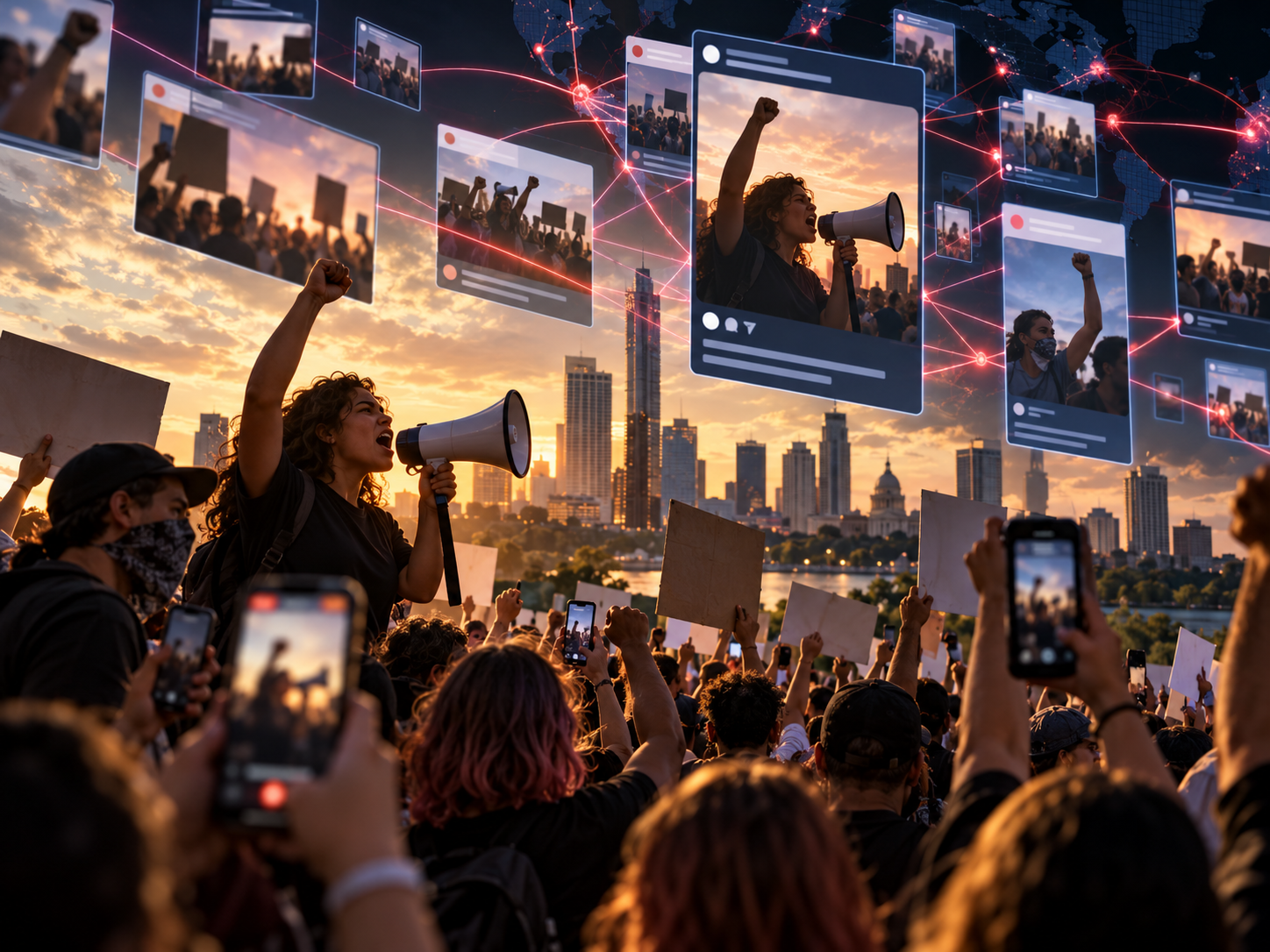 National left-wing organizations moved quickly to connect the Austin shooting to a larger campaign against immigration enforcement. Fox News documented the Party for Socialism and Liberation’s national account posting about Austin within hours and calling for “ICE OUT OF AUSTIN NOW!”
Austin DSA promoted an emergency demonstration and described the incident as another example of “ICE and police violence.” Other socialist organizations used similar language and placed the shooting inside a broader argument that ICE enforcement had become violent and dangerous. (Fox News)
Now, its understood political organizations are expected to advocate. So, the issue here is not that PSL or DSA took a position.
The important point is how quickly a still-developing local shooting was given a national narrative before investigators had finished establishing what had even happened.
The national story was moving from “an ICE officer shot a man in Austin and the facts are disputed” to “Austin is another example of ICE violence and another reason to organize against ICE.”
That national framing had real material to work with. Garces Perez had been shot. Local residents did express fear. Protesters did call for ICE to leave Austin, and student demonstrators later expressed concern over the effect of immigration enforcement on friends and family. Those facts supported the argument being made by national anti-ICE organizations. (KUT)
But this was not the only story, or the only version of events. There were disputed facts about the shooting, over exaggerations about the the confrontations with police, and the political groupd and networks behind some of the reporting.
The differences between the first night’s unrest and the following night’s calmer protest complicated the story. National groups messaging tended to lose those facts because facts complicated the stories they wanted to tell, and a calm peaceful protest is harder to turn into slogans, fundraising messages, and calls to action.
The Right Message: Austin Became a Radical Anti-ICE Uprising
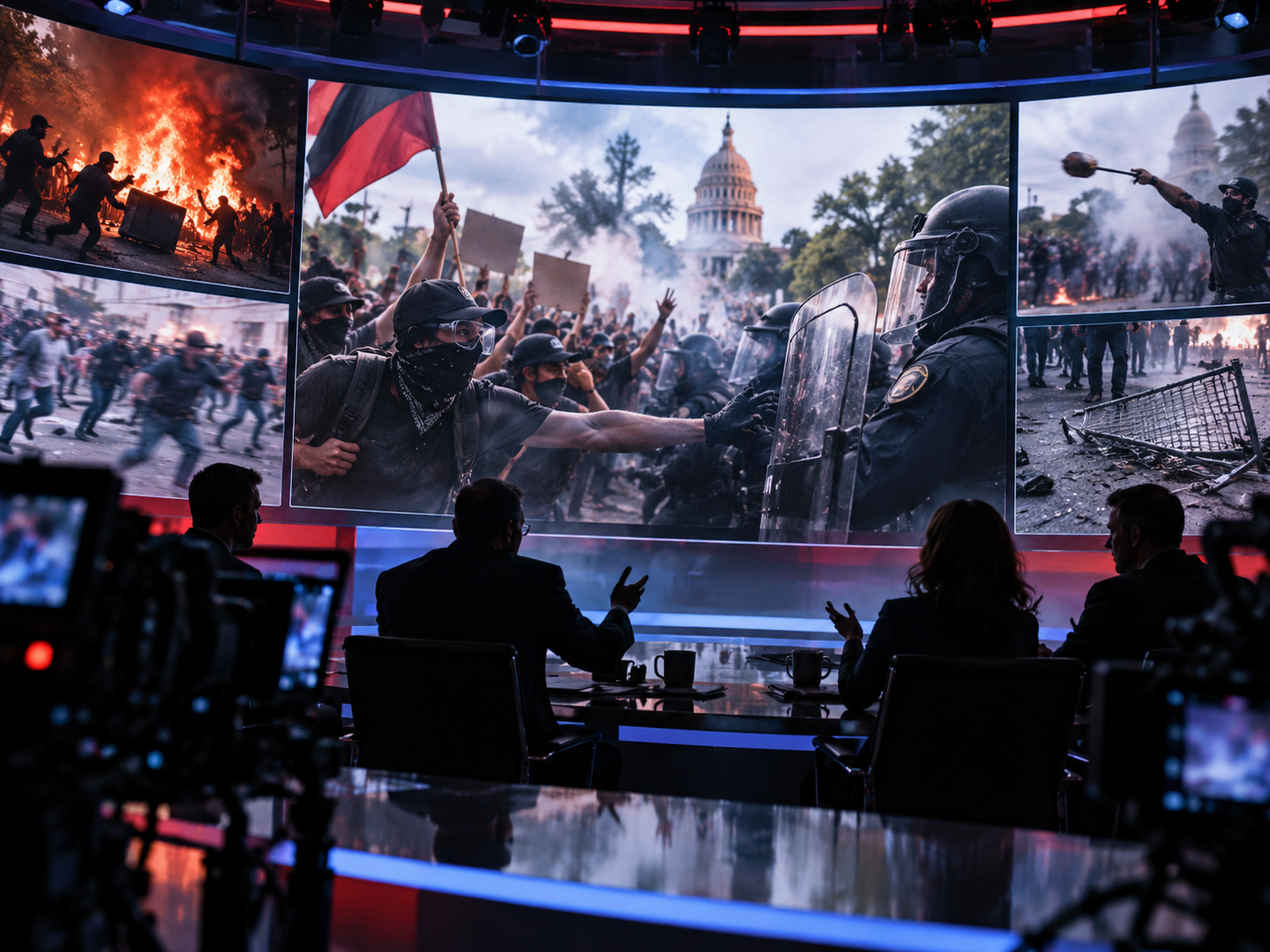 National conservative coverage selected a different part of the same event. The focus fell heavily on PSL, DSA, Freedom Road Socialist Organization, the rapid coordination of social-media messaging, anti-ICE slogans, and the people who threw rocks and bottles at law enforcement. Fox News reported that several socialist and communist organizations had used their networks and online audiences to promote the protests within hours of the shooting. (Fox News)
Those facts also mattered. A concerned american citizen or a protective intelligence analyst should want to know which organizations were involved, how quickly they mobilized, whether their messaging was true or false. And factually whether confrontational behavior was occurring at the scene.
The national conservative version increasingly made Austin look like a coordinated radical-left uprising against federal immigration enforcement. Early Fox coverage emphasized an angry crowd clashing with authorities, while later reporting focused on socialist and communist organizations promoting the demonstrations. That framing contained real facts, but it also pushed other parts of Austin farther out of view: peaceful protesters, students, frightened residents, the victim’s family, and people who simply wanted the shooting independently investigated. (Fox News)
The presence of socialist organizations does not establish that every protester was a socialist, just as the presence of people throwing rocks does not establish that every protester was violent. National organizations and commentators on the right were using real evidence, but they were also selecting the evidence that best supported a much larger argument about radical activism, immigration, public disorder, and federal authority.
One Austin Became Two National Stories
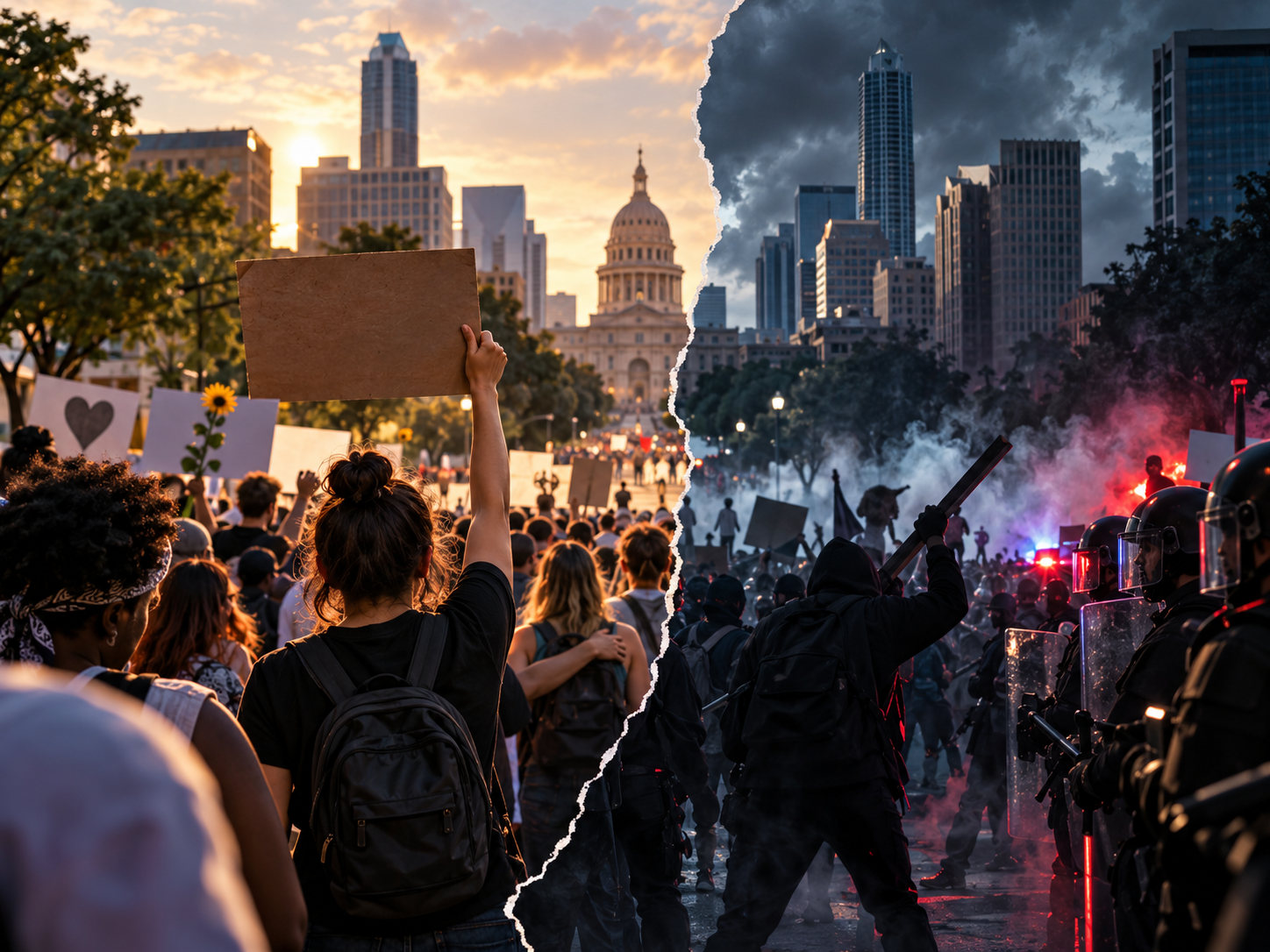 The left did not need to invent the shooting, and the right did not need to invent the socialist organizations. Both existed. That is why this kind of political social media manipulation is harder to recognize than an obvious fake photograph or a video.
A national left-wing account could show Garces Perez, worried immigrant families, peaceful demonstrators, student walkouts, and signs demanding that ICE leave Austin. Those images could support a larger argument that federal immigration enforcement was harming communities.
A national conservative account could show PSL graphics, socialist organizers, anti-ICE slogans, rocks being thrown, and police responding to the crowd. Those images could support a larger argument that radical political organizations were mobilizing against federal authority.
Both audiences could be shown genuine material and still come away believing they had seen two completely different Austins.
The physical event had not changed. The difference was what had been selected, how often it was repeated, and what the audience was told those images meant. That is the central point of this article. Manipulation does not always require inventing facts. Sometimes it works by taking a complicated event, removing most of the complications, and repeating the remaining pieces until they look like the whole story.
The Local Story Became Harder to See
As Austin moved into national political networks, the people closest to the original event became less visible. Garces Perez was a 28-year-old Venezuelan immigrant who, according to friends, had been living a quiet life centered on family, work, and soccer before the shooting. After September 20, his name became part of a much larger argument over immigration enforcement and national politics. (KUT)
The protesters also became symbols. A crowd that could include neighborhood residents, immigrant-rights advocates, students, socialist activists, people worried about family members, longtime political organizers, and individuals looking for confrontation was easier to describe nationally as either a community rising against ICE or a radical movement attacking federal authority.
The people living around the shooting site still had to deal with what actually happened. Businesses had closed early. Families worried about immigration enforcement. Local officials and police had to manage demonstrations, arrests, traffic, and the investigation. Students were walking out of local schools. Those were local consequences, but they were competing for attention with a much louder national argument. (KUT)
The local voice was not literally erased. It was buried under larger political messages with much bigger audiences and much stronger distribution systems. That is how Austin became a proxy fight for arguments that already existed long before Wilber Garces Perez was shot.
When the Message Becomes Bigger than the Actual Event
For every day americans or protective intelligence analysts, the problem is not simply that political coverage can be unfair. National amplification can change the actual environment around a demonstration, government building, elected official, police chief, officer, organizer, or other identifiable person connected to the event.
A local incident may initially be known mostly to people in one city. But once national political organizations, large media outlets, and high-volume social-media accounts begin distributing it, people with no previous connection to Austin can become emotionally invested. Outside activists may begin following the issue, counter protesters may respond, national media attention may increase, and local officials or organizations may see a sharp increase in hostile communications.
None of that automatically establishes a threat. Political anger, harsh criticism, protest, and even offensive speech do not by themselves show that someone is moving toward violence. Protective intelligence still has to look at behavior, including direct threats, fixation, unwanted approaches, surveillance, schedule research, doxxing, weapons-related behavior, and efforts to defeat security.
What this national amplification did with Austin, was change the size and character of the audience from which concerning behavior could emerge. It can affect how crowds behave, counter protest groups actions, media presence, and how many people are suddenly focusing on one event or identifiable person.
The Democratic Problem Is That People Begin Arguing About Different Events
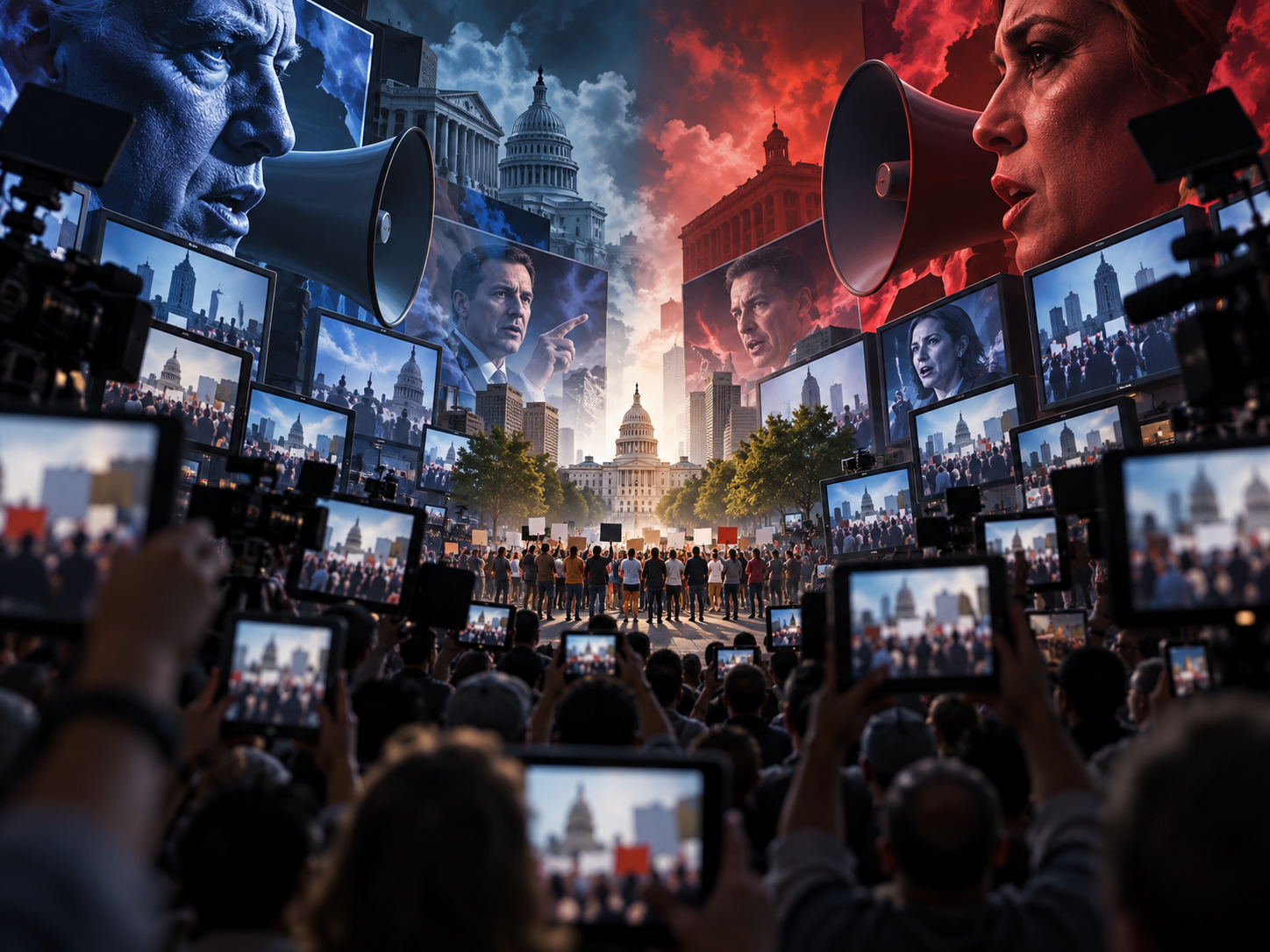 Americans can look at Austin and reasonably reach different conclusions about immigration enforcement, ICE, federal power, police tactics, protest, and public order. Democracy does not require everybody to reach the same political conclusion, and disagreement over those issues is legitimate.
The larger problem appears when different groups of voters are no longer being shown the same basic event. One audience sees Austin mainly as another case of ICE violence, while another sees Austin mainly as a radical anti-ICE uprising. Each version contains enough truth to feel convincing, but neither gives its audience the whole picture.
When that happens, additional facts can start looking like partisan attacks instead of information. A person who has only seen peaceful protesters may believe that video of rocks being thrown is an attempt to smear the movement. A person who has only seen clashes with police may dismiss evidence of peaceful local protests or frightened residents as propaganda.
Why This Matters to the Defending Democracy Initiative
ISA’s Defending Democracy Initiative looks at the point where political anger, misinformation, intimidation, threats, and violence begin affecting people’s ability to participate safely in public life. The mission is not to protect elected officials, police officers, immigration agents, protesters, or political organizations from criticism. Government actions should be questioned, investigated, protested, defended, and debated.
The protective issue begins when attention moves from a public issue toward an identifiable person and starts producing concerning behavior. A national political story can take someone who was previously known only in one city and make that person a symbol to people across the country. That can happen to an officer involved in a shooting, the person who was shot, a mayor, police chief, prosecutor, organizer, or elected official.
That is where media literacy and protective intelligence meet. We need to understand what actually happened, but we also need to understand what millions of other people have been told happened. If those two versions are significantly different, the digital narrative may still shape demonstrations, communications, threats, and the protective environment around real people.
The Bottom Line: Austin Became Everybody Else’s Story
Austin began with a real shooting, conflicting accounts of what happened, a wounded man and his family, worried residents, local protesters, political organizers, police officers, students, and an investigation that was still trying to establish the facts. Some demonstrators confronted police, while another demonstration was peaceful. National left-wing organizations quickly connected Austin to their existing campaign against ICE, and national conservative media and commentators connected the socialist organizations and disorder around the protest to broader arguments about radical activism, immigration, federal authority, and public order. (The Texas Tribune)
The national left increasingly presented an Austin that demonstrated the dangers of ICE. The national right increasingly presented an Austin that demonstrated the dangers of radical anti-ICE activism. Both stories contained facts, but neither contained all of them, and the people closest to the original event had to compete with national organizations that had larger audiences and stronger distribution systems.
That is the digitization of a crisis. A local event enters the national political system, different networks select the pieces that support arguments they were already making, and millions of people can end up reacting to a version of the event that looks very different from what someone standing on the street in Austin would have seen.
For voters, the answer is to work back toward the local facts before deciding what the event means. For protective intelligence professionals, the job goes farther because once the digital story becomes national, it can begin changing the physical environment around the people and places involved. What happened in Austin matters, but in the modern information environment, what the rest of the country was told happened in Austin can matter just as much.
About the Defending Democracy Initiative
The Defending Democracy Initiative is an Independent Security Advisors project focused on a simple problem: threats, intimidation, political violence, and fear can change who is willing to participate in public life. The DDI is not about a political side. It is about helping preserve the space in which Americans can disagree, protest, campaign, govern, judge, investigate, and participate in public life without intimidation or preventable violence deciding who gets to take part.
The Initiative examines the protection of elected officials, judges, prosecutors, candidates, election personnel, public employees, and others whose work is part of democratic government. Its purpose is not to protect government officials from criticism or political opposition. Public officials should be questioned, challenged, investigated, protested, and voted against. Those are normal parts of a functioning democracy.
The Initiative looks at how protective intelligence, threat assessment, executive protection, law enforcement, public safety, emergency management, and better public understanding can help reduce that risk without separating public officials from the communities they serve.
Social media and misinformation are now part of that mission because an online story can change a real-world protective environment very quickly. A misleading video, false accusation, manipulated photograph, or nationally amplified political narrative can bring attention to a local official or event from people who otherwise would never have known about it. Most of that attention will never become a threat, but protection professionals need to recognize when political anger begins turning into fixation, direct threats, unwanted approaches, surveillance, doxxing, or other concerning behavior.
About the Author
Matthew C. Parker is the CEO and Director of Training for Independent Security Advisors LLC (ISA) and EPTraining.us. He is a retired U.S. Army professional with more than 20 years of military service and a career that has included executive and dignitary protection, anti-terrorism, protective intelligence, and security program management in the United States and overseas.
Parker has worked in operational, advisory, instructional, and program-management roles involving military, law-enforcement, government, diplomatic, and private-sector operations. Through ISA, his work has included the development of ISA’s Defending Democracy Initiative, which grew from years of writing and work involving the protection of public officials and the effect that threats, intimidation, political violence, misinformation, and fear can have on public service.
Matthew C. Parker
CEO & Director of Training
Independent Security Advisors LLC
EPTraining.us
Defending Democracy Initiative
Related ISA Media-Literacy Briefings
This Austin case study is part of a broader ISA examination of social-media manipulation, political misinformation, and protective intelligence.
AI and Deepfakes: How Fake Videos, Voices, and Photos Can Fool Voters examines the growing ability to manufacture convincing photographs, audio, video, and online identities. Its central point is simple: seeing or hearing something is no longer enough, by itself, to establish that it happened.
Be a Fact Checker: Why Voters Today Have to Verify What They Read explains how voters and protective intelligence professionals can move back toward the original source, verify photographs and video, examine websites, and use network-analysis tools when deeper research is required.
The Digitization of a Crisis completes that progression by showing that political manipulation does not require fabricated media at all. Austin demonstrates how genuine events, genuine photographs, genuine protesters, and genuine organizations can still be assembled into sharply different national narratives depending on what is selected, repeated, and left out.
#ProtectiveIntelligence #MediaLiteracy #SocialMediaManipulation #Austin #ICE #PoliticalMisinformation #ThreatAssessment #DefendingDemocracy #PublicSafety #EPTraining