- 315-486-7854
- [email protected]

 E-mail us
Part 1. AI Deepfakes in Elections: How New Technology Fools Voters with False Narratives
ISA Intel Briefing
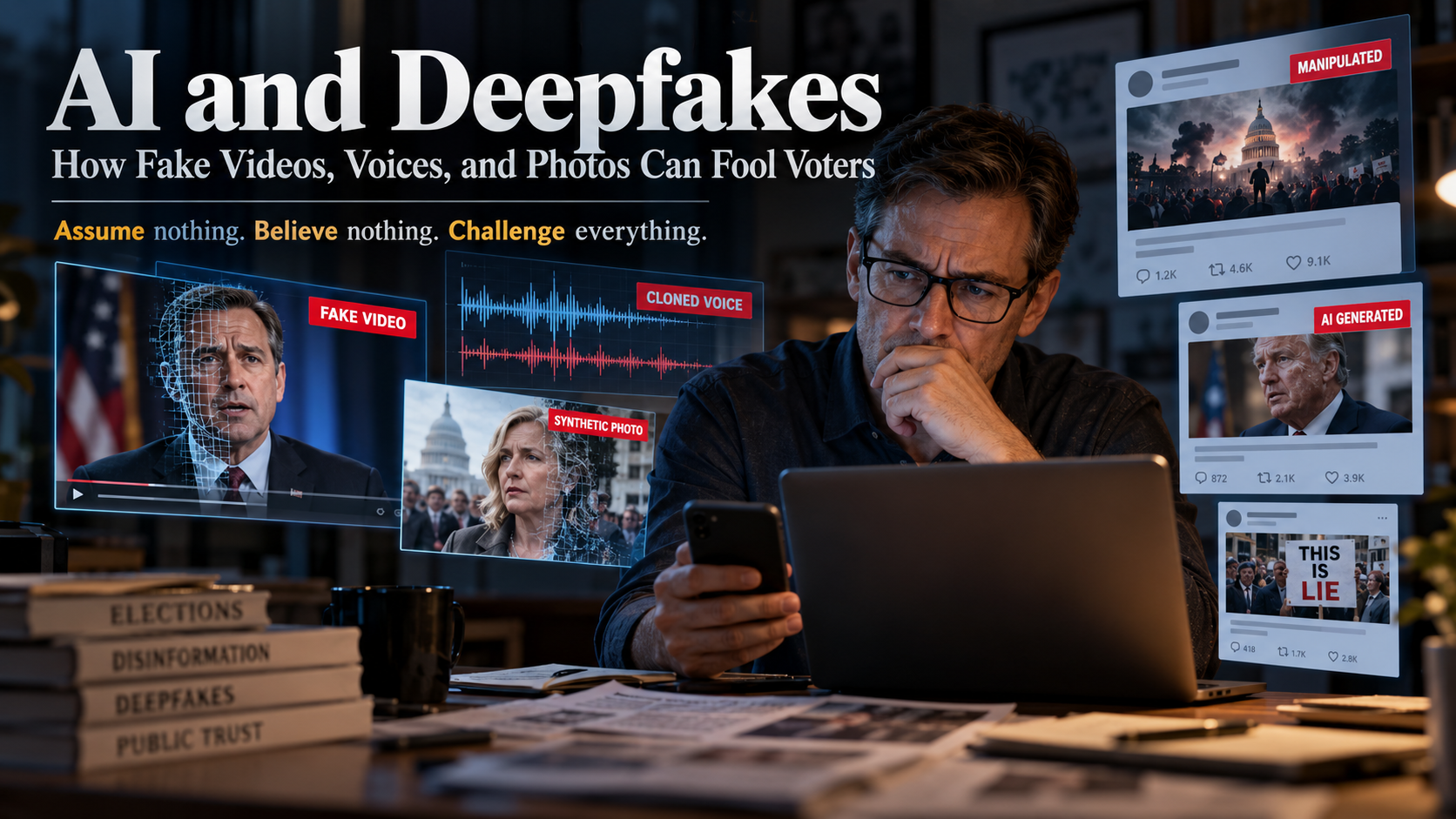
AI Deepfakes in Elections
AI Deepfakes and Elections: How New Technology Can Fool Voters
By Matthew C. Parker | Director of Training, Independent Security Advisors LLC | EPTraining.us | Defending Democracy Initiative
Date Posted: September 24, 2026
Abstract

Artificial intelligence can create remarkably convincing photographs of events that never happened. We have used it ourselves at ISA to create clearly fictional images of our Director of Training interacting with historical figures as part of our educational case studies series.
There is nothing inherently wrong with that use of the technology when the audience understands what it is looking at. The problem begins when the same technology is used to deceive people—to clone a public official’s voice, alter video so someone appears to say something they never said, manufacture a photograph of an event that never occurred, or amplify stories and create a fake or misleading context or narrative.
The technology is becoming easier to obtain, cheaper to use, and more convincing. That changes one of the basic assumptions most of us grew up with: seeing something with our own eyes or hearing it with our own ears means we actually saw or heard something.
**The FBI warns that synthetic images, audio, and video have become easier to produce at scale and can be difficult for ordinary viewers to recognize.
Bottom Line Up Front
These tools can affect elections, destroy reputations, create panic during emergencies, and turn political or social disagreement into something much larger before the truth has time to catch up. A fake does not have to fool everybody. It only needs enough real people to believe it, react to it, and pass it along. The technology may create the deception, but like a virus, it is people that are the ones that spread it.
A One-Minute Check Before You Share
“Assume nothing. Believe nothing. Challenge everything.”
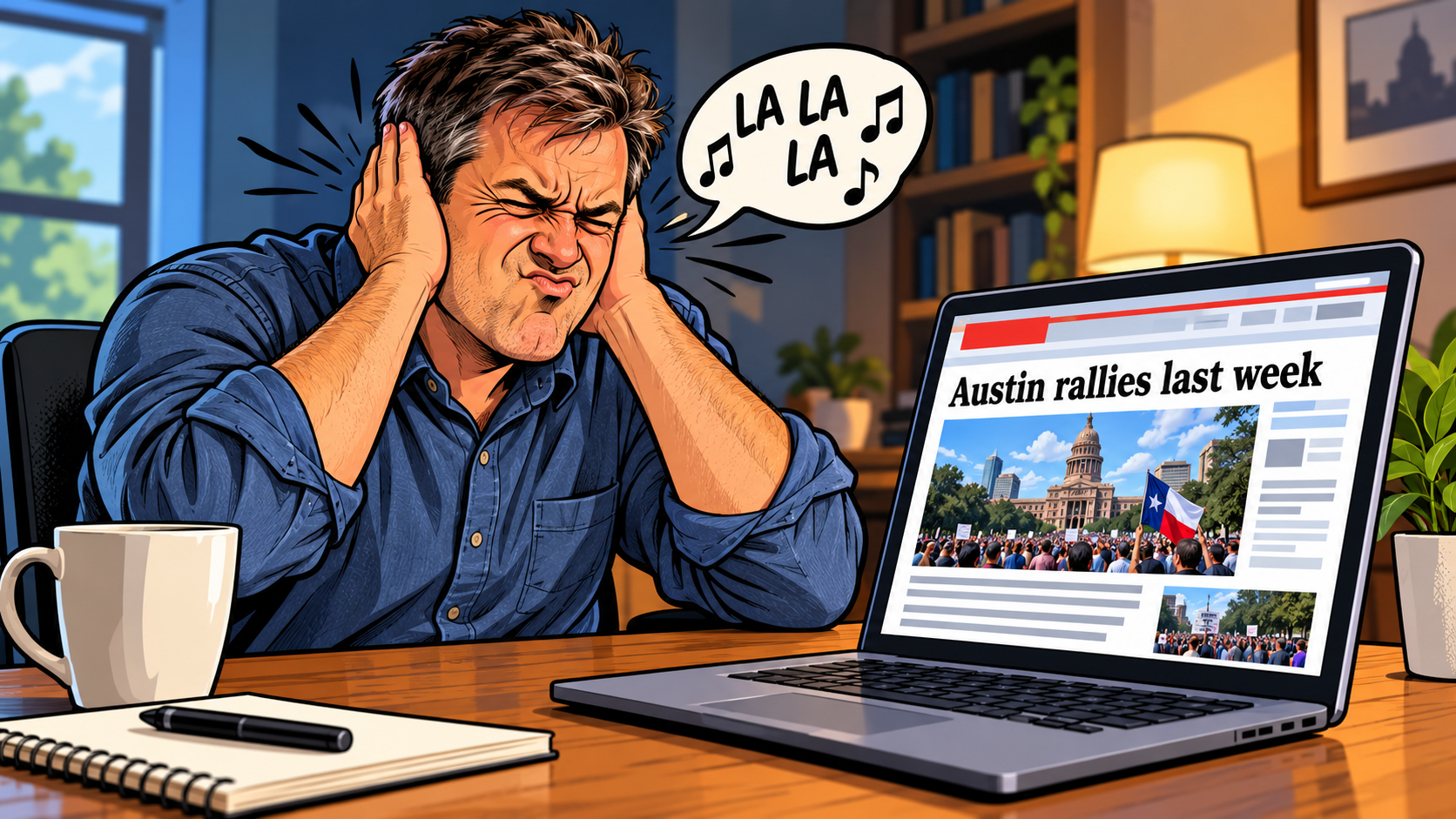 The answer is not to stop believing everything we see. That would be almost as dangerous as believing everything. What matters more is developing a few good habits and being willing to wait before sharing something designed to make you angry, frightened, or outraged.
The people creating deceptive material are counting on speed. They want the emotional reaction to happen before the verification does.The better response is to slow down and start with the most basic question: Where did this actually come from?
Taking a minute to check the source and context interrupts that process before you become part of it.
You do not have to become an artificial-intelligence expert to do any of this. Most people will never be able to identify every sophisticated deepfake by studying pixels, shadows, blinking patterns, or somebody’s fingers, and increasingly they should not expect to.
If the post involves an emergency, public safety, an election, a school, a government agency, or some other event where an official source should exist, go to that source before accepting what somebody on social media tells you happened. If the story is on X or facebook, ensure they are not parody sites.
So, find the original source instead of relying on a screenshot, repost, shortened video, or somebody else’s description. If a longer recording exists, watch it. If a public official supposedly made an outrageous statement, look for the full remarks rather than the few seconds moving through social media.
Then look for independent confirmation. Ten accounts repeating the same allegation are not necessarily ten sources. They may all be repeating one source. What matters is whether another credible source separately established that the event happened.
We Have Already Seen This Used Against Voters
AI-generated election deception is not something we are waiting to see in the future. Before the 2024 New Hampshire presidential primary, voters received robocalls using an artificially generated voice made to sound like President Joe Biden. The message discouraged people from participating in the primary even though Biden had not made the call. Federal regulators later described the recording as an artificially created voice made to sound like Biden.
The new practical rule is straightforward. If an unexpected call, recording, post, or video gives you instructions about when or where to vote, tells you an election has been canceled, claims a polling location has changed, or says a candidate has withdrawn, do not act on the recording alone. Verify the information through the responsible state or local election authority.
The FBI has repeatedly advised voters to rely on their local election officials for accurate voting information when false election material is circulating.
What AI Can Fake Now
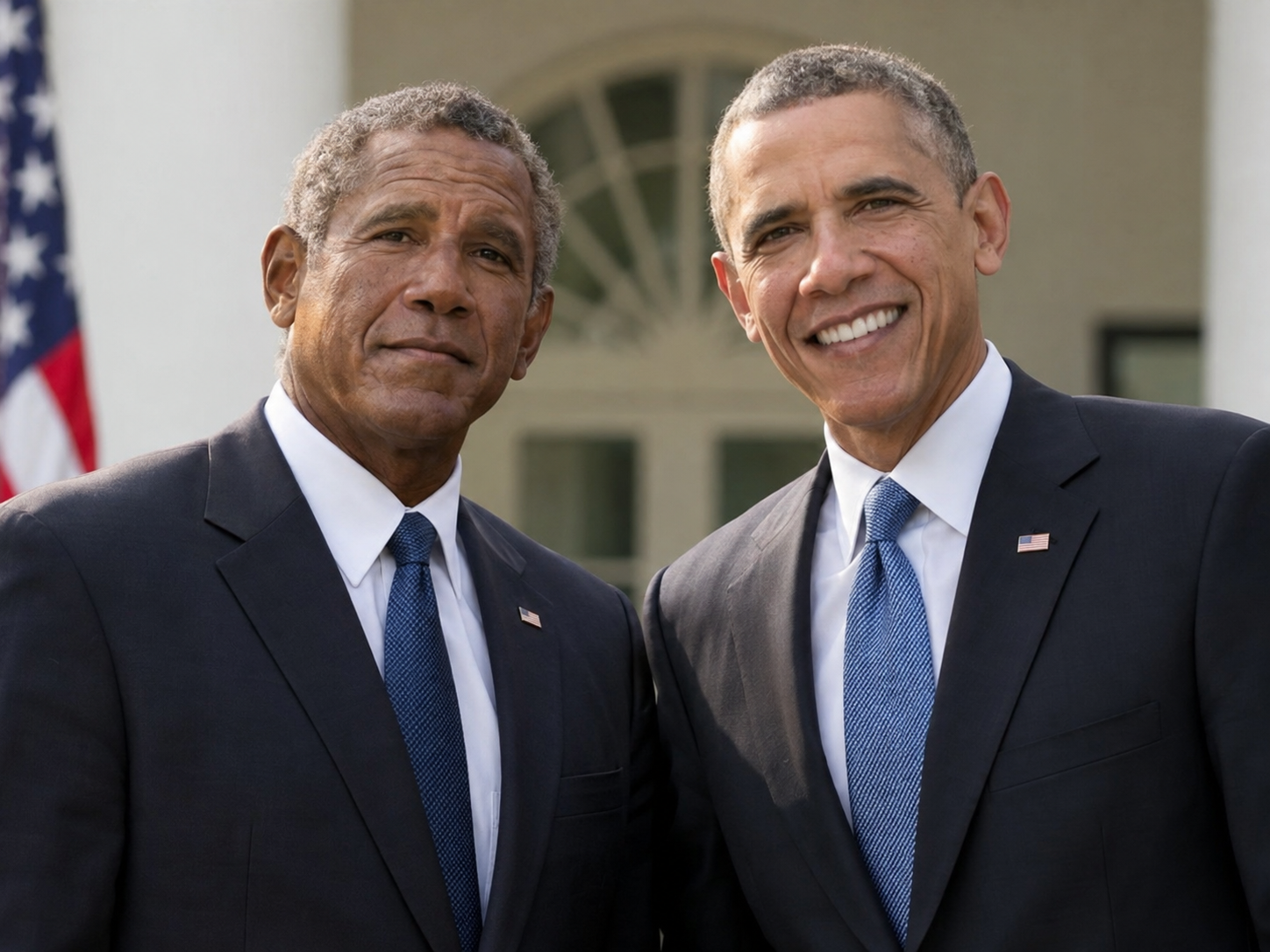
Deepfakes are only one part of the problem. Artificial intelligence can create or manipulate voices, photographs, video, written material, profile pictures, and online identities, often without the specialized equipment or technical skill that would once have been required.
The same technology can also help build fake online identities and artificial crowds. One person or organization can operate numerous accounts, create plausible profile photographs, produce large amounts of text, and make an argument appear more popular, angry, or widespread than it actually is.
That matters because people naturally take cues from crowds. If thousands of comments appear to be saying the same thing, many of us assume thousands of independent people reached the same conclusion. The important point is that modern deceptive material does not have to look cheap or obviously fake. It may look professional, local, and entirely believable.
The Facebook and Local-News Problem
Local Facebook groups and neighborhood pages deserve special attention because information is appearing to come from our own community, so naturally we feel it is more trustworthy. A photograph supposedly showing a school damaged by violence, a police officer injured during a protest, a burning public building, or an emergency in a familiar neighborhood can spread quickly because people recognize the place and genuinely want to warn others.
The person sharing the material may have nothing to do with creating the deception. He may sincerely believe it. That is one of the reasons false information spreads so effectively: somebody creates it, another person believes it, and then legitimate users carry it into their own families, churches, workplaces, neighborhoods, and community groups.
So, before sharing a dramatic local image, find out where it originally came from and check with the agencies that should know whether the event actually occurred. If the post says a school is closed, check the school district. If it describes a major fire, police incident, evacuation, or emergency, check the responsible public-safety or emergency-management agency and credible local reporting. If it concerns voting, use the responsible election authority.
If you cannot confirm the story, that does not automatically prove it is false. It means you do not know yet, and there is nothing wrong with waiting until you do.
Sometimes the Picture Is Real and the Story Is False
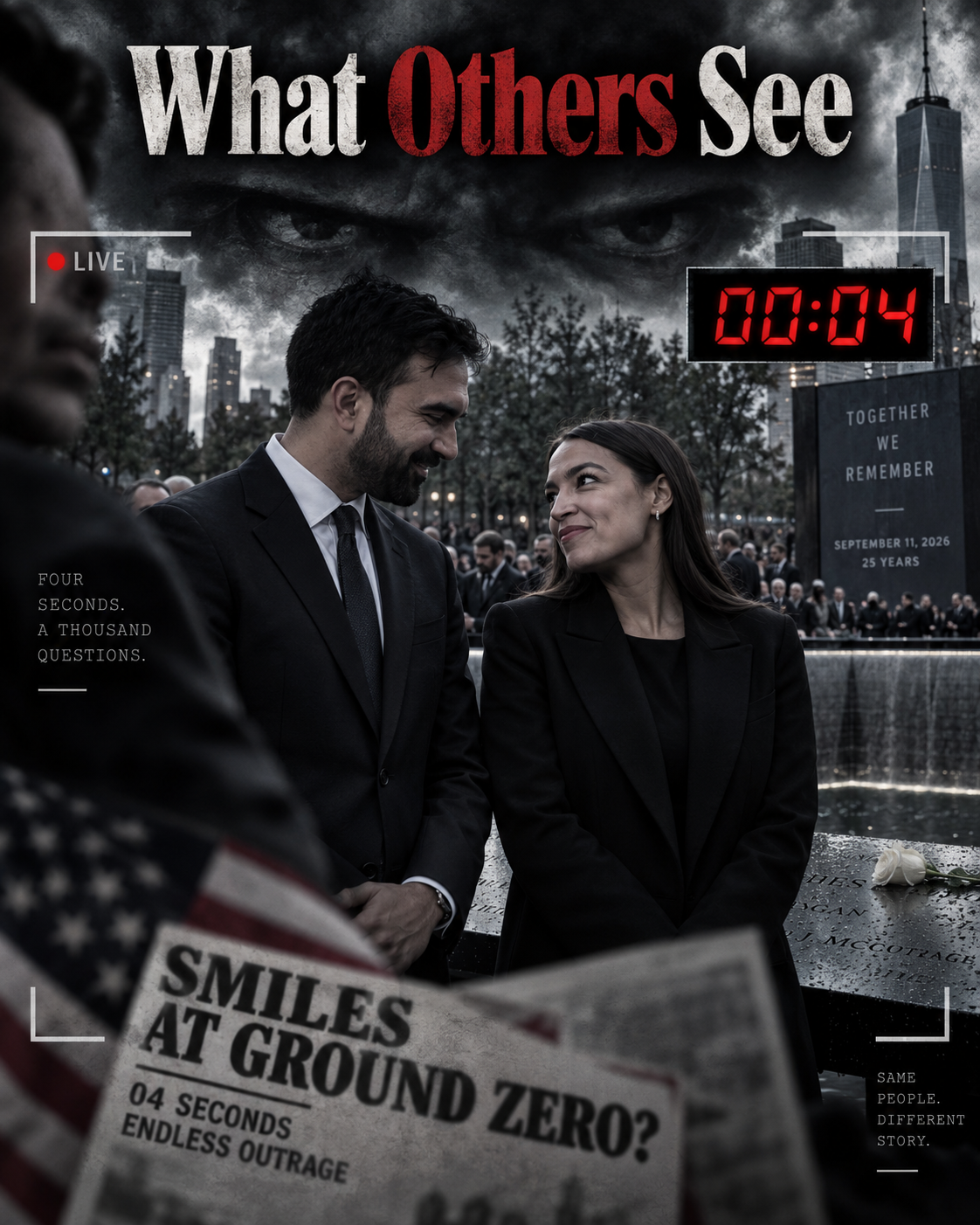 Artificial intelligence is not the only way an audience can be misled. Sometimes the photograph or video is completely genuine and the deception comes from the caption, the camera angle, missing context, selective editing, or the story somebody attaches to it.
ISA has examined that problem in several recent articles. The September 11 Ground Zero case involved genuine video of public officials that became the basis for much broader claims about motive and character. The argument was not primarily over whether the camera recorded a real moment. It was over what people claimed that brief moment proved about the people shown in it.
That means we now have to ask two separate questions when we encounter dramatic media. Is the photograph, audio, or video authentic, and does the story being told about that authentic material accurately describe what happened?
A real photograph can still be used to tell a false story. AI makes verification more difficult, but it did not invent missing context, misleading captions, selective editing, or bad faith.
Stop Depending on Strange Fingers and Bad Blinking
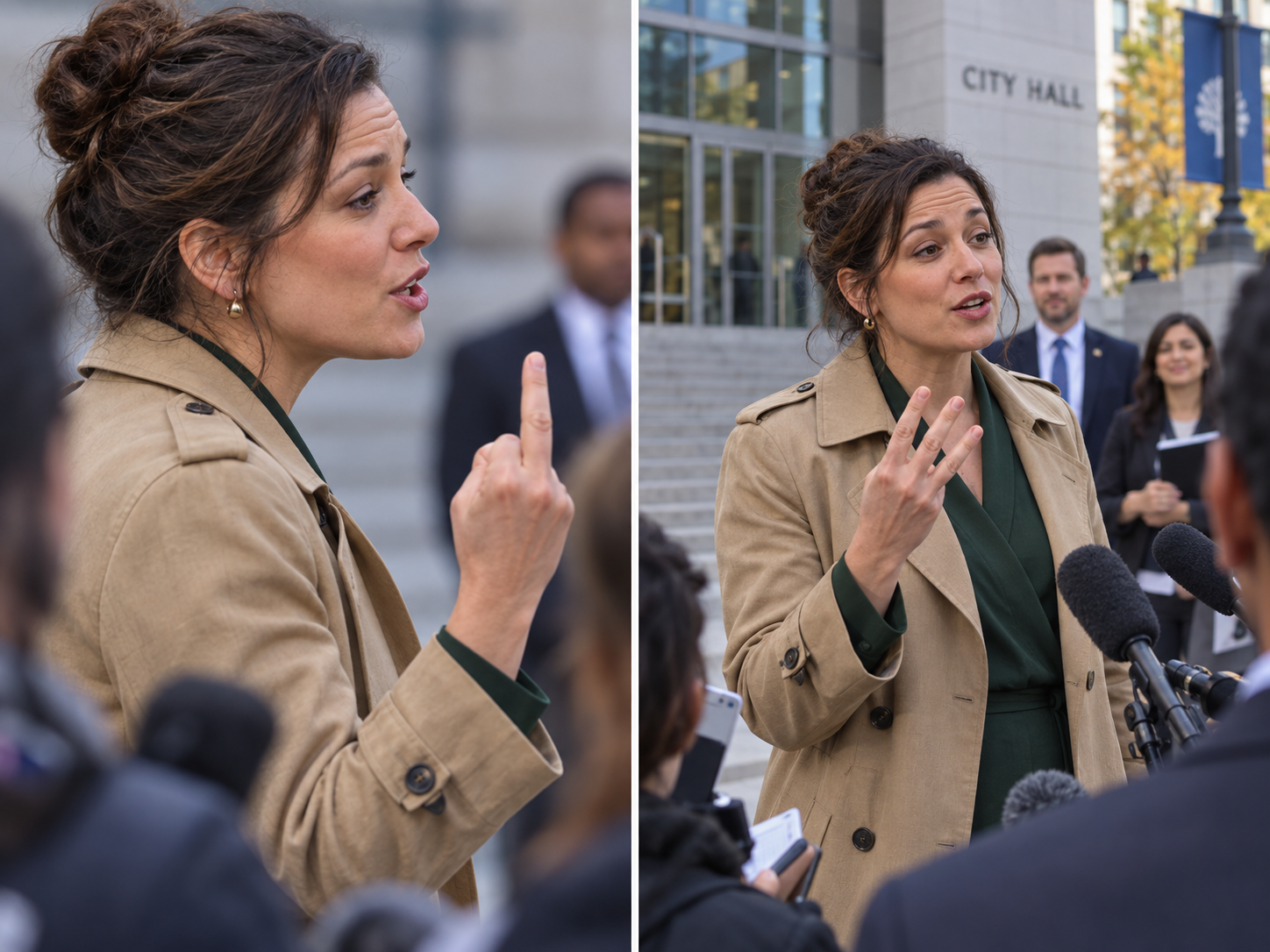 The old advice about spotting fake or synthetic media is becoming less dependable. People were once told to look for six fingers, melted hands, distorted teeth, unnatural blinking, strange shadows, poor lip movement, or text that made no sense. Those problems still occur, and the FBI continues to identify visual warping, unnatural movements, unusual blinking, inconsistent facial details, abnormal lighting, poor synchronization, and unusual audio as potential warning signs.
The problem is that synthetic media keeps improving while genuine media can also look bad. A convincing fake may have perfectly normal hands and natural blinking, while a real cellphone video that has been compressed, reposted, cropped, or recorded in poor lighting can contain visual problems that look suspicious.
The more dependable questions usually sit outside the image. Who posted it first? Where is the original? Is there a longer version? What happened immediately before and after the clip? Can another reliable source independently confirm the event? Those questions are not as entertaining as hunting for an extra finger, but they are much harder for a convincing image to defeat.
Fake Crowds Can Be as Misleading as Fake Images
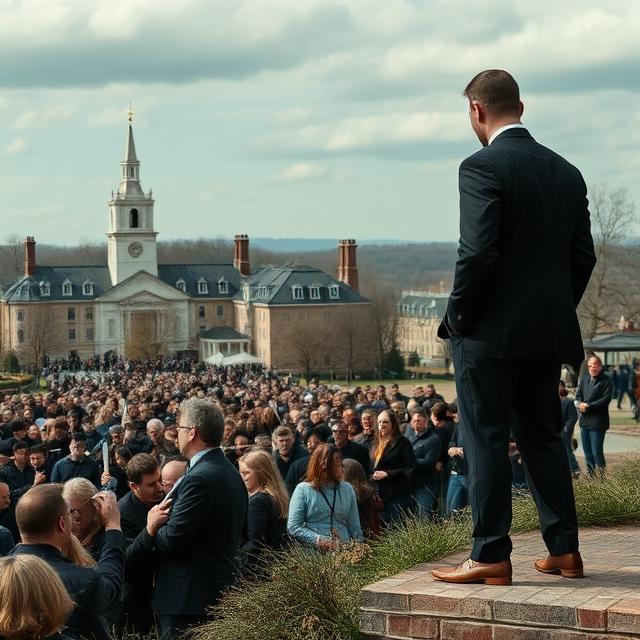 AI doesn’t have to fabricate a photograph to change what people believe. People have bias and want to believe whatever fits in their belief system. But AI can help create a false narrative to challenge your beliefs when a story is accompanied by the appearance of a large online movement, and that can influence real people who assume they are watching genuine public opinion develop in front of them.
Fake personas, artificial engagement, generated profile photographs, automated content, and coordinated accounts can make a political controversy look larger or more spontaneous than it really is.
ISA examined this issue in When the Voice and Outrage Is Fake: Social Media and Protective Intelligence, including the protective consequences that can follow when artificial online activity starts changing the environment around a real person.
The important lesson is not that every large online reaction is artificial. Many are completely genuine. The lesson is that the number displayed beside a post does not tell you how many independent human beings are behind it, who they are, or why they are participating.
During an election or crisis, the appearance of overwhelming anger, support, or panic can itself influence behavior before anyone determines whether the crowd was authentic.
Do Not Let Deepfakes Convince You That Nothing Is Real
The opposite reaction can be just as dangerous. Once people understand how convincing fake/synthetic media has become, some begin assuming that every damaging recording, photograph, or video can simply be dismissed as fake. Hunter Biden’s laptop, real or fake? The Nixon tapes, real or fake? Man on the moon, real or fake?
That creates a different opportunity for deception. A genuine recording can be called fake. A real photograph can be dismissed as fabricated. Someone who actually said or did something damaging can claim the evidence was manufactured, and people may accept that explanation because they know the technology exists.
During the 2024 election cycle, the FBI had to publicly identify multiple fabricated videos and statements that falsely used the Bureau’s name and insignia. Some of those fake videos claimed to report election fraud, voting-machine problems, threats at polling locations, or other incidents that had not occurred.
The correct lesson is not “nothing can be trusted”. It is that evidence needs a source, context, and confirmation. Healthy skepticism makes us check the evidence. Cynicism allows us to dismiss evidence whenever we do not like what it shows.
Why This Matters During an Election
Fake/synthetic media becomes particularly dangerous during elections because a false story does not have to survive very long to have an effect. It may only need to last until the polls close, until a candidate is forced to respond, or until enough people have seen and shared it that a correction can no longer catch up.
A cloned voice can distribute false voting instructions. A fabricated photograph can manufacture a scandal. A false video can depict violence or election misconduct that never happened, while fake accounts can amplify the material until it appears to represent a broad public reaction.
The U.S. intelligence community, FBI, and CISA warned during the 2024 election that foreign influence actors were manufacturing videos and fake articles in efforts to undermine confidence in elections, create fear, and deepen divisions among Americans.
Federal officials specifically identified manufactured videos attributed to Russian influencers and warned that some of those efforts risked contributing to violence against election officials.
The technology does not belong to one political party and neither does the vulnerability. A candidate from either party, an election official, judge, police department, protest group, public agency, or ordinary citizen can become the subject of manipulated media.
The standard should remain the same no matter whose name is attached to the story: establish what actually happened before helping the story travel farther.
Why ISA Cares About This

This subject connects directly to the Independent Security Advisors Defending Democracy Initiative. ISA created the Initiative to address threats, intimidation, political violence, political incivility, and protective vulnerabilities that can interfere with the ability of people to perform legitimate roles in democratic government.
Its concern includes elected officials, judges, prosecutors, candidates, election personnel, public employees, and others whose work keeps government and the democratic process functioning.
The mission has never been to protect one political party, one ideology, or one public official from criticism. Public officials should be criticized, challenged, investigated, voted against, protested, and held accountable. That is part of democracy.
The problem begins when intimidation, threats, or violence start deciding who is willing to run for office, who is willing to hold a town hall, whether a judge can perform a judicial function independently, whether an election worker is afraid to do the job, or whether a public official can continue serving without fear becoming part of every decision. ISA’s Defending Democracy work has consistently framed protection as a way to preserve legitimate public function rather than isolate officials from the people they serve.
That also explains why misinformation and deepfakes belong in this discussion. A false image or recording does not remain confined to a computer screen once real people begin reacting to it. It can change the atmosphere around a public meeting, increase hostility toward an official, generate demonstrations, push personal information into circulation, or focus attention on an individual who was previously unknown outside a small community. None of those developments automatically establishes a threat, but they can change the environment in which protection professionals, law enforcement, emergency managers, and public officials have to operate.
The Defending Democracy Initiative is therefore concerned with both sides of the problem. We need to recognize and respond appropriately when behavior moves toward a real threat, but we also need citizens to become harder to manipulate in the first place. If a fake photograph, cloned voice, fabricated video, or false story can make us hate somebody we have never met before we even bother to determine whether the story is true, the damage begins long before anyone crosses a security line.
Protecting democracy is not simply about putting security around a politician. It is about keeping intimidation and preventable violence from deciding who participates in public life, while preserving the criticism, disagreement, protest, accountability, and public access that democracy requires. That is the mission of the Defending Democracy Initiative, and it is why learning to recognize and verify deceptive media belongs in this work.
About the Author
Matthew C. Parker is the CEO and Director of Training for Independent Security Advisors LLC (ISA) and EPTraining.us. He is a retired U.S. Army professional whose career has included executive and dignitary protection, anti-terrorism, protective training, and security program management in the United States and overseas.
Parker has served in operational, advisory, instructional, and program-management roles internationally, and has written and spoken for years about the security of elected officials and the relationship between threats, intimidation, political violence, public access, and democratic government. His 2017 article “Security for Elected Officials, Revisited” reflects the same concerns that later developed into ISA’s Defending Democracy Initiative.
Related ISA Reading
When the Voice and Outrage Is Fake: Social Media and Protective Intelligence examines fake personas, artificial engagement, generated identities, and the protective consequences of artificial online activity. Read When the Voice and Outrage Is Fake
The Monster Engine: How Modern Politics Strips the Human Face from America examines the larger problem of political dehumanization, repetition, outrage, and the transformation of criticism into identity. Read The Monster Engine
Four Seconds at Ground Zero examines a related problem in which genuine video can be stripped of context and made to support claims about motive and character that the recording itself cannot establish. Read Four Seconds at Ground Zero
Sources
Federal Bureau of Investigation — Artificial Intelligence and Synthetic Media provides the FBI’s guidance on synthetic images, video, audio, and common warning signs. FBI Artificial Intelligence guidance
Federal Communications Commission — New Hampshire Presidential Primary Robocalls documents the artificially generated voice made to sound like President Biden and the agency’s response to the robocall campaign. FCC New Hampshire robocall documentation
FBI, ODNI and CISA election-security statements document fabricated election videos, false government statements, and foreign influence activity identified during the 2024 election period. Joint election-security statement
©2018 Independent Security Advisors LLC. All Rights Reserved. Created by WebCreationUS