
 E-mail us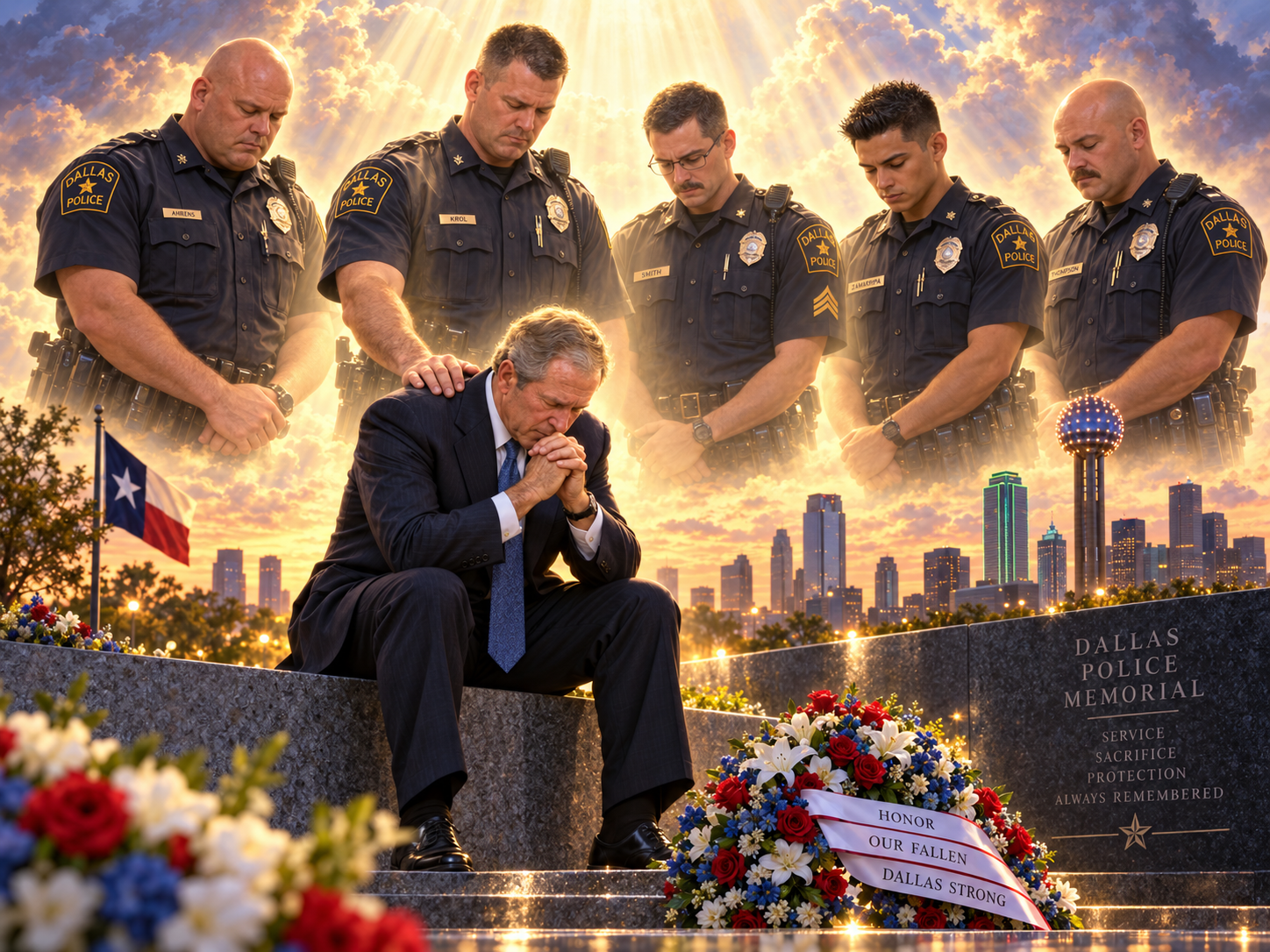
When a Memorial Became personal abuse, political dehumanization
George W. Bush Dallas police memorial
How a Few Seconds of George W. Bush at the Dallas Police Memorial Became an Excuse for Personal Attacks
By Matthew C. Parker
CEO, Independent Security Advisors LLC | Director of Training, EPTraining.us
ISA Defending Democracy Initiative
Abstract:
George W. Bush and the Dallas Police Memorial will be remembered for two ridiculous reasons: he swayed and smiled during the playing of The Battle Hymn of the Republic at the memorial for five murdered Dallas police officers, and within hours, a moment dedicated to remembering others had become unsupported and ugly speculation about alcohol, drugs, dementia, and intelligence. We will examine how criticism of visible conduct became personal abuse and political dehumanization, and why the difference matters to protective intelligence.
Bottom Line Up Front
 On July 12, 2016, former President George W. Bush stood onstage at a memorial for five Dallas law-enforcement officers murdered days earlier. Near the end of the service, the Dallas Police Choir performed The Battle Hymn of the Republic. Bush sang, appeared to smile, and swayed more energetically than the people standing around him. The video was real, and anyone watching it was free to have an opinion about the former president and whether more restraint at a memorial was warranted.
But what followed went well beyond opinions or mild criticism. Short video clips and GIFs spread online, and a moment of emotion was turned into speculation that Pres Bush was drunk, high, suffering from dementia or “simply too stupid” to understand where he was. None of those unfounded, and insulting claims is supported by the video. Yet, within hours, criticism of something the camera actually showed had become an attack on Bush’s health, sobriety, intelligence and character.
We as citizens can criticize public officials for what they actually say and do without inventing what is happening inside their heads. Once we cross that line political criticism becomes personal attacks, and a few seconds of video can replace a much larger truth. The former president is a human being, and he was affected by the emotions of the day and the music.
Reader Navigation
- The Dallas Police Memorial
- What Bush Actually Did
- What Happened Before the Video
- A Short Video Takes Over the Story
- From Criticism to Personal Abuse
- What the Full Setting Looked Like
- Donna Brazile Pushes Back
- Bush Had Just Warned About Dehumanization
- What Protection Professionals Should See
- Criticism Does Not Require Character Assassination
- The Person in the Video Is Still a Person
- Bottom Line
- Frequently Asked Questions
The Dallas Police Memorial
Dallas was grieving. On July 7, 2016, a gunman had opened fire on law-enforcement officers during a protest in downtown Dallas, killing five officers and wounding others. Five days later, President Barack Obama, former President George W. Bush, Michelle Obama, Laura Bush, Vice President Joe Biden, Dallas officials, police leaders and the families of the fallen officers gathered for an interfaith memorial at the Morton H. Meyerson Symphony Center. In an emotional display five seats were left empty in memory of the officers who had been killed.
Pres Bush was not attending simply as a former president making a ceremonial appearance. He returned to Texas after leaving the White House and lived in the Dallas area, he is a son of Texas. During his remarks, he described the killings as “five deaths in the family” for those who loved Dallas and called it home. He spoke directly to the families, acknowledged that their loss was greater than anyone else’s and said the community could stand beside them and share their grief. Could this be any more emotional?
Near the end of the memorial, the Dallas Police Choir began performing The Battle Hymn of the Republic. Attendees stood together and joined hands and it was during that song that the cameras captured the moment that would soon overtake much of the public conversation about Bush’s appearance at the memorial.
What Bush Actually Did
Bush sang, smiled and swayed with the music. He was considerably more animated than most of the people around him, moving from side to side and swinging the linked arms of Laura Bush and Michelle Obama as he did so. The song lasted nearly five minutes, and while other people onstage also moved or mouthed the lyrics, Bush clearly stood out.
There is no reason to sanitize the video. Bush looked awkward. Someone could watch the scene and conclude that a former president should have remained more restrained at a memorial for murdered police officers. A member of one of the officers’ families could have found it inappropriate, and a police officer watching the service could reasonably have believed Bush misjudged the moment.
The problem was not that people criticized him. The problem was how quickly criticism of something plainly visible became speculation about things the video could not possibly establish. Bush’s swaying was soon being offered as supposed evidence that he was intoxicated, using drugs, suffering from dementia or mentally incapable of appreciating the seriousness of the memorial. Those claims were not observations from the video; they were personal accusations added to it.
What Happened Before the Video
The short clips that spread online said very little about what Bush had been doing before the choir began singing. Only minutes earlier, he had delivered a serious address about the five officers, the families they left behind and the divisions affecting the country. He spoke about the responsibilities police officers accept for strangers and the grief carried by their families. His remarks were not the words of a man treating the memorial as a party.
Bush also warned about what political and social division was doing to Americans. He said that argument was turning too easily into animosity and disagreement into dehumanization. He warned that people too often judged other groups by their worst examples while judging themselves by their best intentions. He called for empathy and reminded the audience that Americans shared the same country, future and human dignity.
He then said that the country should not seek only a unity created by grief or fear, but a “unity of hope.” Shortly afterward, the Dallas Police Choir began singing The Battle Hymn of the Republic, the people on stage joined hands, and Bush moved with the music more enthusiastically than anyone else.
That larger setting did not require anyone to approve of his behavior. It did make the more extreme claims about him considerably harder to defend.
A Short Video Takes Over the Story
The video of Bush swaying spread quickly through Twitter, Facebook, Instagram, news sites and blogs. The Washington Post documented how the clip divided social media almost immediately. Some viewers thought the behavior was inappropriate, unpresidential or disrespectful. Others believed Bush was simply moved by the hymn and saw nothing wrong with him showing emotion during the song.
The criticism soon moved beyond decorum. Social-media users began asking whether Bush had been drinking alcohol. Some suggested cocaine use. Others speculated, without evidence, that the 70-year-old former president might be showing signs of dementia. The Washington Post specifically noted that these medical claims were being made without evidence and only shortly after Bush had delivered what the paper described as a clear and moving speech.
The San Antonio Express-News documented similar attacks. Social-media users described Bush as “lit,” wondered whether he was “on the juice” and accused him of having far too much fun at a memorial service. Gawker described the scene as though Bush had arrived ready to party.
Pajiba went further. Its writers openly speculated about whether Bush was drunk, high or suffering from Alzheimer’s disease before reducing the former president to a crude insult and declaring him an idiot. There was no medical evidence, toxicology report or other factual basis for those accusations. There was simply a video of Bush swaying during a hymn and people willing to make it say considerably more.
From Criticism to Personal Abuse
There is a large difference between saying George W. Bush looked foolish and claiming that a few seconds of video proved he was intoxicated, using cocaine or suffering from a neurological disorder. The first is an opinion about something people could actually see. The second converts an awkward public appearance into unsupported allegations about the man’s physical and mental condition.
That line disappeared quickly. CBS reported that Bush’s arm movements had become the subject of mockery and criticism across social media, with users replaying the footage and circulating older videos of him dancing awkwardly. The Dallas memorial was becoming another opportunity to ridicule a former president whom many of those posting already disliked.
There was no shortage of legitimate material available to people who wanted to criticize George W. Bush. He had served eight years as president. His decisions on Iraq, Afghanistan, terrorism, surveillance, Hurricane Katrina, the economy and many other subjects were part of the public record and open to scrutiny.
Instead, an awkward few seconds during a hymn became an easier target. Rather than argue about decisions he actually made, some people used the video to speculate about alcohol, drugs, dementia and intelligence. The attack became less about Bush’s conduct and more about humiliating the person. You don’t need to look any further than some of the bias and distorted video that came out after the event https://www.youtube.com/watch?v=R5uujKXzd84
What the Full Setting Looked Like
The complete setting was less sensational than the short clips and jokes suggested. Bush was not swaying while a police widow delivered a eulogy, while the names of the officers were being read or during a moment of silence. The service was nearing its conclusion, and the Dallas Police Choir was performing The Battle Hymn of the Republic. The people on stage had joined hands in a public display of unity after speeches from Bush and Obama calling for the country to come together.
Most of the people in the line remained solemn, although several moved with the music or mouthed the lyrics. Bush was simply much more animated. The Washington Post described him as appearing more moved by the music and mood than those around him.
A viewer could see all of that and still decide that Bush behaved inappropriately. There was no requirement to like the swaying, excuse it or pretend that it looked dignified.
What the fuller setting does not support is the claim that a man moving enthusiastically to a patriotic hymn was therefore drunk, high, demented or incapable of understanding why he was at the memorial. Those were not facts revealed by the video. They were accusations attached to it.
Donna Brazile Pushes Back
One of the responses came from someone with no partisan obligation to defend George W. Bush. Democratic strategist Donna Brazile publicly pushed back against the ridicule and described Bush as “feeling the spirit,” telling people to allow him to sway. The Washington Post also documented responses from people who made clear that they had never supported Bush politically but nevertheless believed the criticism had become unfair.
That distinction is important because defending the facts does not require defending the politician. Brazile did not have to become a Republican, reconsider the Bush presidency or excuse decisions she opposed. Other critics did not have to suddenly become Bush supporters. They only had to acknowledge that swaying during a hymn did not establish intoxication, drug abuse or dementia.
The ability to make that distinction should be ordinary. Political disagreement should not require us to abandon judgment simply because the person being attacked is someone we dislike.
Bush Had Just Warned About Dehumanization
There is a bitter irony in what happened after the memorial. Bush had just spoken about how quickly political and social disagreement can become dehumanization. He warned that Americans were judging opposing groups by their worst examples while judging themselves by their best intentions, and he asked the country to recognize the shared humanity of people on the other side of political and social divisions.
Within hours, a few seconds of his own behavior were being used to reduce him to a caricature. The former president who had just spoken about murdered police officers and national division became the drunk Bush, the cocaine Bush, the senile Bush or simply the stupid Bush.
That is exactly how political dehumanization becomes easier. The whole person disappears and is replaced by the version most useful to people who already dislike him. Bush’s speech, his relationship to Dallas, the five officers he had just mourned and the larger memorial could all be pushed aside because a few seconds of awkward movement made a better joke.
The criticism no longer required understanding the person or even the event. It required only a clip and an audience already prepared to dislike the man in it.
What Protection Professionals Should See
Public officials and former public officials operate inside an information environment where a few seconds of video can quickly become a claim about character, health, motive or competence. Most of the resulting hostility will never become a security threat. A cruel joke is not a threat, and calling a former president foolish or embarrassing does not make somebody dangerous.
Protective intelligence has to maintain that distinction. The concern changes when an individual’s behavior becomes focused and personal. A grievance centers on one protected person, communications become persistent or threatening, the individual begins seeking contact or information about locations and schedules, approaches protected sites, stalks the principal, discusses weapons, leaks violent intent or takes other steps suggesting that anger is moving toward action.
An atmospheric assessment helps the protection team understand the conditions surrounding those behaviors. It does not treat political affiliation, ideology, religion, race, ethnicity or demographic information as proof of danger. It examines changes in rhetoric, grievance, public activity, organization and capability and determines whether those changes should affect staffing, observation, site control, transportation, routes, law-enforcement coordination or instructions to the protectee.
The Dallas episode shows how quickly public perception can be altered by a few seconds of video. Bush went from giving a serious memorial address to being portrayed online as drunk, drugged, mentally impaired or stupid. A protection team does not exist to defend him from insults, but it does need to recognize when ridicule and hostility around a public figure begin producing people whose grievances are becoming more focused, persistent and threatening.
Criticism Does Not Require Character Assassination
George W. Bush could have stood more still during The Battle Hymn of the Republic. He could have looked around, realized he was considerably more animated than the people beside him and restrained himself. Anyone is free to think that would have been the better choice.
Fair criticism does not make every accusation fair. Saying Bush looked awkward, overly enthusiastic or out of place is an opinion based on visible conduct. Claiming that the video showed he was drunk, using drugs or suffering from dementia turns that opinion into an unsupported factual or medical allegation.
Evidence still matters when the person being criticized is unpopular. There is something particularly distasteful about taking an awkward moment at a memorial for murdered police officers and using it to speculate about someone’s mental health, drug use or intelligence without any evidence that those conditions existed.
That kind of attack does nothing for the families of the five officers. It adds nothing to a discussion of Bush’s record or the political issues dividing the country at the time. It simply uses tragedy as an excuse to degrade another person.
The Person in the Video Is Still a Person
George W. Bush had been one of the most polarizing presidents in modern American history. That did not stop him from being a human being, a Dallas resident and someone who had just stood before the families of five murdered officers and spoken about the men as husbands, fathers, veterans and public servants.
Then a patriotic hymn began, and Bush moved with it more enthusiastically than the people standing around him. That is what the camera recorded.
It may have been awkward. It may have looked inappropriate. It may have made some viewers uncomfortable. None of those opinions requires any additional evidence.
Claims about cocaine, alcohol, dementia or mental incompetence do. The video supplied none.
Once the attack depends on inventing a condition the evidence cannot establish, the argument is no longer about what the person actually did. It becomes about how much contempt can be poured onto a political opponent while still pretending the attack is an observation.
Bottom Line
George W. Bush smiled, sang and swayed during The Battle Hymn of the Republic at a memorial for five murdered Dallas police officers. That happened, and people were free to believe his behavior looked inappropriate.
What happened next was different. Within hours, a few seconds of awkward video had become speculation that Bush was drunk, high, using cocaine, suffering from dementia or simply too stupid to understand the solemnity of the event. The fuller setting showed that he was participating in the closing hymn after delivering a serious address mourning the officers and warning Americans about political dehumanization.
Donna Brazile and other people who had no political reason to defend Bush recognized that the attack had gone too far. They did not need to defend his presidency or agree with his politics. They only had to recognize that the video did not prove the things people were saying about him.
That is a standard worth keeping. Criticize what the camera actually records. Call a moment awkward, inappropriate or embarrassing if that is what the evidence supports. But once the attack requires invented intoxication, drug use, dementia or some other condition the video cannot establish, the criticism has stopped being about what happened and become a personal attack on the individual.
Bush had warned the audience only minutes earlier that disagreement can turn into dehumanization. The response to his own behavior showed how quickly that can happen.
Frequently Asked Questions
Was George W. Bush really dancing at the Dallas police memorial?
Bush smiled, sang and swayed energetically while holding hands with Laura Bush and Michelle Obama during the Dallas Police Choir’s performance of The Battle Hymn of the Republic. Whether someone calls that movement dancing or swaying is a matter of description, but the video clearly shows him moving more enthusiastically than most of the people standing beside him.
Was the memorial service still underway?
Yes. The choir performance came near the end of the memorial after Bush and Obama had delivered their remarks. The people onstage had joined hands while the hymn was performed.
Was there evidence that Bush was drunk or using drugs?
The contemporaneous reporting cited here provides no evidence establishing intoxication or drug use. Those allegations arose as social-media speculation and personal attacks prompted by the video.
Was there evidence that Bush had dementia or Alzheimer’s disease?
No such diagnosis was established by the memorial video. Commenters and some media writers speculated about dementia or Alzheimer’s disease without supporting medical evidence.
Did Democrats defend Bush?
Yes. Democratic strategist Donna Brazile publicly defended him and described him as “feeling the spirit.” The Washington Post also documented responses from people who said they had not supported Bush politically but believed the criticism of the video had become unfair.
What had Bush said during the memorial?
Bush mourned the five officers, praised law enforcement and addressed the country’s divisions. He warned that disagreement was turning too easily into dehumanization and said Americans too often judged other groups by their worst examples while judging themselves by their best intentions.
Why does an incident like this matter to executive protection?
Hostile political commentary by itself does not establish a threat. It becomes relevant to protective intelligence when an individual’s behavior moves beyond criticism or ridicule into persistent fixation, targeted threats, stalking, repeated approaches, leakage, weapons-related behavior or other signs that a grievance may be moving toward action.
About the Author
Matthew C. Parker is CEO of Independent Security Advisors LLC and Director of Training for EPTraining.us. A retired U.S. Army Senior Non-Commissioned Officer, combat veteran, instructor and executive-protection practitioner, Parker’s work includes executive and dignitary protection, threat assessment, protective intelligence, curriculum development and training for professionals responsible for protecting elected officials and other at-risk persons.
Through ISA’s Defending Democracy Initiative, Parker examines threats, intimidation, political violence and the information environments that can affect public officials and the professionals assigned to protect them. His approach to protective intelligence begins with a simple requirement: establish what happened, separate observation from assumption and do not turn political belief, suspicion or insult into an intelligence conclusion without evidence.