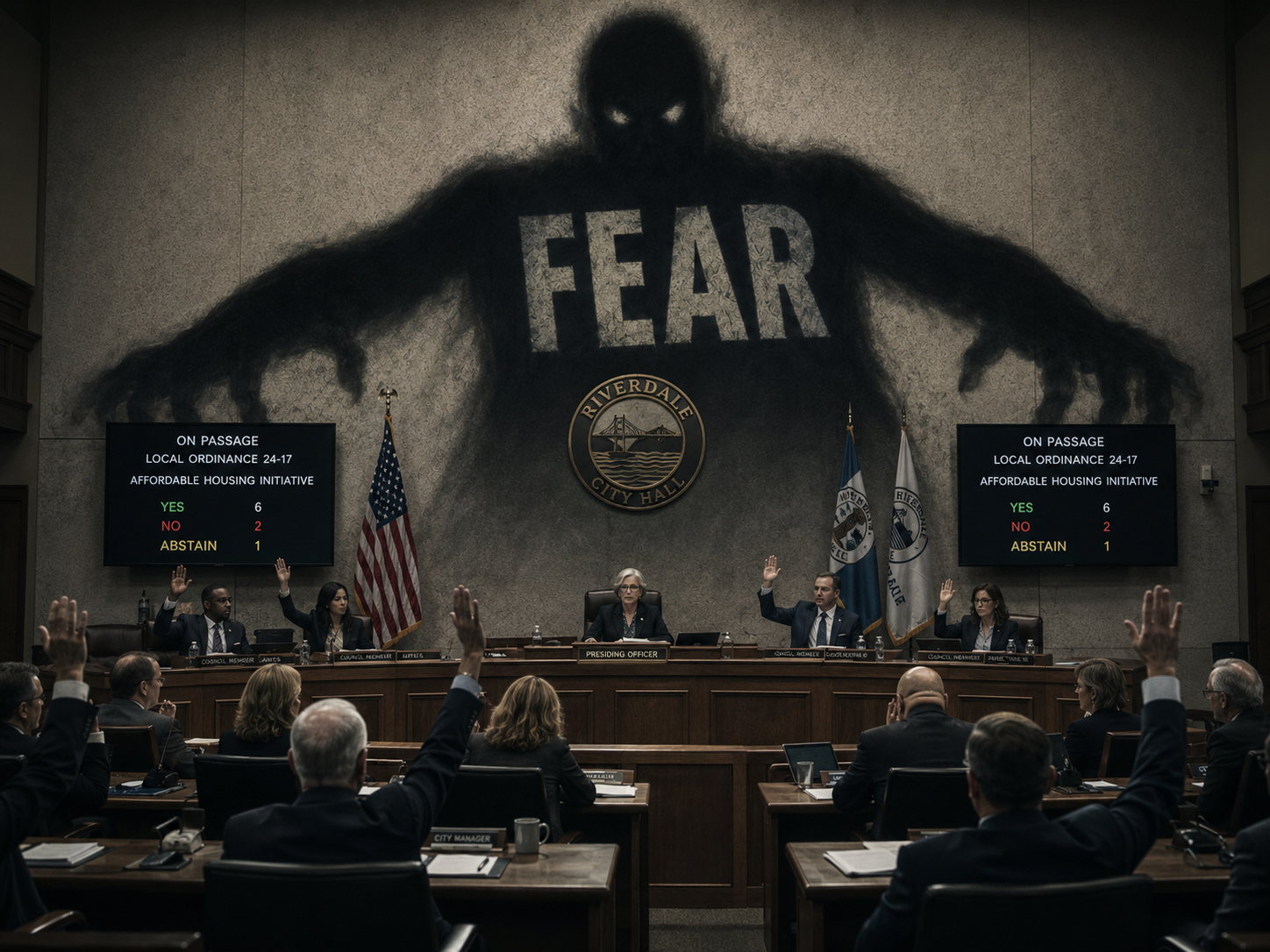

Fear Is Already Here: Threats Against Public Officials II

Local elected official continuing public service despite threats and harassment

Fear Is Already Here: Threats Against Public Officials Are Changing How They Serve

Princeton Survey Shows How Threats Against Public Officials Are Changing Public Service

Updated July 25, 2026: 
 

Threats against public officials: One day before ISA published Fear is Already Here; https://www.eptraining.us/https-www-eptraining-fear-is-already-here-democracy/blog/  Princeton University’s Bridging Divides Initiative released new survey findings that measured the effect fear is having on local elected officials. The survey, conducted with CivicPulse during the first quarter of 2026, included responses from more than 460 local elected officials.

The results do more than confirm what ISA has been preaching since 2017: that officials are being insulted, harassed, and threatened. They show that the Defending Democracy Initiative was right in its assessment that hostility is changing how public officials serve, where they appear, what issues they are willing to address, and whether they are willing to remain in public life.


Harassed at Home

More Numbers: Fifty-four percent of officials reported experiencing at least one form of hostility. At the same time, forty-six percent were worried about experiencing hostility in the future.

Officials from across the political spectrum reported similarly elevated levels of hostility. From death threats to property damage to cars, homes, and office windows. Officials report being harassed and verbally assaulted while walking to their cars after public events and meetings.  

And even more troubling, the same treatment was reported by their spouses and children, friends and family. Staff and even of their supporters. From incivility to physical and verbal assault, local officials and others are on the front lines of the political discord we are seeing across the country.
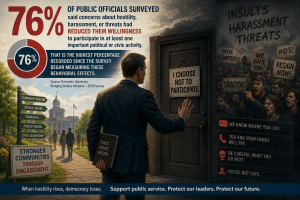


But the most troubling number number may be 76 percent.

Seventy-six percent of the officials surveyed said concerns about hostility, harassment, or threats had reduced their willingness to participate in at least one important political or civic activity. That is the highest percentage recorded since the survey began measuring these behavioral effects. This is the consequence ISA has warned about since creating the Defending Democracy Initiative.

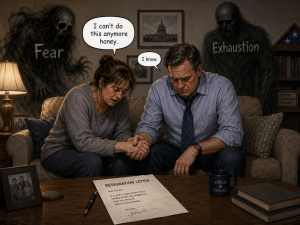
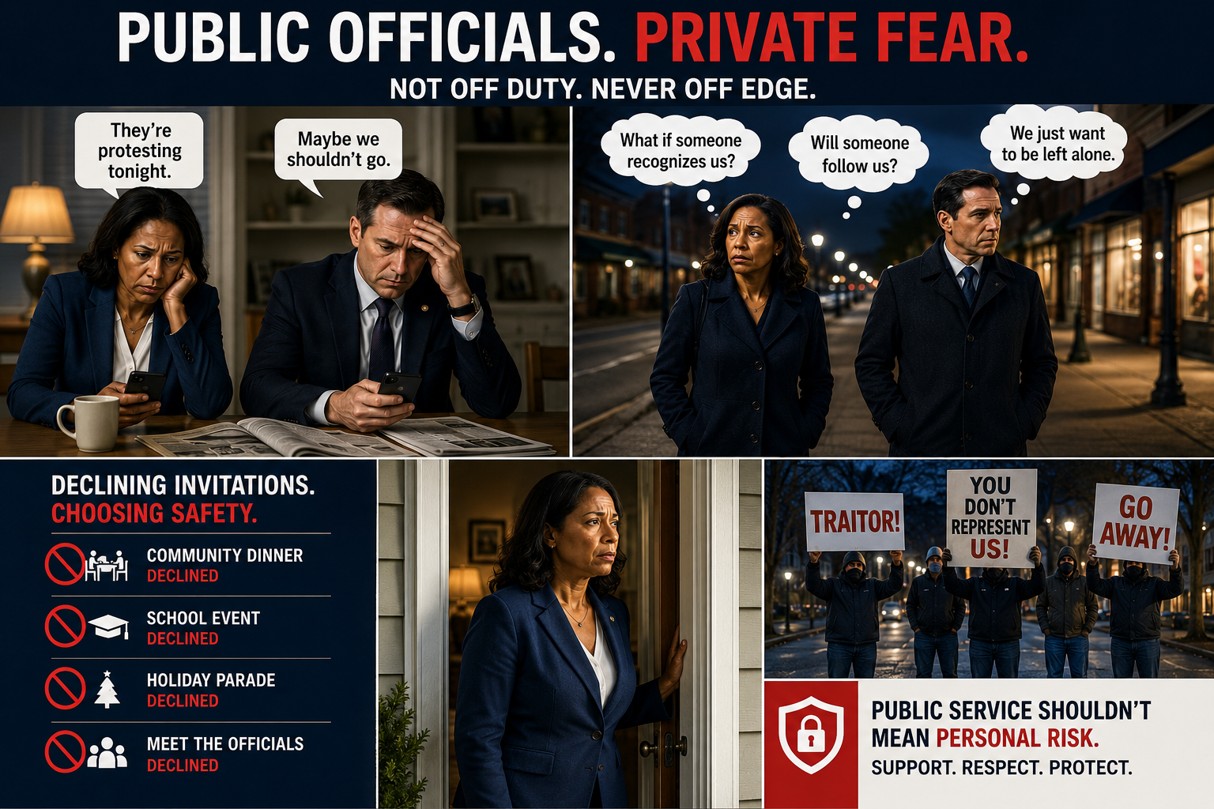
The danger is not limited to the official who is physically attacked. It includes the official who remains home, cancels an appearance, avoids a difficult issue, becomes less willing to address controversial subjects, declines to seek reelection, or decides that public service is no longer worth the danger to themselves, their staff, or their family.


Fear Is Changing How Officials Perform Their Duties

Threats and harassment are changing how some local elected officials serve, appear before the public, and remain in office.

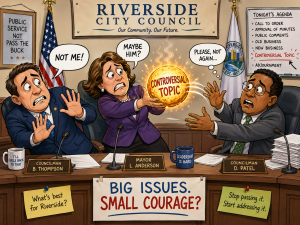
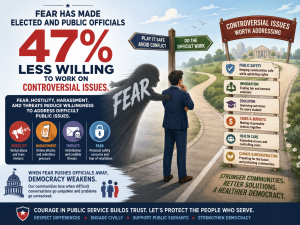
Nearly half, Forty-seven percent, of the officials surveyed said concerns about hostility had made them less willing to work on controversial issues.  

When threats and harassment cause officials to avoid difficult subjects, intimidation has entered the decision-making process.

It means hostility may begin influencing which matters receive attention before a hearing is held, legislation is introduced, or a vote takes place.


Our elected and appointed officials whose job is to address the needs of the community and its residents are playing hot potato with issues because they are worried by the implications of a yes or no vote. 
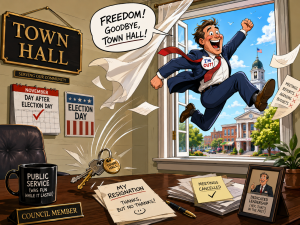
Forty-three percent were less willing to seek reelection. When public officials decide against remaining in office because of threats and intimidation, hostility begins influencing who remains in government.  
Local elected official continuing public service despite threats and harassment
Thirty-seven percent were less willing to participate in public events. As officials withdraw from public meetings, community events, or ordinary public life, access and communication between the public and its representatives begin to disappear.


The Democratic Damage

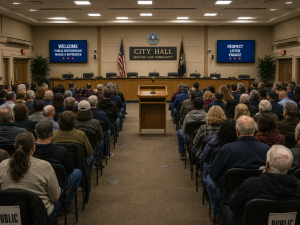
Public meetings, transparent votes, open discussion are the hallmark of our democracy, especially at the local level. But what if our elected officials don’t show up?

Public service cannot become dependent on a person’s willingness to accept harassment against themselves, their family, their home, their staff, or their neighbors.
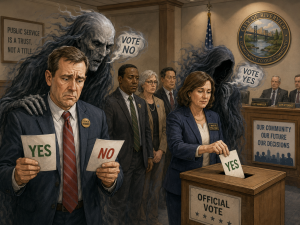
We already know from members of congress votes have been affected, changed, or avoided over fear. Does anyone seriously think a local official, a civic board member or mayor has not changed a vote? 
Public officials are expected to address difficult and controversial matters. They are expected to appear before the public, explain their decisions, hear criticism, answer questions, and remain accessible to the people they represent.


Intimidation Is Affecting Who Is Willing to Serve

The survey also found that the effects were particularly serious among some minority officials and officials with less time in office.

When threats disproportionately discourage newer officials and members of communities that have historically been underrepresented in government, intimidation begins determining whose voice remains in the room.

The Threat Is Not Limited to One Political Party

Threats against public officials are often discussed only after a prominent member of one party is targeted. Concern rises, political statements are issued, security is reviewed, and attention fades until the next official is threatened or attacked.

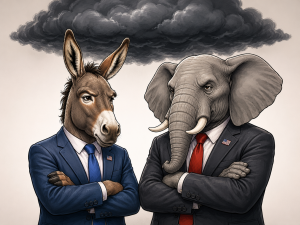
This is not a Democratic security issue. It is not a Republican security issue. It is a threat to the people responsible for carrying out the democratic process. 

The Princeton survey found no statistically significant difference among Democrats, Republicans, and Independents in their reported experiences of hostility or in the effects that hostility had on political participation during the first quarter of 2026.
Minority officials reported a greater reduction in their willingness to participate in public events and to go out in public when they were not working. Newer officeholders were also more likely than officials with decades of service to report withdrawing from controversial issues and public events.


The Challenges of Protecting Local Public Officials

Protecting public officials is a nonpartisan responsibility. Law enforcement cannot prepare to protect only one party, and threat assessment cannot depend on whether an agency agrees with an official’s policies. The target may change with an election, a controversial issue, or the grievance motivating the threat. The protective responsibility does not.
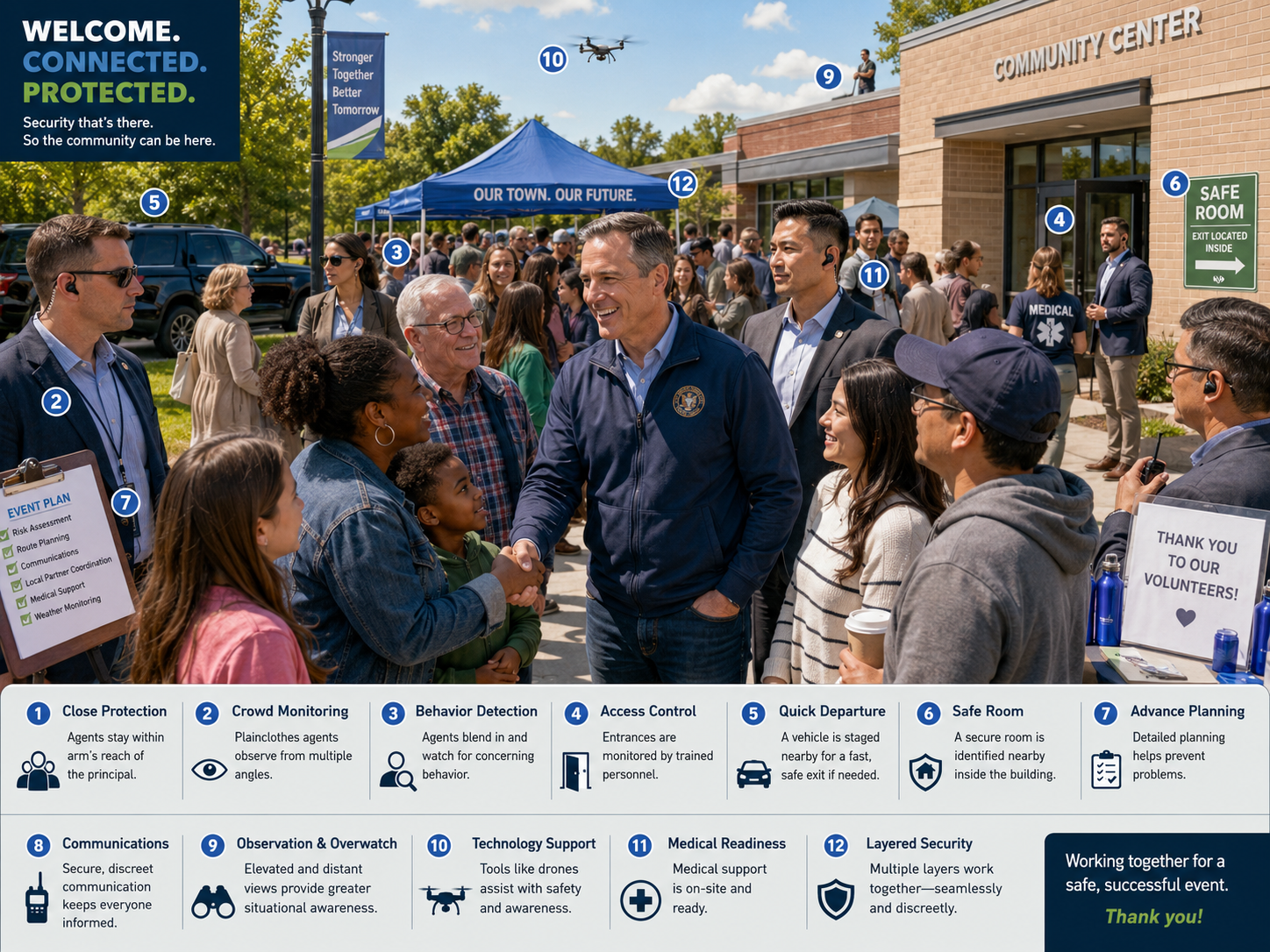
The Princeton findings also reinforce a point ISA has made since 2017: properly applied protection does not interfere with public access. It helps preserve it.

Without protective planning and institutional support, officials may begin creating distance on their own. They may stop publishing schedules, decline invitations, reduce town halls, avoid community events, limit constituent meetings, or become more cautious about appearing with family members.

They may change routes and routines without professional guidance. Staff members may be left to screen hostile messages and angry communications without the training or resources necessary to determine what may follow.

Eventually, the official becomes less visible and less accessible.

That withdrawal is sometimes blamed on security. In reality, it is often what happens when security has not been adequately planned, funded, or provided.

The challenge is not limited to determining whether a particular threat is credible or whether the person making it has the immediate capability to carry it out. Those are necessary parts of threat assessment, but they do not measure the complete effect of threatening behavior.

A communication may not result in criminal charges and can still contribute to an increasingly hostile environment. Repeated harassment can change an official’s behavior even when no single message leads to an arrest or prosecution.

The protective question is therefore not limited to whether someone will attack.

It must also consider whether continued hostility is forcing an official to change routines, reduce public appearances, avoid controversial issues, withdraw from constituents, expose family members, overburden staff, or reconsider public service.

Law enforcement agencies, government institutions, and security professionals cannot evaluate the problem only by counting completed acts of violence. By the time an attack occurs, opportunities to recognize escalation, reduce exposure, or strengthen protection may already have been lost.

The protective system also fails when threats and harassment are allowed to control how an official serves before violence occurs.

The Requirements for an Effective Protective Capability

The officials surveyed identified threat monitoring, stronger institutional responses to harassment, and conflict-resolution and de-escalation training as measures that could improve their safety and confidence. More than half identified a system for tracking social-media threats as an important protective measure.

Those responses identify real needs, but none is sufficient by itself.

Monitoring social media is not enough unless trained personnel can evaluate the information, identify escalation, document threatening behavior, connect online activity to real-world conduct, and provide relevant intelligence to those responsible for protection.

De-escalation training is valuable, but an official or staff member cannot be expected to talk their way out of every dangerous situation.

Anti-harassment policies matter, but written policies do not inspect a residence, secure a route, assess an event site, establish emergency communications, coordinate responding agencies, or remove an official from an escalating confrontation.

These measures must be connected through a complete protective process.

An effective protective capability requires:

  • Threat assessment and protective intelligence
  • Open-source and social-media monitoring
  • Documentation and evaluation of threatening behavior
  • Advance work and site surveys
  • Physical-security assessments
  • Public-meeting and special-event security planning
  • Residential-security considerations
  • Route planning and secure movement
  • Arrival and departure procedures
  • Communications and emergency-action planning
  • Coordination among law enforcement, government staff, venues, and supporting agencies
  • Clearly assigned protective responsibilities
  • Practical procedures for responding when a threat escalates

The objective is not to react to every insult as though it were an assassination attempt.

The objective is to recognize the behaviors, circumstances, patterns, and vulnerabilities that may indicate movement toward violence and to prepare before the incident.

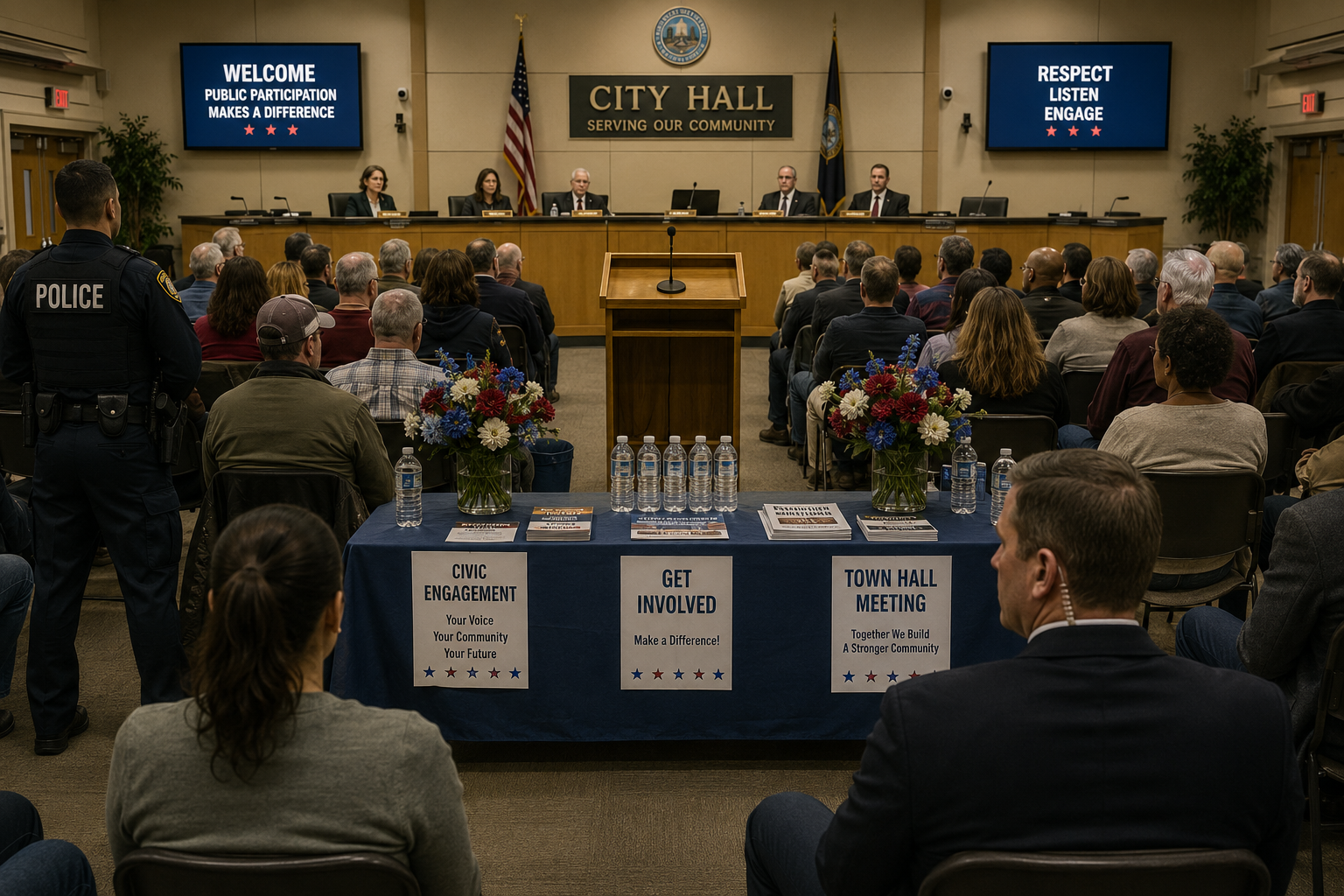
The purpose of protecting public officials is not to hide them from the public. It is to make continued public service possible without depending on luck.

A trained protective operation can support public meetings, community events, government offices, campaign appearances, court proceedings, travel, and other official duties while reducing unnecessary exposure.

Protection should not replace public access. It should prevent threats from eliminating it.

How ISA Training Prepares Agencies to Protect

Most local elected officials do not have permanent security details, dedicated protective-intelligence units, protected transportation, residential-security systems, or staff trained to manage threats.

Their first call will usually be to a local police department, sheriff’s office, court-security unit, emergency-management agency, or another local public-safety organization.

Those agencies may suddenly be expected to evaluate threatening communications, inspect a residence, secure a public meeting, protect an official and family members, review routes, coordinate across jurisdictions, manage demonstrations, and determine whether temporary or continuing protection is required.

Many local agencies were not originally designed, staffed, trained, or funded for that mission.

That does not remove the responsibility. It makes preparation more important.

The ISA Dignitary and Executive Protection Training Program prepares law enforcement and public-safety agencies to build an internal protective capability before a crisis forces them to improvise.

The program connects threat assessment to protective operations. Students learn how to identify and evaluate threats, gather and assess protective intelligence, conduct advance work, inspect locations, identify vulnerabilities, develop mitigation measures, and coordinate the personnel and resources required for the mission.

Training addresses the environments in which public officials actually serve, including government offices, public meetings, courthouses, schools, residences, hotels, travel routes, campaign appearances, community events, and other locations where officials remain accessible to the public.

Students are prepared to develop:

  • Threat assessments and protective-intelligence products
  • Site surveys and physical-security recommendations
  • Public-event and meeting security plans
  • Residential and workplace security considerations
  • Route, arrival, departure, and transportation plans
  • Communications and emergency-action procedures
  • Law-enforcement and interagency coordination plans
  • Protective formations and secure-movement procedures
  • Contingency plans for demonstrations, disruptions, medical emergencies, and escalating threats

ISA training also addresses de-escalation, conflict resolution, hostile-surveillance awareness, public-contact management, emergency response, protective-security law, ethical responsibilities, and the practical demands placed on officers assigned to protect public officials.

Written testing, practical exercises, planning assignments, and scenario-based training require students to apply what they have learned. They must assess the threat, plan the operation, communicate responsibilities, move the protectee, respond to changing conditions, and adapt when the original plan is disrupted.

The purpose is not merely to teach officers how to stand beside an official.

It is to prepare agencies to recognize risk, organize a protective mission, coordinate the people responsible for it, and support an official’s continued access to the public without accepting preventable exposure.


The threat may begin online, but it can arrive at a city council meeting, county office, courthouse, school board meeting, campaign event, parking area, family residence, or community gathering.

When it does, local law enforcement will usually be the first expected to respond.

ISA training helps ensure that response is based on planning, tested procedures, and a trained internal capability rather than improvisation after the official has already withdrawn from public life or the threat has become an attack.

The Survey Confirms the Warning

Sources and Further Reading

Bridging Divides Initiative and CivicPulse. “Hostility Against Local Officials Is Continuing at Elevated Levels in 2026, Disproportionately Impacting Women, Minority, and New Officeholders.” Princeton University, July 23, 2026.

Bridging Divides Initiative and CivicPulse. “Survey of Local Elected Officials on Threats and Harassment: Q1 2026.” Princeton University, July 23, 2026.

Independent Security Advisors. “Fear Is Already Here: Public Officials, Judges, and the Threat ISA Has Warned About Since 2017.” July 24, 2026

#DefendingDemocracy #ProtectPublicOfficials #ElectedOfficials #ExecutiveProtection #ThreatAssessment #ProtectiveIntelligence #LocalGovernment #PublicSafety #PoliticalViolence #EPTraining