
 E-mail us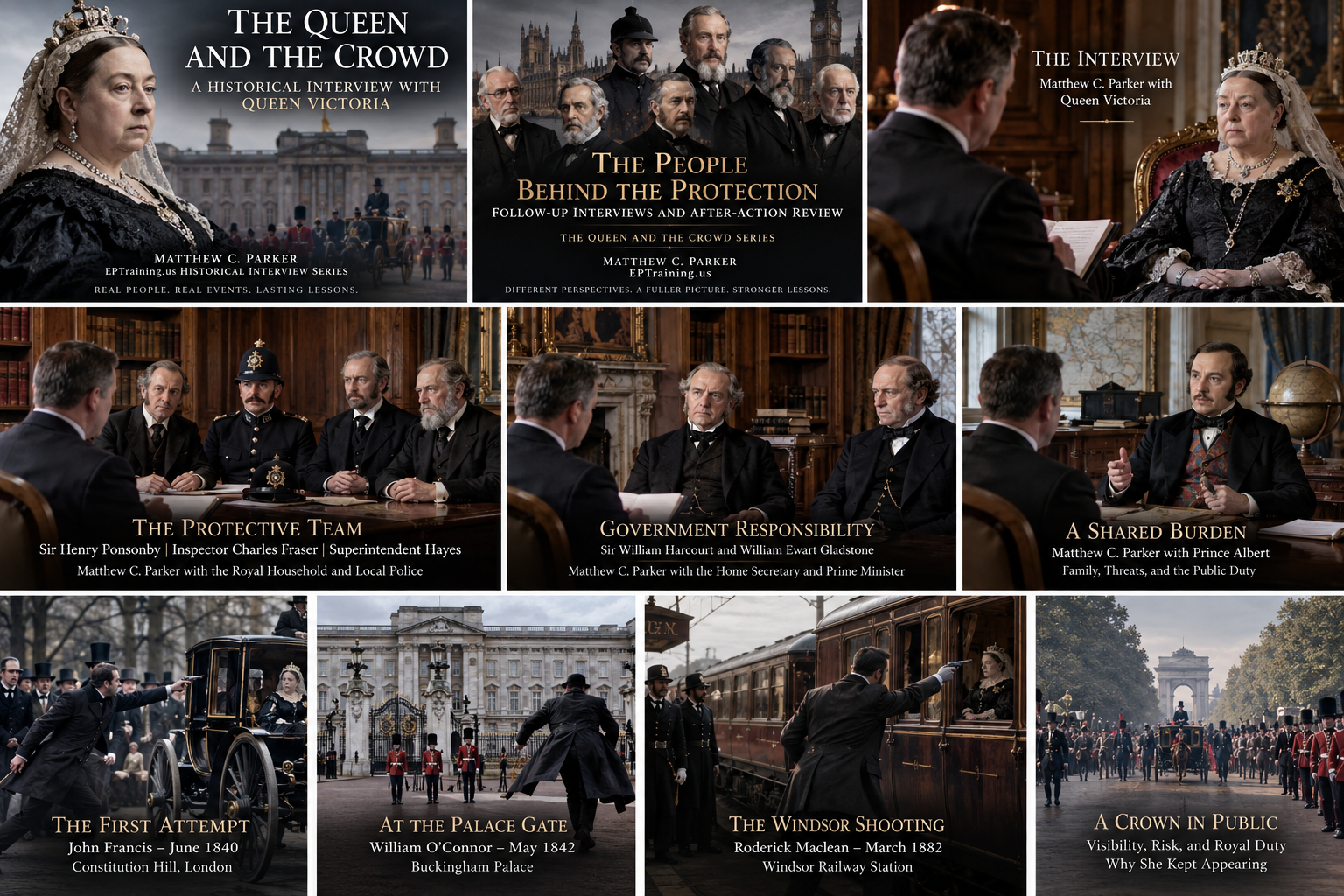
Matthew Parker in Conversation with Queen Victoria at Windsor, 1882
Queen Victoria, Roderick Maclean, Repeated Assassination Attempts, Public Duty, and Executive Protection Lessons
Windsor, England – March 1882
Matthew Parker interviews Queen Victoria at Windsor in 1882. Artistic historical reconstruction for the EPTraining.us Historical Executive Protection Interview Series;
Queen Victoria survived repeated attacks over more than forty years while continuing the public duties of the Crown. This historical case study examines what those incidents reveal about protective intelligence, movement, access, law, family security, principal cooperation, and the protection of public officials.
Why This Historical Executive Protection Case Still Matters
Seven named attackers entered Queen Victoria’s story between 1840 and 1882. Pistols were presented or fired toward her carriage. One man came close enough to strike her in the face with a cane. Another crossed into the Buckingham Palace courtyard with a pistol and petition. In 1882, Roderick Maclean fired toward her carriage as she left Windsor Station.
Victoria kept going out.
For a protection professional, that is what makes this case difficult and useful. The question is not simply why repeated attackers were able to get close. The harder question is how a protective system should manage a principal whose public duty requires travel, ceremonies, rail journeys, carriage movements, and visible contact with the public even after the threat has proved real.
I keep coming back to the Queen’s experience because it forces us to look beyond the bodyguard standing nearest the principal. Royal Household Police, local police, Household officials, ministers, railway personnel, family members, and the Queen herself all held different pieces of the protective problem. No single person possessed the whole picture. That is not unique to Victorian Britain. It is the same systems problem modern protection teams face whenever intelligence, advance work, movement, legal authority, staff coordination, family concerns, and the principal’s mission have to function together.
The political system was different from modern elected government, but the operational tension is familiar to ISA’s Defending Democracy Initiative: protection can fail by leaving a public figure unnecessarily exposed, and it can also fail by making the legitimate public role impossible to perform. Security has to reduce avoidable vulnerability without confusing public access with uncontrolled access—or isolation with success.
Historical Simulation and Editorial Note
This is a historically grounded reconstructed conversation set at Windsor shortly after Roderick Maclean fired at Queen Victoria’s carriage on 2 March 1882. The dialogue is imagined, but the chronology, the repeated attacks during Victoria’s reign, the documented Windsor incident, and the legal and policing questions are based on surviving royal, parliamentary, police, and contemporary records.
Parker addresses the sovereign as “Your Majesty” throughout. The Queen is interviewed only about matters she could personally know, experience, decide, or influence. Technical questions that belong to police commanders, Household officials, ministers, or Prince Albert are reserved for separate supporting historical interviews.
Where motive, mental condition, prior warning, or exact protective procedure is uncertain, the reconstruction preserves that uncertainty. The supporting interviews are also historical simulations: each is confined to the participant’s documented role and to facts reasonably available in that period. They are not presented as verbatim transcripts.
Reader Navigation – Choose How You Want to Read This Case Study
This case study can be read two ways. Part I preserves the reconstructed historical interviews; Part II can be read independently by students and practitioners who want the consolidated protective findings without reading the full interviews.
Case Snapshot: Queen Victoria, Repeated Attacks, and the Protection Problem
Queen Victoria’s long reign produced a series of attacks and threatening approaches that are often grouped together in popular histories, although the incidents differed sharply in motive, capability, proximity, and legal outcome. The interview examines seven named attackers: Edward Oxford, John Francis, John Bean, William Hamilton, Robert Pate, Arthur O’Connor, and Roderick Maclean.
Oxford fired at the royal carriage in 1840. Francis presented a pistol toward the carriage in May 1842 and escaped; Victoria and Prince Albert went out again the next day under increased police observation, and Francis was arrested after firing. Bean followed only weeks later. Hamilton fired in 1849. Pate reached the Queen in 1850 and struck her in the face with a cane. O’Connor penetrated the Buckingham Palace courtyard in 1872 with a pistol and petition before John Brown seized him.
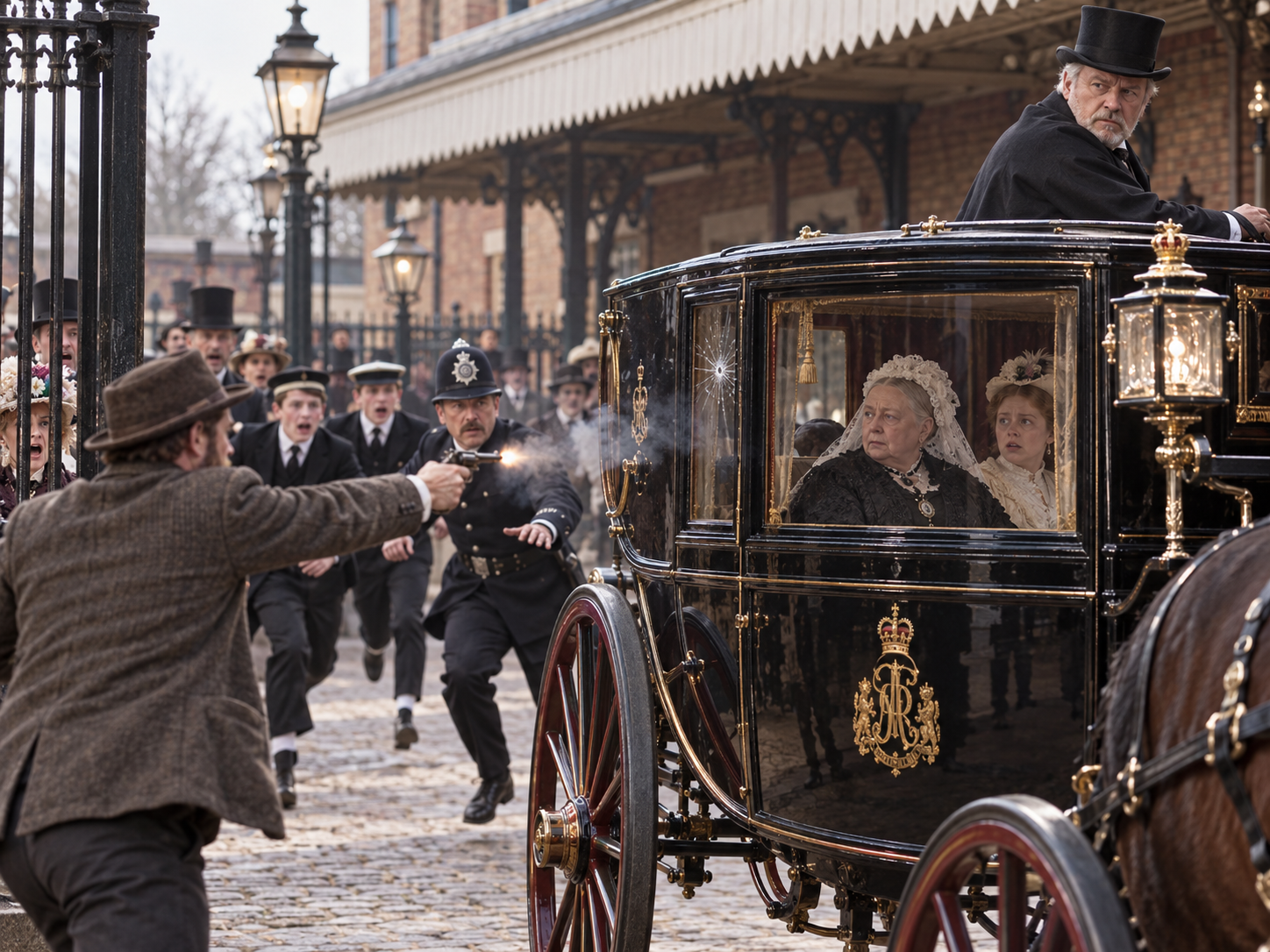
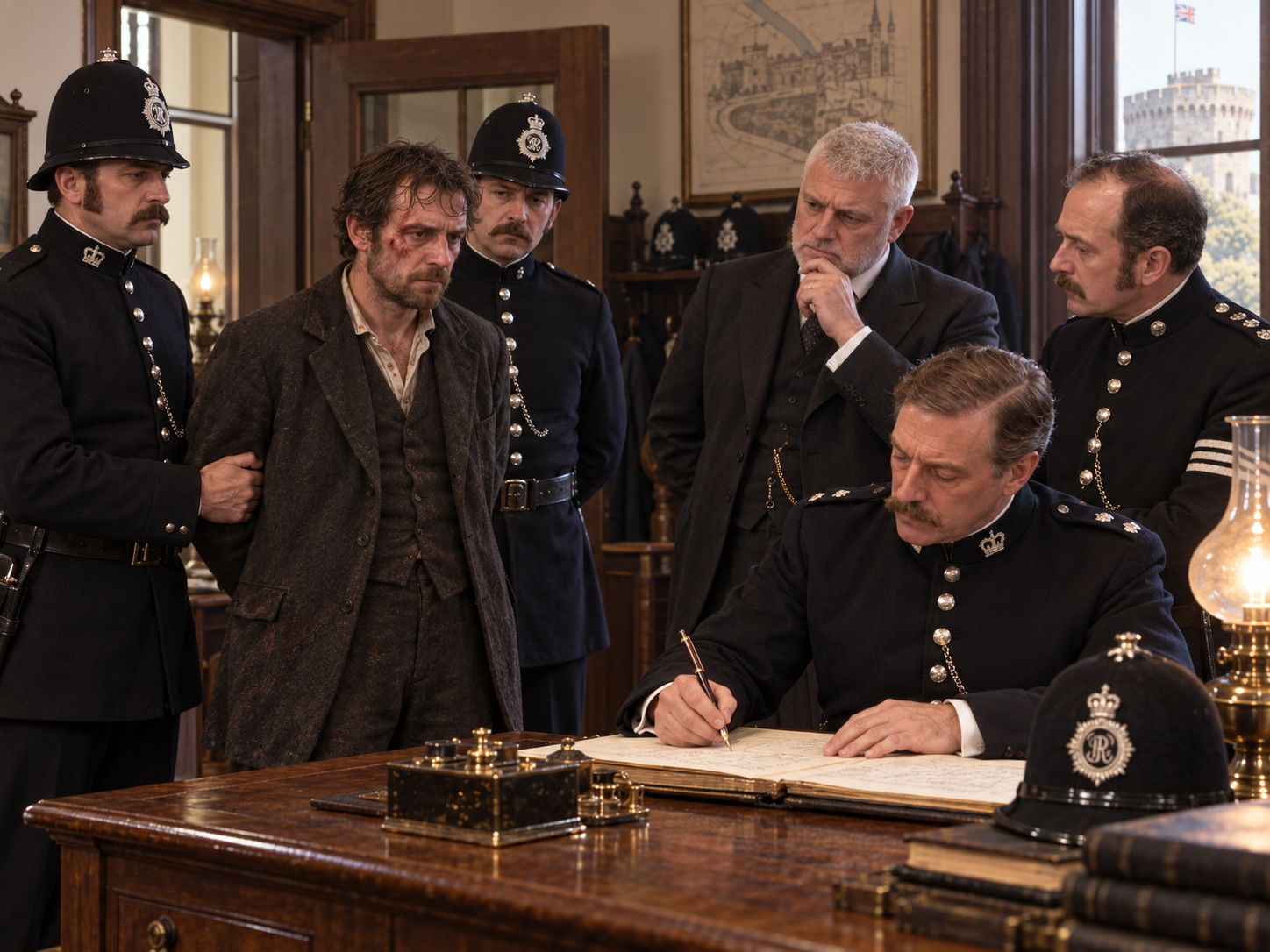
On 2 March 1882, Maclean fired a revolver toward Victoria’s carriage as she left Windsor Station. The shot missed. Members of the public, including Eton students, helped stop him, and police took control. Home Secretary Sir William Harcourt told the House of Commons that the Queen was uninjured and that Sir Henry Ponsonby reported she was “not alarmed.”
The protection arrangements around Victoria were not a modern single-agency detail. Royal Household Police, local police, Household officials, government ministers, railway personnel, and the Royal Family all touched different parts of the problem. The case therefore allows a modern AAR to examine not only reaction to an attacker, but also the seams between organizations, information, movement, law, public duty, and family consequence.
PART I – The Historical Interview
Prefer the operational analysis? Skip the reconstructed interviews and go directly to the Protective After-Action Review.
Windsor, March 1882
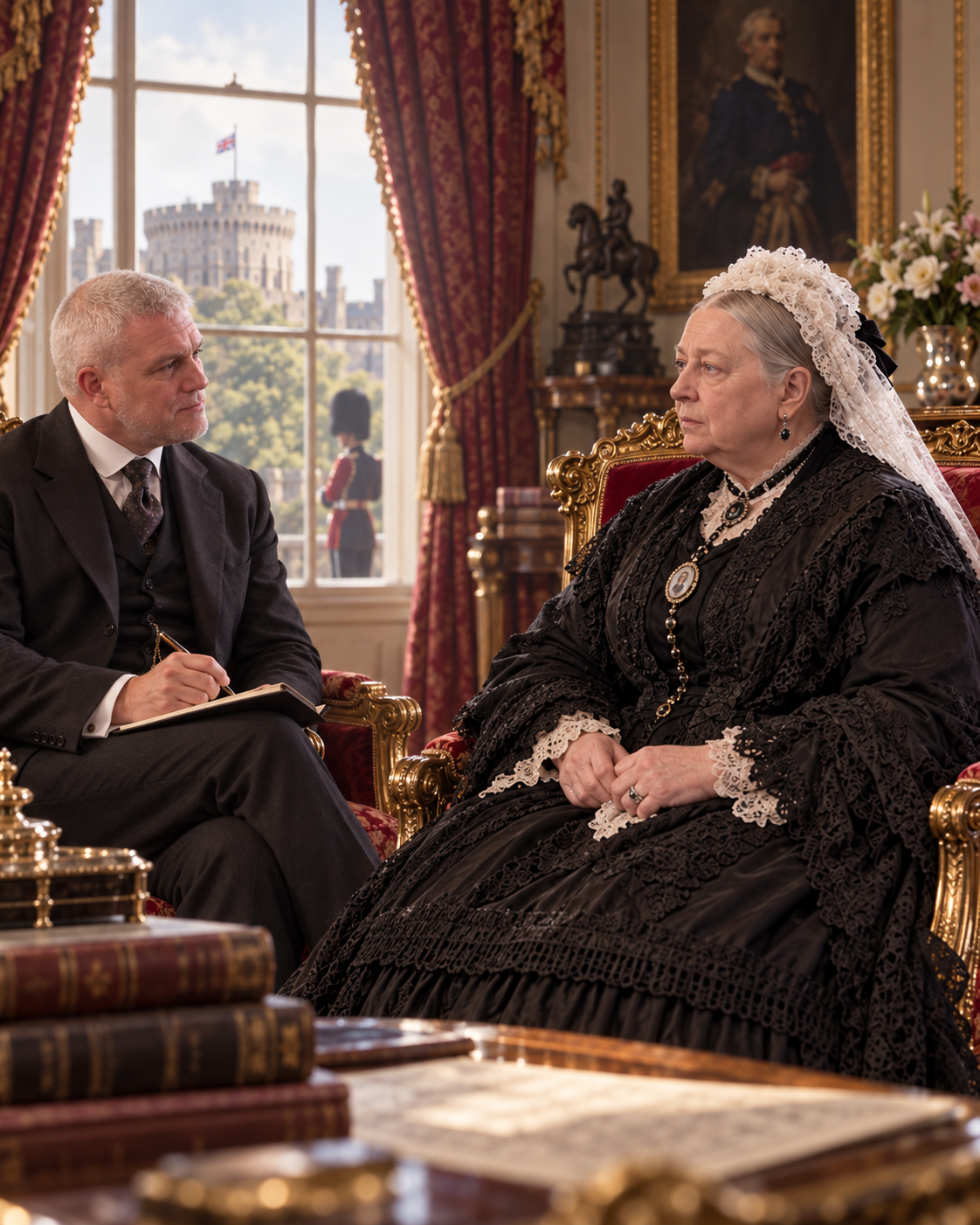 Only days after Roderick Maclean’s shot at Windsor Station, Parker meets Queen Victoria at Windsor Castle. The questions stay with the Queen’s own experience: what she saw, what she was told, what she decided, how repeated attacks affected her family and public duties, and what she expected from the people advising her. Questions about police deployment, legal authority, intelligence handling, and operational coordination are reserved for the follow-up interviews that form the AAR.
Victoria is sixty-two years old and has been sovereign for nearly forty-five years. Maclean is not her first attacker. The attempted shootings by Edward Oxford, John Francis, John Bean, William Hamilton, the cane assault by Robert Pate, and Arthur O’Connor’s approach at Buckingham Palace belong to different periods of her life and different protective circumstances.
PARKER: Your Majesty, your journal says that when the shot was fired at Windsor you first thought the sound came from the engine. When did you understand that someone had fired at your carriage?
QUEEN VICTORIA: Not immediately. I saw people rushing about and a man being seized. Only then did I understand that the sound had been a shot and that it must have been directed at us.
PARKER: Who first told you plainly what had happened?
QUEEN VICTORIA: Brown told me when the carriage stopped. Sir John McNeill was greatly concerned and said the man had been caught. Sir Henry Ponsonby and Lord Bridport followed the matter to the police station and afterward told me more.
PARKER: What did you want to know first?
QUEEN VICTORIA: Whether anyone had been hurt. Then who the man was and what had been found. I also sent word to my children and near relations. News travels quickly when the person in the carriage is the Queen.
PARKER: Princess Beatrice had seen more of the attack than you had. Did that matter to you afterward?
QUEEN VICTORIA: Very much. She had seen the man take aim and fire. She said nothing in the carriage because she saw that I had not understood what had happened. One learns afterward that the people beside you may have experienced the same few seconds very differently.
PARKER: You had lived through attacks for more than forty years by then. Did Maclean feel like another chapter in the same story, or did each incident remain separate to you?
QUEEN VICTORIA: Separate. The same Queen was attacked, but the men were not the same, the circumstances were not the same, and I was not the same woman. One ought not turn forty years into a single incident simply because history can fit them on one page.
Edward Oxford: The First Attempt
PARKER: May I take you back to 1840, Your Majesty? You were newly married to Prince Albert and expecting your first child when Edward Oxford fired at the carriage. What do you remember most clearly about the first attempt?
QUEEN VICTORIA: That it was suddenly personal. I knew that sovereigns could be attacked. That knowledge was abstract until Albert was beside me, the pistols were fired, and I had to think of what might have happened to him, to me, and to the child I was carrying.
PARKER: After you returned, what did you and Prince Albert talk about?
QUEEN VICTORIA: What had happened, what was known of the man, and what precautions were reasonable. Albert was very attentive to detail. He did not like an unexplained danger left unexplained.
PARKER: Did the attempt make you want to withdraw from public appearances?
QUEEN VICTORIA: No. It made me conscious that public appearance carried danger. That is not the same as deciding that the Queen should no longer be seen.
 John Francis: Choosing to Go Out Again
PARKER: In May 1842, Prince Albert saw John Francis present a pistol toward the carriage and Francis escaped. The next day you went out again knowing that he might return. Why?
QUEEN VICTORIA: Because we knew he was at large and that the police were looking for him, but we could not allow one man to determine indefinitely whether the Queen left the Palace. Albert and I understood that there was a risk.
PARKER: Was that a decision you and Albert made together?
QUEEN VICTORIA: Yes. He did not treat me as though I were incapable of understanding what was at stake, and I did not treat his concern as an inconvenience.
PARKER: You already had two very young children. Did that make the decision harder?
QUEEN VICTORIA: Of course. Duty does not make a mother cease to be a mother. It merely means that one sometimes has to make a decision while holding both responsibilities in mind.
PARKER: When Francis returned and was arrested, what did you want to know afterward?
QUEEN VICTORIA: Whether it was the same man, what he had carried, and whether the matter was truly finished. I wanted facts, not merely reassurance.
John Bean and William Hamilton: What the Queen Could Not Know in the Moment
PARKER: John Bean followed only weeks later, and William Hamilton fired in 1849. In some of these cases the weapon later proved less capable than everyone feared at the moment. Did learning that afterward make the original alarm seem foolish to you?
QUEEN VICTORIA: No. The person in the carriage does not know the contents of a pistol while it is being raised. A fact discovered afterward may change the court case. It does not change what the people present could reasonably have believed before the weapon was examined.
PARKER: Did repeated incidents make you more impatient with officials who could not give you certainty?
QUEEN VICTORIA: I preferred an honest uncertainty to confident nonsense. If they did not know, they should say so and then find out what could be found out.
Robert Pate: The Attack That Hurt
PARKER: In 1850 Robert Pate got close enough to strike you in the face with his cane. Was that incident different because the harm was immediate and physical rather than the feared effect of a pistol?
QUEEN VICTORIA: Yes. Pate struck me. There was no need afterward to argue about whether the weapon had been loaded or what might have happened. He had been close enough to injure me with his hand and the cane.
PARKER: Did that alter how you experienced people coming close to the carriage afterward?
QUEEN VICTORIA: For a time, certainly. It is one thing to be told that a crowd contains risk. It is another to feel the blow on one’s face. Familiar streets do not look quite so harmless immediately afterward.
PARKER: Did you want to stop appearing in public?
QUEEN VICTORIA: No. I wanted not to be struck again. Those are different wishes.
After Albert
PARKER: Your Majesty, Prince Albert had been beside you during the earliest attempts and involved himself in what followed. After his death, did danger feel different because the person who had shared those decisions was gone?
QUEEN VICTORIA: Yes. Albert did not merely worry. He asked questions, read papers, spoke with ministers, and helped me think. After he died there were still ministers, secretaries, police, children, and trusted servants, but there was no replacement for a husband.
PARKER: Did the attacks change how you thought about your children as they became adults with public lives of their own?
QUEEN VICTORIA: Naturally. My position affected them whether they wished it to or not. But they were not extensions of me. They had duties and families of their own. One could not simply lock the Royal Family away because danger existed.
 Arthur O’Connor: When the Palace Did Not Feel Like the End of the Street
PARKER: In 1872 Arthur O’Connor reached the Buckingham Palace courtyard with a pistol and a petition before John Brown seized him. Did the fact that he reached the Palace grounds disturb you differently from an attack along a public route?
QUEEN VICTORIA: Very much. There is an expectation that once one has passed into the Palace the uncontrolled street has ended. When a man crosses that boundary, the place one regards as secure feels altered.
PARKER: Your journal recorded real fear even though public accounts emphasized composure. Did you feel pressure to appear unaffected?
QUEEN VICTORIA: A sovereign is expected to reassure others. That does not mean she feels nothing. I was frightened. I see no virtue in pretending otherwise to the people who actually need to know my condition.
PARKER: Did John Brown’s intervention change what you expected from trusted members of your Household?
QUEEN VICTORIA: I expected them to pay attention and to act when necessary, but I did not confuse loyalty with a complete system of protection. Brown happened to be in the right place and acted quickly. I was grateful for that.
Maclean: What the Queen Was Told
PARKER: Returning to Windsor, Your Majesty, Sir Henry Ponsonby and others brought you information after Maclean was taken to the police station. What did you ask them to tell you?
QUEEN VICTORIA: Who he was, what he had said, whether the revolver was loaded, whether anyone had been hurt, and what would happen next.
PARKER: Were you told that the police had known Maclean as a danger to you before he fired?
QUEEN VICTORIA: No.
PARKER: When you later learned more about his history and condition, did you regard those later discoveries as proof that the danger should have been obvious beforehand?
QUEEN VICTORIA: Not automatically. A thing can be known somewhere without having been known by the person who needed it at the proper time. I would want to know who actually had the information and whether there had been reason to connect it with me.
PARKER: That sounds less like criticism of the police than a question about what reached them.
QUEEN VICTORIA: It is a question of fairness as well as usefulness. If one blames men for facts they could not have possessed, one learns nothing from the failure.
The Verdict
PARKER: You objected strongly when Maclean was found not guilty on the ground of insanity. What, specifically, offended you about the verdict?
QUEEN VICTORIA: The words appeared to deny an act no one seriously disputed. He had fired at me. If his condition meant that he was not criminally responsible in the ordinary way, the law could say that without pretending the act had not occurred.
PARKER: Were you objecting to the consideration of his mental condition?
QUEEN VICTORIA: No. I objected to the form in which the conclusion was expressed.
PARKER: When Parliament changed the form of the verdict the following year, did that answer the objection you had raised?
QUEEN VICTORIA: In language, yes. The act and the condition could both be acknowledged. Parliament, of course, made the law.
Why Keep Going Out?
PARKER: After Oxford, Francis, Bean, Hamilton, Pate, O’Connor, and now Maclean, why continue carriage rides, railway journeys, ceremonies, and public appearances?
QUEEN VICTORIA: Because the purpose of the Crown is not to keep the Queen indefinitely inside Windsor Castle. A sovereign must travel, receive people, attend duties, and be seen. I learned during my years of withdrawal after Albert died that absence itself could become a public matter.
PARKER: When someone advising you believed an appearance should be changed or cancelled for safety, what did you expect from that person?
QUEEN VICTORIA: A reason. Not merely anxiety. If the danger was particular, tell me what was known. If the route was unsuitable, tell me why. If another arrangement would allow the duty to be done more safely, propose it. But do not simply tell the Queen that remaining unseen is always the safest course and imagine the question is finished.
PARKER: Were there risks you regarded as part of the office and others you regarded as unnecessary?
QUEEN VICTORIA: Certainly. Duty may require exposure. Habit does not. There is no merit in taking a needless risk merely to prove one is unafraid.
PARKER: Did repeated attacks make you distrust the public?
QUEEN VICTORIA: No. They made me distrust particular persons who gave me reason to do so. At Windsor, members of the public helped stop the attacker. One must not turn millions of subjects into suspects because a handful of men behaved wickedly or irrationally.
What Victoria Expected from Her Advisers
PARKER: Your Majesty, by 1882 you had dealt with ministers, private secretaries, police, physicians, family, and Household staff after several attacks. What did you expect from the people advising you after an incident?
QUEEN VICTORIA: Tell me what is known. Tell me what is not known. Tell me what you propose to change and why. Do not hide a serious matter merely to avoid alarming me, and do not exaggerate a doubtful matter merely because it concerns the Queen.
PARKER: And when their advice affected a public duty?
QUEEN VICTORIA: They should understand why the duty exists before asking that it be abandoned. I should understand the danger before insisting that it proceed. That is how responsible people ought to speak to one another.
PARKER: Of all the incidents, is there one you believe changed you more than the others?
QUEEN VICTORIA: I would not rank them so neatly. Oxford belongs to my youth and my marriage. Francis belongs to the period when Albert and I were learning together what danger around the Crown meant. Pate actually injured me. O’Connor reached a place that should have felt protected. Maclean reminded an older Queen that experience does not repeal danger. They belong to different parts of my life.
PARKER: Thank you, Your Majesty.
QUEEN VICTORIA: Mr. Maclean does not decide whether the Queen leaves Windsor.
PARKER: No, Your Majesty.
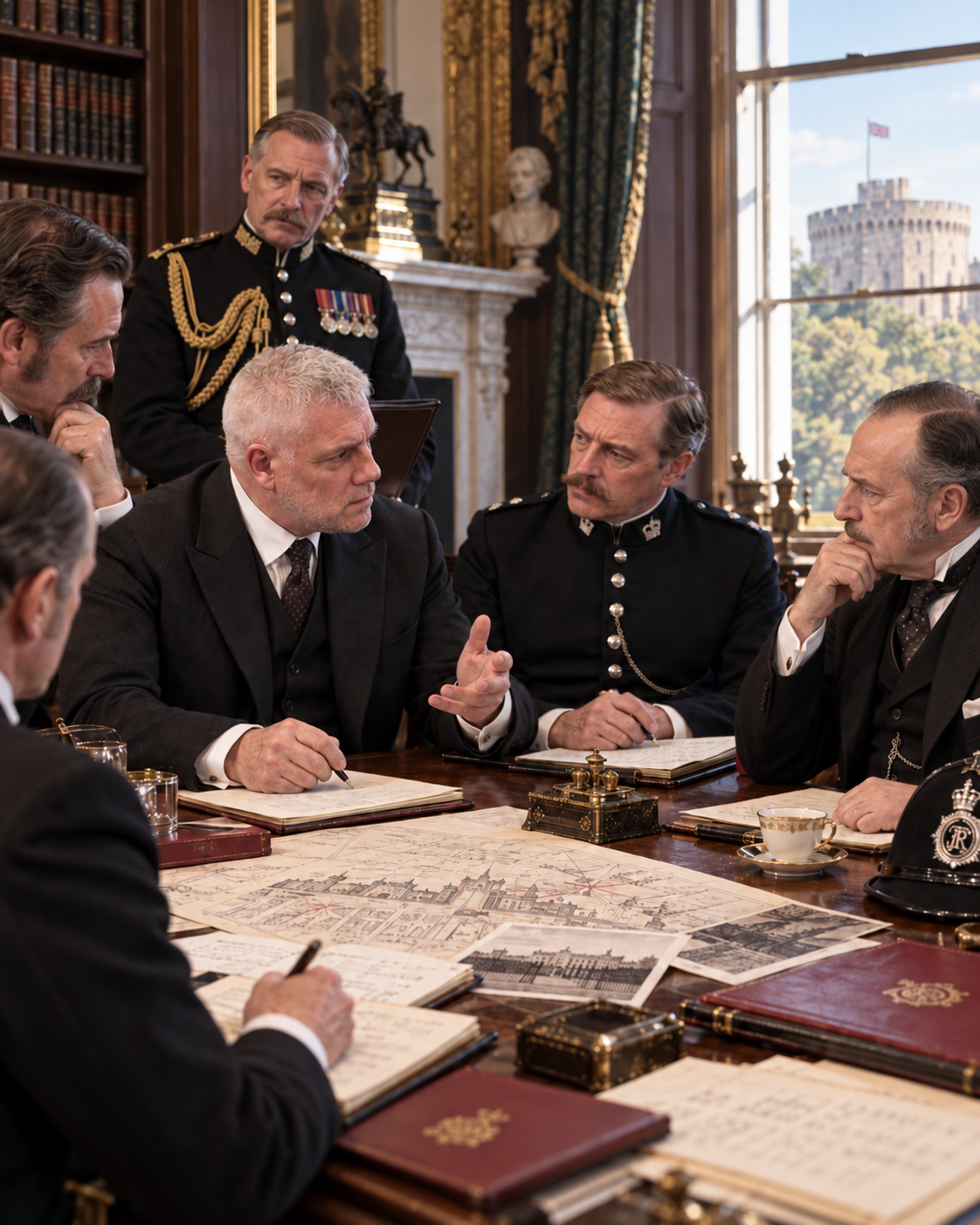 Supporting Historical Interviews: The Protective System Around the Queen
Editorial note: Victorian royal protection did not have a single modern Secret Service-style detail leader. Responsibility was distributed among Royal Household officials, Royal Household Police, local police, ministers, and the Royal Family itself. The following short interviews place technical and institutional questions with the people whose roles made those questions appropriate. They are reconstructed at historically appropriate moments; they are not presented as one meeting or as verbatim transcripts.
Sir Henry Ponsonby – Private Secretary to Queen Victoria, Windsor, 1882
Role note: Ponsonby was the Queen’s Private Secretary. On 2 March 1882 he followed the Maclean matter to the police station and sent the Home Secretary the telegram reporting that the Queen was unhurt and “not alarmed.” His value to the AAR is the principal-staff interface: what reached the Queen, what reached ministers, and how the Household communicated.
PARKER: Sir Henry, after the shot at Windsor, what was your first responsibility to the Queen?
PONSONBY: To establish what had happened and give Her Majesty an accurate account. Rumour was already moving faster than any of us.
PARKER: You followed the matter to the police station. What did you need to confirm before you briefed her?
PONSONBY: That the man had been secured, whether anyone had been injured, what was known of the weapon, and what the police intended to do next.
PARKER: You also telegraphed the Home Secretary. Why was that your responsibility rather than the Queen’s?
PONSONBY: Her Majesty should not have to become the reporting clerk for her own attempted assassination. My office existed in part to ensure that information moved between the Sovereign, the Household, and the Government.
PARKER: Did you command the police protecting her?
PONSONBY: No. That distinction matters. The Private Secretary advised and coordinated around the Queen’s duties. Police officers retained their own authority and responsibilities.
PARKER: When police advice affected the Queen’s programme, what did you need from the police before taking it to her?
PONSONBY: Something more useful than “there may be danger.” The Queen had duties. If an appearance or route was to be altered, I needed to understand the reason well enough to explain it honestly.
PARKER: And what did the police need from you?
PONSONBY: Accurate movements, timings, changes, and an understanding of what the Queen intended to accomplish. A policeman cannot protect a journey he is not told is taking place.
Inspector Charles Fraser – Royal Household Police, Windsor, 1882
Role note: Contemporary accounts place Inspector Charles Fraser of the Royal Household Police at Windsor Station during Maclean’s arrest. Later records describe Fraser as a long-serving Royal Household police officer who travelled with Queen Victoria. He provides the closest direct protective-police perspective in the surviving 1882 accounts.
PARKER: Inspector, when Maclean fired, what was the immediate problem in front of you?
FRASER: A man with a revolver had fired toward the royal carriage in a public space. The first necessity was to secure him, prevent another shot, and keep the carriage moving away from the danger.
PARKER: The bystanders reached him very quickly. Did that help you or complicate the arrest?
FRASER: Both. They helped prevent a second shot, but an angry crowd can become another danger. Once he was seized, the police had to take control of the prisoner and stop punishment from the crowd.
PARKER: Maclean had stood among people waiting to see the Queen. Was the problem the crowd itself or the amount of uncontrolled access the crowd gave one man to the carriage path?
FRASER: The latter. The crowd was expected. Most of it was harmless. The difficulty was that a man within it could stand close enough to act before his purpose was apparent.
PARKER: After an event like that, what part of the movement would you examine first?
FRASER: The point where the Queen passed from the station into the carriage route: who could stand there, how close they could stand, which officers had a view of the approach, and what could be changed without turning every royal arrival into a military occupation.
PARKER: Did the Royal Household Police control the whole environment by itself?
FRASER: No. The Queen moved through places belonging to other jurisdictions. Household police, local police, railway staff, and the people responsible for the royal programme all had pieces of the problem.
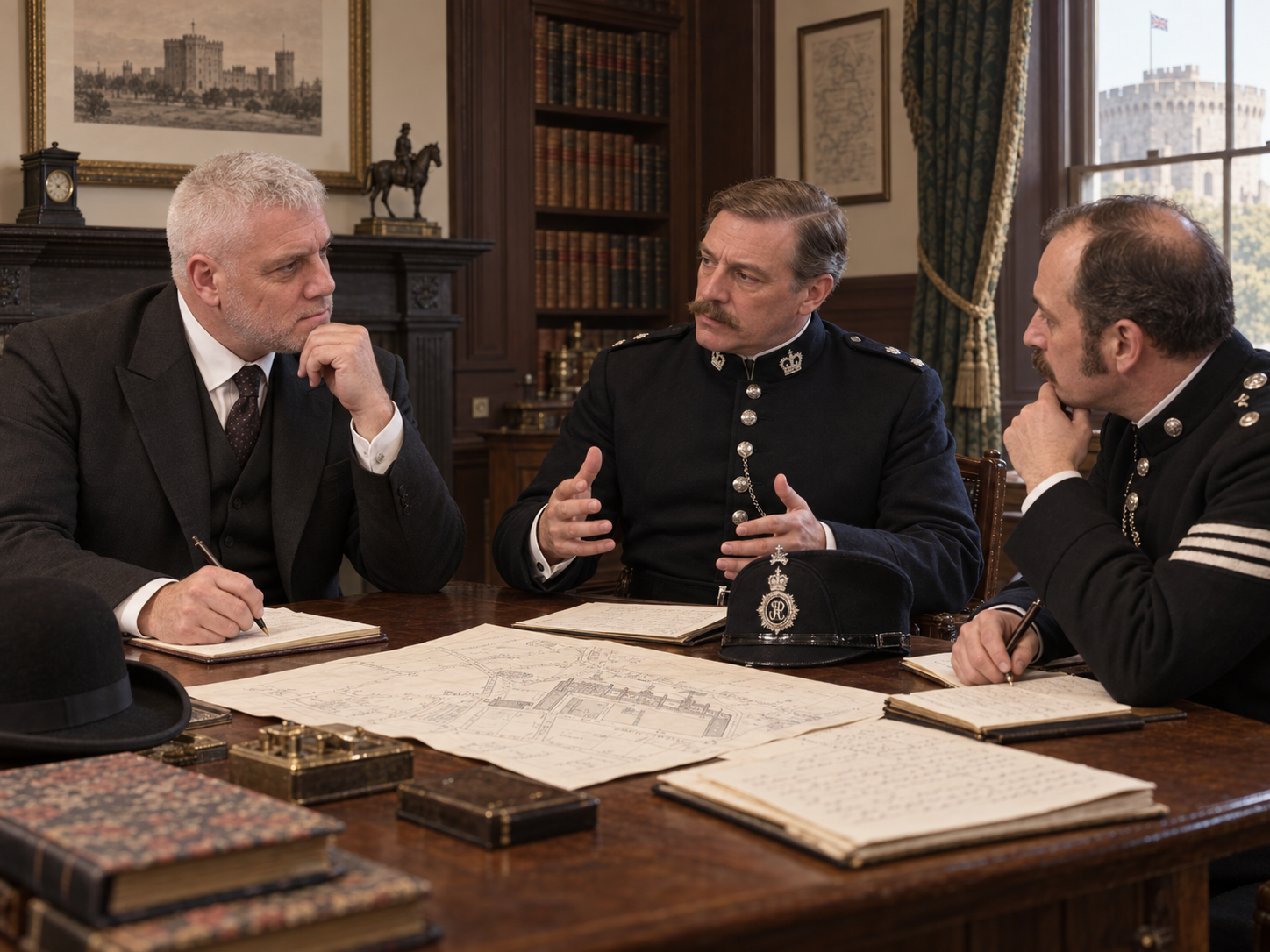 Superintendent Hayes – Chief Officer, Windsor Borough Police, 1882
Role note: Contemporary reporting identifies Superintendent Hayes as the chief officer of Windsor Police and as one of the officers who seized and arrested Maclean. His questions concern local policing, arrest, evidence, and what Windsor authorities actually knew before the shot.
PARKER: Superintendent, before 2 March, had you received information identifying Roderick Maclean as a man intending to attack the Queen?
HAYES: No such warning had reached me.
PARKER: What did you learn only after he was in custody?
HAYES: We learned what he said about his circumstances, examined the revolver, found the cartridges, and began establishing where he had been living and what his history was. More information about his earlier confinement came afterward.
PARKER: So the fact that information existed somewhere about his prior condition did not mean Windsor Police had it before he fired?
HAYES: Correct.
PARKER: What would you want an AAR to distinguish there?
HAYES: What was discoverable after arrest from what had actually been reported before the attack. Those are not the same question.
PARKER: At Windsor Station, where did your responsibility meet Inspector Fraser’s?
HAYES: The Queen brought Household protection with her, but the streets and the borough remained our responsibility. Once a criminal act occurred in Windsor, the local police had to arrest, preserve evidence, take statements, and move the case into the courts. Protection and ordinary policing met at the same gate.
PARKER: If you had been given a credible warning about a named man before the Queen arrived, what would have changed?
HAYES: Then we would have had a particular person to look for rather than a general crowd to watch. That is a very different problem.
Sir William Harcourt – Home Secretary, London, 1882
Role note: Harcourt was Home Secretary when Maclean fired. He reported the attempt to the House of Commons, relied initially on Sir Henry Ponsonby’s telegram, and the next day sent the Solicitor to the Treasury to Windsor while senior Bow Street magistrate Sir James Ingham assisted the local inquiry. He is the appropriate figure for questions about national police policy, prosecution, legal authority, and the later insanity-verdict controversy.
PARKER: Sir William, when you spoke in the Commons on the night of the shooting, how much did you actually know?
HARCOURT: Only what could responsibly be stated. A shot had been fired, the man had been arrested, the Queen was uninjured, and Sir Henry Ponsonby reported that she was not alarmed. I deliberately avoided adding particulars that had not yet been proved.
PARKER: The next day you sent the Solicitor to the Treasury to Windsor and Sir James Ingham went to assist the local magistrates. What problem were you trying to solve?
HARCOURT: To ensure that a case involving the Sovereign was handled carefully without allowing excitement to substitute for evidence. The charge, the evidence, and the prisoner’s condition all required proper inquiry.
PARKER: If police had learned before the attack that Maclean had previously been confined in an asylum, would that fact alone have given them authority to detain him near Windsor Station?
HARCOURT: Not merely because he had once been ill. Government cannot convert medical history into an offence. There would have to be lawful grounds connected to present conduct.
PARKER: Then the protection problem and the legal power to interfere with a person were not identical?
HARCOURT: They could not be. The importance of the Queen did not abolish the law.
PARKER: Maclean’s verdict angered the Queen because it said “not guilty” even though the act itself was proved. What did the Government have to consider that the Queen did not?
HARCOURT: The form of the criminal law had to work beyond one case. It had to describe both the act and the accused’s legal responsibility without creating a special rule merely because the victim was the Sovereign.
PARKER: The Trial of Lunatics Act followed in 1883. Would you describe that as Maclean’s law?
HARCOURT: No. His case was part of the political and legal history surrounding the change, but legislation should not be reduced to a single dramatic incident when the underlying problem was broader.
William Ewart Gladstone – Prime Minister, London, 1882
Role note: Gladstone led the Government when Maclean attacked the Queen and moved the House of Commons address following the attempt. His AAR value is constitutional and institutional: how the Government should think about danger to the Sovereign without allowing an attacker to redefine the public role of the Crown.
PARKER: Mr. Gladstone, when the Queen is attacked, is the Government protecting only a person or also a constitutional office?
GLADSTONE: Both. The person matters in her own right, but an attack upon the Sovereign also touches the public life of the country. That is why Parliament responded as Parliament did.
PARKER: Does that mean security should reduce the Queen’s public movements whenever danger increases?
GLADSTONE: Not as a general rule. The Crown has public duties. Government must take reasonable precautions, but it would be a strange victory for an assailant if the result of his failure were that the Sovereign disappeared from public life.
PARKER: Where, then, should the decision sit when police recommend greater restriction but the Queen believes the duty should proceed?
GLADSTONE: The police should state the danger plainly. The Household should explain the duty and the proposed programme. Ministers must consider the public consequences where government responsibility is engaged. The Queen must be treated as a constitutional actor, not as luggage to be moved without explanation.
PARKER: So the disagreement itself is not a failure?
GLADSTONE: No. Concealing the disagreement or failing to reason through it would be the failure.
Prince Albert – Buckingham Palace, 1842
Role note: Albert died in 1861, so this interview is set forty years earlier, after the Francis and Bean incidents. Royal Archives material shows that Albert received police and ministerial papers concerning the attempts and later wrote to Prime Minister Sir Robert Peel about proposed legislation for the Queen’s additional security. He is interviewed as Victoria’s spouse and closest private partner, not as a police commander.
PARKER: Your Royal Highness, when you saw John Francis present a pistol toward the carriage and he escaped, what concerned you most that evening?
PRINCE ALBERT: Victoria’s safety, certainly, but also that we did not yet know enough. A man had shown himself with a weapon and remained at large. That uncertainty was difficult to leave alone.
PARKER: You and the Queen went out again the following day. Did you regard that as her decision, yours, or a decision you made together?
PRINCE ALBERT: Together. She was the Sovereign and understood her duty. I was her husband and would not have pretended that my concern did not exist. We spoke plainly.
PARKER: You had two very young children at home. Did that affect how you viewed the risk?
PRINCE ALBERT: Of course. The danger to a sovereign is also danger brought into a family. Public duty does not make that private consequence disappear.
PARKER: The Royal Archives show that you continued to receive police and ministerial material after Francis and Bean. Why involve yourself so closely?
PRINCE ALBERT: Because Victoria should not be protected by people who simply tell her not to worry. If there was information, I wanted to understand it well enough to help her judge what was being proposed.
PARKER: When you wrote Sir Robert Peel about the Bill for the Queen’s additional security, you questioned details such as the wording around injury and the penalties for assault. Were you asking for harsher punishment because the victim was your wife?
PRINCE ALBERT: I wanted a law capable of addressing the conduct that had repeatedly occurred. My personal anger as a husband could not be the measure of a statute. That is why the details mattered.
PARKER: What did you need from ministers that you could not provide for Victoria yourself?
PRINCE ALBERT: Police authority, investigation, law, and the machinery of government. A husband can share the burden. He cannot replace the institutions responsible for the Queen’s safety.
PART II – Protective After-Action Review and Lessons Learned
The interviews establish the historical perspectives. The AAR now puts the protective system back together. The purpose is not to read modern doctrine backward into Victorian institutions, but to ask the same disciplined questions a modern protection team should ask after any attack: what was known, who possessed it, where the principal was exposed, what authority existed, what reaction succeeded, and what changed afterward.
Historical Grounding
The conversation above is reconstructed, but the incident sequence is grounded in surviving records. Edward Oxford attacked the royal carriage in 1840. John Francis presented a pistol toward the carriage in May 1842 and was arrested after the Queen and Prince Albert went out again the next day under increased police observation. John Bean followed weeks later. William Hamilton fired in 1849, Robert Pate struck Victoria with a cane in 1850, Arthur O’Connor approached at Buckingham Palace in 1872, and Roderick Maclean fired at Windsor in 1882. Sources differ in how they count attempts because some men made more than one approach and some weapons later proved incapable of the harm initially feared.
The reconstruction does not assume these men shared one motive, organization, diagnosis, or level of capability. It also distinguishes what was learned after arrest from what police or Household personnel could reasonably have known before an attack. That distinction is essential to a fair protective after-action review.
Protective Analysis / Curriculum Connection
Editorial analysis. The main interview and the AAR follow-up interviews are intentionally separated by role. Victoria supplies the principal’s experience and decisions. Ponsonby supplies the principal-staff interface. Fraser and Hayes address protective policing and local police responsibilities. Harcourt and Gladstone address government, law, and institutional responsibility. Albert supplies the spouse and family perspective. This structure mirrors a professional after-action review: no single participant is assumed to possess the entire picture.
For Independent Security Advisors and EPTraining.us, the value of the case is not that Victorian institutions used modern executive-protection doctrine. They did not. The value is that the same operational questions appear in recognizable form: what was known, who possessed it, where the principal was exposed, who controlled the environment, how information moved, what authority existed, how public duty affected acceptable risk, what happened when prevention failed, and what changed afterward.
The case also connects directly to ISA’s Defending Democracy Initiative. Victoria’s constitutional role differed fundamentally from that of a modern elected official, but the protection problem is comparable in one important respect: security can fail by leaving a public figure unnecessarily exposed, and it can also fail by making the public role impossible to perform.
1. No single witness can explain the whole protective system
Victoria could explain what she saw, what she was told, why she accepted risk, how the attacks affected her family, and why public visibility mattered. She could not reliably explain police deployment, local arrest procedure, ministerial authority, or information she never received. The supporting interviews make the larger point: protection was distributed among the Queen, Household staff, Royal Household Police, Windsor Police, ministers, railway personnel, and family. A professional AAR therefore has to interview the system, not just the principal. In modern protection, the same requirement applies to detail leadership, advance personnel, drivers, protective intelligence, local law enforcement, staff, medical support, and the principal’s family.
2. Transition zones and uncontrolled proximity deserve deliberate control
Maclean attacked at a transition: the Queen was leaving Windsor Station and entering the carriage route. Pate’s earlier assault and O’Connor’s Palace approach make the same proximity problem visible in different settings. The operational issue is not that crowds or public access existed; it is that an individual could move close enough to act before intent became apparent. Modern advance and movement planning should therefore treat station exits, vehicle doors, stairs, receiving lines, hotel entrances, rope lines, and other transitions as deliberate control points. Helpful bystanders may intervene, as they did at Windsor, but they are an uncontrolled variable—not a protective layer.
3. Information becomes protective intelligence only when it reaches the right person in time
The Maclean case contains information learned after arrest about his history and condition, but there is no documented pre-attack warning identifying him to Windsor Police as a man intending to attack the Queen. That distinction is essential. Information existing somewhere is not the same thing as actionable protective intelligence. A fair AAR asks who knew what, when they knew it, whether the information was reliable, whether it was connected to the principal, whether it reached someone with responsibility, and whether there was time and authority to act. Mental illness, eccentricity, poverty, or unusual behavior alone should not substitute for behavior-based threat assessment; conduct, fixation, threats, approach behavior, weapons, capability, access, escalation, and context matter.
4. Protection, police authority, and prosecution are different functions
Harcourt’s role exposes a distinction that remains important today. Protection personnel may identify a risk and change an operation; police still require lawful authority to search, detain, or arrest; prosecutors must prove an offence; legislators define the statutory framework. Victoria could object to the wording of Maclean’s insanity verdict, but that did not make the Queen the author of criminal law. Modern protective planning has to understand jurisdiction, authority, and legal thresholds before a crisis rather than discovering them at the moment someone approaches the principal.
5. Public duty changes acceptable risk, and candor is part of principal cooperation
Victoria’s repeated decision to remain visible did not mean risk was irrelevant. Her strongest expectation of advisers was useful candor: tell her what was known, what was uncertain, what should change, and why. Ponsonby describes the same problem from the staff side—police advice has to be translated into a decision the principal can understand, while staff must provide accurate movements and timings to the people responsible for security. The safest principal in purely physical terms may be the one who never leaves a protected residence, but that can destroy the mission. Professional protection has to reduce avoidable exposure while preserving necessary public function.
6. Family, post-incident consequences, and survival belong in the AAR
The Oxford and Francis incidents show that danger to a principal also enters a family. Albert was both spouse and adviser; Victoria was a wife, mother, and sovereign. Modern protection should account for family notification, family movements, emotional consequence, and the possibility that threat may migrate beyond the principal. The AAR must also resist outcome bias. Victoria survived every incident discussed here, but survival proves only that she survived. It does not prove every protective layer performed correctly. The proper review asks where earlier layers were penetrated, what reaction succeeded, what information existed, what changed afterward, and what should be different before the next movement.
Frequently Asked Questions: Queen Victoria Assassination Attempts and Executive Protection
How many assassination attempts were made against Queen Victoria?
The interview examines seven named attackers between 1840 and 1882: Edward Oxford, John Francis, John Bean, William Hamilton, Robert Pate, Arthur O’Connor, and Roderick Maclean. Counts vary in popular histories because Francis made more than one approach and because some incidents involved weapons that later proved incapable of the harm initially feared.
Who was Roderick Maclean?
Roderick Maclean was the man who fired a revolver at Queen Victoria’s carriage as it left Windsor Station on 2 March 1882. The shot missed. He was arrested, tried for high treason, and found not guilty on the ground of insanity under the law then in force.
Why did Queen Victoria continue public appearances after repeated attacks?
Victoria’s public role required travel, ceremonies, audiences, carriage movements, and visible connection with the country. The protective lesson is not that danger should be ignored. It is that security should reduce avoidable risk while still allowing the public official to perform the legitimate mission.
Did Queen Victoria deliberately go out after John Francis first threatened her?
Yes. After Francis presented a pistol toward the carriage on 29 May 1842 and escaped, Victoria and Prince Albert went out again the following day while police in plain clothes watched for him. They took additional precautions, and Francis was arrested after firing at the carriage.
Does mental illness mean a person is a security threat?
No. Mental illness, eccentricity, poverty, or unusual behavior alone does not establish violent intent. Professional behavioral threat assessment focuses on conduct such as threats, fixation, stalking, repeated approaches, weapon acquisition, escalation, capability, access, and context.
What did the Trial of Lunatics Act 1883 change?
The Act created a special verdict for cases in which the accused committed the act but was insane at the time and therefore not legally responsible in the ordinary sense. Victoria’s strong objection to the wording of Maclean’s verdict forms part of the political history surrounding the change, although the Act should not be attributed to one incident alone.
What does Queen Victoria’s experience teach modern executive protection teams?
The strongest lessons concern threat reassessment, protective intelligence, access and proximity, movement planning, familiar-site complacency, legal authority, behavioral threat assessment, family security, communication with the principal, and the need to preserve public function rather than pursue isolation as the only security strategy.
How does this case connect to the Defending Democracy Initiative?
ISA’s Defending Democracy Initiative argues that threats and intimidation can weaken public institutions when officials are unable to perform their duties or remain accessible to the public. Victoria’s circumstances belong to a different political system, but the protective principle is similar: security should preserve lawful public function while reducing preventable risk.
Why does the article include separate AAR interviews?
Because many technical questions in royal protection were not questions Queen Victoria could reasonably answer. The follow-up interviews place police deployment with Royal Household and Windsor police, Household coordination with Sir Henry Ponsonby, legal and government authority with Sir William Harcourt and William Gladstone, and family concerns with Prince Albert. This keeps the historical interview credible while still allowing a complete executive-protection after-action review.
Who was responsible for protecting Queen Victoria in 1882?
There was no single Victorian equivalent of a modern Secret Service detail leader. Protection was distributed across Royal Household Police, local police forces, Household officials and staff, and government authorities. At Windsor in March 1882, contemporary accounts specifically place Inspector Charles Fraser of the Royal Household Police and Superintendent Hayes of Windsor Police in the response, while Sir Henry Ponsonby carried information between the Queen and the Home Secretary.
The Bottom Line
The enduring lesson of Queen Victoria’s experience is not that protection should learn how to stop the next Roderick Maclean. It is that a mature protective system must remain capable of recognizing a threat that does not resemble Maclean at all.
More than forty years of repeated attacks exposed the same problem in changing forms: public visibility creates opportunity, but public visibility was also part of Victoria’s constitutional role. The answer was not permanent isolation. The answer was better information, better coordination, better control of proximity and movement, clearer legal understanding, candid advice to the principal, and the ability to learn without pretending hindsight was foresight.
For modern executive protection and public-official security, that remains the standard. Protection should preserve the legitimate mission without confusing public access with uncontrolled access, familiarity with safety, or survival with proof that the protective system worked.
Related EPTraining.us Resources
- Defending Democracy Initiative – ISA analysis and support for protecting elected officials, candidates, election workers, and others who serve the democratic process.
- Defending Democracy: Why the Protection of Public Officials Is a Democratic Imperative – Why structured protection preserves participation, continuity, and lawful public access.
- The Threats to Our Democracy: It Starts with Incivility – ISA analysis of intimidation, political hostility, and the security consequences of escalating public discourse.
- Executive Protection Training Curriculum – How ISA structures threat assessment, protective intelligence, movement, physical security, law, behavioral threat, and operational planning.
- Dignitary and Executive Protection Specialist Course – Current program information for law enforcement, military, corporate security, and private-sector protection professionals.
- ISA Executive Protection Training Standards – ISA approach to measurable training standards, regulatory compliance, and curriculum review.
- About Independent Security Advisors – Background on ISA, the training division, accreditations, and executive-protection program development.
Sources and Historical Notes
- Eton College Collections – The Attempted Assassination of Queen Victoria – Windsor 1882, Queen Victoria journal material, and the intervention of Gordon Wilson and Leslie Murray Robertson.
- UK Parliament, Hansard – Attempt Upon the Life of Her Majesty, 2 March 1882 – Contemporary parliamentary report of Maclean’s shot and the Queen’s condition.
- UK Parliament, Hansard – Attempt Upon the Life of Her Majesty, 3 March 1882 – Harcourt reports the follow-up inquiry, Solicitor to the Treasury, and Sir James Ingham.
- Royal Collection Trust – Correspondence about attempts by John Francis and John Bean, 1842 – Royal Archives correspondence, depositions, memoranda, trial material, and subsequent legal questions.
- Royal Collection Trust – Deposition of Inspector James Russell – Contemporary account of Francis’s arrest, search, gunpowder, and pistol.
- Queen Victoria’s Journals – Primary-source diary material used by Royal Archives and later accounts of the attacks and the Queen’s reactions.
- Trial of Lunatics Act 1883 (46 & 47 Vict. c. 38) – The statutory special-verdict framework that followed the Maclean era.
- Royal Collection Trust – Prince Albert to Sir Robert Peel, 10 July 1842 – Albert discusses the Bill for additional security for Queen Victoria and questions its wording and penalties.
- Royal Collection Trust – Sir James Graham to Prince Albert, 30 May 1842 – Contemporary ministerial correspondence following the Francis attempt.
Historical caution: The reconstructed interviews do not assume that the repeated attacks shared one motive or organization, and they do not diagnose historical individuals beyond what contemporary legal and medical records support. Where sources differ on motive, weapon capability, or prior warning, the article preserves the distinction between established fact and retrospective interpretation.
About Independent Security Advisors, EPTraining.us, and Defending Democracy
Independent Security Advisors LLC (ISA) operates EPTraining.us, a U.S.-based executive protection training program serving law enforcement, military, public-safety, corporate-security, and private-sector protection professionals. ISA uses historical case studies, contemporary incidents, regulatory requirements, and operational experience to connect threat assessment, protective intelligence, planning, physical security, movement, advance work, law, communications, and emergency response within one protective system.
The Defending Democracy Initiative was created by Independent Security Advisors to support the protection of public officials and the democratic process by improving preparedness among local and state law enforcement and other organizations responsible for public-official security. The initiative emphasizes a principle repeated throughout this interview series: security should enable legitimate public function and access, not destroy them.
About the Author
Matthew C. Parker is CEO of Independent Security Advisors LLC and Director of Training Operations for EPTraining.us. U.S. Army retired, combat veteran, master instructor, and protective-services practitioner, his assignments included training-department management at the U.S. Army Chemical, Biological, Radiological, and Nuclear School, recognition as Instructor of the Cycle and Instructor of the Year, and instructor service with Army ROTC at Virginia Tech. He has more than three decades of military, government, executive-protection, training, and special advisor experience internationally in Africa, Asia, Iraq and Ukraine.
For more than a decade, Parker has focused on a question central to the professionalization of executive protection: How do we turn standards into measurable performance? Through ISA and EPTraining.us, he has developed and evaluated protective-services training against regulatory requirements, external standards, operational practice, and demonstrated competency. His position is simple: training prepares the professional; standards define expectations; performance demonstrates competence.