
 E-mail us
Defending Democracy Initiative: Can We Be Serious Now?
Preparing Law Enforcement to Protect Public Officials, Candidates, Election Workers, and the Democratic Process
Defending Democracy Initiative
 After July 13th, 2024, there will be days, weeks, and probably years of speculation and debate about why Thomas Matthew Crooks, identified by the FBI as the person who shot Donald Trump, attempted to assassinate a former President and candidate for office during a campaign rally in Pennsylvania.
There will be arguments.
There will be blame.
There will be disinformation.
Some will blame the left. Some will blame the right. Some will blame foreign actors, social media, mental illness, conspiracy theories, rhetoric, or the security plan on the ground that day. Already, disinformation has blamed ANTIFA, Ukraine, and “the crazy left”.
But while everyone else argues over motives, we need to ask a much more serious question. Why are we still surprised?
For years, the warning signs have been right in front of us. Threats against public officials, candidates for office, election workers, judges, jurors, law enforcement officers, and government employees have not been hidden. They have been reported, investigated, discussed, testified about, and in some cases ignored until another public official was shot, threatened, forced to cancel an event, or told their family may not be safe.
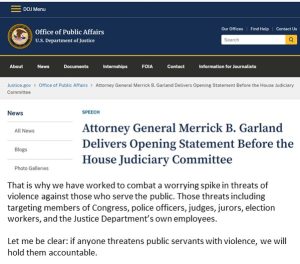
President Biden has given speeches where he “Warns Democracy is In Peril” and said “the battle for the “soul of America” is “animated by the perennial battle between our worst instincts’. And AG Merrick Garland says, “we have worked to combat a worrying spike in threats of violence against those who serve the public. Those threats include targeting members of Congress, police officers, judges, jurors, election workers, and the Justice Department’s own employees”.
Unattributed sources with the Dept. of Homeland Security confirm an increase in dangerous rhetoric across social media calling for civil war, retribution against targets on the left and RHINOs or never Trumpers. One post called for attacks on local and state officials not supporting Trump and called for the “execution of traitors”.
So, with emotions high, conspiracy theories growing, and calls for violence getting louder, can we be serious now?
Can we finally admit that protecting public officials is not a political issue? It is a democracy issue. It is a public safety issue. And it is a law enforcement training issue.
Bottom-Line Up Front

The Defending Democracy Initiative was created to help prepare local and state law enforcement to protect public officials, candidates for office, election workers, and others who serve the democratic process. That mission matters now more than ever.
The threat is not new. The threat did not begin on July 13th. The threat did not begin on January 6th. The threat did not begin with one party, one candidate, one movement, or one incident.
For years, elected officials and public servants have faced threats at public meetings, campaign events, town halls, polling locations, government buildings, private residences, and online. Some officials have canceled public appearances.
Some have changed how they vote. Some have been targeted at home. Some have been shot.
That is not normal political disagreement. That is intimidation, and intimidation changes democracy.
If a public official cannot meet with constituents because of fear, democracy is weakened.
If a candidate cannot safely campaign, or the election worker do the job without threats to their family, democracy is weakened.
If a local sheriff, police chief, or county agency does not have trained personnel available to provide close protection when needed, democracy is exposed.
This is why the Defending Democracy Initiative exists.
The Threat Is Not New
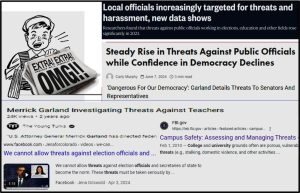
Since 2015, we have written repeatedly about the protection, or lack of protection, for public officials. Over sixteen articles, we have recommended, begged, pleaded, and advocated for local and state law enforcement to take the security of public officials more seriously.
In 2017, Independent Security Advisors founded the Defending Democracy Initiative to provide executive protection training, close protection training, and protective services support to local and state law enforcement.
We did not do that because it sounded good. We did it because the need was obvious.
Public officials were already being threatened. Election officials were already being targeted.
Members of Congress were already reporting threats. Town halls were already being canceled because of safety concerns.
And families of public officials were already being dragged into the line of fire.
After July 13th, the risk environment did not calm down. It became more dangerous, more emotional, and more unstable. That means local and state law enforcement cannot wait for federal agencies to solve every problem.
The federal government will adjust protection for the highest-ranking officials. Former presidents, presidential candidates, and high-profile federal officials will become what we call hard targets. But what about the county commissioner or the state legislator?
What about the mayor or the election director or the campaign volunteer?
What about the local official who supports Trump, Biden, a third-party candidate, or no party at all, but still becomes the target of anger, conspiracy theories, or retaliation? Who protects them?
Can the local law enforcement agency provide protection? Does the agency have trained personnel or have a plan?
Does the agency have a protective operations capability, or are we still pretending this is someone else’s problem?
Can We Stop Pretending We Are Surprised?
 We have heard the speeches. We have heard public officials say democracy is in peril. We have heard leaders talk about the battle between our worst instincts and our better angels. But speeches are not security plans. And condemning political violence is necessary, but it is not enough.
We already know our political discourse has become toxic. We already know threats have been directed at members of Congress, police officers, judges, jurors, election workers, and public employees. We already know that conspiracy theories and disinformation can move unstable people from anger to action.
So again, why are we acting surprised?
When elected officials are threatened, democracy is being threatened.
When election workers are threatened, democracy is being threatened.
When judges and jurors are threatened, the rule of law is being threatened.
When candidates are threatened, the voters are being threatened because their choices are being shaped by fear.
This is not just about protecting one person; it is about protecting the process.
ISA CEO Matthew Parker
The Media Knew. Government Knew. Law Enforcement Knew.
 The possibility of political violence has been a major concern for years. Federal reports and media coverage have warned that attacks could be directed at government officials, voters, election personnel, polling places, ballot drop boxes, campaign events, political party offices, and vote-counting sites.
That is a very specific warning; it’s not vague. Not hypothetical. Not something buried in a footnote.
So, if we know there are real, active, and growing threats, where is the increased level of protection for the public officials holding our system together? Where is the training? Where is the funding?
Where is the plan for the local level? Where is the county-level protective capability?
Where is the regional team that can protect a threatened official, secure a public meeting, support a campaign event, or move an official safely through a hostile environment?
It is not enough to say, “That is a federal issue,” or “We do not have the manpower,” or give excuses that “Our officials do not want to look protected.”
We have to stop using excuses that disappear only after someone gets hurt.
The Repercussions Will Not Stay at the Top
After an attempted assassination of a former President, high-ranking federal officials will receive more attention, more intelligence, and more security. That is expected. But the danger does not stop at the federal level. In many cases, the easier targets are down ballot.
County and State officials are known to be under threat. But there is a growing threat to election workers, party officials, and campaign staff. Conspiracy theorists and election deniers from both inside and outside threaten our voting system and the lives of those who make up our democratic process.
Public health officials and School board members join a growing list of public officials who are quitting because of threats to them and their families. The people at the local and state level are often more accessible, less protected, and more exposed. They are the ones in grocery stores, local restaurants, county buildings, church events, community festivals, town halls, and school board meetings.
They are not surrounded by federal resources. They are often relying on local police, sheriff’s deputies, or no security at all. That is where the threat becomes real.
The attacker does not have to reach the President to damage democracy. They only have to make public service feel unsafe enough that good people stop serving, stop campaigning, stop voting their conscience, or stop showing up in public.
Protection Does Not Mean Hiding Officials from the Public
 One of the most dangerous myths in public official security is the idea that protection places an elected official in a bubble. That is wrong.
Receiving executive protection does not prevent public access; it preserves it. It facilitates it. It allows our elected and other public officials to meet with people and hear their thoughts and opinions. It allows the official to attend the meeting, walk the parade route, speak at the event, shake hands, listen to constituents, and continue doing the work of public service.
The choice is not between security and democracy. The choice is between trained protection and preventable chaos.
The “boy in the bubble” argument needs to end. Public officials do not need to be hidden from the people they serve. They need trained professionals who understand how to protect them while still allowing them to remain accessible.
That requires training. It requires advance work, threat assessment, route planning, event security, emergency action planning.
It requires disciplined agents and officers who know the difference between reasonable access and unnecessary exposure. Protection is not a wall; protection is a system.
A Local and State Solution Is Needed
Fusion centers and intelligence-sharing systems push threat information down to local and county law enforcement. But top-down intelligence alone is not enough. Once the threat information reaches the local level, someone still has to act on it.
State and local-level agencies need to maintain their own local intelligence sources and build profiles on local threats. Based on that intelligence, someone has to plan the movement, secure the venue, brief the official, coordinate with the campaign, agency, staff, family, or event host. And someone has to stand close enough to intervene if the situation changes.
That means we need trained close protection teams at the lowest possible levels. This isn’t done in a vacuum. It takes trained personnel and leadership.
Police officers, sheriff’s deputies & state troopers
Reserve & auxiliary officers
Corrections officers & bailiffs
National Guard personnel and properly licensed private sector agents should all be considered part of the solution.
Not every agency can stand up a full-time protective detail, but multiple agencies can work together. Regional teams can be built, and personnel can be trained across jurisdictions. The burden can be shared. And when activated, these teams can operate under one command structure with clear responsibilities and a mission-focused plan.
https://eriecountypa.gov/erie-county-addresses-increased-risk-to-public-figures-via-training/
That is how we build a practical protective capability before the next emergency.
https://www.youtube.com/watch?v=tcBAdMypZvs
https://www.youtube.com/watch?v=FZJCXK-Wa9g
Funding Must Follow the Threat
It is time for the Department of Homeland Security and state-level grant programs to set aside funding for executive protection and close protection training for officers, deputies, troopers, and qualified public safety personnel.
We already fund equipment and new technology. We fund exercises, and we will fund programs after a crisis. Now we need to fund the training that helps prevent one. Public official protection should be treated as part of homeland security, emergency preparedness, election security, and critical infrastructure protection. Because that is what it is.
A mayor, judge, election official, legislator, county executive, or candidate for office is not just an individual. That person is part of the functioning system of government. If intimidation, threats, or violence force that person out of public life, delay official action, change a vote, cancel a meeting, or silence public service, the system has been affected.
That is why protective training matters.
We Have a Proven Training Model
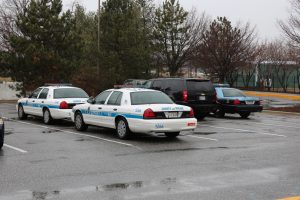 Independent Security Advisors has trained hundreds of officers and agents in close protection and executive protection since 2011.
Our programs are built for law enforcement and public safety professionals who may be called on to protect public officials, candidates, executives, visiting dignitaries, or other at-risk persons.
The training is practical, structured, and mission-focused. Accredited by POST, the Dept Of Criminal Justice and other Law Enforcement regulatory agencies. It includes the skills that agencies need:
- Protective intelligence and the threat assessment process
- Advance work and site surveys
- Route planning
- Public event and meeting security
- Daily EP Operations
- Close protection formations & secure movement
- Emergency action planning
- Communication procedures & protective operations command and control
- Working with public officials, staff, families, and event organizers
The point is simple. This is not about building celebrity bodyguards. This is about building disciplined, professional protective teams that can support democracy at the local and state level.
We have a proven, cost-effective program that can help prepare law enforcement to mitigate these threats before another public official is harmed.
Public Officials Must Also Take This Seriously
 Law enforcement cannot do this alone. Public officials also have a responsibility. Stop pretending threats are just part of the job. Stop refusing security because you do not want to look separated from the public. Stop believing that carrying a firearm is the same thing as having a protective plan.
Stop using volunteers and the cheapest guard service available for campaign security and then acting surprised when something goes wrong. Stop thinking only about yourself. You are not just a private citizen anymore.
You are an elected official, candidate, public servant, or part of the democratic process. When you are threatened, your staff is affected. Your family is affected. Your constituents are affected. Your office is affected. And the process is affected.
You cannot represent your district, serve your agency, certify an election, vote on legislation, hold a public meeting, or perform your public duties if you are dead, hospitalized, hiding, or intimidated into silence.
That is not fear-mongering. That is reality.
What Should Agencies Do Now?
Agencies should begin with a realistic assessment. Ask the hard questions before the next public meeting, campaign event, court proceeding, election cycle, or controversial vote.
- Do we have officials who have received threats?
- Do we have candidates or public employees who are being targeted online?
- Do we have election workers who are concerned about their safety?
- Do we have public meetings where emotions are escalating?
- Do we have trained personnel who can provide close protection?
- Do we have officers who understand advance work and protective movement?
- Do we have a plan for protecting a public official at a community event?
- Do we have a regional team or mutual aid agreement?
- Do we have a way to receive and act on threat intelligence?
- Do we have funding identified for training?
If the answer is no, then the agency has work to do.
That work should start now.
Not after another shooting.
Not after another kidnapping plot.
Not after another death threat.
Not after another election worker quits.
Not after another public official cancels an event because nobody could provide security.
Now.
Call to Action
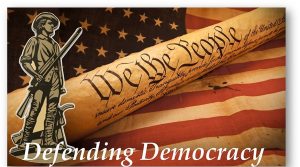 The Defending Democracy Initiative exists to help local and state law enforcement prepare for this mission.
Independent Security Advisors provides executive protection training, close protection training, threat assessment training, and protective operations support for agencies responsible for protecting public officials, candidates, and others at risk.
If your agency, department, campaign, or organization needs to build a public official protection capability, now is the time to act.
We can train your officers. We can support your planning. We can help develop a protective program that keeps officials accessible to the public while reducing preventable risk.
We Need to Lower the Temperature, But Prepare for Reality
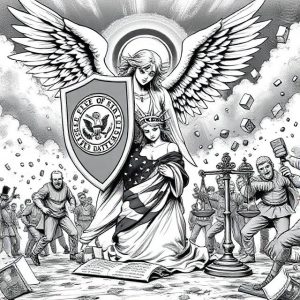
We as a society need to dampen down the violent political discourse. We need to make it clear we can disagree with policy, with each other, but we can do that without hating our public officials or each other personally.
But until “our better angels” do appear, and we agree to turn down this level of hate, public officials and our democracy need to be defended.
ISA CEO Matthew Parker
We as a society do need to acknowledge the threat from violent political discourse. We do need to make it clear that we can disagree on policy, argue over elections, challenge leadership, and oppose decisions without hating public officials or each other personally.
We need to insist we stop treating political opponents as enemies to be destroyed. We need to stop feeding conspiracy theories that turn public servants into targets.
We need to stop pretending words do not create consequences. But until our better angels appear, public officials still need to be protected.
Democracy still needs to be defended. And local and state law enforcement need the training, funding, and support to do that job.
Democracy does not defend itself. People defend it. And those people need to be trained.
Key Takeaways
- The threat to public officials is not new.
- Political violence and intimidation affect the democratic process.
- Local and state officials are often more exposed than federal officials.
- Protection does not place public officials in a bubble; proper protection keeps them accessible.
- Law enforcement needs trained close protection teams at the local and regional level.
- Funding should support protective training before another incident occurs.
The Defending Democracy Initiative provides a practical model for preparing agencies to protect public officials and defend the democratic process.
Author
Matthew Parker is CEO and Director of Training for Independent Security Advisors LLC, and a licensed private investigator and executive protection specialist with over seventeen years of operational experience. He has served as the director of protection for international trade delegations and diplomats during official state visits to the United States, and has advised on matters involving terrorism, international commerce security, democracy programs, and protective operations.
A former advisor on supporting international democracy programs for the Institutional Investors Consulting Company, Mr. Parker is also a former special advisor to the Government of Iraq & Kurdish Regional Government, where in 2021 he became only one of three Americans to have received the Iraqi Commitment Medal on behalf of the Government of Iraq.
Mr. Parker has worked on various political campaigns for both republican and democratic candidates. He has interned for a US Senator, and he currently supports the Defending Democracy Initiative, which provides security training and protective services support for public officials while combating misinformation and threats that can lead to political violence. https://www.linkedin.com/in/matthew-parker-16a60118/
#DefendingDemocracyInitiative #ExecutiveProtectionTraining #PublicOfficialSecurity #PoliticalViolencePrevention #CandidateProtection #ElectionWorkerSafety #ThreatAssessment #CloseProtection #LawEnforcementTraining #ProtectingDemocracy
Previous articles are available at https://www.eptraining.us/blog/
https://www.eptraining.us/defending-democracy-and-the-political-process/blog/
https://www.eptraining.us/protection-for-elected-officials-times-are-a-changing/blog/