
 E-mail us
The Threats to Our Democracy: It Starts with Incivility.
Threats to Our Democracy / Why ISA Created the Defending Democracy Initiative in 2017—and Why Its Mission Is More Urgent Today
Matthew Parker | July 12, 2026 | Updated data through July 2026
 South Carolina Senator Lindsey Graham died on July 11, 2026, at age 71. Preliminary findings attributed his death to an aortic tear associated with cardiovascular disease. The Senator, having just returned from Ukraine, was experiencing chest pain, but at the time of this post, it is said he declined to see a doctor.
Senator Graham was not assassinated. He did not die because of a political attack. Yet the public reaction to his death tells us something important about the environment in which elected officials now live and serve.
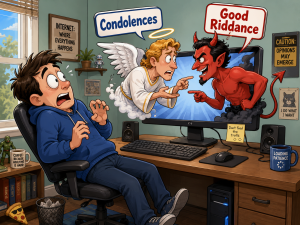
A quick look at social media tells the story: within hours, condolences were competing with attacks on his character, his humanity. Comments such as “good riddance,” declarations that his death should be celebrated, and homophobic insinuations about his private life. Iranian state television announced that Graham had “gone to hell.”
These were not reasoned criticisms of his votes, policies, foreign-policy positions, or political alliances. They were celebrations of another human being’s death. Another demonstration of the lack of civility that has crept into our politics and our society as a whole.
You did not have to agree with Senator Graham. God knows I myself had several disagreements with his policies, opinions, and actions.
You did not have to support him, vote for him, defend his record, or remain silent about decisions you believed were wrong. We are in an open and free society where we are expected to discuss our differing political beliefs and debate our policy differences.
But when a political opponent dies, and the immediate response is ridicule, celebration, personal humiliation, or hatred, we are no longer debating policy. We are demonstrating how thoroughly political disagreement has become dehumanization.
In too much of our political discourse, basic civility is gone.
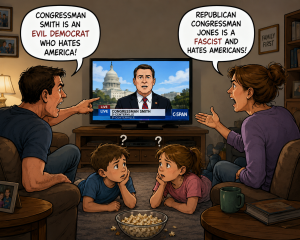
 That matters because threats do not begin with a weapon. They often begin with language that teaches people that an opponent is not merely wrong, but evil, illegitimate, dangerous, or undeserving of ordinary human consideration.
Social media and bias media channels and sites has amplified that language. “Keyboard warriors” and media personalities try to out-insult each other in an apparent effort to see who can demonstrate their absolute hate for a man who has just passed away.
Online and broadcast media ignorance and cruelty is not the same thing as a criminal threat. But this is where threats are normalized, applauded, and brushed aside—until someone decides to act.
The U.S. Capitol Police have warned that people have a false sense of anonymity online. And the media has 1st amendment protections they think allow them to say almost anything. But that false confidence produces the comments we see today in the media or on social media about the passing of Senator Graham.
Thanks to the lack of civility and the desensitizing of dangerous rhetoric and political violence, threats to our public officials and our democracy itself have increased and expanded.
And it has moved beyond Washington.
Political Leaders Also Have a Responsibility
Law enforcement can investigate threats.
Security professionals can assess vulnerabilities.
Protective details can improve planning, transportation, communication, and emergency response.
But no security plan can completely compensate for a political culture that constantly encourages outrage, humiliation, and hatred.
Words do not automatically cause violence. Political criticism must remain protected, even when it is harsh, angry, or offensive. But leaders, commentators, organizations, and citizens should understand the difference between criticizing an official and portraying that person as less than human.
The comments following Senator Graham’s death illustrate the problem. His record remains open to debate. His decisions remain open to criticism. History will judge his service, just as it judges every public official. But his death should not be an opportunity for cruelty.
Civility Cannot Be Conditional
When “good riddance” becomes an acceptable public response, when personal degradation replaces policy debate, and when people receive applause for celebrating the death of an opponent, the distance between political rhetoric and political violence becomes dangerously small.
Matthew Parker, ISA, CEO, DDI
Comments celebrating Senator Graham’s death may or may not meet any criminal threshold. That is not the point. Incivility is not the same thing as a threat, and the data does not prove that rhetoric caused every increase. But dehumanizing speech normalizes contempt, encourages mob behavior, and weakens the social guardrails that discourage intimidation and political violence.
Just a few examples of the lack of civility in the echo chambers that have taken hold of our country.
With Senator Graham passing; you would think basic civility would be the order of the day, and the threat would have decreased. Death should lower the temperature. Instead, within hours, the same political cruelty simply found a new target: the dead.
@RickWilson, co-founder of the anti-Donald Trump Lincoln Project, responded to calls for civility after Graham’s death by pointing to earlier occasions when Trump mocked the deaths of Robert Mueller, Colin Powell, and John McCain.
Our Take: Criticizing hypocrisy is fair. But civility cannot become a partisan scorecard. Two wrongs do not restore decency.
Progressive executive producer and co-host @AnaKasparian of The Young Turks replied to the announcement on X with two words: “Good riddance.” Far-right political commentator Nick Fuentes, not to be outdone, posted the same response. The far left and the far right found common ground in disrespecting a man who served his state and this country.
Former MSNBC analyst and Lincoln Project co-founder @SteveSchmidt wrote that Senator Graham was a “lonely and unprincipled man who betrayed his country for power and his decency for attention.”
Quick Take:
I’m sorry, but betrayed his country? Senator Graham served in the U.S. Air Force, the South Carolina Air National Guard, and the Air Force Reserve for more than three decades. He served more than six years on active duty, including four years in Germany, and completed short reserve tours in Iraq and Afghanistan. He received the Bronze Star Medal in 2014 for exceptionally meritorious service as a senior legal adviser during Operation Enduring Freedom. His official retirement announcement documented that service and he retired as a colonel in 2015.
Unfortunately Mr. Schmidt decided silence and respect should be replaced with “he betrayed his country for power and his decency for attention.”
This incivility will have consequences later when these political ‘talking heads” have so dehumanized their political opponents that their followers decide political violence is not only called for, but it is acceptable.
Mr. Wilson, Ms. Kasparian, Mr. Fuentes, and Mr. Schmidt, respectfully, you’re part of the problem!
A new phenomenon? Are threats higher or lower than in 2017?
The answer is not complicated.
They are dramatically higher.
In 2017, the United States Capitol Police opened 3,939 threat-assessment cases involving members of Congress. As a result on May 23, 2017, ISA published Elected Officials Under Threat & Executive Protection Training, this was the beginning of the Defending Democracy Initiative.
By 2024, the number had risen to 9,474. In 2025, Capitol Police recorded 14,938 concerning statements, behaviors, and communications directed at members of Congress, their families, staff, and the Capitol complex.
The latest complete-year figure is approximately 3.8 times the 2017 total—an increase of roughly 279 percent.
 Now, to be clear, these numbers show a troubling trend pattern, although not every case resulted in an arrest, criminal charge, or conviction. But 14,938 cases do not appear out of thin air. They represent statements, behaviors, communications, and direct threats serious enough to reach the U.S. Capitol Police.
But how did 14.938 more people think it was acceptable, a viable option, to threaten public officials? It’s almost as if we are teaching a generation of people that it is ok to hate.
The Threat Is No Longer Confined to Members of Congress
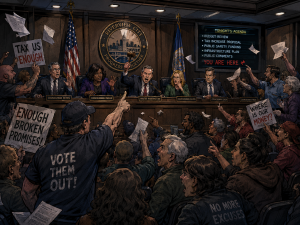
A 2024 National League of Cities survey found that 73 percent of surveyed mayors, council members, and city managers had personally experienced harassment connected to their public roles. Among those reporting harassment, 89 percent said it occurred on social media, and 84 percent said it occurred during public meetings.
Nearly 60 percent believed political harassment had grown worse since they entered office.
A 2025 Brennan Center survey of local election officials found that 38 percent had experienced threats, harassment, or abuse because of their work. Election administrators—many of whom were once anonymous public servants performing administrative duties—have become targets of conspiracy theories, intimidation, and personal hostility.
The Brennan Center’s 2026 survey still found that 32 percent—nearly one in three—had experienced threats, harassment, or abuse because of the job. More than half were concerned about the safety of their colleagues, and 23 percent were concerned about being assaulted at home or at work.
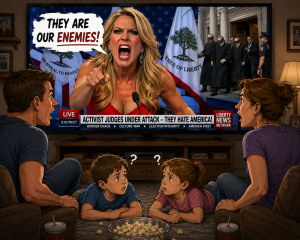
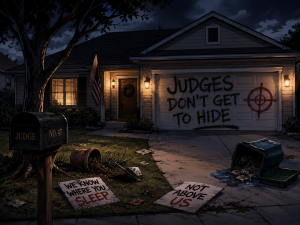 Federal judges are also being targeted. Depending on the audience, a judge who rules against a favored administration may be accused of bias, corruption, “derangement,” or serving a political agenda. The labels differ. The pattern is the same: character is attacked, motives are declared illegitimate, and threats can follow.
In fiscal year 2025, the U.S. Marshals Service recorded 564 non-unique threats to federal judges, and identified 396 individual judges as targets. Through July 1, 2026, it reported 370 threats, and 276 individual judges identified as threatened.
The threat of political violence is now found at:
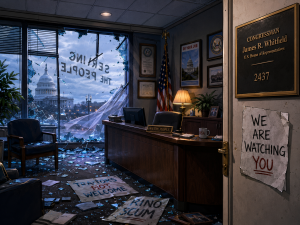
- Congressional offices and campaign events.
- State capitols and legislative districts.
- Courthouses and judges’ homes.
- City council meetings and school-board meetings.
- Polling places and election offices.
- Town halls, public appearances, and constituent events.
- Private residences and family gatherings.
- Social-media accounts and online discussion groups.
Families, staff members, election workers, volunteers, and even local law-enforcement officers are increasingly under threat.
This is not simply a federal problem.
It is a national problem that must be addressed locally.
The Warning Signs Have Been in Front of Us
 Since 2017, Americans have witnessed a growing list of attacks and attempted attacks involving public officials and political institutions:
- The 2017 shooting of members of Congress and staff during a baseball practice.
- The January 6, 2021 attack on the United States Capitol.
- The 2022 assault on Paul Pelosi inside his home.
- Two assassination attempts against Donald Trump during the 2024 presidential campaign.
- The 2025 killing of Minnesota legislator Melissa Hortman and her husband, and the shooting of another Minnesota lawmaker and his wife.
- The 2025 arson attack on the Pennsylvania governor’s residence while Governor Josh Shapiro and his family were inside.
- The 2026 physical attack on Representative Ilhan Omar during a public town hall.
Different victims.
Different political parties.
Different motives.
The same central lesson: public officials, candidates, judges, election workers, and their families are operating in a more hostile and less predictable environment.
The threat does not belong exclusively to the political left or right. It comes from grievance, obsession, conspiracy theories, personal instability, ideological extremism, and the belief that violence or intimidation is an acceptable political response.
Why ISA Created the Defending Democracy Initiative
We did not adopt the name Defending Democracy Initiative after the latest assassination attempt, congressional shooting, election controversy, or social-media crisis.
ISA selected defending democracy to publicly address this new level of violent rhetoric and political violence. Publishing on May 23, 2017, Elected Officials Under Threat & Executive Protection Training.
We started with explaining the need to prepare local and state law-enforcement officers to protect elected officials. The training model itself had developed from lessons following the 2011 attack on Representative Gabrielle Giffords.
On June 28, 2017, ISA again published under the Defending Democracy Initiative name an article that stressed that “democracy cannot function when public officials, candidates, public employees, or citizens are intimidated into hiding or prevented from participating in the political process.”
That includes elected officials, candidates, judges, election workers, public employees, campaign staff, members of the media, citizens attending public meetings, and the law-enforcement officers responsible for protecting them.
Defending democracy means protecting the people who make democratic government possible.
ISA created the initiative to promote practical protective-service training and assistance, particularly for state and local agencies that may suddenly be assigned responsibilities normally associated with specialized federal protection units. The objective was not to isolate public officials from the people they represent. It was to help them remain accessible without being unnecessarily vulnerable.
ISA has continued publishing, teaching, and warning about these issues because the need never disappeared.
The protection of public officials—not from criticism, but from violence, intimidation, and threats intended to drive them out of public life.
No More Wake-Up Calls
We have already had the wake-up calls.
We had them in 2011.
We had them in 2017.
We had them in 2021, 2022, 2024, 2025, and again in 2026.
The question is no longer whether elected officials and others involved in the democratic process face a serious threat. The question is whether government agencies, political organizations, security professionals, and communities are prepared for the rise in political violence with the rise in incivilioty?
ISA’s Defending Democracy Initiative was created because protecting democracy requires more than defending buildings, ballots, or political traditions. It requires protecting people.
It also requires restoring enough civic restraint to recognize that an opponent remains a human being, that disagreement is not treason, and that political defeat is not a justification for intimidation or violence.
The threats have not decreased since 2017.
They have multiplied.
The mission is therefore not complete.
It is more urgent than ever.
About the author: Matthew Parker writes on executive protection, public-official security, and the responsibilities of state and local agencies under ISA’s Defending Democracy Initiative.
Sources and Further Reading
Associated Press — Lindsey Graham dies at 71; preliminary medical findings — July 2026
Associated Press — International reactions to Graham’s death — July 2026
United States Capitol Police — Threat Assessment Cases for 2024 — Includes annual totals from 2017 through 2024
United States Capitol Police — Threat Assessment Cases for 2025 — Includes 2025 total and local-agency partnership data
National League of Cities — Harassment of Local Officials Survey — September 2024
Brennan Center — 2025 Local Election Officials Survey — Threats, harassment, and abuse data
Brennan Center — 2026 Local Election Officials Survey — Latest survey used in this draft
U.S. Marshals Service — Protective Investigations and Threat Statistics — FY2025 and FY2026 year-to-date data
Senator Lindsey Graham — Air Force Retirement and Bronze Star — Official military-service source
ISA — Elected Officials Under Threat & Executive Protection Training — May 23, 2017
ISA — Defending Democracy Initiative — June 28, 2017
ISA — Defending Democracy Initiative: Protecting Public Officials — Current program overview
Learn more about the ISA Defending Democracy Initiative
Learn more about the Dignitary & Executive Protection Specialist Course