
 E-mail us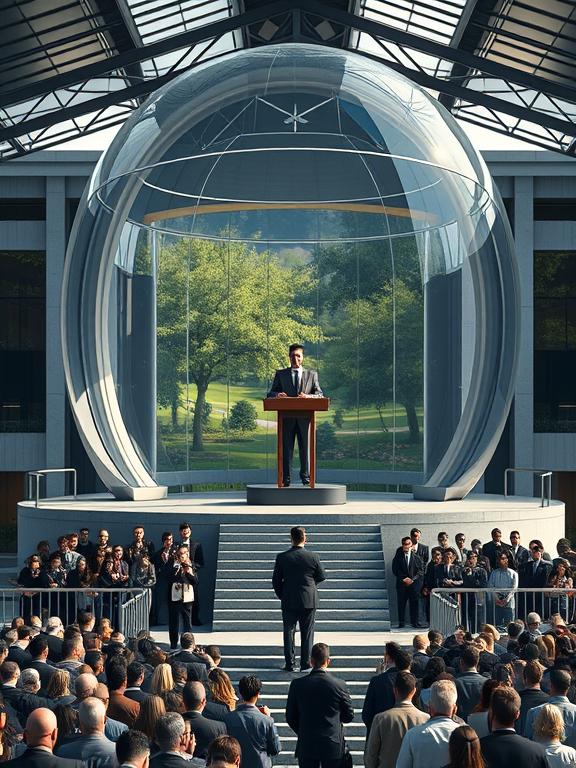
Executive Protection for Public Officials: Breaking the “Boy in the Bubble” Myth
Summary: Executive Protection for Public Officials does not isolate elected officials — it enables safe public engagement. Learn why professional security strengthens democracy rather than distancing leaders from constituents.
Introduction
One of the most damaging misconceptions about executive protection for elected officials is what we call the “Boy in the Bubble” myth.
The image is familiar: an isolated official, surrounded by barriers, detached from constituents, hidden behind layers of security.
It is a powerful image.
It is also wrong.
Defending democracy requires access — but access without protection is not openness. It is exposure.
Protection Enables Access
Professional executive protection is not about separation. It is about safe engagement.
Well-trained protective teams:
-
Conduct advance work.
-
Assess threat environments.
-
Coordinate logistics.
-
Manage venue security.
-
Create controlled access without visible disruption.
The objective is simple:
Enable elected officials to interact freely and safely.
Security, done properly, is almost invisible.
The Cost of Avoidance
When protection is minimized to preserve optics, several predictable outcomes follow:
-
Events are canceled due to credible threats.
-
Staff assume security roles they are not trained for.
-
Risk decisions are made in real time without planning.
-
Officials self-limit their public presence.
Ironically, the effort to avoid looking “protected” results in reduced access.
Professional executive protection training prevents this dynamic.
Security Is a Professional Discipline
Executive protection for public officials is a specialized discipline requiring:
-
Threat assessment
-
Behavioral detection
-
Protective intelligence
-
Secure movement planning
-
Crisis response coordination
This is not improvisational work. It is structured, trained, and mission-focused.
The goal is not to create distance between elected officials and their constituents.
The goal is to preserve the conditions under which democracy can function safely.
Coming soon part 3:
For years, warnings about escalating threats were often minimized.
Then came moments that made denial impossible.
One such moment forced a national security reckoning.