
 E-mail us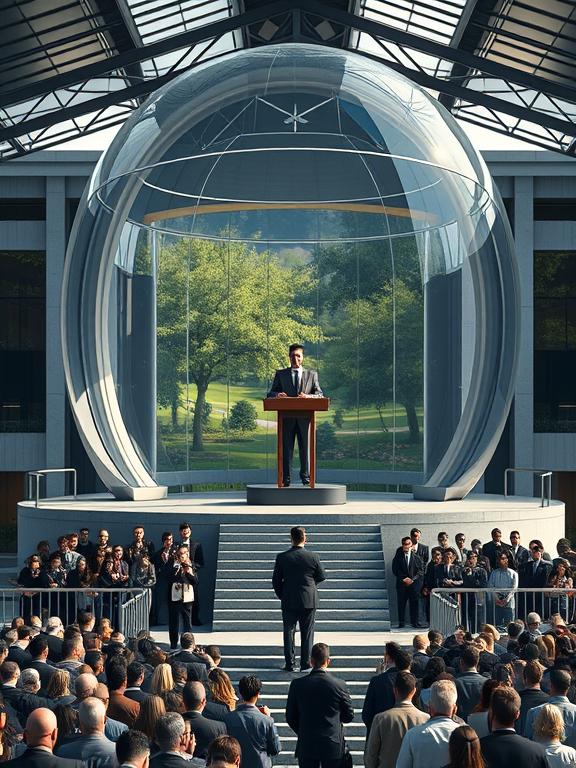
Executive Protection and Event Security: The “Boy in the Bubble” Effect
Executive Protection | 10/5/2025
A Historical and Operational Review of Public Debate Security on University Campuses
Introduction: Executive Protection in Public Debate Environments
Executive protection in university debate environments is no longer a theoretical concern—it is an operational necessity. Violence associated with controversial speakers on college campuses is not a new phenomenon. Historically, institutions of higher education have served as arenas for political discourse, protest, and ideological confrontation. In recent years, however, the intersection of executive protection, event security, and First Amendment activism has created increasingly volatile security environments.
Many student groups have had events canceled due to concerns regarding safety, campus security resources, and the risk of civil unrest. Yet a growing number of controversial speakers have adopted a different strategy: positioning themselves in open public spaces—either on campus grounds or immediately adjacent to them—to conduct live “debates” on politically charged topics.
These events are often structured to provoke confrontation. Some speakers deliberately use emotionally charged messaging to “trigger” opponents, frequently with the intention of capturing short video clips to distribute later as evidence of ideological hostility. From an executive protection and risk mitigation standpoint, this is a dangerous operational model—often conducted with insufficient security planning, inadequate threat assessments, and limited law enforcement coordination.
Case Study: Cam Higby and Reactive Security Failures
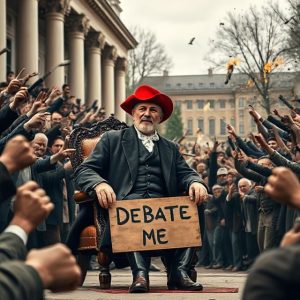 Consider conservative activist Cam Higby. In October 2025, following a debate event at the University of Maryland, Higby was involved in a physical confrontation at Washington, DC’s Union Station. In a phone interview with Fox News Digital, Mr. Higby stated that “a woman approached him and started being combative.” He later used pepper spray after the woman allegedly lunged at him during the interaction.
This was not an isolated incident. In June 2025, while engaging participants at an anti-ICE rally in downtown Seattle—conduct that could reasonably be described as confrontational or provocative—Higby was filmed being attacked by three men. He reportedly used pepper spray to escape and later stated he suffered “a concussion, dizziness, nausea, and other symptoms that required ER and urgent care treatment.”
Mr. Higby has publicly stated that his mission is “to expose violence on the left and promote peaceful political dialogue.” While this may reflect his stated intent, his debate signage frequently includes phrases such as:
“The Left is Violent! Let’s Debate!”
From a protective intelligence and behavioral threat assessment perspective, it is reasonable to ask whether such messaging increases the probability of violence. When event branding directly challenges or accuses a targeted ideological group, it may function as an incitement vector—not legally, but emotionally.
Mr. Higby has stated:
“We want people fired up. We want people to be excited to talk about political issues, but what we don’t invite people to do is touch us.”
However, publicly available video footage of these encounters illustrates significant deficiencies in personal security posture, standoff distance, crowd control strategy, and layered protection planning. His protective measures appear dangerously inadequate relative to the threat environment being created.
A particularly concerning detail in the Washington, DC incident was Mr. Higby’s acknowledgment that:
“It was unclear if the woman had any weapons, as she had her hands in her pockets during the majority of the encounter.”
From an executive protection standpoint, this reflects a critical breakdown in protective buffer zones and advance threat recognition. A hostile individual was permitted to:
-
Close distance
-
Enter personal space
-
Make physical contact
-
Knock the principal to the ground
-
Potentially conceal hands in pockets (unknown weapon access)
Such proximity without control measures contradicts fundamental close protection doctrine.
Comparative Security Posture: Charlie Kirk at Utah Valley University
In contrast, Charlie Kirk—who uses a similar open-debate format—demonstrated a more structured security posture during his event at Utah Valley University. Video analysis reveals:
-
Close protection agents positioned in proximity
-
Physical barriers and fencing
-
Established standoff distance
-
Controlled engagement zones
These measures allowed reaction time to emerging threats. However, even with improved executive protection strategy, an assailant armed with a rifle and clear line of sight was able to shoot Mr. Kirk.
This underscores a core reality in modern event security:
Layered protection reduces risk but does not eliminate it.
Given the near absence of robust protective measures for some speakers operating in open public spaces, it is not a matter of if, but when, a speaker will be seriously injured or killed.
The First Amendment and Campus Security Dilemma
First Amendment advocates continue to push for greater access to public university spaces. While they acknowledge security risks, they argue those risks should be mitigated by campus police, local law enforcement, and structured event security planning.
Universities, however, increasingly delay or refuse to host such events due to:
-
Escalating security costs
-
Liability exposure
-
Reputational risk
-
Resource strain on campus security departments
Institutions that do proceed often request financial assistance to cover additional security measures.
Yet the central issue may not be constitutional law, nor solely the adequacy of campus policing.
The deeper issue lies in:
-
The tone adopted by certain “debaters”
-
The emotionally escalated rhetoric
-
The inability of segments of the crowd to disengage
As fictionalized in popular culture by the Joker:
“This is what happens when an unstoppable force meets an immovable object.”
In this case:
-
The unstoppable force = unwavering ideological conviction of the speaker
-
The immovable object = the crowd’s inability to tolerate opposing viewpoints
The friction between these forces produces the violent reactions we are witnessing.
Operational Solutions in Executive Protection and Event Security
 Modern executive protection professionals must adapt to emotionally volatile campus environments where ideological confrontation increases risk exposure.
It is unrealistic to expect a reduction in ideological intensity in public debate environments. Nor can we assume uniform protection standards across shifting venues, threat environments, and jurisdictions.
Additionally:
-
Private sector protection agents lack arrest authority
-
Protective intelligence access may be limited
-
Event mobility complicates advance planning
Therefore, the solution lies in professionalization and structured risk mitigation:
1. Enhanced Executive Protection Training
Agents must receive advanced training in:
-
Behavioral threat recognition
-
Emotional crowd dynamics
-
Escalation indicators
-
Close-quarter reaction protocols
-
Large- and small-scale event security planning
Risk mitigation must account not only for physical threats, but also emotional volatility and ideological extremism.
2. Protective Intelligence Integration
Stronger intelligence sharing between:
-
Universities
-
Local law enforcement
-
Campus police
-
Event organizers
-
Private security firms
Pre-event threat assessments should be standardized and mandatory.
3. Environmental Security Controls
Events should be held in:
-
Controlled access environments
-
Locations allowing clear lines of sight
-
Areas with defined ingress/egress
-
Pre-established standoff distances
4. Pre-Emptive Public Service Campaigns
Institutions may consider proactive messaging reinforcing that:
-
Opinions are not acts of violence
-
Disagreement does not justify assault
-
Debate requires restraint
Public service announcements could be deployed prior to scheduled events.
5. Balanced Programming and Desensitization
Hosts should consider:
-
Offering equal time to opposing viewpoints
-
Encouraging structured debate formats
-
Promoting civil discourse training
Reducing emotional overreaction requires long-term cultural investment.
The “Bulletproof Fishbowl” Question
One extreme solution would be to place speakers inside literal or metaphorical bulletproof enclosures—surrounded by agents, barriers, and rigid speech controls. But that approach undermines open discourse and risks regulating speech rather than protecting it.
The more sustainable path forward includes:
-
Better education for speakers regarding threat environments
-
Higher professional standards in executive protection training
-
Improved event security doctrine
-
Societal recalibration toward reasoned debate
The future of executive protection on university campuses depends on structured training, intelligence coordination, and disciplined operational planning.
The future of public discourse on university campuses depends not only on constitutional rights, but on the professionalization of executive protection, campus event security, and protective intelligence operations.
Matthew Parker
CEO, ISA and EPtraining.us
#ExecutiveProtection #EventSecurity #CampusSecurity #ProtectiveIntelligence #ExecutiveProtectionTraining #FirstAmendmentEvents #RiskMitigation #ThreatAssessment #EndDivisiveDebate