
 E-mail us
Ten Days to Build the Detail — and What Happens When the Detail Loses the Mission
Local Government Executive Protection
Two Executive Protection Roundtables on Building the Capability, Staffing the Mission, Using Police and Private Resources, and Keeping the Detail From Losing Its Purpose
By Matthew C. Parker
Independent Security Advisors LLC | EPTraining.us | Defending Democracy Initiative
Abstract: A fictional Ohio county judge receives a credible threat ten days before a major trial. It has experienced police officers but no permanent executive-protection detail, dedicated protection budget or group of trained agents waiting for the call. Matthew Parker brings together two police chiefs with different views, a veteran sergeant who wants the assignment, an FOP president and the county administrator to decide what happens next.
The discussion then shifts to Laurel Ridge County, Pennsylvania, a fictional after-action case based on documented problems that have occurred in a real public-official protection program. A second roundtable examines what happens when a legitimate detail loses its boundaries through personal errands, political activity, uncontrolled overtime, officer pressure, weak supervision, and poor accountability. Together, the two discussions address both sides of the same problem: how government builds a protective capability and how it keeps that capability from becoming something it was never supposed to be.
Why This Discussion Matters
Most local governments do not maintain permanent executive-protection units, and most probably do not need one. That does not mean a police department, sheriff’s office or county government can wait until a credible threat arrives to begin thinking about protection.
If an agency has responsibility for protecting a public official and receives a credible threat, it should be able to establish a protective posture quickly. The official may have a public meeting tomorrow or travel the following week. Family members or staff may have been mentioned. The official may still have to walk through an open government building, attend a council meeting, visit multiple locations or appear in front of citizens who have every legal right to approach an elected representative. Cancelling everything indefinitely is not a protection plan.
The first problem is obvious: How do we build the detail? The second is easier to overlook: Once we build it, how do we keep it under control?
A department can make mistakes in either direction. It can wait too long, under-resource the mission and place an official in public without enough protection. It can also create an emergency detail that quietly becomes permanent, burns through overtime, removes officers from other police duties and gradually begins performing work that has little to do with protection.
This article examines both problems. The first roundtable takes place in Cedar Valley County, Ohio, a fictional Midwestern county facing a credible threat with ten days to prepare. The second examines Laurel Ridge County, Pennsylvania, a fictional instructional case in which an established executive-protection detail gradually loses control of its mission.
Source-Grounded Composite and Fictional Scenario Notice
Cedar Valley County, Ohio, and Laurel Ridge County, Pennsylvania, are fictional jurisdictions. No claim is being made that the events attributed to either county occurred in an actual Ohio or Pennsylvania county.
Other than Matthew Parker, the participants are fictional, evidence-based composite professionals. They are not disguised representations of any single police officer, chief, union representative, administrator or protection professional. Their backgrounds and positions draw from documented executive-protection policies; statements and testimony involving working police officers and protection supervisors; public comments by police chiefs; police-union and Fraternal Order of Police positions; municipal budgets; government investigations and oversight records; professional discussions of mayoral protection; and documented cases involving public-official security.
The Laurel Ridge scenario is an instructional reconstruction developed from a documented public record involving another U.S. jurisdiction. Names, location, agencies and participants have been changed, and events have been organized for instructional clarity. The scenario preserves the underlying issues without representing them as actual events in Pennsylvania.
Where police leaders, labor representatives, administrators and protection professionals disagree in the real world, these discussions preserve that disagreement rather than manufacture a consensus.
Reader Navigation
Roundtable One — Building the Capability
- The People at the Table
- A Sergeant Volunteers
- The Chiefs Debate the Detail
- What Police Labor Adds
- Setting Boundaries Before the First Shift
- How Large Should the Detail Be?
- Emergency Management and the Multiagency Roster
- Reserve, Auxiliary and Court Personnel
- Police or Private Executive Protection?
- Minneapolis: Threats, Private Security and Police Staffing
- Cost, Overtime and Accountability
- Political Activity, Protest and Threat Assessment
- The Ten-Day Plan
Roundtable Two — When the Detail Loses the Mission
- A Different Group at the Table
- When a Favor Becomes Part of the Job
- When Protection Becomes Political
- Who Does the Protection Officer Work For?
- Overtime and Mission Drift
- Why Experienced Officers Do Not Always Simply Say No
- Supervisory Failure
- Labor Revolt and Organizational Trust
- Disbanding the Detail
- The Outside Review
- Rebuilding the Protection Mission
Final Analysis
- What Both Roundtables Tell Us
- Parker Bottom Line
- Frequently Asked Questions
- Related EPTraining.us Resources
- Sources
- About the Author
Roundtable One — Ten Days to Build the Detail
Cedar Valley County, Ohio
Ten days remained before a scheduled public meeting. Investigators had concluded that a threat directed toward the Cedar Valley County executive was credible enough to require an increased protective posture while the investigation continued.
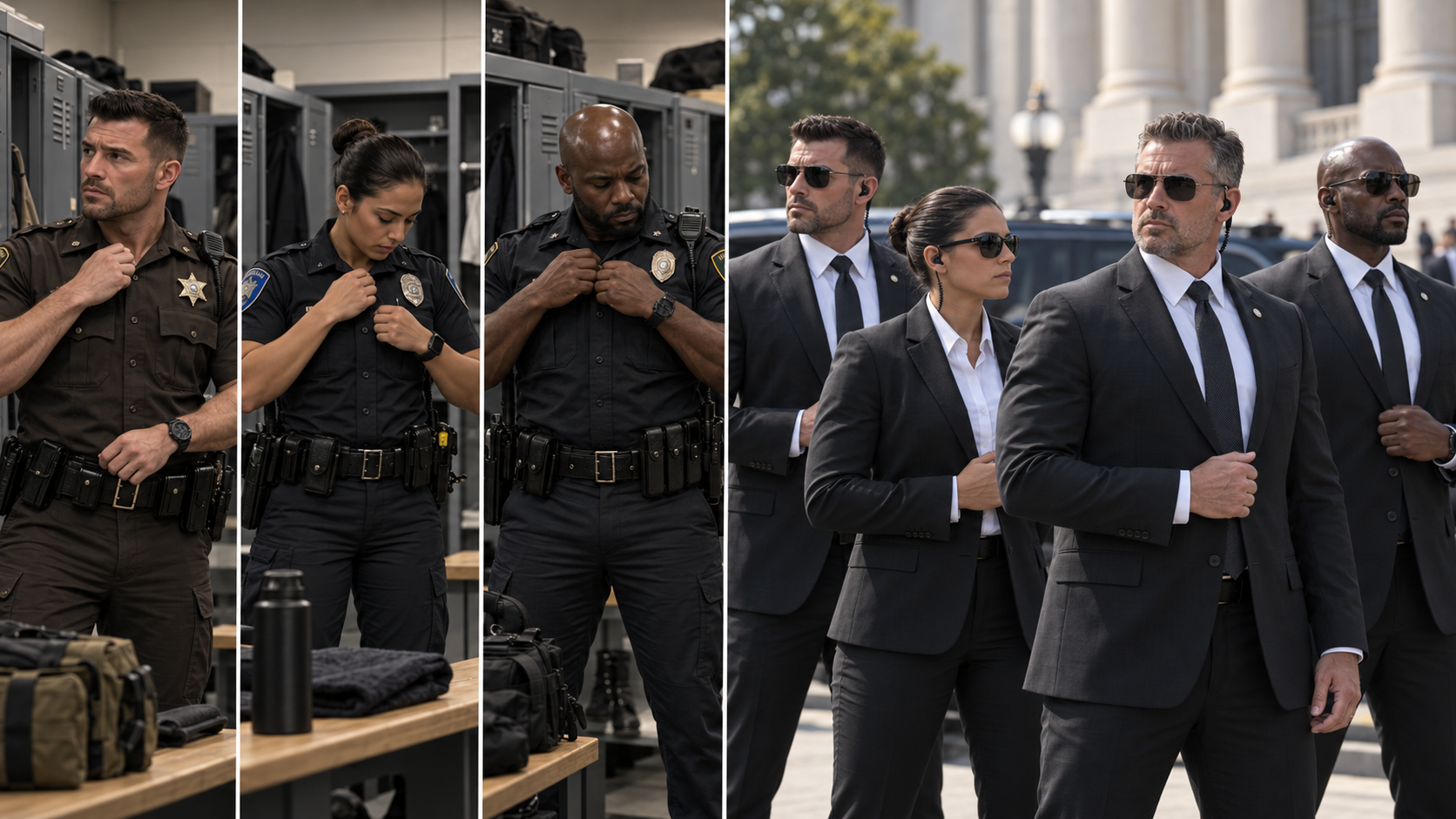
The county had police officers, sheriff’s deputies, neighboring departments and access to state resources. What it did not have was a permanent executive-protection detail. Parker brought five people into the room because each of them saw a different part of the problem.
The People at the Table
Chief Daniel Mercer
Daniel Mercer has been a police officer for almost thirty years and a chief for six. He came up through patrol, narcotics, investigations and operations before moving into command. His department is the largest municipal agency in Cedar Valley County and regularly provides officers for demonstrations, political events, visiting dignitaries and appearances by state and federal officials.
Mercer has never commanded a permanent mayoral-protection unit. He has, however, been responsible for temporary security operations involving governors, members of Congress, presidential candidates and local officials after threats. His instinct is straightforward: if the threat is credible, do not spend three days arguing over which budget owns the problem while the official continues moving in public.
Chief Elena Brooks
Elena Brooks has twenty-seven years in law enforcement. Much of her command career was spent running patrol operations and personnel before she became chief of a smaller city department elsewhere in the county. Her agency has dealt with vacancies, mandatory overtime and the familiar problem of losing experienced officers to task forces and special assignments while patrol supervisors are still expected to answer every call.
Brooks is not opposed to executive protection. She is opposed to allowing the words security requirement to end every discussion about staffing, cost or whether the assignment remains necessary.
Sergeant Michael Torres
Michael Torres is forty-one years old and has fourteen years on the job. He spent seven years in patrol, four in investigations and the last three as a patrol sergeant. He has supervised officers at demonstrations, political rallies and large community events, worked courthouse-security operations and assisted during visits by state and federal officials.
He has not completed a full executive-protection course and has never led a protective advance or commanded a close-protection team. When Mercer asked whether any supervisors were interested in helping build the temporary detail, Torres volunteered. He wants the assignment.
Officer James Keane
James Keane has eighteen years in policing and serves as president of the fictional Cedar Valley FOP lodge. Most of his career has been spent in patrol and field supervision, and as a labor representative he has dealt with overtime disputes, specialty assignments, involuntary transfers and complaints from officers who believed they were repeatedly selected for extra work because management knew they would not say no.
Keane is not at the table to determine whether the county executive deserves protection. He is there because somebody eventually has to work the schedule.
County Administrator Rachel Donovan
Rachel Donovan spent twelve years in county budgeting and finance before becoming deputy administrator and later county administrator. She has watched supposedly temporary government operations acquire overtime, vehicles, equipment, training, travel and backfill costs that nobody included in the original estimate.
She also knows a police chief cannot wait several weeks for an ordinary procurement process when a credible threat exists today. Her job is to make the operation possible without allowing emergency spending to become invisible spending.
Parker Starts With the Officer
Parker looked at Torres.
PARKER: Mike, how did you get into this room? Did you volunteer for this, or did Mercer pick you?
TORRES: I volunteered.
PARKER: You want the assignment?
TORRES: Yes, sir.
PARKER: Why?
TORRES: A couple reasons. It’s interesting work, and I think I can help. I know the county. I’ve worked most of the bigger venues, I know the hospital routes, the courthouse, the county complex and most of the supervisors we’d be calling if something went bad. I’ve also worked enough large events that I don’t mind when there are a lot of moving pieces. But I know I’ve never worked a full close-protection detail.
PARKER: If the chief calls you this afternoon and says you’re assigned, you’re going?
TORRES: Absolutely.
PARKER: No hesitation?
TORRES: About going? No. About somebody deciding I’m suddenly the expert because I’m wearing a suit? Yeah, I’d have a problem with that. I don’t want the chief handing me a radio and saying, “You’re the detail leader. Figure it out.”
PARKER: What do you bring to the job?
TORRES: Judgment, local knowledge and police experience. I’ve planned operations, supervised officers at public events, handled threats and worked with outside agencies. I’ve had plans fall apart and still had to make decisions. I can bring all of that.
What I haven’t done is build a protective advance from the ground up. I’ve never had formal surveillance-detection training, I haven’t been through a protective-driving course, and I haven’t spent years walking beside principals. I don’t see anything wrong with admitting that.
PARKER: There isn’t. New Orleans requires commissioned officers assigned to its Executive Protection Unit to complete specific protection training. The policy covers advances, routes, cover and evacuation, protective intelligence, surveillance detection, vehicle ambush countermeasures and tactical medical response. PERF brought more than sixty people together in 2025, primarily police officials responsible for mayoral protection, and their recommendations included role-specific training, refresher training and field training. You have fourteen years on the job. Why isn’t that enough?
TORRES: Because fourteen years tells you I’ve been a cop for fourteen years. It doesn’t tell you I’ve done those things. I’ve worked shootings. That doesn’t make me SWAT. I’ve investigated crimes. That doesn’t make me a bomb technician. Same thing here. If you want me to do protection work, I’ll learn it. I just don’t want us pretending the training happened because I volunteered.
PARKER: Would you take the assignment if somebody experienced was leading it?
TORRES: In a second. That’s actually how I’d want to start. Put me beside somebody who knows the work and let me learn it the right way.
Keane leaned forward.
KEANE: That’s how management should want him to start too. Mike is exactly the kind of officer departments grab for something like this: good record, steady, knows everybody, doesn’t create problems. Then somebody makes the jump from “good cop” to “executive-protection agent” without anything in between. If you want specialized work, give people specialized training.
PARKER: Mercer, did you know he volunteered?
MERCER: Yes.
PARKER: Why him?
MERCER: He wanted it, first of all. He called me before the email had been out an hour. Second, he’s steady. He listens. He knows the county, and he doesn’t need to be the smartest guy in the room. I can get a good officer protection training. It’s a lot harder to fix bad judgment.
PARKER: But you agree he’s not ready to lead it tomorrow.
MERCER: Correct. If I don’t have somebody qualified to run the detail, I need to find that person. Calling Mike “detail leader” doesn’t solve the problem.
The Chiefs Debate the Detail
Parker turned toward Brooks.
PARKER: Elena, you already look unhappy.
BROOKS: I’m not unhappy. I’m waiting for Dan to tell me how many people he wants.
Mercer laughed.
MERCER: I haven’t even asked for anybody yet.
BROOKS: Give it five minutes.
PARKER: All right, Dan. Ten days. What do you want?
MERCER: First thing I want is somebody who has actually run protection. Then I want the meeting site advanced, current threat information in that person’s hands, transportation looked at, communications worked out and the executive’s normal movement reviewed. After that, I’ll tell you how many people I need.
BROOKS: That’s a better answer than six.
MERCER: Thank you.
BROOKS: Don’t get used to it.
PARKER: Why are you pushing him on the number?
BROOKS: Because that’s where special assignments go sideways. Everybody agrees the official needs security, then a number gets put on a schedule. Maybe the number made sense the first day. Three months later nobody can tell you why there are still six officers except that there were six yesterday.
MERCER: That’s a management problem, not an argument against putting enough people on it today.
BROOKS: I agree. I’m not telling you to under-staff it. I’m telling you I want to know what each person is doing. If you tell me you need a detail leader, driver, close officer, advance person and another officer covering a particular exposure, fine. Now we’re discussing jobs. What I don’t want is, “The executive gets six.”
PARKER: Dan, what’s driving you?
MERCER: I’ve watched local government wait too long because everyone wanted certainty they were never going to get. If the investigators tell me the threat is credible and the executive is still going into public, I’m putting something around him. We can improve it tomorrow. I don’t want to be explaining after an attack that we were still deciding whose overtime account to use.
PARKER: Elena?
BROOKS: I’ve had nights where three patrol cars were covering the whole city because people were tied up on task forces and special assignments. That’s what drives me. Every officer Dan puts beside the executive came from somewhere. If protection is necessary, assign them. But don’t pretend there isn’t a cost somewhere else in the department.
PARKER: So you’re not opposed to the detail.
BROOKS: No. I’m opposed to treating today’s staffing decision like it automatically answers next month’s question. Put a review date on it.
MERCER: I can live with that.
Police Labor: The Officers Already Have Jobs
PARKER: Mike, if Mercer puts you on this detail, what happens to your normal shift?
TORRES: Another sergeant covers it.
PARKER: Who?
TORRES: Probably somebody on overtime unless we move schedules around.
KEANE: There it is. That’s the part people leave out when they say, “Use the officers you already have.” Mike doesn’t disappear from the payroll when he goes to protection, and his squad doesn’t stop needing a supervisor.
DONOVAN: So my cost is not necessarily Mike. It may be Mike plus whoever covers Mike.
PARKER: Keane, do you want your members on the detail or don’t you?
KEANE: Some of them would want it. I’d probably have volunteers. It’s good work, it’s different and they can learn something. What I don’t want is management grabbing the same dependable four officers, working them fifteen or sixteen hours a day for months and continuing to call it temporary.
I also don’t want somebody placed into specialized work with no training and then blamed afterward because he didn’t perform like a guy who’s been doing protection for ten years.
PARKER: Would you object to Torres?
KEANE: No. I’d object to everybody pretending he’s already something he’s not. There’s a difference.
What Police Organizations Have Actually Argued
PARKER: Police unions haven’t taken one position on this either. Chicago’s FOP objected when an outside retired federal official was put over work traditionally performed by Chicago police. After the officer protecting San Jose Mayor Matt Mahan was attacked, the San Jose Police Officers Association called for more than one officer on the detail. The National FOP has also argued that when state and local departments assist federal protective operations, those assignments can create real costs that local agencies should not simply be expected to absorb. Those aren’t exactly the same argument.
KEANE: They don’t have to be. One union can say, “This is police work.” Another can say, “If you’re going to make it police work, give the officer enough help.” And the national organization can say, “If local police are helping protect somebody, recognize what that costs the department.”
My question here is simpler. Is the detail properly staffed? Are the people trained? How long are they working? What happens to the unit they came from? I’m not the threat assessor, but I’m also not going to pretend officers are an unlimited resource.
Set the Boundaries Before the First Shift
PARKER: Mike, before you work your first shift, what do you want to know?
TORRES: Who I’m working for, who I’m taking direction from and what my job actually is.
PARKER: You know who you’re protecting.
TORRES: That’s different. I’m protecting the county executive. I still work for the police department. If he changes his schedule, I need to know. If there’s somebody he’s worried about, I need to know that too. But if he asks me to do something that has nothing to do with protection, I want to know where the line is before I’m standing there trying to figure it out by myself.
PARKER: Give me an example.
TORRES: Campaign stuff. Personal errands. Checking on somebody because he doesn’t like them. I’m not saying I expect him to ask. I’m saying I want the rule clear before anybody does.
KEANE: Mike shouldn’t have to invent that policy on the side of the road. That’s management’s job.
PARKER: Mercer, who does Torres answer to?
MERCER: His detail leader and police chain of command.
PARKER: Not the county executive?
MERCER: No. Obviously we work with the executive. We need his schedule and cooperation. If he has a security concern, we listen. But he doesn’t command my officers.
BROOKS: Put that in writing. These assignments get personal. An officer may spend more time around the executive in a week than most of us do. If the boundaries aren’t clear, little favors can start looking like part of the job.
PARKER: What happens if Torres tells the executive no?
MERCER: Depends what he said no to. If he refuses a legitimate protective instruction from the detail leader, that’s a problem. If he refuses to run a campaign errand, I’ve got his back.
TORRES: That’s what I want to know before I take it.
What Does the Protectee Get to Decide?
PARKER: Rachel, the executive sits above you in county government. What happens if he says, “I want these two officers with me all the time”?
DONOVAN: I ask the chief why.
PARKER: You don’t just approve it?
DONOVAN: No. He’s entitled to say he feels exposed somewhere, and he’s entitled to tell the chief about a person he’s worried about. He’s not entitled to write his own police staffing plan. If Dan says two officers are required because of the threat, that’s one conversation. If the executive says, “I like those two guys and want them around,” that’s a different one.
PARKER: What if he says he doesn’t want Torres anymore?
MERCER: I ask why. If Mike is unsafe, unprofessional or damaging the protective relationship, I need to know. If Mike told him no when he asked him to do something political, Mike stays and we’re having a different conversation.
How Large Should the Detail Be?
PARKER: Dan, give me a starting number.
MERCER: You’re not letting this go.
PARKER: No.
MERCER: For the meeting, I probably need a detail leader, somebody close to the executive, a driver and somebody working the venue and movement with local officers. Maybe another person depending on what the advance and threat information tell me. But I’m not locking it in until someone walks the site.
BROOKS: I can live with that.
PARKER: Why?
BROOKS: Because he’s describing functions. If the driver can’t also stay with the principal because the vehicle has to remain secure and ready, tell me that. If the advance officer has to be somewhere else before the executive arrives, tell me that. Now I know why the person is there.
Emergency Management and the Multiagency Roster
PARKER: If there isn’t a permanent unit, who keeps the system ready?
DONOVAN: Emergency management can maintain the administrative side: agreements, contact information, reimbursement procedures, equipment requests, qualification records and maybe the roster itself.
PARKER: Do they run the detail?
MERCER: No.
BROOKS: Absolutely not.
MERCER: They help me get resources. They don’t investigate the threat, make arrests or command police officers.
DONOVAN: I don’t want them doing that. I want one office that knows who to call and what paperwork applies so the chief isn’t negotiating reimbursement in the middle of the operation.
PARKER: What’s on the roster?
MERCER: More than names. Who has executive-protection training? Who can lead? Who has done advances? Who can drive? Which agency will release the person? How much notice is required?
TORRES: It should also tell my supervisor ahead of time that I may be activated. If I’m on a roster for a particular period, the department can plan.
KEANE: And if the same people are constantly on call, we need to deal with that too. Readiness has a labor cost.
Reserve, Auxiliary and Court Personnel
PARKER: Could you use reserves?
MERCER: Maybe, but “reserve officer” doesn’t tell me enough. Some departments have experienced, fully sworn reserves. Others use volunteers with limited authority. I need to know who the person is, what authority the person has and what training the person has.
TORRES: They can still be useful even if they’re not on the close team. If somebody can legally handle traffic or another support position, maybe that frees somebody else for a protection-specific job.
KEANE: Fine, as long as we’re not putting somebody in a suit and pretending the authority changed because the assignment did.
PARKER: Court personnel?
BROOKS: Same answer. A deputy who works around a judge may know that courthouse and that judge better than anybody else in the county. That’s useful. It doesn’t automatically make the deputy qualified for every mobile-protection function.
Police or Private Executive Protection?
PARKER: Elena, you’re more open than Dan to private protection.
BROOKS: I don’t believe every protective function automatically requires another sworn officer. If a properly vetted private professional has real experience in advances, protective driving, residential coverage or close protection, I’m willing to look at it, especially if the alternative is pulling another detective away from cases.
MERCER: I’m willing to look too. My concern starts when the protection problem becomes a police problem. Who runs the plate? Who gets restricted information? Who makes the arrest? Who closes the road? Who gets five patrol cars there when everything goes bad?
BROOKS: That’s why the private team can’t operate on an island.
KEANE: My question is why they’re there. If they bring a skill we don’t have, that’s one thing. If they’re there because somebody thinks they’re cheaper, I want to look harder at the decision.
DONOVAN: Cheaper doesn’t help if they aren’t qualified, licensed or properly insured.
The Minneapolis Test
Parker turned back toward Brooks.
PARKER: Minneapolis faced something close to the problem you’re describing in 2020. Three city council members—Andrea Jenkins, Phillipe Cunningham and Alondra Cano—received private security after reporting threats. The city initially said the protection was costing about forty-five hundred dollars per day, and the final reported total was $152,400 before the temporary details ended.
The city used private companies and said Minneapolis police resources were needed in the community. The reported hourly cost of the private security was similar to using police. Does that support your argument?
BROOKS: Part of it. It shows government can have a real protection problem and still decide sworn officers are more urgently needed somewhere else. That’s why I want options.
MERCER: Keep going.
PARKER: There was also a disconnect over the threat information. Minneapolis police said they did not have recent police reports documenting threats against the council members. Jenkins said she had received threats through email, letters and social media but had not reported them to police. Dan?
MERCER: That bothers me. Not because I’m saying the threats weren’t real. It bothers me because if we’re spending public money based on threats, the people responsible for assessing those threats need to see them. If the police don’t know what was sent, how are we supposed to tell you whether somebody has intent, capability or access?
BROOKS: That’s a coordination problem. You can still use private security, but the threat assessment and protection operation shouldn’t exist in separate worlds.
TORRES: The people beside the official need that information too. There’s a big difference between one identified person who has been showing up and a pile of angry emails.
Minneapolis and Contractor Vetting
PARKER: There was another issue. One of the private companies drew scrutiny because a person associated with it had previously led another security company that had serious background-check problems. A state audit of that earlier company found a substantial number of workers with disqualifying criminal convictions.
I have not found evidence showing that the agents actually assigned to the Minneapolis council members failed their background checks or failed to protect the officials. Rachel, what does that tell you?
DONOVAN: That hiring a contractor doesn’t make my responsibility disappear. Who owns the company? Who manages it? Who is assigned? Who did the background checks? What training was verified? What insurance exists? What does the contract require? A purchase order isn’t a vetting process.
BROOKS: And Parker’s distinction matters. Problems involving a company or somebody associated with it do not automatically prove that the guards assigned to those officials failed. We need to be accurate about that.
MERCER: But it’s enough to make me ask better questions before I let the company work around the principal.
KEANE: Same standard you’re applying to Mike. Don’t stop at the title. Find out what the person can actually do.
Politics Do Not Decide the Protection Question
PARKER: The Minneapolis case also became political. Some of the council members receiving private protection supported major changes to policing. Does that affect whether they should be protected?
MERCER: Not for me. If the threat justifies protection, their politics don’t change the threat.
BROOKS: Same answer.
KEANE: Individual officers can have opinions. That’s different from deciding whether a credible threat gets addressed.
PARKER: Minneapolis also did not abolish its police department. Voters later considered a proposal to replace the Police Department in the city charter with a Department of Public Safety that could include licensed police officers. The proposal failed, with about 56 percent voting no and 44 percent voting yes. Why does getting that right matter?
DONOVAN: Because facts matter. Security decisions shouldn’t be built around political slogans.
BROOKS: The useful question is better anyway. The city had officials reporting threats, police staffing under pressure and a decision to make about where sworn officers were most needed. That’s what we should study.
Parker Tests the Minneapolis Lesson
PARKER: One lesson each. Dan?
MERCER: Private protection doesn’t make the police role disappear.
PARKER: Elena?
BROOKS: Not every protection position requires a sworn officer if a qualified professional can legally and competently perform it.
PARKER: Mike?
TORRES: Everybody needs to know who owns what before something happens. If they’re working close protection and I’m the police liaison, tell us that before we’re dealing with a problem in a parking lot.
PARKER: Keane?
KEANE: Police manpower isn’t free because the officer is already on the payroll.
PARKER: Rachel?
DONOVAN: Hiring a contractor doesn’t outsource government responsibility. I still need to know who we’re paying and what we’re buying.
Can Additional Authority Fix the Gap?
PARKER: What if the private agent is very good at protection but lacks an authority the mission requires? Can somebody simply deputize him?
MERCER: Not because it would be convenient. There has to be lawful authority.
BROOKS: And even if the appointment is legal, that only answers the authority question.
TORRES: Giving somebody a commission doesn’t teach executive protection.
PARKER: So what are the questions?
TORRES: Can the person legally do the job, and can the person actually do the job?
PARKER: That’s better.
Torres smiled.
TORRES: It sounds more like something a cop would actually say.
The Cost Follows the Mission
PARKER: Rachel, what’s this going to cost?
DONOVAN: I still don’t know.
PARKER: That’s going to make your council happy.
DONOVAN: They’ll survive. One twelve-hour meeting with five people is one cost. Protection for every public appearance for the next month is another. Residence coverage, family protection, travel and twenty-four-hour security are different missions. Tell me what we’re doing and I’ll tell you what it costs.
PARKER: What are you counting?
DONOVAN: Regular time, overtime, whoever covers the officers we move, vehicles, fuel, equipment, travel, outside-agency reimbursement and training if we’re trying to retain the capability. And I want one cost code. Six months from now I want to be able to tell you what protection actually cost without reconstructing it from fifty overtime slips.
PARKER: Should the public know?
DONOVAN: What it costs? Generally, yes. They don’t need routes, shift changes, residence procedures or tactical information. Financial accountability and operational security are not the same thing.
Official, Campaign and Personal Activity
PARKER: Suppose the executive leaves an official meeting and goes to a campaign fundraiser.
DONOVAN: The security concern may follow him. That doesn’t mean every dollar automatically follows him. We need rules for what is official, campaign-related and personal.
MERCER: If the threat still exists, I’m not telling the officer to walk away at the curb because the event changed.
DONOVAN: I’m not asking you to. I’m saying somebody needs to know which account owns the expense.
KEANE: And Mike needs to know whether he’s being asked to provide security or campaign help.
TORRES: Security is one thing. Handing out signs isn’t security.
Politics, Protest and Threat Assessment
PARKER: The county executive is controversial. There are demonstrations expected outside the meeting. Does that increase the threat?
MERCER: Not by itself. It changes the environment. More people, more movement, maybe counterprotest. That may change staffing, access or observation. It doesn’t make everybody holding a sign dangerous.
BROOKS: Political affiliation, ideology, race, religion, immigration status, criticism and lawful protest are not threat indicators by themselves.
TORRES: Behavior gets my attention. Somebody researching the executive’s movements, following him, making repeated unwanted approaches, sending threatening communications, acquiring weapons or moving from talking online to showing up. That’s different.
PARKER: And what should the assessment do?
MERCER: Change the operation. Maybe another route, different access, more observation, residence coverage or another officer. Maybe fewer officers when the threat comes down. If the assessment changes nothing we’re doing, I want to know what it actually did for us.
The Ten-Day Plan
Parker looked around the table.
PARKER: We’ve talked enough. What are we doing?
MERCER: Today I contact a partner agency and get somebody with real protection experience involved. Tomorrow we advance the meeting site. Investigators keep the threat case, the protection supervisor gets what is needed to plan, and we look at transportation, normal movement, the residence and staff procedures. Then we build the team around what the threat and advance tell us.
PARKER: Elena?
BROOKS: The authorization gets a review date. Every position has a reason. If the threat changes, the staffing changes.
PARKER: Mike?
TORRES: I’m on the team. I work under somebody who knows the job, and I don’t pretend I know what I don’t know. If the county wants me on the roster afterward, I go get the training.
PARKER: Keane?
KEANE: We work out hours and backfill before people start stacking sixteen-hour days. If this becomes permanent, we stop calling it temporary and build a staffing plan.
PARKER: Rachel?
DONOVAN: One cost code. Agreements confirmed. Reimbursement rules clear. And the line between protection, campaign activity and personal activity goes into writing.
Parker looked back at Torres.
PARKER: Still want the assignment?
TORRES: Yes.
PARKER: After all this?
TORRES: More than I did before. At least now I know what questions I should be asking.
PARKER: Anything you need before the first shift?
Torres looked at Mercer.
TORRES: One thing. If the executive asks me to do something that has nothing to do with protection, I need to know I can say no and my chief is going to back me.
Mercer nodded.
MERCER: You can, and I will.
Brooks leaned back.
BROOKS: Put that in writing too.
Roundtable Two — When the Detail Loses the Mission
 The Laurel Ridge County Case
Several weeks later Parker brought a different group into another conference room. The first discussion had been about creating a capability. This one was about what can happen after government creates one.
The file on the table read:
LAUREL RIDGE COUNTY, PENNSYLVANIA — EXECUTIVE PROTECTION AFTER-ACTION REVIEW
Laurel Ridge County is fictional. The failures examined in the scenario are reconstructed from a documented public record in another jurisdiction. This was not a discussion about whether public officials sometimes require protection. Everyone in the room already accepted that.
The question was harder: How does a legitimate protection detail stop being a protection detail?
A Different Group at the Table
Retired Officer Thomas Avery
Thomas Avery spent twenty-two years in law enforcement and several years assigned to a protective detail. He remembers the long days, schedule changes, uncomfortable proximity to a principal’s private life and the pressure that can develop when an officer spends more time with the protectee than with the officer’s own unit.
Avery’s perspective reflects recurring themes from sworn testimony by officers who have worked troubled protection assignments.
Retired Captain Laura Benton
Laura Benton spent most of her career in patrol and operational command. As a captain she supervised specialty units and became known for asking a question officers sometimes dislike hearing from command: Where is that written?
Her concern is less about whether an individual officer made a bad decision and more about what supervisors allowed to become normal.
Marcus Reed
Marcus Reed is a retired patrol officer and former FOP lodge president. He spent years representing officers in grievances, transfers, disciplinary investigations and command disputes. His concern is simple: what happens when an officer believes saying no to a powerful protectee could affect the officer’s career?
Ellen Price
Ellen Price spent more than twenty years in county administration, finance and ethics compliance. She approaches a protection detail from the perspective of public money and public purpose. If government is paying an officer overtime, she wants to know what government function that officer was performing.
Retired Chief Raymond Cole
Raymond Cole served as chief of a medium-sized police department before working on accreditation and outside agency reviews. He has been brought in after organizational failures before and knows the difference between an individual misconduct problem and a system that taught people to accept misconduct as normal.
How Laurel Ridge Built the Detail
Parker opened the file.
PARKER: Laurel Ridge created an Executive Protection Detail to provide security around the county executive. The officers were experienced sworn police, selection leaned heavily on police experience and seniority, and the detail came together quickly. The policies came later. What’s wrong with that?
COLE: Nothing is wrong with using experienced cops. The problem is thinking that solves everything else.
PARKER: Such as?
COLE: What is the mission? Who commands the detail? What training is required? What can the executive ask the officers to do? What can’t the executive ask them to do? How does an officer report something inappropriate? If nobody has answered those questions, you don’t have much of a program yet.
AVERY: And the longer officers work beside one principal, the more important those rules become.
PARKER: Why?
AVERY: Because protection is personal. You’re with the person all day. You know where they’re going. You know family problems, staff problems and personal problems. The executive gets used to having officers there, and the officers get used to helping. That’s where a small favor can start becoming part of the job.
When a Favor Becomes Part of the Job
PARKER: Give me an example.
AVERY: You’re already driving, so the principal wants to make a stop. You’re already standing there, so somebody asks you to carry something. Then maybe you’re told to pick something up. None of those things looks like the end of the world by itself. The problem is when nobody can tell you where it stops.
BENTON: That’s why the policy needs prohibited activities, not just duties. People are very good at writing what officers should do. They forget to write what officers should not do.
PRICE: Government also has to separate protective necessity from convenience. Driving the principal may be a protection function. Being available does not make the officer a personal employee.
When Protection Becomes Political
In Laurel Ridge, the problem eventually went beyond convenience. Protection officers were directed into activities connected to political campaigns and political opponents. Officers handled campaign-related materials, assisted with political tasks and collected information concerning people who were viewed as political adversaries.
PARKER: Is that still mission drift?
PRICE: Once public employees and public money are being used for political work, we’ve gone beyond an unclear job description. Now government resources are being used for a political purpose.
REED: And the officer is stuck between two things. He’s a police officer, but the request is coming from the person he’s assigned to protect.
COLE: That’s why the protectee cannot control the detail.
Who Does the Protection Officer Work For?
PARKER: Tom, you’re standing beside the county executive ten hours a day. Who do you work for?
AVERY: The police department.
PARKER: Who are you protecting?
AVERY: The county executive.
PARKER: Same thing?
AVERY: No. That’s the problem. Those can start feeling like the same thing if the department doesn’t keep the line clear.
PARKER: What happens when the executive tells you to do something you think is wrong?
AVERY: Ideally, I call my supervisor and the supervisor handles it.
PARKER: Ideally?
AVERY: If I’m worried the supervisor is going to tell me, “Just do it,” then I’ve got a different problem.
REED: That’s where the officer starts thinking about the assignment, the transfer, the promotion list and whether the executive has enough influence to make life miserable. People sitting outside the situation say, “Why didn’t he just refuse?” Sometimes he should, but management shouldn’t design a system where the lowest-ranking officer has to personally fight that battle with the elected official.
BENTON: That’s what the supervisor is for.
Overtime and Mission Drift
The Laurel Ridge detail also accumulated substantial overtime. Four officers worked approximately 1,475 overtime hours during one year, with more than half occurring on weekends. That number alone did not establish misconduct because the officers also worked legitimate protective assignments.
PARKER: Fifteen hundred hours. Problem?
PRICE: Maybe. Tell me what the hours bought. A serious threat can produce a very expensive detail, and that doesn’t make the overtime improper. I want to know why the officer was there.
PARKER: Some of Laurel Ridge’s most controversial hours involved extended coverage while the county executive was hospitalized.
AVERY: And part of the problem was that the assignment became mixed up with the executive’s personal relationships.
PRICE: Then I ask the same question: what public protection purpose required the officer to be there?
REED: I’ve got another question. How long had the officer been working? If you’re doing sixteen-hour days and driving the principal, that’s not only an accounting issue. That’s an officer-safety issue.
BENTON: And eventually a principal-safety issue.
Why Didn’t the Officers Just Say No?
PARKER: This is what everybody asks afterward. These were experienced cops. Why didn’t they say no?
Avery sat back before answering.
AVERY: Because real organizations are messy. If the person you’re protecting expects something, your supervisor knows you’re doing it and you believe refusing could get you taken off the detail or moved somewhere you don’t want to go, it looks different from inside. That’s not an excuse. It’s why command matters.
REED: The officer needs somewhere to go besides the person creating the problem. The union, internal affairs, an inspector general, an ethics office or a commander who will actually listen.
BENTON: And the close officer should not be negotiating ethics with the county executive in the back seat of the car. The supervisor should be saying, “No. My officers aren’t doing that.”
COLE: And the chief has to back the supervisor.
When Supervision Fails
PARKER: Suppose officers tell supervisors what they’re being asked to do and the assignments continue. Who owns the problem?
BENTON: Management owns a lot more of it at that point. An officer can make a bad decision. A repeated practice known to supervisors is no longer just an individual mistake.
COLE: That’s the difference between misconduct and culture. If everyone knows something is happening and nobody stops it, the organization is teaching people that the conduct is acceptable.
PARKER: What should happen the first time an officer reports campaign work?
COLE: Stop the activity. Document it. Tell the executive or staff that police personnel are not campaign employees. If it happens again, it goes higher.
PARKER: What if the executive says, “Then I don’t want that officer anymore”?
COLE: The executive can make a complaint. The executive doesn’t make my personnel decision. Otherwise everybody on the detail learns exactly where the real power is.
Labor Revolt and Organizational Trust
Eventually the Laurel Ridge controversy spread beyond the protection detail. Police labor organizations issued overwhelming no-confidence votes involving department and county leadership.
PARKER: Does a union no-confidence vote prove misconduct?
REED: No. But if most of your police department is telling you it no longer trusts the command structure, you probably shouldn’t dismiss it as a couple of unhappy employees either.
PARKER: What does a chief do before it gets that far?
REED: Give officers a legitimate reporting process. Complete investigations. Don’t punish people for raising concerns. And don’t tell officers for three years that something is fine and then act shocked when it ends up in court.
COLE: That’s how one bad unit damages confidence in an entire department.
The Standing Detail Is Disbanded
Eventually Laurel Ridge’s standing Executive Protection Detail was disbanded. Police remained available to provide security when particular events or threats required law-enforcement protection.
PARKER: Laura, does disbanding the standing unit mean the executive no longer needs protection?
BENTON: No. It means the county decided the existing structure was no longer the right way to provide it. Those aren’t the same thing.
COLE: That’s one of the most important points in the case. Government can eliminate a permanent detail and still maintain the ability to put protection around an official when the threat requires it. That’s what Cedar Valley was trying to build in the first roundtable.
Criminal Accountability Does Not Finish the Administrative Work
The Laurel Ridge county executive was eventually convicted of misconduct offenses related to misuse of government employees and the protection detail for personal and political purposes.
PARKER: The executive gets convicted. Are we finished?
COLE: No. The criminal case answers whether the defendant committed the offenses the state proved. I still need to know what happened inside my department. Who knew? Who reported it? Who approved what? Which policy failed? Did somebody violate an order? Did supervisors ignore complaints? A criminal conviction doesn’t write your after-action report for you.
The Missing Internal Investigation
The later outside review found another problem: the police department had never completed a comprehensive internal accounting of every member’s conduct connected with the controversy.
REED: That’s bad for everybody. If an officer is accused, complete the investigation. If an officer reported misconduct, investigate that too. Leaving allegations unresolved doesn’t protect the officer or the department.
BENTON: And if management doesn’t examine its own role, the easy answer becomes blaming whoever happened to be standing closest to the executive.
The Outside Review
A successor administration brought in experienced outside police leaders to examine the organization. They reviewed policy, interviewed personnel and established an independent way for employees to report misconduct or mismanagement.
Their conclusion was important: they did not conclude the entire department was corrupt. The larger rank-and-file organization was considered generally professional and ethical. The failures were concentrated around leadership, accountability, internal investigation, overtime controls and the protection structure.
PARKER: Why is that distinction important?
REED: Because hundreds of officers can do their jobs professionally while a bad command system damages the reputation of all of them.
COLE: That’s also why we study systems. A relatively small number of bad decisions can create a very large institutional failure.
Rethinking the Protection Model
The outside review recommended restructuring routine executive protection. Instead of simply rebuilding the same standing sworn-police detail, the recommendation favored personnel selected specifically for executive-protection experience, operating under defined rules and appropriate legal authority.
Sworn police would still support the mission when threats, investigations, arrests, intelligence access, traffic authority or other functions required police powers.
PARKER: Is that an argument for private security?
COLE: Not by itself. It’s an argument for matching people to the job.
BENTON: If the routine job requires protection expertise, hire or assign people with protection expertise. If the job requires a police officer, use a police officer.
AVERY: Don’t use police seniority as a substitute for protection experience.
REED: And don’t use a contractor simply because you don’t want to deal with police staffing.
PRICE: Whatever model government selects still needs supervision, auditing and written boundaries.
Rebuilding the Laurel Ridge Mission
Parker closed the file.
PARKER: All right. Laurel Ridge gets one chance to rebuild this. What changes?
BENTON: Written mission and written prohibited activities.
COLE: Independent police command for sworn personnel. The protectee can raise concerns, but the protectee does not command or discipline the detail.
AVERY: Actual EP qualification standards: advance work, protective movement, driving, surveillance detection, protective intelligence and emergency action. Don’t assume years on the job prove those skills.
REED: A protected reporting route. If an officer gets an inappropriate order, the officer knows where to go.
PRICE: Separate cost codes and an audit trail. If government pays overtime, we should know what public mission produced it.
BENTON: Clear separation between official protection, campaign activity and personal service.
COLE: And a review date. Protection shouldn’t remain at the same level forever simply because nobody wants to make the decision to reduce it.
What the Two Roundtables Tell Us
Cedar Valley and Laurel Ridge begin at different points. Cedar Valley has a threat and no permanent detail. Laurel Ridge has a detail and has lost control of what the detail is supposed to do.
The first county worries about moving too slowly. The second demonstrates the danger of allowing temporary solutions, personal relationships and weak supervision to change the mission. Together, they produce several practical conclusions.
Police Experience Matters, but It Is Not the Same as EP Competence
A veteran officer brings judgment, police authority, local knowledge, communications, investigative ability and immediate access to law-enforcement resources. Those are substantial assets, but they do not prove the officer has conducted advances, protective movements, surveillance detection, protective driving or protective-intelligence work.
Training should match the job. So should testing.
A Willing Officer Is Better Than a Forced Officer, but Volunteering Does Not Establish Qualification
Torres wants the assignment, and that matters. Executive protection places people in long hours, close contact with the principal and circumstances requiring discretion and patience. Motivation and temperament matter, but wanting the job cannot replace preparing for it.
Police Resources Are Not Free Because Government Already Employs the Officers
When a detective moves onto protection, investigative work remains. When a patrol supervisor moves, somebody still has to supervise patrol. Overtime, backfill and opportunity cost belong in the protection budget discussion.
That is not an argument against protection. It is an argument for seeing the full cost.
Private Protection Does Not Eliminate the Police Role
Minneapolis demonstrates why government may choose private personnel when sworn officers are needed elsewhere. It also shows the limitations of treating a private contract as a complete security system.
A private protection professional may handle close protection, transportation, advances or residential security. Police still investigate crimes, access restricted systems, exercise police authority and provide emergency response. The mission should define where one stops and the other begins.
Outsourcing Personnel Does Not Outsource Government Responsibility
Government must still vet the provider. Who owns the company? Who manages it? Who is being assigned? What training and experience have been verified? What licenses, insurance and legal authority apply?
The same principle applies to police personnel. A badge does not prove executive-protection competence, and a company brochure does not prove it either.
The Protectee Is Not the Detail Commander
This is where Laurel Ridge becomes especially important. The officer may spend ten or twelve hours a day beside the principal. Familiarity develops, and small requests begin to feel normal.
That makes written boundaries more important, not less. The official is the person being protected. The official is not the unchecked commander of police personnel.
Overtime Should Be Connected to the Mission
High overtime does not automatically mean waste. Protection can be expensive.
The important question is why the officer was working. A chief or administrator should be able to explain the protective requirement that produced the overtime. If the answer is campaign work, personal errands or something unrelated to security, government has a different problem.
The Detail Must Be Able to Grow and Shrink
Mercer worries about waiting too long to add protection. Brooks worries about waiting too long to reduce it.
Both are right to worry. The same threat-assessment process used to increase protection should also be used to reduce it. The objective is not necessarily a permanent detail. The objective is a permanent capability.
Bottom Line
A police chief should not solve an executive-protection problem by finding several good officers, putting them in suits and giving the assignment a new name. Ask who wants the assignment because motivation matters, then ask what those people have actually done.
Test an officers/deputies/agent’s knowledge and have them demonstrate the skills that cannot be tested on paper. If an officer has never conducted an advance, don’t pretend he has because he has fifteen years on the job. If a private agent is being hired because he supposedly brings protection experience, verify it.
Start with the threat. Define the mission. Determine what authority each position requires. Identify qualified people. Establish command, build the schedule and understand what the assignment is doing to patrol, investigations and overtime.
Use every lawful resource that adds capability. That may mean local police, the sheriff, state police, properly qualified reserve officers, court personnel or private executive-protection professionals. The patch, badge or company logo comes after the mission.
Then establish the boundaries. The public official is the principal, but the officer is not political staff. The protection team is not an opposition-research unit, and government personnel are not personal employees simply because they are standing beside the official.
The principal can raise security concerns, but the principal does not become the unchecked commander of the detail.
When the threat rises, increase the protection. When the threat falls, reduce the posture. What should remain is the ability to put trained, properly equipped people back around that official without starting from zero.
That is the difference between having bodyguards for a few days and having an executive-protection capability.
Frequently Asked Questions
Does every elected official need a permanent executive-protection detail?
No. The requirement should be based on threat, exposure, public schedule, environment and other operational considerations rather than title alone. A jurisdiction can maintain a protection capability without maintaining permanent close protection around every official.
Is a veteran police officer automatically qualified for executive protection?
No. Police experience provides important abilities, but executive protection contains specialized functions. Agencies should identify the position being filled and train and evaluate personnel for those functions.
Should police departments use volunteers for protection assignments?
Volunteering can help identify motivated candidates, but it should be one part of selection. Work history, judgment, disciplinary history, interpersonal skills, physical readiness, relevant training and demonstrated competence also matter.
Should police unions determine who receives protection?
No. Threat assessment and deployment remain management responsibilities. Labor organizations do, however, have legitimate interests in working conditions, training, staffing, overtime, fatigue and the effect special assignments have on the remainder of the workforce.
Can a county use officers from several departments?
Yes, when applicable law, policy and mutual-aid agreements allow it. Command, authority, qualifications, communications, liability, scheduling and reimbursement should be established before activation whenever possible.
Can reserve and auxiliary officers be used?
Possibly. The title itself is not enough. Government must verify the individual’s actual authority, training, firearms status, supervision and ability to perform the assigned function.
What about court or judicial-security personnel?
They may bring valuable experience, familiarity with the protectee and knowledge of government facilities. That does not automatically establish qualification for mobile executive protection.
Can private protection professionals protect public officials?
Yes, where legally permitted and properly structured. Qualified private professionals may provide experience and manpower not available within a small police department. Their use does not eliminate the need for law-enforcement coordination.
What does Minneapolis add to the discussion?
Minneapolis demonstrates that government can face a legitimate protection requirement while also needing sworn officers for other critical public-safety work. It also demonstrates the importance of contractor vetting, sharing threat information and defining the relationship between private protection and police response.
Did Minneapolis abolish its police department?
No. Voters rejected the 2021 proposal to replace the Police Department in the city charter with a Department of Public Safety.
Is expensive overtime evidence that a protection detail is being abused?
Not by itself. A serious threat may justify substantial overtime. The more important question is whether the hours can be tied to legitimate protection requirements and whether fatigue and long-term staffing are being managed.
Who should the protection officer answer to?
A sworn officer remains within the lawful police chain of command. The protectee has an important role in communicating schedules, security concerns and relevant information but should not exercise unchecked personnel or operational control over police officers.
Can the protectee ask officers to perform personal errands?
Incidental circumstances can arise during protective operations, but agencies should establish clear boundaries. Campaign work, political intelligence gathering and personal services unrelated to protection should not quietly become part of a publicly funded police detail.
When should protection be reduced?
When the current threat, exposure and operational environment support reduction. Reassessment should be built into the original protection decision rather than waiting until an emergency assignment has quietly become permanent.
Related EPTraining.us Resources
Who Should Protect Elected Officials: Police, Private Security, Reserves, or an Integrated Detail?
Companion article — add active link after publication.
Security for Elected Officials, Revisited
ISA’s earlier Defending Democracy discussion of threats against elected officials and the roles of law enforcement and private protection. Security for Elected Officials, Revisited
Fear Is Already Here: Threats Are Changing How Public Officials Serve—and How Judges Rule
The September 2026 Defending Democracy update examining how threats and intimidation are affecting elected officials, judges and the performance of public duties. Fear Is Already Here: Threats Are Changing How Public Officials Serve—and How Judges Rule
Defending Democracy Initiative
ISA’s continuing program addressing threats, intimidation, political violence and protective vulnerabilities affecting public officials, candidates, judges, election personnel and democratic institutions. Defending Democracy Initiative
Threat Assessment and Atmospheric Assessment Resources
For the structured threat-assessment process, protective intelligence and risk evaluation: Executive Protection Training: Mastering the Threat Assessment Process
For an operational case study showing how atmospheric assessment, political conditions, location, behavior and protective planning work together: Georgetown Executive Protection Case Study: Threat Assessment and Atmospheric Assessment
Executive Protection Training Standards and Curriculum
ISA’s standards page explains the measurable training and evaluation requirements behind the program. ISA Executive Protection Training Standards
The curriculum page explains how ISA structures learning objectives, practical training, assessment and continuing curriculum review. Executive Protection Training Curriculum
External Research and Professional Resources
The factual and professional background supporting this article includes the Police Executive Research Forum’s Protecting Mayors and Other Elected Officials; the New Orleans Police Department’s Executive Protection of City Officials; National Fraternal Order of Police statements concerning local-law-enforcement support for protective operations; public reporting concerning the San Jose mayoral protection detail and Chicago FOP positions on mayoral protection; City of Minneapolis records and reporting concerning temporary private protection for three City Council members; Minneapolis Police Department staffing and overtime materials; official Minneapolis election results; state security-industry licensing and contractor background-review records; and government court records, sworn testimony, labor actions and independent police-review materials used to construct the fictional Laurel Ridge County case.
About the Author
Matthew C. Parker is CEO of Independent Security Advisors LLC and Director of Training for EPTraining.us. A retired U.S. Army senior noncommissioned officer, trainer and leader, Parker has worked in protective services, law-enforcement training, security operations and executive-protection program development.
His approach begins with the mission and threat and then moves to authority, personnel, resources, planning, execution and evaluation. His training philosophy emphasizes demonstrated performance rather than attendance, title or possession of a certificate alone.
#ExecutiveProtection #ExecutiveProtectionTraining #PublicOfficialSecurity #DefendingDemocracy #LawEnforcementTraining #ThreatAssessment #ProtectiveIntelligence #PoliceLeadership #GovernmentSecurity #EPTrainingUS