
 E-mail us
Fear Is Already Here: Public Officials, Judges, and the Threat ISA Has Warned About Since 2017
Fear Is Already Here
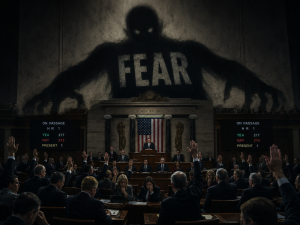 Fear is not some abstract or distant possibility in America’s democratic process. It is already shaping how judges rule, how staff members work, and how elected officials vote, appear in public, and carry out the basic duties of office.
Since 2017, ISA and the Defending Democracy Initiative have warned that threats against elected and public officials are not only security concerns. These threats are a direct challenge to our democracy and to our democratic ideals themselves.
Today, those warnings are visible everywhere: canceled public events, missed votes, swatting attempts against judges, threats against families, assaults on staff, and a 40 percent spike in threat‑related cases reported by the Secret Service.
Even before violence occurs, fear is already changing how democracy works.
 ISA’s Record: A Decade of Warnings
ISA’s concern did not begin with the Supreme Court’s recent security request. For nearly a decade, ISA has documented how fear undermines democratic participation.
2017: The First Public Warning
In 2017, after Congressman Steve Scalise was shot on an Alexandria, Virginia baseball field, ISA wrote that security for elected officials had again been called into question. At that time, some members of Congress resisted additional security because they feared it would separate them from constituents.
Rep. Michael Capuano warned that members should not live in a “glass house” where they are “untouchable.” ISA answered that concern because it misunderstood the protective mission. Proper protection does not make a public official untouchable. It allows that official to keep meeting.
The Cost Argument
Rep. Kevin Yoder raised a different concern in 2017, warning that round‑the‑clock personal security for every member of Congress would be costly and could make lawmakers less accessible to voters. That was a fair budget concern, but it was incomplete
ISA’s answer was direct: properly trained protection can facilitate access, not block it. A trained protective detail can support transportation, communications, coordination with outside agencies, arrivals, departures, and safer public access.
Rep. Frederica Wilson
Later in 2017, ISA returned to the issue after Rep. Frederica Wilson missed votes because of threats. CBS News reported that Wilson remained in Florida and missed several House votes after receiving threats, with her office stating she stayed home for safety reasons. Roll Call separately reported that threats prevented Wilson from voting in Washington.
ISA asked then whether a member of Congress missing votes because of threats on their life was a threat to democracy. That was not rhetorical. It is the same issue now repeating itself across Congress, the courts, and local government.
2021: After January 6th
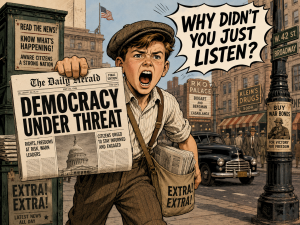 In 2021, after January 6th, ISA wrote Why Didn’t You Just Listen? and returned to the same warning again. That article reviewed Liz Cheney’s comments, the January 2021 letter from 30 House members who said they felt like “targets,” Capitol Police threat numbers, district protection gaps, and the fact that members remain more exposed when they leave Washington and return home.
2024–2026: The Pattern Expands
ISA continued documenting threats against judges, election workers, staff, local officials, and public servants across the country. The same pattern repeated:
A public official steps up. A threat follows. Fear enters the process.
Now the Supreme Court, the Secret Service, and members of Congress are confirming the same warnings ISA issued nearly a decade ago.
ISA warned about this in 2017. ISA warned about it again in 2021. ISA warned about judges, district events, staff, families, local officials, and law enforcement readiness.
That is the record. Now the public record is catching up.
Far and Intimidation Controlling the Legislative Process: Pattern Made Public
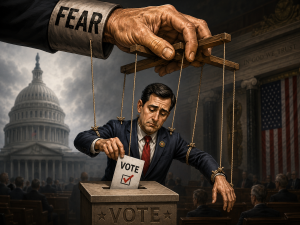 Representative Liz Cheney gave one of the clearest warnings after January 6th 2021. She said some members of Congress were afraid for their own security, and in some cases their lives, when deciding how to vote.
She also said some members were not able, or did not feel able, to cast votes because of their own security. Fear had become so pervasive it was influencing Congressional votes. This was no longer ordinary political pressure—this was fear and intimidation entering the legislative process.
That should have ended the debate.
But Rep. Adam Smith has now described pressure from a different political direction. His office after confirming that he voted Aye on the Massie Amendment, felt it necessary to issue a statement explaining the vote and, at the same time, described intimidation directed at him, his family, his neighbors, his town halls, and his staff.
His statement said his home had been vandalized, a fire had been set in his driveway, neighbors had been disrupted by demonstrations in the middle of the night, town halls had been shut down, and a staff member had been physically assaulted.
Smith did not use the words “under duress,” and ISA will not put words in his mouth. The facts are serious enough without overstating them.
When threats, harassment, vandalism, and violence surround a public official’s vote, fear is no longer outside the process. It is around the process.
Jewish Insider separately reported that Smith indicated his vote was influenced in part by sustained threats against his family and staff. That interpretation reinforces the same concern ISA has raised for years: intimidation surrounding public service can become part of the decision‑making environment.
The security point is not whether Smith’s vote was right or wrong. The security point is that a member of Congress felt it necessary to explain a vote.
The Judiciary Speaks Out 2026
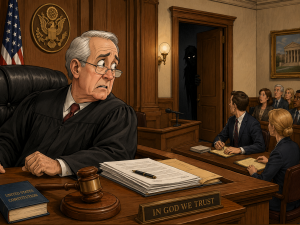
The Supreme Court’s recent security request should not be treated as a routine budget story.
Justices Amy Coney Barrett and Elena Kagan appeared before Congress in a rare public appeal for additional security funding. They described threats and intimidation facing judges and justices, including swatting attempts, residential exposure, threats to families, and the attempted assassination near Justice Brett Kavanaugh’s home.
Justice Barrett described the threat environment in personal terms. She spoke about having to bring a bulletproof vest home and explain it to her child. Justice Kagan addressed the danger of political figures trying to intimidate judges and justices into preferred outcomes.
Judges can be criticized. Justices can be criticized. Public disagreement is not the problem. The line is crossed when political pressure becomes intimidation and when threats are aimed at forcing a ruling, punishing a ruling, or making a judge fear what may happen after a ruling.
Judicial independence requires more than a secure courtroom. It requires protection at home, on daily routes, at chambers, in parking areas, and in every place where routine becomes vulnerability.
A judge can have courtroom security and still be exposed at home. A justice can have a detail and still face residential vulnerability. A family can become part of the threat picture because of a ruling. A courthouse can be secure while the route home remains predictable.
The threat does not stop at the courtroom door.
That is the pattern.
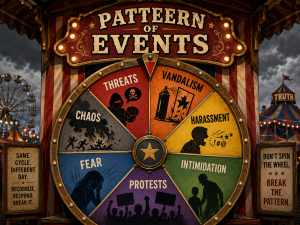 Cheney described members afraid to vote. Wilson missed votes because of threats. Smith described intimidation surrounding a vote. Justice Barrett described threats reaching her home and family. The Secret Service is describing a threat environment beyond anything its director says he has seen in 24 years.
These are not separate stories. They are separate warnings from the same democratic system.
The titles change—representative, justice, judge, mayor, candidate, election worker, school board member, prosecutor, public servant.
The pattern does not change.
A public official does the job. A threat follows. The family becomes part of the risk picture. Staff members absorb fear they never signed up for. Public events become harder to hold. Security becomes urgent only after the threat becomes public. Then everyone acts surprised.
We should stop acting surprised.
ISA warned about this in 2017. Members of Congress warned about it after January 6th. Judges and the Secret Service are warning about it now.
Elected and public officials are under threat, and the fear created by those threats is endangering the democratic process before violence even occurs.
Matthew Parker ISA ,CEO
That has been the point of ISA’s Defending Democracy Initiative from the beginning.
Misunderstanding the Threat
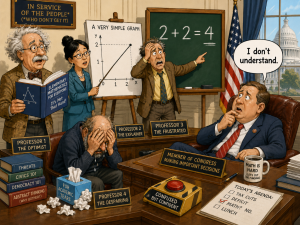 Despite escalating threats, misunderstandings persist. Some officials still view protection as a matter of optics, cost, or inconvenience. After the Scalise shooting, concerns arose that more security would create barriers between officials and the public.
But done correctly, protection does not isolate; it enables democracy by preventing fear from becoming a political tool.
The same misunderstanding appeared in the budget debate around congressional security. Cost matters. Oversight matters. No public official should ask taxpayers to fund anything without justification.
But cost cannot become an excuse to ignore verified threats. The answer is not unlimited security for every official in every circumstance. The answer is a threat-based protective model that applies resources where the risk demands them.
The real risk is not the price tag—it is denial. When our leaders downplay these threats, they leave themselves vulnerable to intimidation that shapes how they vote, serve, and appear in public life.
Note* Elected officials, you are not like the rest of us. We can’t vote on budget bills and new legislation. We can’t authorize military actions or call cabinet members and agency directors. We send you to federal and state office to represent us. You can’t do that effectively if you’re hiding in your office afraid to come out.
You owe it to us to have a protective posture, around you, your family and staff. Around your home and office. You owe it to us the voters that sent you to speak for us to have a voice. Not cower from fear.
Minnesota Assassination (2025)
After the targeted political assassination of state Rep. Melissa Hortman and her husband, and the wounding of state Sen. John Hoffman and his wife, Sen. Mike Rounds questioned how far increased security should go. He noted that the victims were state legislators and said constant security was not feasible based on his own time in a statehouse.
That is a fair administrative question—but it cannot become an excuse for inaction.
The answer is not unlimited federal‑style protection for every public official. The answer is threat assessment, trained local‑agency capability, protective planning, district coordination, event security, residential review when warranted, and a realistic system for responding before the incident.
Senator John Kennedy’s “Money Fairy” Argument (2026)
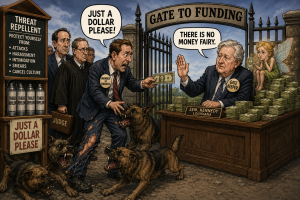
Now Senator John Kennedy has brought that same misunderstanding into the Supreme Court security debate.
After Justices Barrett and Kagan appeared before Congress to support additional Court security funding, Kennedy questioned why the Court needed more money when the justices already had “better security than everybody else.” He said there is no “money fairy” in Congress and said having four to eight officers with a justice is “strong as horseradish.”
That may work as a television line. It does not work as a security assessment.
Kennedy’s comments reduce the problem to what can be seen: officers near a justice, security at the Court, and a budget request on paper. Protective work is not limited to the officer standing near the principal. Protective work begins with understanding the threat, identifying what the threat actor may know, determining where the official is predictable, and evaluating where family members, staff, residences, routes, public events, parking areas, offices, and daily routines create exposure.
A visible detail does not automatically protect a residence. A secure courthouse does not automatically protect a judge’s family. Capitol Police coverage in Washington does not automatically protect a member at a district event.
An officer near the principal does not erase the risks created by swatting, surveillance, predictable movement, exposed staff, exposed family members, public schedules, unsecured travel, and routine patterns.
At some point, dismissing these warnings stops being budget discipline. It becomes denial. And denial is how public officials, judges, staff members, and families stay exposed until after the incident.
The Supreme Court is not asking for protection in a vacuum. The request must be reviewed and justified, but it must also be measured against the threat environment. The Secret Service is describing that same environment from the national protective side.
The Secret Service Warning
 Director Sean Curran said the current environment is the most challenging he has seen in his career, with threats “off the charts” and ABC News reported that the Secret Service has handled about 10,000 threat-related cases for protectees this year, a 40 percent increase from last year.
The Independent reported similar numbers, calling the threat environment the highest agents had ever seen.
Public officials are under threat. Judges are under threat. Staff members are being threatened, harassed, and assaulted. Families are being pulled into the risk picture.
Public meetings are being shut down. Homes are being targeted. Court security is being stretched. Local agencies are being asked to respond to threats many were never trained, staffed, or funded to manage.
The danger is not only the act of violence. The danger is what fear does before violence occurs. Fear changes how people vote. Fear changes whether officials appear in public. Fear changes whether judges and public officials can do their jobs without calculating what may happen to their families, homes, staff, neighbors, or daily routines.
These are not separate stories. They are the same warning coming from different parts of the same democratic system.
That is the security reality Kennedy’s comments ignore.
The real protective question is not whether a public official already has some security. The real question is whether the protective plan matches the threat. A serious assessment identifies the source of the threat, the credibility of the threat, the likely intent, the capability to act, and the opportunity created by routine. It examines where the official is predictable, where the family is exposed, where staff members become the front line, and where public access can turn into vulnerability.
It looks beyond the courthouse, beyond the Capitol, beyond the event stage, and into the route home, the parking area, the district office, the hotel, the public entrance, the staff entrance, the residence, and the routine nobody thinks about until after something happens.
Why Local Agencies Must Prepare
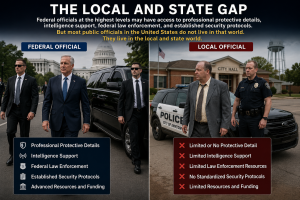 Local and state agencies are often the first to respond when threats target public officials, judges, candidates, staff, or families. Many of those agencies are already stretched, and many were never designed, trained, or funded to manage modern protective missions.
That is why ISA training programs and the Defending Democracy Initiative matters.
In October 2021, officers, deputies, and emergency management agency personnel attended ISA Dignitary and Executive Protection Training hosted by the Erie County Public Safety Center. Students worked with ISA instructors and had the opportunity to meet with judges, health officials, and others, conduct interviews, prepare threat assessments, and make risk mitigation recommendations.
The students conducted a detailed physical security inspection for the Department of Health and for one judge’s home and office. That is the work local and state agencies are now being asked to perform.
The Erie, Pennsylvania training shows why local and state police agencies, sheriff’s offices, court security units, campus police departments, public-safety agencies, emergency management agencies, and security departments should call ISA before the threat becomes an incident.
Erie was not theory. Erie was proof of concept.
When a judge is threatened, the protective problem does not begin and end at the courthouse door. The risk can extend to the residence, chambers, parking area, route to work, staff entrance, public entrance, family routine, public schedule, and the places where the judge is most predictable.
When a county commissioner, mayor, school board member, prosecutor, election official, state legislator, or other public official is threatened, the same principle applies.
 The risk follows the person, not the title.
In Erie, students worked through that problem in the real environment. They reviewed a judge’s home and office. They examined how a public official moves from home to work and back again. They considered the ordinary routines that become vulnerabilities when a judge, elected official, public official, or family member is threatened.
The driveway matters because it may be the first predictable place outside the home. The courthouse entrance matters because public access and official movement intersect there.
Chambers and offices matter because staff, schedules, visitors, documents, and daily routines all meet there.
The parking area matters because it often becomes the point where official security, personal routine, and public exposure overlap. The route to work matters because predictability is one of the oldest vulnerabilities in protective operations.
A judge’s running route matters because personal habits do not disappear just because someone holds public office. The public building where staff members come and go every day matters because staff often become the unprotected front line of public anger.
That is why local and state agencies need training before they are handed the mission.
A threat assessment is not simply asking whether someone made a threat. It is identifying what the threat actor may know, what routine can be exploited, where the public official is predictable, where the family is exposed, where staff members are vulnerable, where public access becomes risk, and what can be changed before someone acts.
ISA has been warning about this threat environment since 2017. ISA has trained agencies for this mission. ISA has worked through the protective problem with judges and public officials in the room. ISA has helped students evaluate the places where threat, routine, public access, and exposure intersect.
Local and state agencies cannot wait for Washington to solve every protective problem. When the threat arrives at the county courthouse, city council meeting, judge’s home, school board meeting, public health office, campaign event, district town hall, public parking lot, or private residence, local agencies will be the first ones expected to respond.
They should not be forced to improvise.
They should call ISA and the Defending Democracy Initiative before the incident, not after it.
Security Makes Democracy Possible
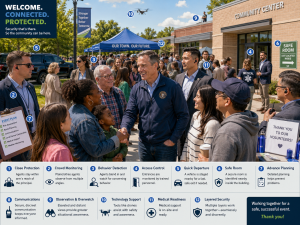 One myth persists: that security isolates public officials from the people they serve.
ISA challenged that idea in 2017, and the evidence is even clearer now. Properly trained protection does not hide officials from the public. It helps them stay accessible by making public access safer, more controlled, and less dependent on luck.
Protection should not replace public service. Protection should make public service possible.
The goal is not to shield public officials from criticism. They should be criticized. They should answer questions. They should meet constituents. They should be challenged by the public.
The goal is to prevent threats, harassment, intimidation, swatting, vandalism, assaults, and violence from deciding who can safely appear in public.
Protection should make it possible for judges to rule, members of Congress to vote, candidates to campaign, election workers to serve, staff members to work, and local officials to meet the public without fear becoming part of the job description.
Security is not the opposite of democracy. Properly applied, it helps keep the democratic process open.
Fear Is Not a Standard
Democracy depends on officials making decisions based on law, conscience, duty, and public interest.
Not fear.
Judges are supposed to decide cases based on law. Members of Congress are supposed to vote based on judgment, conscience, constituents, policy, and constitutional duty. Public officials are supposed to serve the public.
Fear should not be part of that decision‑making process.
But fear is already in the room.
It was in the room when members of Congress said they were afraid to vote. It was in the room when Rep. Wilson skipped votes because of threats. It is in the room when public officials cancel events. It is in the room when judges need residential security. It is in the room when children and spouses become part of the risk calculation. It is in the room when staff members are assaulted during public meetings. It is in the room when political opponents see fear and try to use it as leverage.
Threats are not debate. Swatting is not protest. Harassment of families is not accountability. Violence is not political speech.
The danger is not that a public official admits fear.
The danger is that fear becomes useful to people who want control.
Threats are not debate. Swatting is not protest. Harassment of families is not accountability. Violence is not political speech.
Fear must never become the standard by which public officials vote, judges rule, candidates’ campaign, staff members work, or citizens decide whether public service is worth the risk.
We’re Here Again
 The cycle repeats.
ISA warned about this in 2017. Congress spoke up after January 6th. Judges and the Secret Service are warning about it now. The threat is real, and it is reshaping public service in real time.
The warning is no longer coming from one article, one agency, one party, or one branch of government. It is coming from the people who vote, the people who rule, the people who protect, and the people who have already watched intimidation move from words to action.
The issue is not whether public officials should be insulated from criticism. They should not.
The issue is whether threats, violence, harassment, swatting, vandalism, assaults, and intimidation are being allowed to shape who serves, who votes, who rules, who appears in public, and who goes home afraid.
That is the line.
Once fear begins shaping public service, democracy is already being pressured.
ISA has been saying that since 2017 because the threat was already here. The latest warnings from Congress, the Supreme Court, and the Secret Service do not create a new issue. They confirm the one we have been warning about for years.
And the ISA and Defending Democracy Initiative training program gives local and state law enforcement a way to address these threats to our democratic process by preparing the guardians of elected and public officials before fear becomes the deciding factor.
Related ISA Reading
Protection for Elected Officials, Times Are a Changing
ISA’s 2017 article after the Scalise shooting, addressing congressional security funding, public access, district events, and the need to protect officials when they return home.
Security for Elected Officials, Revisited
ISA’s 2017 article asking whether a member of Congress missing votes because of threats is a threat to democracy.
Protection for Elected Officials, Part 6: Why Didn’t You Just Listen?
ISA’s 2021 article tying Liz Cheney’s comments, member fear, Capitol Police threat numbers, congressional security, and district-level protection gaps into one warning.
The Protection of Public Officials: A Democratic Imperative
ISA article explaining why protecting public officials is not about privilege, but preserving democratic function.