
 E-mail us
July 13th and Another Security Wake-Up Call for Elected Officials
Summary: Wake-Up Call for Elected Officials; After July 13th, the urgency of executive protection training for public officials became undeniable. Defending democracy requires proactive security, not reactive responses.
Introduction
There are moments in history when risk shifts from abstract to undeniable.
July 13th was one of those moments.
The incident did not create the threat environment facing public officials — it exposed it.
Defending democracy can no longer rely on assumptions that “it won’t happen here.”
The Pattern We Ignored
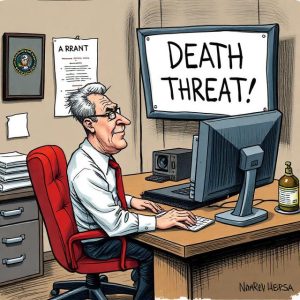 Prior to July 13th, there were warning signs:
-
Escalating rhetoric.
-
Increased credible threats.
-
Online targeting of public officials.
-
Intelligence indicators of mobilization.
Yet security posture often lagged behind reality.
Executive protection for elected officials remained inconsistent across jurisdictions. Protective planning varied widely. Training standards were uneven.
The wake-up call was not about surprise. It was about consequence.
Reaction vs. Preparation
After high-profile incidents, there is a predictable surge:
-
Emergency funding discussions.
-
Temporary security measures.
-
Public statements of concern.
But defending democracy requires sustained preparedness — not episodic reaction.
Executive protection training must be institutional, not situational.
Protection of public officials cannot depend on headlines.
A Congressional Security Reckoning
For federal, state, and local officials alike, the lesson is clear:
Security must be treated as infrastructure.
Just as we invest in:
-
Cybersecurity,
-
Election integrity,
-
Continuity of government,
We must invest in professional, standardized protection for elected officials.
This is not alarmism. It is governance maturity.
The Path Forward
If July 13th demonstrated anything, it is this:
Threats against public officials are not anomalies. They are indicators of a shifting environment.
Defending democracy means acknowledging that shift and responding with discipline, training, and institutional seriousness.
The question now is not whether protection is necessary.
The question is why it took so long to act.
Transition to Part 4:
And that leads to the uncomfortable but necessary question:
Why didn’t we listen when the warnings were first delivered?