
 E-mail us
Defending Democracy: Protecting Public Officials in an Era of Escalating Threats
Why Public Officials Are Under Threat Like Never Before
Bottom-Line Up Front
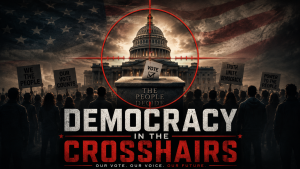 Defending democracy is no longer just a political phrase or a theoretical debate. It is a security reality.
Across the United States, elected officials, public officials, candidates for office, election workers, judges, public employees, and their families are facing threats, harassment, targeted intimidation, and acts of political violence that would have been considered extraordinary not long ago.
What was once rare has become routine. What was once unthinkable is now discussed in security briefings as a foreseeable risk. That should concern everyone.
Not just Republicans. Not just Democrats. Not just candidates. Not just law enforcement.
Everyone.
When a public official cannot safely hold a town hall, attend a community event, vote on a controversial issue, walk into a courthouse, certify an election, or serve constituents without fear of violence, democracy is not functioning the way it should.
This is not about protecting power. It is about protecting the process.
It is about making sure public officials can remain accessible, visible, and accountable without being left exposed to preventable harm. That is where the conversation about defending democracy has to begin. Not with slogans. Not with speeches. Not with outrage after the next attack.
It begins with a serious question: Who is responsible for protecting the people who keep the democratic process running?
The Threat Environment Has Changed
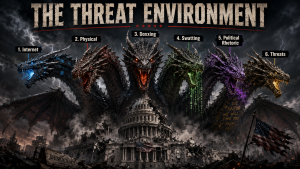 There was a time when threats against public officials were treated as isolated events. A threatening letter. An angry phone call.
Those grew into hostile people at a public meeting followed by a protest that got out of hand. A campaign event that needed a few extra officers in the parking lot.
That time is gone. Threats against public officials have increased in frequency, intensity, and sophistication. Social media amplification, and polarized rhetoric have created an environment where elected officials are more exposed than ever before.
Today, threats move faster. They spread online. They grow inside social media groups, comment sections, political forums, conspiracy circles, and grievance movements. A public official can make one decision, cast one vote, certify one result, enforce one law, or say one sentence in public and suddenly become the target of thousands of strangers.
Some of those people are just angry. Some are unstable.
Some are organized. Some are watching, sharing addresses, posting schedules, tracking family members, or looking for a moment when the official is most exposed.
That is the reality.
Public officials are expected to remain accessible to the public, but many of them are doing so without a real protective plan. They attend meetings, campaign events, parades, courthouse hearings, school board meetings, and public ceremonies with little more than hope, habit, and maybe a uniformed officer somewhere nearby.
Hope & Habit is not a security plan.
A single officer without advance work, emergency planning, and a clear protective mission is not a security plan.
If the threat environment has changed, our response has to change with it.
Accessibility Without Protection Creates Exposure
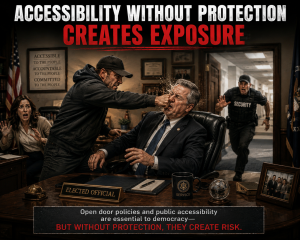 Democracy requires access.The political process requires accessibility. But accessibility without protection creates vulnerability.
Public officials have to meet people. They have to hear complaints. They have to walk into rooms where not everyone agrees with them. They have to face criticism. They have to campaign, speak, vote, debate, listen, and show up. That is part of the job. But access without protection is not openness. It is exposure.
There is a difference between being accessible and being vulnerable.
A mayor speaking at a community event, a legislator meeting constituents and a candidate shaking hands after a speech should be accessible.
An election official performing official duties should be accessible to the process and accountable to the public. But none of them should be left without trained security personnel who understand protective operations.
The goal is not to hide officials from the people they serve. The goal is to make sure they can continue serving.
That distinction matters.
Political Violence Is Not Just an Attack on One Person
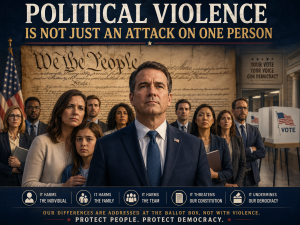 When a public official is threatened, the target is not only the individual, the office is also affected. The staff, the family, the public and the process is affected.
If threats cause an official to cancel public events, the public loses access. But, if intimidation changes how an official votes, the public loses representation.
If candidates stop running because the risk to their families is too high, voters lose choices. If election workers quit because they are threatened, the election system loses experienced people.
If judges, jurors, clerks, law enforcement officers, or public employees are intimidated into silence, the rule of law becomes weaker.
That is why public official protection is not a luxury.
- It is not a perk.
- It is not about ego.
- It is not about creating distance between leaders and the people.
It is about preserving the conditions that allow democratic government to function. A democracy cannot operate on fear. Public service cannot depend on whether someone is willing to risk being stalked, assaulted, doxxed, harassed, or targeted at home.
We need to stop acting as if this is normal. It is not normal. And it should not be accepted as the cost of serving in public office.
This Is Not a Partisan Issue
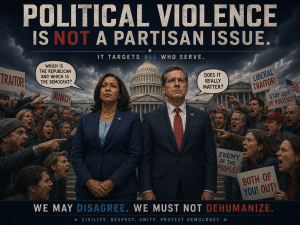
One of the biggest mistakes in this discussion is allowing protection to become political. It is not.
Threats do not belong to one party. Violence does not belong to one ideology. Public safety does not belong to one side.
A public official can be targeted because of a vote, a court ruling, a campaign position, a rumor, a conspiracy theory, a social media post, a protest, a personal grievance, or simply because someone wants attention.
The security question is not whether we agree with the official. The security question is whether the official has the ability to perform public duties without being intimidated or harmed. That standard has to apply across the board.
Republican, Democrat, Independent, conservative, liberal, moderate, local, state, federal, elected, appointed, candidate, staff member, or election worker. If they are part of the democratic process and face a credible risk, the security profession has a responsibility to take that risk seriously. You do not defend democracy by only protecting the officials you like.
You defend democracy by protecting the process itself.
The Local and State Gap
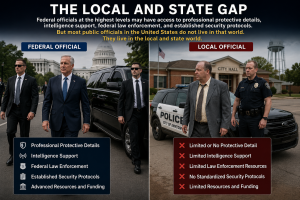 Federal officials at the highest levels may have access to professional protective details, intelligence support, federal law enforcement, and established security protocols. But most public officials in the United States do not live in that world. They live in the local and state world.
They go to county meetings. They attend church functions. They walk into small-town parades. They sit in school board rooms. They speak at civic clubs. And they campaign at restaurants, firehouses, union halls, county fairs, and public parks.
They drive themselves. They move with staff who are not trained in security. They rely on local law enforcement agencies that may already be understaffed, overworked, and not trained in executive protection.
That is where the gap exists.
The threat may be national, but the exposure is often local. A local police department or sheriff’s office may suddenly be asked to protect a mayor, county executive, state legislator, judge, election official, congressional candidate, visiting dignitary, or controversial speaker.
The agency may have good officers. But patrol experience and executive protection training are not the same thing. Standing at a post is not the same as conducting advance work. Providing a visible presence is not the same as building a protective plan. And responding after something happens is not the same as preventing it from happening.
That is why local and state agencies need a trained protective capability before the next crisis arrives.
Public Official Protection Is a Professional Discipline
 Executive protection for public officials is a professional discipline. It requires assessment, planning, coordination, communication, movement, decision-making, and restraint.
A trained protective team understands how to evaluate a threat environment, plan routes, assess venues, coordinate with event staff, work with law enforcement partners, identify suspicious behavior, move an official safely, respond to emergencies, and still preserve the official’s ability to interact with the public.
That last point matters.
The best protective operations do not prevent access. They manage it.
They do not turn every event into a fortress. They reduce preventable risk so the event can still happen.
They do not make public service impossible. They make public service safer.
That is the message public officials, agency leaders, and community members need to understand. Security is not the enemy of democracy.
Poorly planned security can create problems. No security can create disasters.
But professional protection helps preserve access, confidence, and continuity.
The Warning Signs Are Already Here
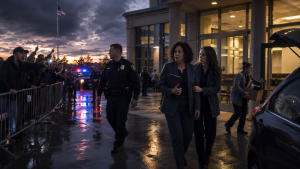
We do not need to wait for another national tragedy to admit the problem exists. We have already seen public meetings disrupted by threats and officials harassed at home. Candidates and elected leaders targeted in public, and election workers threatened for doing their jobs. Judges, prosecutors, jurors, and law enforcement officers placed under pressure because of politically charged cases.
We have violent rhetoric move from online spaces into real-world action. Public officials and their families killed at home. And the warning signs were not hidden. They are in police reports and in threat assessments. They are in news stories, and pushed by bias media, and on display in public hearings.
They are in the private conversations public officials are having with their families when they ask whether serving is still worth it. That is the part people do not always see. The decision not to run again. The spouse who is worried, the children harassed in school. The decision to stop holding events and to avoid certain locations.
The staff member who is scared. The election worker who quits. The official who stops being accessible because nobody can tell them how they will be protected.
That is how democracy erodes. Not always in one dramatic moment.
Sometimes it erodes one canceled meeting at a time.
What Agencies Should Be Asking Now
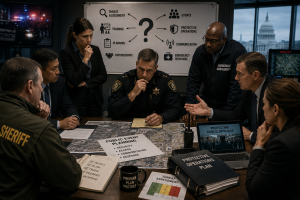 Law enforcement leaders, city managers, county administrators, emergency managers, campaign staff, and public officials should be asking hard questions now.
Not after the next incident. Now.
- Do we have public officials who have received threats?
- Do we have candidates or officials with elevated public exposure?
- Do we have controversial meetings, votes, court proceedings, hearings, or events coming up?
- Do we have trained personnel who understand protective operations?
- Do we conduct advance work before public events?
- Do we have a local process for assessing threats?
- Do we know how to protect an official without cutting them off from the public?
- Do we have plans for arrival, movement, seating, crowd interaction, emergency evacuation, medical response, and family notification?
- Do we know who is in charge if something happens?
- Do we have regional partners who can help?
- Do we have written procedures?
- Have we trained them?
If the answer to most of those questions is no, then the agency does not have a protective program. It has a hope.
And hope is not enough.
Defending Democracy Requires Preparation
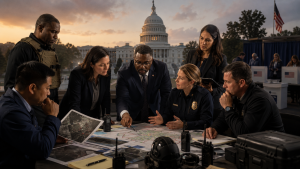
The phrase “defending democracy” gets used a lot. But defending democracy is not only about speeches, campaigns, court cases, elections, or public statements.
It is also about the practical work of keeping the people inside the process safe enough to do their jobs.
- That means training.
- It means planning.
- It means threat assessment.
- It means protective operations.
- It means helping public officials remain visible and accessible while reducing unnecessary exposure.
- It means giving law enforcement agencies the tools to support public service before a threat turns into an attack.
Independent Security Advisors created the Defending Democracy Initiative because this problem was foreseeable. The need for trained protection at the local and state level has been obvious for years. Public officials are exposed. Agencies are being asked to manage threats they were not fully trained or funded to manage. Communities are relying on systems that were not built for the current threat environment.
That has to change.
Not someday.
Now.
The Real Mission
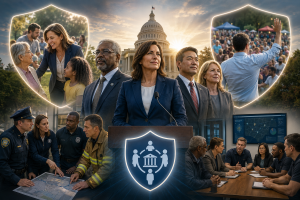
The mission is not to scare public officials into hiding. The mission is to keep them working.
The mission is not to turn every public event into a hard target. The mission is to make public access safer.
The mission is not to protect one party, one movement, or one official. The mission is to protect the democratic process from intimidation, disruption, and preventable violence. That mission requires law enforcement, public officials, security professionals, emergency managers, and community leaders to take the threat seriously.
It also requires a change in mindset. Protection should not begin after the threat becomes public, after an event is canceled, or after someone is hurt. Protection begins with recognizing that public official security is now part of defending democracy.
What Comes Next
 If the threat environment is real, and it is, the next question becomes unavoidable:
How do we protect public officials without isolating them from the people they serve?
That question matters because one of the most persistent myths about executive protection is the idea that security places an elected official in a bubble.
That myth is wrong.
Proper protection does not separate public officials from the people. It helps them stay connected to the people safely.
That is the subject of Part 2: Executive Protection for Public Officials: Breaking the “Boy in the Bubble” Myth.
Key Takeaways
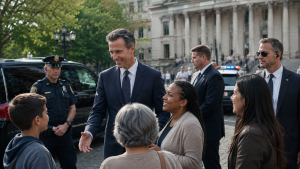
- Defending democracy begins with protecting public officials. It is essential to preserving the political process.
- Protecting public officials is not about shielding power. It is about preserving the constitutional process.
- Executive protection for elected officials is not a luxury. It is not a symbol of elitism. It is a professional response to a measurable risk environment.
- If we are serious about defending democracy, we must be equally serious about the protection of public officials.
- Defending democracy begins with protecting the people who serve inside the democratic process.
- Threats against public officials are no longer rare or isolated.
- Accessibility is essential, but accessibility without planning creates exposure.
- Public official protection is not partisan. It protects the process, not a political side.
- Local and state agencies need trained protective capabilities before the next crisis.
- Executive protection for public officials is a professional discipline that supports access, safety, and continuity of government.
The next step is understanding why protection does not isolate officials from the public, but allows them to serve safely.
Call to Action
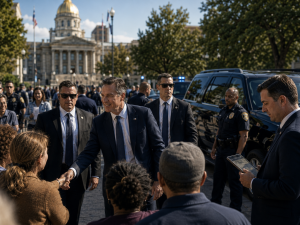 Independent Security Advisors provides executive protection training, close protection training, threat assessment training, and protective operations support for law enforcement agencies, public safety organizations, public officials, campaigns, and agencies responsible for protecting at-risk personnel.
If your agency or organization needs to build a public official protection capability, now is the time to start.
Do not wait for the next headline, the next threat or the next attack.
Train now. Plan now. Protect the process now.
#DefendingDemocracy #ProtectingPublicOfficials #PublicOfficialSecurity #ExecutiveProtectionTraining #PoliticalViolencePrevention #ThreatAssessment #LawEnforcementTraining #ProtectiveOperations #ElectionSecurity #PublicSafety