
 E-mail us
Executive Protection Training: Mastering the Threat Assessment Process
Learn how executive protection training integrates threat assessment to identify real risks, strengthen protective intelligence, and safeguard principals effectively. / 2026
Executive Protection Training Starts with Threat Assessment
Executive protection training is incomplete without mastering the threat assessment process. At its core, a professional threat assessment enables executive protection teams to identify credible risks, filter out background noise, and implement informed security decisions that protect the principal, family members, and corporate assets.
In today’s rapidly evolving threat landscape, however, basic awareness is no longer sufficient. Instead, executive protection professionals must gather intelligence systematically, analyze behavioral patterns, assess vulnerabilities, and continuously monitor emerging risks. For this reason, structured executive protection training has become more important than ever.
What Is a Threat Assessment in Executive Protection?
A threat assessment in executive protection is a structured methodology used to identify, evaluate, and prioritize risks to a principal. More specifically, it combines protective intelligence gathering, behavioral analysis, vulnerability assessments, and risk prioritization into one cohesive process.
Unlike a general risk assessment, which may focus on environmental hazards or operational disruptions, an executive protection threat assessment concentrates on human-driven threats. For example, risks may originate from stalkers, disgruntled employees, fixated individuals, political extremists, or organized criminal actors.
Because of this complexity, executive protection training teaches agents how to distinguish credible threats from emotional reactions or online rhetoric. Without that structure, teams may either overreact or underestimate genuine danger.
The Modern Threat Landscape Facing High-Risk Principals
Over the past decade, the threat environment has evolved dramatically. In addition to physical surveillance concerns, security professionals must now address digital exposure and reputational risks.
For instance, social media platforms can reveal travel patterns, leaked addresses, or real-time locations. Likewise, data breaches may expose private contact information that increases vulnerability. Meanwhile, online harassment campaigns can escalate into real-world confrontations if left unmonitored.
As a result, executive protection training programs must address both physical and digital threat vectors. Protective intelligence now requires monitoring open-source information (OSINT), analyzing online behaviors, and evaluating digital footprints alongside traditional field assessments.
Ultimately, professionals who fail to adapt to these changes risk overlooking early warning signs.
The Executive Protection Threat Assessment Process: Step-by-Step
A structured executive protection threat assessment process generally includes several interconnected phases. Although the steps may vary slightly depending on the organization, the foundational elements remain consistent.
1. Information Gathering
First, intelligence must be collected from reliable sources. This stage typically includes reviewing public records, monitoring online platforms, conducting interviews, and analyzing internal incident reports.
Additionally, historical behaviors and previous encounters should be evaluated to establish patterns. Without comprehensive information, subsequent analysis may lack accuracy.
 2. Threat Identification
Once information is gathered, professionals must determine whether a credible threat exists. Not all concerning behavior indicates genuine intent to cause harm.
Therefore, trained agents evaluate factors such as intent, capability, opportunity, history of escalation, and proximity to the principal. By applying objective criteria, executive protection teams reduce subjective bias in decision-making.
3. Vulnerability Assessment
Even a minor threat can escalate if vulnerabilities remain unaddressed. Consequently, teams must examine travel routes, residential security measures, public appearance protocols, digital exposure, and staff access controls.
By reducing vulnerabilities, the overall risk level often decreases significantly.
4. Risk Analysis and Prioritization
After identifying threats and vulnerabilities, teams analyze likelihood and potential impact. At this stage, prioritization becomes essential because resources are always limited.
High-probability, high-impact threats require immediate mitigation. In contrast, lower-level risks may require monitoring rather than direct intervention.
5. Continuous Monitoring
Importantly, a threat assessment is not a static document. Instead, it functions as a living process that must evolve alongside changing circumstances.
For example, travel plans may shift, public visibility may increase, or online rhetoric may intensify. Therefore, executive protection training reinforces the necessity of ongoing reassessment and documentation.
Why Threat Assessment Is Essential in Executive Protection Training
Without formal training, threat assessments can easily become inconsistent or reactive. On the other hand, structured executive protection training provides standardized methodology, clear evaluation criteria, and scenario-based learning.
Furthermore, training introduces legal considerations and ethical boundaries that guide responsible decision-making. As a result, agents learn to balance proactive protection with respect for privacy and civil liberties.
Rather than relying solely on instinct, well-trained professionals apply evidence-based frameworks. Consequently, decisions become more defensible, strategic, and effective.
Modern Tools Used in Executive Protection Threat Assessments
Technology has transformed how executive protection teams conduct threat assessments. For example, open-source intelligence platforms allow analysts to monitor digital signals efficiently. Similarly, AI-assisted monitoring tools can flag behavioral escalation patterns.
In addition, geospatial risk analysis tools help teams evaluate travel corridors and high-risk zones. Secure communication systems, meanwhile, enable rapid dissemination of updates across the protection detail.
Nevertheless, technology alone is insufficient. Human judgment remains indispensable because context determines meaning. Executive protection training therefore emphasizes analytical reasoning alongside technological proficiency.
Best Practices for Integrating Threat Assessment into Executive Protection Operations
To strengthen overall security posture, threat assessment must be embedded into daily operations rather than treated as a separate task.
First, assessments should be conducted before major travel or public appearances. Next, teams should update findings whenever circumstances change. Additionally, all conclusions should be documented clearly and stored securely.
Collaboration also plays a key role. For instance, coordination with legal advisors or HR departments may be necessary when internal threats emerge.
By integrating threat assessment into routine operations, executive protection teams shift from reactive security to proactive protection.
Common Mistakes in Executive Protection Threat Assessments
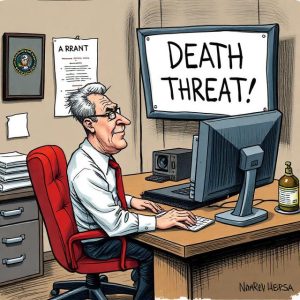 Even experienced professionals can make critical errors. For example, some teams overreact to non-credible online comments. Conversely, others ignore subtle behavioral escalation indicators.
Another common mistake involves relying exclusively on technology while neglecting human analysis. Additionally, outdated intelligence can distort current risk evaluations if it is not reassessed regularly.
Through comprehensive executive protection training, however, these mistakes become less likely. Structured methodology reduces emotional decision-making and improves consistency.
Key Takeaways
-
Executive protection training must include formal threat assessment methodology.
-
Moreover, threat assessments should be continuous and adaptable.
-
Protective intelligence requires both digital monitoring and field evaluation.
-
Reducing vulnerabilities often lowers overall risk.
-
Ultimately, structured training improves operational effectiveness and decision-making.
Frequently Asked Questions
What is the purpose of a threat assessment in executive protection?
The purpose is to identify credible risks, evaluate their likelihood and impact, and implement mitigation strategies that protect the principal and security team.
How often should executive protection threat assessments be updated?
Generally, assessments should be updated whenever travel plans, public exposure, staffing, or intelligence conditions change.
What skills are taught in executive protection training for threat assessment?
Training typically includes protective intelligence gathering, behavioral analysis, vulnerability assessment, risk prioritization, and continuous monitoring techniques.
Is technology enough for threat assessment?
Although technology enhances intelligence collection, human expertise is required to interpret context and determine appropriate action.